China's textile and apparel sector dominates the global market
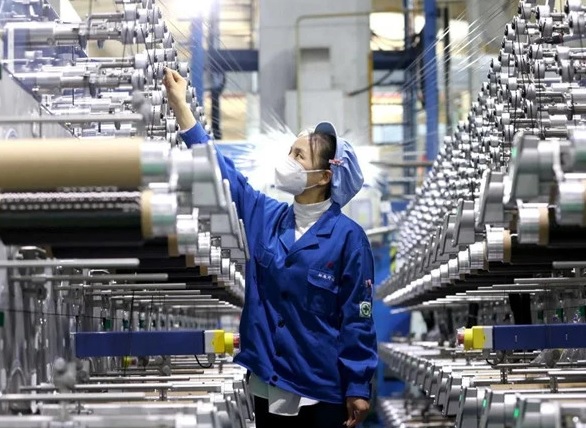
As the second China International Supply Chain Expo (CISCE) unfolds in Beijing, the spotlight shines on China's textile and apparel sector, a critical pillar of the nation's robust supply chain network and a major contributor to the global economy.
China has solidified its position as a dominant force in the textile and apparel industry, boasting the world's largest production capacity and export volume. This success is due to several factors.
• Scale: China's textile industry leads with over 40 per cent of the world's 500 major industrial products, holding the top spot in global manufacturing for 14 consecutive years. This massive scale translates into competitive pricing and a vast array of product offerings.
• Supporting systems: Over the years, China has created a comprehensive supporting ecosystem for the textile industry, which encompasses raw material production, textile machinery manufacturing, and efficient logistics networks. This integrated approach streamlines production processes and enhances overall efficiency.
• Technological advancement: The industry is increasingly embracing automation and advanced manufacturing technologies to improve productivity and product quality. Investments in research and development are driving innovation in areas like sustainable textile production and smart manufacturing.
Table: China’s market share
|
Metric |
Value |
Source |
|
Global textile and apparel market share |
31.6% (2023) |
Sheng Lu Fashion |
|
Total value of textile and apparel exports |
$164 billion (2023) |
Sheng Lu Fashion |
|
Domestic consumption of textile and apparel production |
70-80% |
Sheng Lu Fashion |
|
Number of R&D projects in the textile and apparel sector |
Over 10,000 (2022) |
Statista |
Despite facing challenges such as rising labor costs and increasing competition from other low cost countries, China's textile and apparel sector has shown resilience and adaptability. The industry is actively pursuing strategies to maintain its competitive edge.
The sector has shifted focus to higher-value products, moving away from basic garments, like functional apparel and fashion-forward designs. With growing demand for eco-friendly products, the industry is also investing in sustainable practices, such as recycled materials and reducing water and energy consumption. Also, Chinese textile and apparel companies are actively developing their own brands to enhance their global recognition and capture a larger share of the value chain.
China's commitment to further integrating its textile and apparel sector into the global supply chain is evident. The CISCE serves as a platform to showcase the industry's strengths, foster international collaborations, and explore new opportunities for growth. As the world becomes increasingly interconnected, China's textile and apparel sector is poised to remain a vital thread in the fabric of the global economy.
New EU customs regulations could impact sourcing operations

A new report by Source Fashion and Insider Trends, recent changes to EU customs regulations could significantly impact sourcing operations for UK retailers.
The report, titled ‘The State of Sourcing Report: Sourcing and Sustainability in 2025’, is based on a survey of UK retailers of all sizes. It provides insights into current sourcing practices and sustainability trends in the retail industry. The report also includes data tables, quotes, and case studies from industry leaders.
Sourcing practices
• The majority of UK retailers (74 per cent) source internationally.
• China is the most popular sourcing region (49 per cent), followed by the UK (42 per cent), India (37 per cent), and Western Europe (33 per cent).
• Cost of production is the primary reason for choosing sourcing regions (46 per cent of respondents).
• Smaller companies are more likely to source from closer regions due to various factors like preference, shorter lead times, or barriers to sourcing from further afield.
The report highlights that in February 2024, the EU removed customs duty exemption for goods valued at less than €150. This change could potentially affect 2.3 billion items that were previously imported duty-free into the EU in 2023. The report suggests the new regulations could shift sourcing operations away from China towards other regions. While China remains attractive for its established production capabilities and supply chains, pressures on the country might make it less appealing. India, with its growing importance as a sourcing region, could be a potential alternative. The report includes case studies of companies like ASOS, Boohoo, and Asda's George fashion range, which have faced scrutiny over their sustainability claims. These cases highlight the need for clear guidance and collaboration within the industry to tackle sustainability challenges effectively.
The new EU customs regulations could have a significant impact on sourcing operations for UK retailers. The report recommends that retailers adopt a more agile approach to their supply chains and consider diversifying their sourcing regions. It also emphasizes the need for industry collaboration and clear guidance on sustainability practices.
Denim Premiere Vision 2024: A global showcase of sustainability and fashion's future
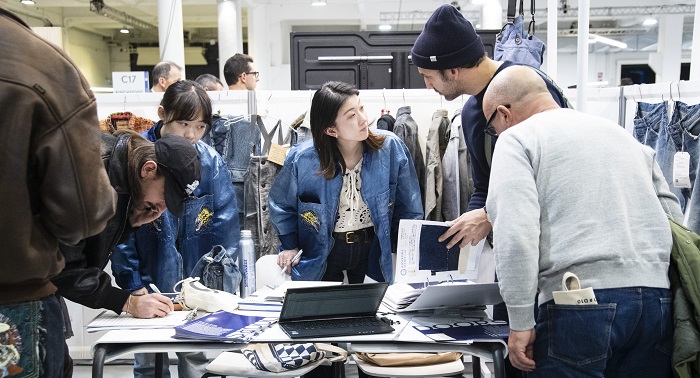
Denim Premiere Vision 2024, held from December 4-5, saw over 2,600 visitors at SuperstudioPiu in Milan for the global denim event. This two-day gathering, under the patronage of the City of Milan, served as a platform for denim professionals to explore the latest trends, innovations, and sustainable practices shaping the denim sector for the Spring-Summer 26 season.
A hub for innovation and collaboration
Denim Premiere Vision continues to solidify its role as a key meeting point for global fashion brands, designers, manufacturers, and industry experts. The event’s success was reflected in the impressive attendance and its vibrant, collaborative atmosphere. Visitors had the opportunity to network with top industry players, explore cutting-edge denim collections, and gain insights into the future of denim design, production, and sustainability.
Florence Rousson, President of Premiere Vision, emphasized the industry's forward-thinking spirit: "Denim is evolving with unique versatility, from casual to sophisticated, and has become a cornerstone of the luxury sector. This edition embodied the collective energy and determination of our industry to drive innovation while addressing the challenges of sustainability."
Fostering dialogue and idea-sharing
The event was marked by dynamic conferences and Pitches, offering attendees valuable opportunities to engage with experts and learn about the latest technological advancements and sustainable initiatives in denim production. These sessions provided a platform for reflection, discussion, and the exchange of ideas to address the industry's evolving needs.
One of the key highlights was the Bioawake presentation by Orta, which showcased the future of eco-friendly denim production. Experts also discussed the transformation of washing, dyeing, and material management processes, with an emphasis on reducing environmental impact while maintaining quality. Andrea Venier’s ‘Zero PP’ concept also offered new insights into eliminating plastics from the denim production cycle.
The event's emphasis on innovation was coupled with a commitment to craftsmanship, particularly in the context of Italy's renowned denim manufacturing expertise. The discussions underscored the importance of blending traditional craftsmanship with cutting-edge technologies to create sustainable products.
Sustainability and fashion forward thinking
Sustainability was a central theme of this edition. The event presented solutions that aim to reduce the environmental footprint of denim manufacturing. One of the most notable discussions was led by Amy Leverton, founder of Denim Dudes, who explored the influence of pop culture, protest movements, and shifting societal values on denim design, manufacturing, and marketing. Leverton’s presentation underscored how cultural shifts will continue to shape the future of fashion.
In addition to sustainability, the conference program also focused on the sociocultural dynamics of the Middle Eastern market, offering insights into market entry strategies and growth prospects for denim in the region. A key theme was the role of women in revolutionizing fashion trends, with discussions highlighting how female figures are redefining stylistic and social norms in the industry.
Looking ahead: Trends for Spring-Summer 26
Denim experts, led by Juliet aMercerat, provided a preview of the Spring-Summer 26 season’s denim trends, outlining emerging stylistic and technical developments. These fashion seminars offered attendees a valuable opportunity to explore innovations in denim manufacturing, while also providing actionable insights for brands looking to stay ahead of the curve.
Key figures and global reach
Denim Premiere Vision 2024 saw the participation of 2,610 visitors, including fashion and accessory brand leaders, buyers, designers, and production managers from 14 countries, including Italy, France, Germany, the United States, and China. The event hosted 71 exhibitors, with a strong representation from denim spinners and weavers, manufacturers, and accessory producers. Additionally, 15 international hosted guests participated in strategic investment programs aimed at fostering key industry connections.
Looking forward to 2025
Denim Premiere Vision will return on May 21-22, 2025, for the Fall-Winter 26-27 season, continuing to serve as an essential hub for industry professionals to explore innovation, sustainability, and the future of fashion.
Zalando acquires About You for €1.2 billion to strengthen e-commerce leadership
Zalando SE, the Berlin-based online fashion giant, has agreed to acquire rival About You Holding SE for €1.2 billion, marking a major step to solidify its dominance in Europe’s e-commerce market. The offer of €6.50 per share represents a 67 per cent premium to About You’s last closing price.
The acquisition, backed by About You's management and major shareholders, including the Otto family and Denmark’s Holch Povlsen, will expand Zalando’s share of Europe’s €450 billion fashion and lifestyle market. About You, founded in 2014, boasts 12 million monthly users and a portfolio of 700,000 items. Its Scayle platform, which supports retailers’ digital growth, complements Zalando’s Zeos system.
The two brands will operate independently, but synergies in logistics and operations are expected to yield €100 million annually. The deal, pending regulatory approval, aims to enhance business-to-business services and long-term profitability despite potential competition concerns.
NDAA boosts US textile industry, NCTO applauds
The National Council of Textile Organizations (NCTO) commends the House of Representatives for passing the Fiscal Year 2025 National Defense Authorization Act (NDAA). The legislation reinforces the Berry Amendment, mandating the Department of Defense (DOD) to procure 100 per cent USmade textiles and clothing, while introducing new measures to bolster domestic manufacturing.
Key provisions include authorizing the Secretary of Defense to establish pre-positioned stocks of defense textiles needed for contingency operations while developing plans to mitigate delays in ramping up supply. Additionally, the legislation enhances transparency for domestic nonavailability determinations (DNADs) by mandating annual public disclosure and requiring the Under Secretary of Defense for Acquisition and Sustainment to maintain and share a comprehensive DNAD list with Congress and industry.
“These provisions strengthen the domestic textile industry’s role in national defense,” said NCTO President and CEO Kim Glas. “The Berry Amendment supports a secure, USbased supply chain for critical defense materials, reducing reliance on foreign suppliers like China.”
US textile mills produce over 8,000 products annually for the military, including advanced uniforms and equipment valued at more than $1.8 billion. This industry ensures the highest quality goods for US armed forces while safeguarding national security through innovative, American-made materials.
Glas emphasized the strategic importance of the domestic textile industry, urging swift Senate approval of the NDAA. “A robust US textile base is essential for providing our military with the vital materials they need,” she said.
The NCTO looks forward to continued collaboration with policymakers to support American manufacturing and defense readiness.
Inditex reports 10.5% rise in sales to €27.4 billion in Q3, FY24
Parent company of the fast fashion brand Zara, Inditex reported 10.5 per cent rise in sales to €27.4 billion during Q3, FY24. The brand’s profit after tax increased by 6 per cent Y-o-Y to €1.68 billion during the quarter, while revenues declined by 2 per cent below analysts’ expectations to €9.4 billion. Despite slightly missing consensus estimates, Inditex remains ahead of its competitor H&M, leveraging Zara's brand strength and trend-driven appeal.
Zara continues to consolidate its position through strategic expansions and collaborations. The brand opened a 7,500-sq-ft Zara Man store in Madrid, offering exclusive collections featuring natural materials like cotton and cashmere. This store also houses Zacaffè, a coffee shop reflecting local architectural styles, a concept already tested in Paris, Lisbon, and Dubai. New café locations are planned for Seoul and Osaka in 2025.
In addition, the Madrid Zara Man store created space for a Zara Apartment concept, launching next year with curated homewares. The brand also upgraded the floor space at its California and Florida stores for improved customer experiences.
Inditex is optimising its retail strategy by reducing store counts while expanding younger-skewing concepts like Pull & Bear. The company also launched a teen line, Z3D, within Zara.
Looking ahead, Inditex plans to upgrade its infrastructure with an investment of €1.8 billion. The company is set to open a logistics center in Zaragoza in 2025. It has also made an investment in Epoch Biodesign to develop AI-driven recycling solutions for polyester and mixed-textile collections.
India’s cotton production to decline to 250 lakh bales in 2024-25: USDA
Compared to the previous season, India’s total cotton production is estimated to decline by 4 lakh bales to 250 lakh bales in 2024-25. In 2023-24, India’s total cotton production had increased to Rs 254 lakh bales, as per a report by USDA. This decline in production of 4 lakh bales is attributed to a reduction in sowing area of approximately 14 lakh hectare and crop damage from natural calamities in certain regions.
Based on bales weighing 480 pounds (213 kg), the USDA report estimates, total available cotton stocks in India are likely to be around 366 lakh bales. These will include 93 lakh bales of outstanding stock, 250 lakh bales from domestic production, and 23 lakh bales of imports.
In terms of consumption, 260 lakh bales are expected to be used domestically, while 13 lakh bales are likely to be exported, with the remaining 93 lakh bales to remain as surplus stock by the end of the season.
In comparison, India had a starting stock of 108.20 lakh bales during the 2023-24 season. It produced 254 lakh bales and imported 8.90 lakh bales.
Domestic consumption totaled 255 lakh bales, and exports amounted to 23.10 lakh bales, leaving a surplus stock of 93 lakh bales at the season's close.
The USDA’s surplus stock estimate has been questioned by India’s Cotton Association, which believes the figure is higher than expected.
Globe Textiles India reports 33.44 % rise in net sales in Q2, FY24
Globe Textiles India’s Q2, FY24 net sales increased by 33.44 per cent to Rs 147.96 crore as against Rs 110.88 crore in Q2, FY23.
The company’s net profit increased by 106.37 per cent to Rs. 3.55 crore during the quarter ended September 2024 as against Rs 1.72 crore in the quarter ended September 2023. Its EBITDA rose by 28.59 per cent to Rs 9.31 crore during the quarter as against Rs. 7.24 crore during Q2, FY23 ended September 2023.
Globe Textiles’ EPS increased to Rs. 0.13 in September 2024 from Rs. 0.06 in September 2023. This growth is attributed to the company’s operational efficiency, optimised product mix, and expanded garment processing capacity. Focusing on sustainability, the company incorporates features like a Zero Liquid Discharge system and solar energy in their operations
A prominent player n the Indian textile industry, Globe Textiles India specialises in a wide range of products such as denim and non-denim fabrics, shirting fabrics, printed fabrics, home textiles, and garments for men and women. For Autumn/Winter 2024-2025, the company offers innovative products, including premium denim, dyed shirting fabrics, and a variety of printed textiles, showcasing a blend of style and sustainability.
Global Sourcing Expo in Melbourne sees record attendance and success

Record attendance and strong feedback highlight Expo’s growth
The Global Sourcing Expo (GSE) in Melbourne has concluded with outstanding success, attracting more than 4,700 visitors and showcasing a diverse array of Australian fashion and retail brands. The event, held from November 19 to 21, demonstrated significant growth, with total visits increasing by 29 per cent compared to 2023, and unique visits rising by 24 per cent. The Expo, which featured over 1,000 exhibitors from 20 countries, has proven to be a key platform for international suppliers and local buyers to network, share insights, and strengthen business relationships.
According to the Expo’s organizers, 95 per cent of visitors held decision-making authority or could make recommendations, highlighting the event's value for industry leaders. Moreover, 83 per cent of attendees attended to discover new manufacturers, products, or sourcing regions, reinforcing the event's relevance in today's globalized marketplace.
Marie Kinsella, CEO of the International Expo Group, emphasized the growing demand for an event that unites global suppliers and buyers. "The steady year-on-year increase in visitors is a clear indication of the value that the Expo provides in bringing the industry together for networking, knowledge-sharing, and relationship building," Kinsella said. "Even just days after the event, we’ve already received several repeat exhibitor inquiries for the 2025 Expo, with participants providing positive feedback on their return on investment."
Exhibitor and attendee feedback reflect event’s success
Exhibitors and attendees alike praised the organization and value of the event. One exhibitor noted, "The event was exceptionally well-organized, and the support from the team was outstanding. The venue was excellent, and the foot traffic was great, leading to valuable interactions and exposure." Another attendee shared their appreciation for the Expo's diverse range of international exhibitors, saying it was "a great platform for sourcing goods and connecting with suppliers from various marketsall under one roof."
The event also included the co-located Footwear & Accessories Show and the China Clothing Textiles Accessories Expo, which further expanded the range of exhibitors and products. Visitors appreciated the opportunity to meet suppliers face-to-face, allowing for more personalized interactions and a deeper understanding of product quality and offerings.
Additionally, industry trade associations such as the Handloom Export Promotion Council India and the Taiwan Textile Federation were present, offering valuable insights and resources for both exhibitors and visitors. These partnerships highlight the Expo’s role in fostering connections across multiple sectors within the fashion and retail industry.
Global Sourcing Seminars provide insight into key industry trends
The Expo's success was further enhanced by its Global Sourcing Seminar program, which brought together over 30 industry experts to discuss pressing issues and trends, such as AI in manufacturing, clothing recycling, and sourcing strategies. Kinsella noted, “Each session was well-attended and provided invaluable perspectives from the best in the industry.”
These seminars allowed attendees to gain crucial knowledge on the future of sourcing, equipping them with the tools needed to stay ahead of evolving market demands.
Looking ahead to the 2025 Global Sourcing Expo
As the 2024 GSE event calendar concludes, the focus now turns to the 2025 expos. The International Expo Group has already announced the dates for the 2025 events: Sydney will host the Expo from June 17–19 at the ICC, while Melbourne will follow with its event from November 18–20 at the Melbourne Convention & Exhibition Centre.
Kinsella concluded, "It’s our goal to continue to offer the Expo as a destination where the sourcing and buying market can find global partners, suppliers, and innovative products to enhance their supply chains and business strategies." The 2024 Expo's success has set the stage for even greater things in 2025, ensuring the event remains a vital component of the global sourcing and fashion industries.
Kraig Labs hits record spider silk production
Kraig Biocraft Laboratories, a pioneer in spider silk-based fibers, announced aninnovative achievement of producing over 1,200 pounds of recombinant spider silk cocoons in the past year. This milestone exceeds the cumulative production of all previous years, highlighting significant advancements in scaling sustainable spider silk production.
This record output was made possible by Kraig Labs innovative hybrid spider silk production strain, which reengineers silkworms to generate spider silk-based fibers. The breakthrough showcases the Company’s ability to transition laboratory innovations into scalable manufacturing solutions.
“We are thrilled to announce this major production milestone, reflecting our team’s dedication to optimizing spider silk production,” said Kim Thompson, Founder and CEO of Kraig Labs. “This achievement marks a pivotal step toward meeting the global demand for performance fibers in diverse consumer markets.”
Kraig Labs continues to focus on developing a scalable and sustainable production model, reinforcing its leadership position in recombinant spider silk manufacturing. The Company’s success paves the way for expanded production capabilities and the commercialization of eco-friendly, high-performance silk fibers designed for a wide range of applications.
This milestone affirms Kraig Labs' role in shaping the future of sustainable performance materials, aligning innovation with growing global demand.
More...
Parkdale and Trutzschler advance partnership with Super tip innovation
Parkdale, a global leader in spun yarns, continues to enhance its 50+ year collaboration with Trutzschler, a pioneer in textile machinery and card clothing solutions. Their shared focus on innovation, quality, and sustainability has led to the adoption of Trutzschler’s advanced Supertip card clothing wires, further solidifying their partnership.
Founded over 108 years ago in Gastonia, North Carolina, Parkdale has grown into the largest consumer of cotton in the US, producing over 8,000 tons of yarn weekly across 21 facilities in the Americas. Parkdale’s diverse portfolio includes fiber blends like cotton, polyester, rayon, and nylon, serving industries worldwide.
Trutzschler, entering the US market in 1969, has collaborated closely with Parkdale to navigate major shifts in the textile industry. Recently, Parkdale ordered 34 carding machines featuring Supertip wires on the licker-in, cylinder, and doffer rollers. Supertip wires boast 30 per cent longer service life and 25 per cent reduced maintenance, ensuring smoother, cost-effective operations.
With over 300 Supertip variations available, Parkdale benefits from tailored solutions for its wide-ranging applications. Supertip also eliminates the need for grinding new clothings, extending maintenance intervals.
Charles Heilig, CEO of Parkdale Textile Division, lauded Trutzschler Card Clothing’s commitment to quality and innovation, highlighting their vital role in Parkdale’s operations. Greg Duncan, VP of American Trutzschler, emphasized the importance of collaboration and long-term trust between the companies.
As Parkdale and Trutzschler continue to push textile manufacturing boundaries, their partnership exemplifies the power of innovation and shared vision in driving industry progress.
Texworld NY C Winter 2025 to launch Industry Insight Series
The Winter 2025 edition of Texworld NYC will mark the debut of the Industry Insight Series, a one-day event crafted to deliver cutting-edge knowledge and foster meaningful connections within the global textile and fashion community. Scheduled for January 2025, the series will be held in collaboration with Business of Fashion and other prominent industry leaders.
This premier initiative is tailored for professionals seeking to gain valuable insights and engage with the visionaries shaping the future of fashion and textiles.
One of the highlights of the event will be an exclusive keynote address by Nick Blunden, President, Business of Fashion. Blunden will delve into findings from the State of Fashion 2025 report, developed in partnership with McKinsey & Co. Renowned as a go-to resource for industry decision-makers, the report offers a comprehensive analysis of critical trends, macroeconomic developments, and emerging growth opportunities. It blends rigorous research with expert insights to provide an actionable guidance for navigating the rapidly evolving fashion landscape.
The agenda will also feature a thought-provoking panel session, moderated by Brittany Sierra, Founder & CEO, Sustainable Fashion Forum and host of the Green Behavior podcast. The discussion will explore the transformative role of sustainability in fashion, offering attendees practical strategies for integrating sustainable practices into their operations.
In addition to the knowledge-sharing sessions, the series will include a complimentary networking lunch, creating an ideal platform for attendees to connect with peers and industry leaders.
The series is designed to help professionals not only keep up but stay ahead, avers Eileen Small, Market Development, Fashion & Apparel Textiles.
India’s textile and apparel sector reported mixed results in H1 FY25 but challenges remain

The Indian textile and apparel sector, a significant contributor to the country's economy, recorded mixed performance in the first half of the fiscal year 2025 (H1 FY25). While certain segments exhibited robust growth, others faced challenges that impacted overall profitability.
Key performance indicators, as reflected by the Wazir Textile and Apparel indices, highlight the sector's positive trajectory.
Wazir Textile Index: A strong performance
The Wazir Textile Index, which tracks the performance of leading textile companies, recorded significant growth in H1 FY25 compared to the same period in the previous year. Key highlights include:
Sales surge: The sales index increased by 13 per cent, indicating robust demand for textile products both domestically and internationally.
Profit boost: The EBITDA index witnessed an impressive 43 per cent increase, signaling improved operational efficiency and cost management.
Consolidated growth: Consolidated sales of selected top textile companies grew by 8 per cent, while consolidated EBITDA improved by 1 percentage point.
The Wazir Apparel Index, which monitors the performance of leading apparel companies, also showed positive trends in H1 FY25. The sales index grew by 25 per cent, reflecting strong consumer demand for apparel products. The EBITDA index increased by 17 per cent%, indicating improved profitability despite rising input costs. Consolidated sales of selected top apparel companies grew by 25 per cent, while consolidated EBITDA remained relatively stable.
Considering the performance of all listed textile and apparel companies, the sector as a whole demonstrated solid growth in H1 FY25. Consolidated sales for all listed companies increased by 8 per cent compared to the same period last year. However, consolidated EBITDA declined by 1 per cent due to factors such as rising input costs and competitive pressures.
The positive performance of the textile and apparel sector in H1 FY25 was due to strong domestic demand. Robust domestic consumption, rising disposable incomes and changing consumer preferences, drove growth. Increasing global demand for Indian textiles and apparel, particularly in key markets like the US and Europe, too boosted export revenues. And government support, including schemes like the Production Linked Incentive (PLI) scheme, provided a significant boost to the sector. To add to it adoption of advanced technologies in manufacturing and supply chain management improved efficiency and reduced costs.
Outlook for the future
While the short-term outlook for the textile and apparel sector remains positive, certain challenges such as rising input costs, global economic uncertainties, and geopolitical tensions could impact future growth. However, the long-term growth prospects for the sector remain strong, driven by increasing domestic consumption, favorable government policies, and the potential for further export market penetration.
As the sector continues to evolve, companies that focus on innovation, sustainability, and brand building are likely to emerge as leaders. By adapting to changing consumer preferences and leveraging emerging technologies, the Indian textile and apparel industry can solidify its position as a global manufacturing and export hub.
Bangladesh garment exports grow despite turmoil, but challenges loom

Despite political instability and labor unrest, Bangladesh's ready-made garment (RMG) sector has witnessed a remarkable 12.34 per cent year-on-year growth in exports, reaching $16.12 billion between July and November 2024. This increase is due to the pre-holiday rush in Western markets and a backlog of orders, raises questions about the factors contributing to this resilience and the industry's future prospects.
Growth amidst uncertainty
There are several reasons for this unexpected growth. Pent-up demand is one of them. A backlog of orders from August and September, combined with increased demand for the holiday season in key export markets like the US and Europe, have driven significant growth. Meanwhile Bangladeshi manufacturers have invested in expanding production capacity, enabling them to complete larger orders and cater to growing global demand. And despite rising production costs, manufacturers have been compelled to accept orders at lower rates due to higher competition and the need to utilize expanded capacity. This has made Bangladeshi garments more attractive to price-conscious buyers. The dedication and resilience of Bangladeshi garment workers too has played a crucial role in maintaining production levels despite challenges.
While export growth is encouraging, it has come at a cost. Mahmud Hasan Khan, a former vice-president of the Bangladesh Garment Manufacturers and Exporters Association (BGMEA), notes manufacturers have been compelled to accept orders at reduced rates due to increased competition and the need to utilize expanded production capacity. This pressure on pricing poses a challenge to the long-term profitability and sustainability of the sector.
According to EPB vice-chairman Md Anwar Hossain, the labor situation in the RMG sector has improved, with most factories operating at full capacity. However, concerns remain about potential unrest due to the recent political instability and economic challenges faced by workers.
Sectoral and country-wise Exports
Both knitwear and woven garment sub-sectors have shown robust growth.
Table: Sector wise growth
|
Sub-sector |
July-November FY25 |
Growth (%) |
|
Knitwear |
$8.96 billion |
12.23% |
|
Woven Garments |
$7.17 billion |
12.48% |
Major export destinations for Bangladeshi RMG products include the US, the European Union, and Canada. Reports suggest that major US retailers have increased sourcing from Bangladesh due to competitive pricing and the country's ability to meet large-scale production demands. In fact, some international buyers have reportedly shifted orders from competing nations like China and Vietnam to Bangladesh due to factors such as political stability and favorable trade agreements.
Future outlook
Despite recent growth, the Bangladesh RMG sector faces challenges.
• Maintaining price competitiveness: Balancing competitive pricing with ensuring fair wages and profit margins remains a key concern.
• Political and economic stability: Ensuring political stability and a conducive business environment is crucial to attract and retain foreign investment.
• Enhancing product diversification: Expanding into higher-value garments and diversifying product offerings can help mitigate risks associated with price fluctuations in the global market.
• Sustainability and ethical concerns: Addressing environmental and social sustainability concerns is essential to meet the evolving demands of international buyers and consumers.
Mahmud Hasan Khan warns, "The aftershocks of recent political instability and labor unrests could surface in the coming months, as buyers might reconsider placing orders if the instability persists." Therefore, addressing the challenges of political instability, pricing pressures, and sustainability concerns is crucial to ensure the sector's long-term growth and competitiveness in the global market.