Pandemic peaks fades as US apparel sector braces for holiday season

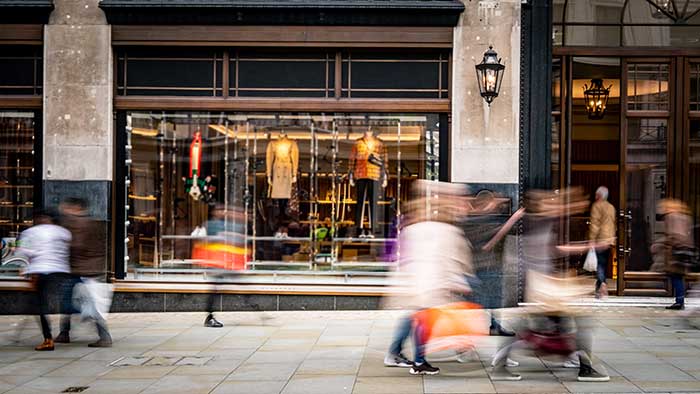
The US fashion and apparel sector, which saw unprecedented growth during the pandemic, is now going through a phase of moderation. The third quarter of 2024 reflects a complex picture of robust sales overshadowed by slow growth compared to the past year. The industry stands at a crossroads, balancing lingering post-pandemic effects with a cautiously optimistic holiday outlook.
A slowdown from pandemic peaks
The exceptional growth witnessed during the pandemic has given way to a more tempered pace. Major players like Inditex, the parent company of Zara, have reported mixed financial results. Inditex's holiday sales have increased by 9 per cent so far this year, a notable dip from the 14 per cent growth recorded in 2023. This shift underscores the broader challenges confronting the sector.
Currency fluctuation is a major issue. The weakening of currencies such as the Mexican peso and Brazilian real has eroded profits for global retailers like Inditex. And post-pandemic as consumer behavior stabilizes, the industry is finding it harder to sustain the pandemic-era demand growth. Add to it, the fashion landscape has become more fragmented, with the rise of niche brands and e-commerce platforms capturing consumer attention.
Holiday season optimism
Despite these hurdles, the outlook for the holiday season remains upbeat. Retailers are pulling out all the stops to attract shoppers, from aggressive promotional campaigns to leveraging technology for personalized marketing. The National Retail Federation projects a robust holiday shopping period, though economic uncertainties, such as inflation and higher interest rates, could temper consumer spending.
Key industry trends are shaping the strategic moves of leading retailers.
Omnichannel integration: As consumers demand flexibility, retailers are blending online and offline experiences to create seamless shopping journeys. Innovations like click-and-collect services and in-store digital kiosks are gaining traction.
Sustainability focus: Ethical and eco-friendly fashion is no longer a niche demand. Brands are investing in circular economy practices, such as recycled fabrics and resale platforms, to meet consumer expectations.
Data-driven personalization: Advanced analytics tools are enabling retailers to provide tailored recommendations, boosting customer satisfaction and loyalty.
Experiential retail: Physical stores are being reimagined as hubs of engagement, offering interactive experiences, workshops, and pop-up events to draw customers into brick-and-mortar locations.
Therefore, as the holiday shopping season unfolds, the US fashion and apparel sector will face a litmus test. While retailers are innovating to capture demand, the interplay of macroeconomic factors and evolving consumer preferences will be pivotal.
Inditex’s performance is emblematic of the broader challenges and opportunities within the industry. Despite headwinds, its focus on digital transformation, sustainability, and market adaptability positions it well for long-term success. For now, the sector’s resilience hinges on its ability to anticipate and adapt to the shifts in consumer sentiment, technological advancements, and global economic conditions. The final quarter of the year will likely provide clearer signals of the trajectory for 2025 and beyond.
Bangladesh rejects claims of apparel brands shifting to India
The Chief Adviser’s press wing dismissed as ‘misleading’ a recent India.com report suggesting global clothing brands are prioritizing Indian manufacturers over Bangladeshi ones.
In a statement on its verified Facebook page, the CA press wing highlighted Bangladesh's robust export performance. November 2024 exports totaled $4.12 billion, marking a 15.63 per cent increase from the previous month. Apparel exports played a key role, contributing $3.06 billiona 16.25 per cent rise from October's $2.84 billion.
For the July-November 2024 period, total exports reached $16.11 billion, achieving a 12.34 per cent year-on-year growth compared to $14.34 billion in 2023.
The statement reaffirmed Bangladesh’s position as a competitive player in global manufacturing, emphasizing that the country continues to meet the rising demands of international clothing brands efficiently.
The press wing urged caution against unfounded reports that could misrepresent Bangladesh's growing economic resilience.
House of Chanel names Matthieu Blazy as new Creative Director
Filling one of the most prestigious roles in fashion after a six-month search, the House of Chanel has named Matthieu Blazy as its new Creative Director. To assume the position in 2025, Blazy will oversee luxury ready-to-wear, haute couture, and accessories, becoming only the third designer to succeed Coco Chanel since her passing in 1971.
Blazy joins Chanel following his tenure at Bottega Veneta, where he earned widespread acclaim for his innovative designs since joining the house in 2020. His appointment at Chanel is seen as a pivotal moment for the brand. His official title at the brand will be Artistic Director of Fashion Activities.
Having began his career in menswear, Blazy transitioned to women’s ready-to-wear in 2011. He joined the fashion group Maison Margiela to oversee its experimental ‘Artisanal’ couture collection. After the departure of Demna Gvasalia from Margiela in 2012, Blazy took over both the main and couture lines, gaining recognition for his avant-garde designs. Notably, his creations caught the eye of rapper Kanye West, who commissioned Blazy to design his wardrobe for the ‘Yeezus Tour.’
In 2014, Blazy moved to Celine as a Senior Designer under Phoebe Philo, contributing to the house’s critically acclaimed collections. Two years later, he joined Raf Simons and Pieter Mulier at Calvin Klein in New York, forming a dynamic creative team that stayed together for three years.
After Calvin Klein, Blazy collaborated with artist Sterling Ruby on a fashion collection presented at the Pitti Uomo trade fair in Florence. He returned to Europe soon after and joined Bottega Veneta, where his innovative work solidified his reputation as one of the most talented designers in the industry.
India- Indore garment makers target 15% growth next year
Garment manufacturers in Indore aim to grow by 15 per cent in the coming year as benefitting from political instability in Bangladesh, they have been witnessing a rise in orders from both domestic and international markets. However, the city's current infrastructure cannot fully accommodate this increased demand, caution industry leaders
Rahul Mehta, Chief Mentor, Clothing Manufacturers Association of India (CMAI), points out, while the Bangladesh crisis has led to the shifting of some garment orders to India, the local industry’s production capacity remains limited. The garment industry in Bangladesh currently house 2,000 machines while the Indian garment industry houses around 500 machines, adds.
Despite these limitations, Indian fabric mills and garment manufacturers have benefitted from the disruption in Bangladesh Supply Chain, affirms Akhilesh Rathi, Joint President, Federation of MP Chamber of Commerce and Industries. Despite current poltical challenges, both these countries will continue to engage in substantial trade, he adds.
To boost the export market in Indore, Readymade Textile Dealers Association has signed an MoU with CMAI to focus on skill enhancement and improving quality output for both domestic and international markets.
RMG sector reduces dependency on buying houses amid growth
The dependency of Bangladesh’s readymade garment (RMG) sector on buying houses has significantly declined over the last decade, thanks to advancements in product development, marketing strategies, and direct buyer communications, according to a Bangladesh Institute of Development Studies (BIDS) report.
The study reveals that exports through buying houses dropped to 38 per cent in 2023 from 51 per cent in 2014, while direct exports rose to 52 per cent from 38 per cent during the same period. Conducted on 43 firms producing eight key RMG products, the study highlights the sector's enhanced technical capabilities and productivity.
The total export value of these surveyed firms increased from $645 million in 2014 to $1.03 billion in 2023. Additionally, the average number of buyers per firm grew from 11 to 17 over the decade. Investments in research and development, certifications, and the adoption of advanced technology have driven this transformation.
Abdullah HilRakib, former vice-president of the BGMEA, attributed the decline in buying house reliance to factories establishing overseas offices and brands setting up local offices in Dhaka. However, smaller buyers without local offices still rely on intermediaries.
Meanwhile, KaziIftekhar Hossain, a former leader of the Bangladesh Garment Buying House Association, claimed buying houses remain integral, contributing $8 billion annually. He emphasized that smaller factories still depend on buying houses for basic support, including design and quality assurance services.
Industry stakeholders advocate expansion of PLI scheme to the entire T&A sector
Stakeholders in the textile and garments sector are advocating for the expansion of the Production Linked Incentive (PLI) scheme to the entire sector in the upcoming Union Budget 2025. Currently, limited to synthetic fiber, the scheme is likely to incentivise investments, foster joint ventures between foreign companies and local production units and enhance competition while creating job opportunities. In recent weeks, numerous proposals were submitted to the government for consideration.
Highlighting the challenges faced by exporters in securing bank loans to fulfill order requirements, Rajiv Bansal, National Vice-President, Indian Industries Association (IIA), emphasised on the need to reinstate the recently concluded interest subvention scheme, which provides relief on loan interest rates until September 30. Bansal called for an extension of the scheme for a longer duration and reduction in interest rate to 5 per cent.
He also urged for a revival of the Technology Upgradation Fund Scheme, which was instrumental in subsidising new equipment purchases in earlier administrations but has since been discontinued. Reinstating this program could significantly aid technological advancements in the sector, he said.
Lalit Thukral, Chairman, Noida Apparel Export Cluster, hailed the government’s support for local businesses through incentives tied to increased production and sales. The government is actively reviewing proposals to enhance the sector’s growth and global competitiveness, he noted.
The implementation of these measures could provide a much-needed boost to the garments and textile industry, enabling it to thrive and contribute significantly to the nation’s economy, he stated.
Marni launches pop-store at Selfridges in London
Italian luxury fashion house, Marni has launched a pop-up store at Selfridges in London. Located on the department store’s first-floor atrium, the pop-up launched with the label’s SS25 Vol. 1 collection offering an idiosyncratic take on wardrobe classics’
The SS25 Vol. 1 collection offers tailored pieces featuring florals, checks and strips. These garment pieces reflect the store’s eclectic spirit as it offers a vibrant glossary of colors, shapes and textures. It assortment includes high-end and premium menswear collection.
To mark the pop-up’s launch November 11, 2024, Marni hosted mending workshops offering brands a unique opportunity to personalise garments and accessories, including a special leather charm developed exclusively for the occasion. The pop-up will run until February 2, 2025.
Kering and Bottega Veneta announce Louise Trotter as New Creative Director
Kering and BottegaVeneta are pleased to announce the appointment of Louise Trotter as the new Creative Director of the House, effective January 2025. Known for her meticulous craftsmanship and ability to draw inspiration from real life, Trotter joins BottegaVeneta following her tenure as Creative Director of Carven.
Trotter’s appointment marks the beginning of an exciting new chapter for the brand. CEO Leo Rongone praised her aesthetic, stating: “Louise seamlessly combines exquisite design with sublime craft, and her cultural advocacy aligns beautifully with our vision. Her sophisticated perspective will honor Bottega Veneta’s heritage while ensuring its modern relevance.”
Francesca Bellettini, Kering’s Deputy CEO for Brand Development, added: “Louise’s fresh perspective and wealth of experience make her the perfect creative talent to carry forward the bold creativity and excellence that define BottegaVeneta. We are deeply grateful to Matthieu Blazy for his visionary contributions over the past three years.”
Trotter said: “I am honored to join BottegaVeneta. Its storied legacy of artistry and innovation inspires me, and I am excited to shape its future while celebrating its timeless vision.”
This appointment signals a bold step forward for BottegaVeneta as it continues to redefine modern luxury while staying rooted in its storied heritage.
Pitti Immagine announces partnership with Japan Fashion Week Organization
Pitti Immagine has announced a new partnership with the Japan Fashion Week Organization (JFW) to enhance promotional efforts for PittiUomo, aimed at strengthening its presence in the Japanese fashion scene. This collaboration focuses on increasing exposure for Italian menswear and lifestyle brands in Japan while showcasing Japanese fashion innovations globally.
Raffaello Napoleone, CEO of Pitti Immagine, emphasized the importance of Japan's fashion system to Italian fashion, noting its central role in the Pitti fairs. He highlighted the need for increased engagement, particularly in the face of recent global economic and political challenges. The partnership aims to promote coordinated actions targeting Japanese manufacturers, specialty stores, department stores, young designers, and emerging brands.
Hiroshi Komoda, Executive Director of JFW, expressed his enthusiasm about the partnership, reflecting on the successful collaborations between the two organizations over the years. Since 2012, PittiImmagine Uomo has introduced over 50 Japanese brands to the European market, including names like Versus Tokyo, sulvam, and BED jw FORD. Komoda believes the new partnership will foster greater collaboration, benefiting both Italian and Japanese fashion industries by increasing visibility among buyers, exhibitors, and media.
The collaboration kicks off with a Pitti press tour in Asia, marking the beginning of an exciting new chapter for both fashion ecosystems.
Source Fashion 2025: Keynote speakers to drive sustainability agenda
Source Fashion, Europe’s leading responsible sourcing show, is set to inspire the fashion industry with a powerful lineup of keynote speakers at its upcoming event in London. From February 18th to 20th, industry visionaries will delve into critical themes shaping the future of fashion.
On February 19th, a full day of thought-provoking sessions will be headlined by All Saints Founder Stuart Trevor, award-winning social entrepreneur Safia Minney MBE, and Andrew Xeni, Founder of Nobody’s Child.
Key sessions at Source Fashion will explore critical themes shaping the future of fashion. Andrew Xeni will discuss how brands can enhance transparency in supply chain practices and empower consumers.
Stuart Trevor will showcase his company's innovative approach to circular fashion, transforming pre-owned clothes into desirable pieces.
Safia Minney will delve into strategies for adopting circular and regenerative models, scaling these practices, and fostering collaborative supply chain solutions.
Additional sessions will feature speakers from John Lewis, Vivo Footwear, PepsiCo, and WRAP, with a full program announcement forthcoming. Source Fashion 2025 promises to be a pivotal platform for shaping a more sustainable fashion future.
More...
Hugo Boss sets up ‘Eightyards’ to recycle excess production materials
German fashion group Hugo Boss has set up an independent company called ‘Eightyards’ to recycle and reuse Hugo Boss's excess production materials. The concept underpinning the group’s new project is strategically aligned with the brand’s broader commitment. Based in Metzingen, Germany, the brand aims to make its production process as environmentally and resource-friendly as possible.
To commence operations in January 2025, Eightyards is led by Marketa Miltenberger, and Placido Klitzke, Joint Directors. The company aims to establish itself as a major facilitator for the recycling and reuse of excess production materials, also in sectors other than fashion.
Owner of the brands, Boss and Hugo, the Hugo Boss group commercialises its brands’ collections in 131 countries via approximately 7,800 multi-brand retailers, and operates e-shops in 73 countries. The group has approximately 19,000 employees worldwide, and generated revenues of €4.2 billion in fiscal 2023.
For the current fiscal year, Hugo Boss has lowered its revenue forecasts to between €4.20 billion and €4.35 billion, in the face of weakening global demand, particularly in China and the UK. In Q3, the company’s sales at constant exchange rates increased to €1.029 billion from €1.027 billion in the same period last year, and well above the market expectation of €1.023 billion. In 2025, the group aims to generate revenues worth €5 billion in 2025.
Good Fashion Fund invests in India’s KKP Fine Linen for sustainable manufacturing
The Good Fashion Fund, in collaboration with the Laudes Foundation and Fashion for Good, has invested $2 million in KKP Fine Linen Private Limited (KKPFL), a leading Indian manufacturer of bed linen and made-up products. The investment will help KKPFL install a state-of-the-art Effluent Treatment Plant (ETP) at its new wet processing unit in State Industries Promotion Corporation of Tamil Nadu (SIPCOT), Perundurai, Tamil Nadu. This plant, featuring a Zero Liquid Discharge (ZLD) system, will play a crucial role in improving the company’s environmental sustainability.
The new wet processing unit, with a capacity of 100,000 meters of fabric per day, aims to reduce chemical consumption, freshwater usage, and material waste while complying with stringent local pollution control standards. KKPFL’s commitment to sustainability is further highlighted by its 100 per cent renewable energy sourcing, with a significant portion (40 MW) coming from its own solar and wind power plants.
The investment will also contribute to the local community, with a focus on hiring workers from nearby areas. Gender and community development programs will be implemented alongside broader sustainability initiatives.
Sathesh Kumar Nallathambi, Managing Director of KKPFL, expressed excitement about the partnership, emphasizing that the funding supports the company’s commitment to sustainable practices and its growth in the home textiles market.
Bob Assenberg, Fund Director of the Good Fashion Fund, added that the investment aims to accelerate sustainable manufacturing in India’s home textile sector. KKPFL’s proactive approach to sustainability positions it as a leader in the bedding and made-up products industry, marking a significant step forward in the company’s journey toward a more sustainable future.
ZDHC sets new standard for sustainable polyester recycling
ZDHC has announced the release of two transformative documents aimed at advancing sustainable chemical management in the polyester recycling process. The Recycled Polyester Guidelines V1.0 and the Industry Standard Implementation Approach V1.0 are designed to enhance transparency across the textile, leather, and footwear industries by providing a unified framework for responsible recycled polyester production.
These comprehensive guidelines focus on three critical areas: Input Management, Process Management, and Output Management. They provide clear guidance on sourcing and handling recycled materials, such as bottles and textiles, and managing production chemicals safely. The guidelines also address best practices for chemical recovery, storage, and handling to ensure worker safety. Moreover, they outline strategies for reducing environmental impacts by managing emissions from wastewater, sludge, and air pollutants during polyester production.
In addition to the guidelines, ZDHC has introduced an implementation approach, offering a detailed roadmap for industry adoption. This approach is aimed at aligning industry stakeholders with ZDHC’s vision of eliminating hazardous chemicals from textile production, advancing supply chain transparency, and promoting sustainable development.
“This initiative fills a critical gap in managing recycled polyester materials, setting a new standard for environmental stewardship and worker protection,” said Liping Chai, Marketing Director at ZDHC.
ZDHC encourages the global textile industry to adopt these guidelines to drive more sustainable and transparent practices throughout the supply chain.
ITMA ASIA + CITME Singapore 2025 exceeds expectations with 30% growth in applications
The ITMA ASIA + CITME Singapore 2025 exhibition has received unprecedented support, surpassing the expectations of its organizers with a 30 per cent increase in the number of applicants. The event, scheduled for 28–31 October 2025 at the Singapore Expo, has drawn over 770 exhibitors from 33 countries and regions, including international textile machinery manufacturers and new technology providers. Due to the overwhelming demand, organizers have expanded the exhibition space from 60,000 to 70,000 square meters.
Owned by CEMATEX (European Committee of Textile Machinery Manufacturers), China Textile Machinery Association (CTMA), and the Sub-Council of Textile Industry, CCPIT (CCPIT TEX), ITMA ASIA + CITME 2025 reflects the region's growing interest in cutting-edge textile technology. Alex Zucchi, president of CEMATEX, expressed gratitude for the industry's support, emphasizing the need to cater to emerging markets and help manufacturers remain competitive through technological advancements.
Gu Ping, president of CTMA, noted that digital technology is reshaping the textile industry, particularly in South Asia, Southeast Asia, and the Middle East. To meet the increasing demand, the Singapore event has been strategically placed between the ITMA ASIA + CITME 2024 and 2026 editions.
The exhibition will occupy seven halls at the Singapore Expo, with exhibits grouped into 19 product sectors spanning the entire textile and garment manufacturing process. The largest sectors, based on space bookings, include finishing, followed by spinning and knitting.
ITMA ASIA + CITME, Singapore 2025, branded as ‘The Leading Textile Technology Exhibition Driving Regional Growth,’ promises to be a pivotal event, connecting manufacturers and buyers eager to leverage the latest innovations in textile technology. The exhibition is organized by ITMA Services, with co-organization by Beijing Textile Machinery International Exhibition Company and special partnership with the Japan Textile Machinery Association (JTMA).