EU accelerates Mercosur trade implementation as industry gains targeted for 2026
The European Commission’s decision to move into the provisional application phase of the EU–Mercosur Interim Trade Agreement (iTA) marks a significant shift in European trade policy, effectively bypassing decades of deadlock. Following recent ratifications by Argentina and Uruguay in February 2026, the European Union is now leveraging this ‘interim"’legal structure to activate trade measures as early as March 2026. This tactical deployment allows Brussels to begin dismantling high tariffs - currently as high as 35 per cent on industrial exports - while a broader Partnership Agreement remains under review by the Court of Justice of the European Union.
Economic stakes and the high cost of onaction
European business coalitions, including major representatives from the automotive, chemical, and textile sectors, have highlighted the severe financial penalties of further delay. Conservative estimates suggest, stalled negotiations have cost European exporters approximately €3 billion in monthly trade volume since 2021, culminating in a nearly €291 billion loss in potential GDP. By contrast, full operationalization is projected to trigger a nearly 40 per cent spike in EU exports to the region. In a global trade environment increasingly defined by protectionism, this agreement serves as a vital hedge, granting European firms a first-mover advantage in a market of 270 million consumers before competing global powers further entrench their positions.
Strategic resilience in a fragmented global Market
Beyond immediate tariff reductions, the agreement is being reframed as a critical pillar of Europe’s economic security. Access to South America’s vast reserves of critical raw materials- such as lithium and niobium - is essential for the EU’s green and digital transitions. By securing rules-based access to these inputs, the EU aims to diversify its supply chains away from high-risk dependencies. The agreement also establishes binding standards on sustainability and labor rights, effectively exporting European regulatory norms to one of the world's largest trading blocs. For industries like textiles, where European design currently faces 35% import duties, the removal of barriers represents a transformative opportunity for market expansion and high-value brand placement.
Operationalization and the path to full ratification
While the provisional application provides a much-needed bridge for commerce, European industry leaders are calling for rapid ‘practical delivery.’ This includes the timely synchronization of customs procedures and the removal of non-tariff barriers that have historically complicated transatlantic trade. Although five EU member states, including France and Austria, have voiced continued opposition due to agricultural concerns, the separation of the trade components into an ‘Interim Agreement’ allows for immediate economic relief. The priority now shifts to ensuring that the technical implementation of the deal - particularly regarding tariff-free quotas and public procurement access - is managed transparently to prevent market disturbances while maintaining the current momentum toward full ratification.
Euratex represents the €170 billion European textile and clothing industry, a sector comprising 200,000 companies and 1.3 million workers. The organization advocates for fair trade and ambitious industrial policies to support high-value manufacturing. With €64 billion in annual exports, the industry views the Mercosur deal as critical for future competitiveness and sustainable supply chain resilience.
LVMH retains strategic Russian hospitality asset amid broader sector withdrawal
While the luxury landscape in Russia has been fundamentally reshaped by store closures and export bans, LVMH Moët Hennessy Louis Vuitton continues to maintain a significant operational foothold through its hospitality division. Despite the immediate cessation of its retail activities in 2022 - including the shuttering of 124 boutiques - the conglomerate has retained ownership of the historic Grand Hotel Europe in St Petersburg. This 19th-century landmark, managed under LVMH’s Belmond subsidiary, highlights a complex navigation of international sanctions, as it remains a primary hub for sanctioned corporate entities and local elites.
Operational independence as a regulatory buffer
LVMH has characterized the hotel’s continued operation as an autonomous endeavor, independent of the broader Belmond distribution system. This structural separation is a critical component of the group's compliance strategy, as accommodation and catering services generally fall outside the scope of existing luxury good export restrictions. However, recent financial filings and VAT records reveal, the property has secured substantial service contracts with state-affiliated organizations, including energy giants and sanctioned financial institutions. For LVMH, this represents a calculated effort to preserve localized human capital and long-standing city partnerships, while other Western hotel chains have opted for complete divestment.
Financial resilience and long-term market positioning
The St. Petersburg asset has demonstrated remarkable fiscal strength, with annual revenues reportedly doubling between 2022 and 2024 to reach approximately 1.9 billion rubles ($25 million). By posting a record net profit of $5.7 million in 2024, the property serves as a high-margin revenue stream that offsets the ‘market marginalization’ experienced by the group’s fashion and spirits divisions in the region. This retention strategy suggests that LVMH is prioritizing ‘brand continuity’ over immediate exit, positioning itself for a rapid re-entry into the Russian market should geopolitical conditions stabilize. Maintaining such a prestigious landmark ensures that the brand's cultural influence remains entrenched within Russia's wealthiest demographic.
LVMH is the world’s foremost luxury conglomerate, managing 75 prestigious houses across fashion, jewelry, and selective retailing. With 2025 revenues reaching €80.8 billion, the group focuses on high-growth markets in Asia and the U.S. while maintaining a 22 per cent operating margin. Originally a merger between Louis Vuitton and Moët Hennessy in 1987, the company is now expanding its experiential hospitality footprint to drive long-term desirability.
Adidas bets on generational synergy to strengthen Superstar’s market dominance
In an era where sneaker cycles are increasingly dictated by fleeting social media trends, Adidas Originals is doubling down on its most enduring asset. The German sportswear giant has unveiled its Spring 2026 strategy for the Superstar, repositioning the 1969 basketball-prodigy-turned-streetwear-staple not merely as a heritage product, but as a cross-cultural bridge. By centering its latest campaign around a surrealist ‘Hotel Superstar’ narrative, the brand is attempting to synthesize the various subcultures - from skateboarding and basketball to high fashion and global pop - that have claimed the shell-toe silhouette over the last five decades. This move signals a strategic pivot toward ‘timelessness’ as a luxury attribute, shielding the brand from the volatility of the fast-fashion market.
A cinematic shift in cultural storytelling
Helmed by filmmaker Thibaut Grevet and narrated by Samuel L Jackson, the brand’s latest creative direction, moves away from traditional product-centric advertising in favor of a metaphorical exploration of influence. The narrative follows Jackson through a non-linear hotel setting, a deliberate aesthetic choice meant to mirror the shoe's own immunity to the passage of time. By casting a multi-generational ensemble - including football sensation Lamine Yamal, fashion fixture Kendall Jenner, and music icons like Jennie and Baby Keem - Adidas is effectively mapping the Superstar’s relevance across disparate demographics. This ‘all-star’ approach functions as a hedge, ensuring the silhouette remains top-of-mind for Gen Z consumers while retaining its prestige among the older cohorts who first popularized the shoe in the 1980s.
Strategic diversification of the Superstar identity
Beyond the visual spectacle, the Spring 2026 rollout marks a significant expansion of the Superstar’s material footprint, particularly within the brand's apparel division. Adidas is moving aggressively into contemporary tailoring and ‘lifestyle’ textiles, signaling an intent to compete more directly with premium streetwear labels. The introduction of denim shorts and faux-leather track tops suggests a move away from purely athletic silhouettes toward a ‘sport-luxe’ hybrid. Specifically, the brand’s increased focus on denim - highlighted through its partnership with skateboarding legend Tyshawn Jones - reflects a broader corporate strategy to capture a larger share of the everyday casual wear market, moving the Superstar franchise beyond the confines of the sneaker shelf and into a full-wardrobe lifestyle brand.
Integrating innovation with heritage DNA
While the core design of the Superstar remains faithful to its original silhouette, the Spring 2026 collection introduces subtle technical and aesthetic shifts designed to keep the product competitive in a saturated market. The color palette focuses on a high-contrast black and white foundation, invigorated by ‘Equipment Blocking’ red accents - a nod to the brand’s technical archives. For the women's line, the inclusion of crochet and structured faux leather indicates a willingness to experiment with textures that blur the lines between high-fashion runway trends and traditional sportswear. According to Annie Barrett, Vice President-Marketing, Adidas Originals, the goal is to prove that the shoe’s design remains a viable canvas for modern expression without losing the ‘DNA’that made it a global icon. Global activation and market positioning
The global rollout of the Spring 2026 campaign is set to be one of the brand's most integrated efforts to date, featuring a combination of digital content and immersive physical activations. This multi-platform approach highlights Adidas's recognition that in 2026, brand loyalty is built through experiential marketing as much as product quality. By weaving the Superstar’s history into a narrative of modern creativity and individuality, Adidas is attempting to secure the shoe's position as a permanent fixture in the global cultural lexicon. The strategy is clear: rather than chasing the next big trend, Adidas is betting that the most profitable path forward lies in reinforcing the ‘originality’ of its most famous icon.
India and China contend for dominance in Australia’s $2.1 billion home textile market
Australia’s home textile import sector reached a valuation of $2.14 billion in 2025, maintaining a consistent growth trajectory despite global inflationary pressures. While China remains the primary supplier, accounting for approximately 58 per cent of the market share, India is rapidly narrowing the gap following the full implementation of the Economic Cooperation and Trade Agreement (ECTA).
In CY25, Indian exports of bed linen and floor coverings to Australia increased by 14.2 per cent, capitalizing on zero-duty access that provides a significant competitive edge over non-FTA partners. This regional realignment is compelling Australian procurement officers to diversify their supply chains, with a measurable shift toward high-thread-count cotton and sustainable hemp-based textiles, which saw a 22 per cent increase in import volume.
Sustainability and premiumization driving import value
The technical composition of Australian textile imports is evolving as ‘green’ regulatory requirements become more stringent. Importers are increasingly prioritizing verified recycled content and traceable fibers, a trend that has benefited specialized manufacturers in Pakistan and Vietnam. Data from the 2025 trade cycle indicates that while unit volumes remained relatively flat, the total value of imports rose by 3.4 per cent due to a broader industry move toward premiumization.
Industry analysts at the Sydney Textile Forum noted, the demand for antimicrobial and temperature-regulating fabrics is no longer a niche segment but a baseline requirement for major hospitality and residential contracts. As Australian retailers navigate a 0.8 per cent rise in logistics costs, the focus has shifted toward high-margin, durable goods that justify the increased expense of trans-Pacific freight.
Australia relies on imports for over 90 per cent of its home textile needs, with a primary focus on bed, bath, and kitchen linens. The sector is currently transitioning toward a circular economy model, with growth plans centered on 100 per cent recyclable fiber mandates by 2030. Financial performance remains stable, supported by a resilient housing and renovation market.
Tariff volatility stalls Bangladesh apparel orders amid global trade realignment
The Bangladesh ready-made garment (RMG) sector is facing a critical freeze in procurement as rapid shifts in United States tariff policy create a ‘wait-and-watch’ environment for major fashion retailers. Since early 2025, Bangladeshi apparel has undergone four separate duty revisions, moving from a 37 per cent reciprocal surcharge to a recently negotiated 19 per cent rate under a bilateral Agreement on Reciprocal Trade (ART). However, the implementation of a 15 per cent universal levy in late February 2026 - following a Supreme Court ruling that disrupted previous executive orders - has left the effective duty on Bangladeshi goods at approximately 31.5 per cent. This instability has triggered a slowdown in bookings for the Fall/Winter 2026 season, with industry leaders reporting that buyers are deferring commitments until duty clarity emerges.
Strategic pivot toward US-linked raw materials
A pivotal clause in the February 9, 2026, trade pact offers a potential lifeline: zero-duty access for specified volumes of garments manufactured using US-origin cotton and man-made fibers. This ‘reciprocal’ mechanism is designed to deepen supply chain integration between Washington and Dhaka but poses significant operational challenges. Bangladesh currently imports only a small fraction of its $16 billion textile input requirement from the US, relying heavily on regional suppliers like India and China. Shifting these procurement channels to qualify for duty exemptions requires a massive realignment of logistics and yarn-forward compliance. The industry is at a crossroads where the cost of raw material transition must be weighed against the benefit of market access, noted Mahbubur Rahman, Commerce Secretary.
The RMG sector is the cornerstone of Bangladesh's economy, contributing roughly 10 per cemt of GDP and accounting for over 80 per cent of total export earnings. Employing four million workers, primarily women, the industry is transitioning from basic mass-market apparel to high-value technical garments and premium knitwear. Despite 2026 trade headwinds, the sector aims for a 5 per cent annual growth rate through 2028, supported by the new PM MITRA-style industrial parks and a strategic focus on ESG-compliant manufacturing to maintain its position as the world's second-largest apparel exporter.
Bharat Tex 2026: Redefining the Indian textile value chain
Scheduled to return to the iconic Bharat Mandapam in New Delhi from July 14–17, 2026, global textile extravangza, Bharat Tex 2026 positions India as the primary nexus of the global value chain, spanning everything from raw fibers and yarns to finished apparel, technical textiles, and artisanal handlooms. The 2026 edition arrives with unprecedented momentum, expecting over 5,500 exhibitors and 7,000 international buyers from more than 130 countries. With a projected turnout exceeding 130,000 visitors, the platform serves as a vital gateway for investors and brands seeking deep market entry into a sector that is a cornerstone of the Indian economy.
Navigating new trade corridors
The timing of Bharat Tex 2026 is strategically aligned with a transformative era in Indian trade policy. Following the operationalization of landmark Free Trade Agreements (FTAs) with the United Kingdom and the European Union in early 2026, alongside strengthened trade ties with the United States, India has secured zero-duty or preferential access to a combined import market worth hundreds of billions of dollars. These ‘Free Trade Corridors’ are effectively reshaping global sourcing patterns, offering international retailers a highly cost-competitive, reliable, and duty-efficient alternative to traditional manufacturing hubs. For global sourcing agencies, the event provides a definitive roadmap to capitalize on these strengthened bilateral ties and India's emerging role as a strategic production partner.
Scalable sustainability and innovation
Beyond trade volumes, Bharat Tex 2026 is a laboratory for Industry 5.0 and circularity. The event’s dedicated Sustainability and Recycling Pavilions shift the narrative from theoretical concepts to commercially viable solutions. Highlighting ‘waste-to-value’ innovations, regenerative raw materials, and traceable supply chains, the fair demonstrates how India is aligning its massive manufacturing scale with global ESG (Environmental, Social, and Governance) imperatives. This focus on ‘Scalable Sustainability’ ensures that large-scale supply chains can remain competitive while meeting the rigorous environmental regulations of Western markets.
Where strategy meets execution
The fair functions as a high-level dialogue platform, bridging the gap between policy intent and industry implementation. The Global Textile Dialogue will feature CXO roundtables, technical panels, and policy discussions aimed at achieving India’s ambitious Vision 2030 goal of $100 billion in textile exports. By integrating the Prime Minister’s 5F Vision -Farm to Fiber, Fabric, Fashion, and Foreign - Bharat Tex 2026 offers a holistic view of an ecosystem that is increasingly future-ready, resilient, and digitally integrated.
India is the world's third-largest textile exporter, supported by a vertically integrated value chain and a workforce of 45 million. The Union Budget 2026–27 has further accelerated growth through the National Fibre Scheme and PM MITRA mega-parks. Historically a leader in cotton, India is now aggressively expanding into man-made fibers and technical textiles to secure a dominant global market share by 2030.
Gildan Activewear expands operations as net sales rise by 31.3% in Q4, FY25
Gildan Activewear Inc. has effectively doubled its industrial scale, with net sales rising by 31.3 per cent to $1.08 billion in Q4, FY25. This surge was primarily catalyzed by the first full month of operations following its $4.4 billion acquisition of HanesBrands Inc., finalized on December 1, 2025. By absorbing the ‘Hanes’ and ‘Bonds’ portfolios, Gildan has transitioned from a wholesale printwear specialist into a retail powerhouse, now projecting 2026 revenues between $6.0 billion and $6.2 billion. This trajectory is supported by a 10 per cent dividend hike and an upgraded synergy target, with management now expecting $250 million in annual cost savings- up from an initial $200 million estimate - by 2028.
Manufacturing synergy and portfolio realignment
To optimize its expanded footprint, Gildan has initiated a formal sale process for HanesBrands’ Australian business, aiming to utilize divestment proceeds to deleverage its balance sheet. The group is concurrently doubling down on its low-cost, vertically integrated model, with plans to break ground on a second major textile facility in Bangladesh by late 2026. This infrastructure investment is designed to support a 5 per cent CAGR in net sales through 2028. Despite a GAAP profit dip to $56.1 million due to one-time transaction costs, adjusted earnings of $0.96 per share outperformed analyst expectations. By joining forces with HanesBrands, we have achieved a scale that distinctly sets us apart in the global basic apparel market, stated Glenn Chamandy, CEO, signaling a robust outlook for the combined entity’s market share.
Founded in 1984 and headquartered in Montreal, Gildan is a leading manufacturer of basic apparel, including activewear, underwear, and socks. Following the 2025 HanesBrands acquisition, the company operates a diverse brand portfolio including Hanes, American Apparel, and Comfort Colors, targeting a $6.2 billion revenue milestone in 2026.
Urban Outfitters Inc registers record $6.2 billion revenue as subscription model expands
Urban Outfitters Inc (URBN) closed FY26 fiscal year with a record-setting $6.17 billion in net sales, an 11.1 per cent increase that underscores the success of its multi-brand diversification strategy. While its traditional retail banners showed steady momentum, the standout performer was Nuuly, the group’s apparel subscription service. Nuuly’s annual revenue increased by 50.2 per cent to $568 million, surpassing internal targets and officially transitioning from a high-growth startup to a core contributor representing 10 per cent of total group turnover. This shift toward a circular fashion economy has proven a critical buffer against the promotional volatility currently impacting the broader apparel sector, as average active subscribers jumped 45 per cent Y-o-Y.
Operational discipline and sourcing resilience
Despite a 12.8 per cent increase in inventory levels and persistent tariff headwinds, URBN achieved a 126-basis-point expansion in its full-year gross profit margin, which reached a record $2.22 billion. This profitability was engineered through a rigorous ‘regular price’ selling strategy and a reduction in markdown activity, particularly within the Anthropologie and Free People banners. The company is actively mitigating trade pressures - estimated at a 75-basis-point drag- by reconfiguring its sourcing geography and optimizing transportation logistics. Management’s capital allocation remains aggressive, with $270 million earmarked for 2026 to fund 69 new store openings, including a fleet of ‘Gen Z-friendly’ format stores designed to recapture younger demographics through immersive, modular retail environments.
Headquartered in Philadelphia and founded in 1970, URBN operates a lifestyle portfolio including Urban Outfitters, Anthropologie, Free People, and Nuuly. With a 2026 net income of $464.9 million, the group is focused on 5.9 per cent annual earnings growth and achieving a 60 per cent responsibly sourced material target by 2027.
Puma targets a strategic reset as Anta Sports becomes anchor shareholder
German sportswear giant Puma SE has officially designated 2026 as a ‘transition year,’ forecasting an operating loss (EBIT) between €50 million and €150 million as it executes a massive operational restructuring. Under Arthur Hoeld, CEO, the brand is navigating the second phase of its ‘Reset’ plan, aimed at purging excess inventory and exiting ‘undesirable’ wholesale channels that have historically eroded brand equity. This strategy resulted in a reported 13.1 per cent revenue decline to €7.3 billion in 2025, primarily driven by aggressive product ‘take-backs’ from North American mass merchants and a deliberate reduction in promotional activity. Despite the projected deficit, management has earmarked €200 million in capital expenditures to fortify direct-to-consumer (DTC) infrastructure and digital capabilities.
Consolidation and the Anta partnership
The company's turnaround efforts are being boosted by a significant shift in its ownership structure. China’s Anta Sports recently acquired a 29.1 per cent stake for €1.5 billion, effectively replacing the Pinault family’s Artemis as the largest shareholder. While Puma maintains its independent governance as a German-listed entity, the partnership provides a strategic buffer against geopolitical trade volatility and enhances its footprint in the critical Greater China market.
The restructuring also includes a global workforce reduction of approximately 1,400 corporate roles and a pivot toward higher-margin licensing models for core North American categories. By streamlining operations and sharpening its focus on ‘DNA categories’ like football and running, Puma aims to stabilize its margins by late 2026, setting the stage for a return to profitable, above-industry growth in 2027.
Founded in 1948 in Herzogenaurach, Puma is a global leader in performance footwear and lifestyle apparel, with a presence in over 120 countries. Its current "Vision 2028" strategy focuses on reclaiming a top-three global market position by leveraging its deep roots in football, motorsports, and high-performance running technology.
Nonwoven industry faces scrutiny over PET spunbond import discrepancies
The European nonwoven sector is entering a period of heightened regulatory tension as Edana, the international industry association, flags a significant mismatch between observed market volumes and official customs data. Market intelligence suggests, imports of specific PET spunbond and staple fiber products ranged between 15,000 and 30,000 metric tons annually over the last two years. However, official records under the designated CN codes 5603 14 20 and 5603 94 20 show volumes substantially below these estimates. This statistical gap suggests a widespread pattern of misclassification, often attributed to importers using outdated codes out of habit or failing to adapt to the Combined Nomenclature updates introduced in 2024.
Regulatory enforcement and anti-dumping implications
The push for accurate classification is increasingly urgent as certain polyester products from China remain under an active EU anti-dumping investigation. Since December 2025, imports of non-woven needle-punched polyester sheets- specifically those weighing over 70 g/sq m with binder impregnation - have been subject to mandatory registration. Jacques Prigneaux, Edana emphasizes, accurate reporting is not merely a statistical requirement but a legal safeguard for the domestic industry. Misclassification can obscure the true impact of dumped goods on the European market, prompting Edana to request enhanced import checks from the European Commission and national customs authorities across EU member states.
Legal risks and commercial compliance
For importers, the consequences of continued reporting errors are transitioning from administrative oversight to severe legal liability. Customs authorities are increasingly applying additional duties, administrative fines, and criminal penalties for inaccurate filings. This is particularly critical for goods under preferential trade regimes or those subject to special regulatory control. The association is currently conducting an outreach initiative to ensure supply chains and customs agents are updated on the specific TARIC and CN codes required for compliance. Failure to align internal databases with current EU rules could result in unforeseen financial burdens and disrupted logistics for firms operating within the European synthetic cluster.
Established in 1971, Edana serves as the global voice for the nonwovens industry, representing over 260 member companies across the value chain. The association focuses on technical standardization, regulatory advocacy, and sustainability within the hygiene, medical, and industrial textile sectors. Historically a key partner to the World Customs Organisation, Edana’s current growth plan involves intensifying market monitoring and supporting responsible product stewardship amidst evolving global trade dynamics and technical challenges.
More...
Anta Sports disrupts North American retail with Beverly Hills flagship launch
China’s premier athletic giant, Anta Sports has altered its global trajectory by inaugurating its first North American flagship in Beverly Hills on February 13, 2026. This 3,000-sq-ft ‘brand hub’ signals a decisive transition from distributor-led exports to a high-margin direct-to-consumer (DTC) model. By bypassing traditional wholesalers, Anta aims to directly manage its narrative in the world's most competitive sportswear market. The move is strategically timed with the 2026 NBA All-Star Weekend, leveraging a newly signed lifetime partnership with NBA star Klay Thompson to anchor its presence alongside industry incumbents like Nike and Adidas.
Global multi-brand synergy
The expansion follows a robust fiscal 2025 performance, where the group reported record interim revenue of RMB 38.54 billion, a 14.3 per cent Y-o-Y increase. Anta's aggressive globalization is further fortified by its recent €1.5 billion acquisition of a 29 per cent stake in Puma, creating a powerful multi-brand ecosystem that includes Amer Sports (Arc’teryx, Salomon) and Fila. This flagship is a window into Chinese innovation, states Samuel Tsui, CEO, Anta Brand. Despite navigating potential geopolitical trade sensitivities and high SG&A investments, the brand is capitalizing on a 60 per cent sales growth in its outdoor and niche categories. By integrating community-centric programming like run clubs and athlete-led workshops, Anta is positioning itself as a cultural lifestyle destination rather than a mere hardware retailer.
Founded in 1991, Anta is the world's third-largest sportswear company by revenue, operating over 12,000 stores in China. Specializing in high-performance basketball, running, and technical apparel, the group targets dominant global market share by 2030, supported by an annual R&D investment exceeding RMB 1 billion and a 2026 revenue target nearing $10 billion.
When the US closed its doors, China conquered Europe’s fashion market
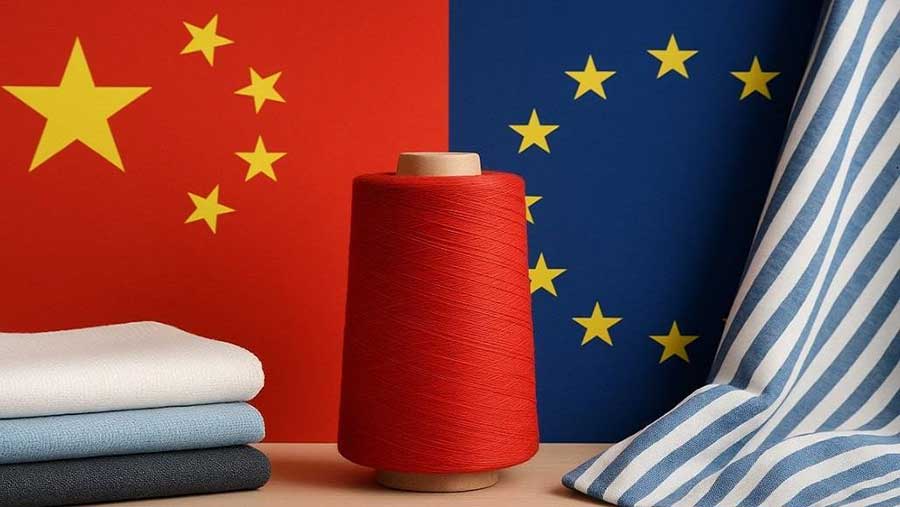
By 2025, the EU overtook the US as the largest destination for China’s low-value e-commerce exports, highlighting a decisive rerouting of digital fashion flows. For Shein to Temu, the shift showcased more than a mere geographical reallocation, it marked a recalibration in the face of growing trade barriers and a changing global appetite for low-cost fashion.
The great re-routing
The catalyst for this change was Washington’s aggressive trade policy. In early 2025, the US intensified regulatory scrutiny around the de minimis threshold, formally codified under Section 321. This provision had previously allowed packages valued under $800 to enter the US duty-free, offering Chinese exporters a substantial advantage in the high-volume, low-value fashion segment. By August, the suspension of duty-free treatment for these parcels fundamentally altered the economics of international fashion trade, forcing a reevaluation of global sourcing and distribution strategies.
The immediate impact on US imports was swift and measurable. Chinese exporters faced new duties ranging from 15 to 50 per cent on small parcels, directly squeezing margins on items historically priced for impulse purchases. Consumer-facing platforms, in turn, raised prices by 10-30 per cent in April 2025 to offset the rising operational costs. For Shein, the impact were tangible: its US market share declined for the first time since 2021, falling from 1.8 per cent in 2024 to 1.7 per cent in 2025, while total sales value dropped 4.5 per cent.
Europe steps into the spotlight
As the American market grew increasingly inhospitable, Chinese fast-fashion giants executed a digital shift toward Europe. Advertising spend rose, with French campaigns up 45 per cent and the UK seeing a 100 per cent increase in digital media allocations. The results were pronounced: Shein recorded double-digit growth in retail sales across the EU, with France growing 26.7 per cent, Germany 31 per cent, and Spain 26.6 per cent.
Hungary and Denmark emerged as unexpected growth engines, recording user engagement jumps of up to 400 per cent, highlighting the potency of a digitally savvy, smaller-market European segment. Platforms responded strategically, with AliExpress leading at 190 million users and Shein following closely with 145.7 million monthly users. In contrast, the US market stagnated, with Temu and Shein collectively capturing just 17 per cent of the discount fashion market amid declining parcel volumes.
Table: Market dynamics: EU vs. US (2025)
|
Metric |
EU |
US |
|
Status |
Largest market for low-value e-commerce |
Declining volume due to trade barriers |
|
User Growth |
Shein: 145.7M monthly users (+11.6%) |
Shein: Sales value decline of 4.5% |
|
Top Growth Hubs |
Hungary & Denmark (400% jump) |
12.6% decline in low-value exports |
|
Platform Lead |
AliExpress (190M users), Shein (145.7M) |
Temu & Shein (17% of discount market) |
|
Consumer Spend |
UK: €2.3B revenue (+32% YoY) |
$238B online fashion spend (stagnant) |
The manufacturer’s perspective: From Panyu to Paris
Bob Liu, a footwear manufacturer based in Fujian province, embodies the industrial dimension of this pivot. Liu’s factory historically relied on the US for 80 per cent of its total orders, producing small parcels tailored to American sizing and style. By early 2026, the US share of his revenue had dropped to less than half, while Europe now accounts for nearly 40 per cent of his output. Europe is increasing, increasing, increasing, Liu told The Wall Street Journal.
Factories in Panyu and other Chinese fast-fashion villages have responded by realigning production lines to European sizing and tastes, developing what Liu describes as ‘Euro-chic’ designs. These adaptations are more than cosmetic; they represent a full-scale operational pivot, including sourcing materials locally where possible and optimizing logistics for regional fulfillment.
EU customs reform a coming impediment
The European boom, however, faces a new inflection point. On July 1, 2026, the EU Council will implement a landmark customs reform, aiming to level the playing field and curb the environmental and economic impact of millions of small parcels. The changes are straightforward but consequential:
• The longstanding €150 threshold for low-value consignments will be abolished.
• A flat €3 duty will apply to small parcels (under €150) sold by non-EU sellers registered under the Import One-Stop Shop (IOSS).
• The duty will be applied per item category. A parcel containing a shirt and a pair of shoes, for example, will attract a total €6 charge.
This reform has prompted platforms to rethink logistics. Temu and Shein are reportedly relocating 20-50 per cent of their inventory to domestic European warehouses, ensuring rapid delivery while mitigating the per-package duty impact. Localized fulfillment, once a luxury, is now a strategic imperative.
Lessons for India
While Europe and the US battle over Chinese imports, Indian manufacturers are closely monitoring these developments. India continues to be a critical sourcing hub for global apparel, yet there is growing concern about dumping, as goods displaced from the US market seek new outlets in Europe. The comparative advantage of Indian textile production vertical integration from cotton to garment, positions the industry to capture demand if Chinese imports face barriers, but challenges remain, including energy costs and logistics constraints.
Table: Comparative labor & trade dynamics
|
Feature |
India |
Bangladesh |
Vietnam |
China (fast fashion) |
|
Primary Advantage |
Vertical integration (Cotton to Garment) |
LDC Duty-Free access to EU |
High efficiency, FTAs (CPTPP) |
Speed-to-market, AI-supply chains |
|
Labor Cost |
Moderate |
Very Low |
Moderate |
Rising |
|
Key Challenge |
High power costs & logistics |
Political stability & energy |
Sourcing raw materials |
US Trade Barriers/Tariffs |
Preparing for volatility
As 2026 unfolds, the fashion industry faces a time of reckoning. According to McKinsey’s State of Fashion 2026, growth in fast fashion will remain in low single digits, with profit margins increasingly tied to supply chain agility. Companies that can pivot production between regions in response to policy shifts, environmental considerations, or consumer trends will outperform those wedded to a single market or distribution channel. For Shein, Temu, and the broader digital fashion ecosystem, the lesson is clear: survival is no longer about volume alone; it is about speed, adaptability, and strategic localization.
In coming years, Europe is no longer just a market, it is the lab for the next era of fast fashion. The winners will be those who combine digital reach with nimble, regionally attuned supply chains, while the losers risk repeating the American market’s costly missteps.
On Running leverages robotic nearshoring to hedge against trade volatility
The high-performance footwear market is witnessing a tectonic shift as On Running operationalizes its state-of-the-art robotic assembly facility in Busan, South Korea. This move represents a strategic departure from traditional labor-intensive Asian manufacturing hubs. By deploying proprietary robotic units, the brand aims to drastically shorten lead times, which typically span several months in the conventional footwear supply chain.
The Busan facility serves as a blueprint for planned regional hubs in North America and Europe, allowing the company to move production closer to its primary consumption centers. This ‘nearshoring’ strategy is designed to mitigate the high freight costs and port congestion that have historically hampered the inventory turnover of premium sportswear brands.
Navigating tariffs and supply chain resilience
In an era defined by escalating trade protectionism and geopolitical instability, the transition to automated localized manufacturing offers a critical buffer. With the US government maintaining a hardline stance on footwear tariffs, On Running’s decentralized model provides a structural advantage over competitors reliant on centralized Southeast Asian production.
Industry analysts estimate, localized robotic production could reduce shipping-related carbon emissions by up to 30 per cent, aligning the brand with tightening ESG mandates in the European Union. Our investment in automation is a direct response to the need for speed and localized resilience, noted a company spokesperson. By utilizing localized ‘Speedfactories,’ the brand can react to consumer trends in real-time, effectively reducing the risk of overstocking and seasonal markdowns that often erode margins in the retail sector.
Strategic footprint and market trajectory
Founded in Zurich in 2010, On Running specializes in premium performance footwear and apparel featuring its signature CloudTec technology. The company primarily targets the North American and European markets, where it has seen triple-digit growth in its direct-to-consumer channel. With a 2026 revenue target exceeding $3.5 billion, On continues to expand its retail footprint through flagship stores in major global cities while maintaining a robust presence in specialty running outlets.
Fashion’s DTC hangover, why 2026 belongs to the hybrid retail model

By 2026, the global fashion and apparel industry has arrived at a reckoning it spent the last decade trying to postpone. After years of evangelising Direct-to-Consumer (DTC) as a silver bullet, promising higher margins, tighter customer relationships and digital independence the sector has discovered the limits of absolutism. What has emerged instead is a far more pragmatic operating model: a high-stakes hybrid balance where DTC and wholesale are no longer competing philosophies but interdependent levers.
This shift marks the most consequential reordering of fashion retail since the rise of e-commerce itself. The question facing brands today is no longer whether to go direct or stay wholesale-heavy. It is how to orchestrate both channels into a single, intelligent commercial system—one that can withstand rising customer acquisition costs, volatile demand cycles and AI-driven consumer expectations.
The end of the ‘Middleman Myth’
The early DTC movement was fuelled by a simple narrative: eliminate intermediaries and reclaim margin control. In practice, the story has proven far more complex. While US DTC e-commerce sales are projected to reach $239.75 billion in 2026, accounting for nearly one-fifth of total e-commerce, this growth no longer signals channel dominance. Instead, it reflects a recalibration where DTC is being repositioned as a precision tool rather than a volume engine. Brands that have survived the DTC boom-and-bust cycle now treat their owned platforms as strategic infrastructure less about replacing wholesale, more about strengthening the entire ecosystem around it.
Why brands still go direct but selectively
The enduring appeal of DTC lies not in revenue scale but in informational power. In 2026, the most competitive brands are those using their digital storefronts as data intelligence hubs. At the centre of this strategy is zero-party data: information that consumers willingly provide in exchange for value. AI-powered style diagnostics, fit visualisation tools and virtual try-ons have transformed data capture from passive tracking into active collaboration. Unlike wholesale environments, where brands often receive delayed or aggregated sell-through data, DTC channels provide real-time insight into intent, preference and price sensitivity.
Margin resilience is another critical factor. With wholesale discounts still averaging close to 50 per cent, DTC has become a buffer against rising input costs from raw materials to logistics and compliance. Brands are no longer using DTC to undercut partners; they are using it to protect pricing architecture while funding innovation.
Perhaps the most transformative development is the rise of agentic commerce. AI-native shopping journeys already deployed by platforms such as Zalando and brands like Michael Kors now dynamically adjust product recommendations, pricing logic and merchandising flows in real time. These systems have been shown to lift average order values by as much as 26 per cent, underscoring DTC’s role as a laboratory for retail intelligence rather than a blunt sales channel.
The quiet revival of wholesale power
Even as DTC matured, wholesale never disappeared. It evolved. In 2026, wholesale has reasserted itself as fashion’s most effective discovery engine. Physical retail once written off as legacy infrastructure now plays a critical role in reducing friction, managing returns and driving brand legitimacy. For digitally native consumers fatigued by infinite scrolling, the physical shelf has regained its authority as a filter of trust.
Wholesale partnerships with retailers such as Target, Macy’s and Selfridges function as high-impact marketing platforms. In an era where digital advertising costs have surged and social algorithms have become unpredictable, these environments offer something increasingly rare: guaranteed visibility at scale.
Operationally, wholesale also remains indispensable. Bulk B2B shipments to regional hubs are structurally more efficient than managing millions of individual B2C deliveries. At a time when online apparel return rates still hover around 30 per cent, physical retail’s touch-and-feel advantage has become a material cost-control mechanism rather than a branding luxury.
Structural constraints that still haunt wholesale
Yet wholesale is not without friction. The model’s limitations are well documented and increasingly intolerable in a fast-cycle retail economy. Data opacity remains a fundamental challenge. Without direct access to the end consumer, brands struggle to retarget, personalise or accurately forecast demand. Price integrity is another pressure point. Retailers, managing their own margin and inventory risks, often resort to aggressive markdowns that can erode brand equity.
Most critically, the traditional wholesale calendar built around six- to nine-month buying cycles collides with the limited-drop, rapid-response culture that defines 2026 fashion. The result has been a forced evolution toward more flexible replenishment models, concession formats and shared-risk inventory agreements.
Table: By the numbers: how the balance is shifting
The scale of the rebalancing becomes clear when viewed longitudinally.
|
Year |
US DTC e-commerce sales (est. bn) |
% of total e-commerce |
Wholesale market share (global) |
|
2023 |
$135 bn |
14.20% |
65% |
|
2024 |
$161 bn |
16.50% |
61% |
|
2025 |
$187 bn |
18.10% |
59% |
|
2026 (Proj.) |
$239.75 bn |
19.20% |
57% |
This table highlights while DTC continues to grow in absolute terms, wholesale remains the dominant global channel by volume. The narrowing gap does not signal replacement it signals redistribution of function.
Nike, a case study in overcorrection
No brand better illustrates the dangers of DTC absolutism than Nike.
Between 2020 and 2024, Nike aggressively pruned its wholesale network, betting heavily on its owned digital ecosystem. While the strategy delivered short-term margin gains, it produced an unintended consequence: invisibility in multi-brand environments. Without standing side-by-side with challengers such as Hoka and On Running, Nike lost contextual relevance for casual and first-time buyers.
By late 2025, the company began a visible course correction. Nike re-entered Amazon and rebuilt relationships with partners including DSW and Macy’s. The results were immediate. In Q2 2026, Nike’s wholesale revenue rose 8 per cent, validating wholesale’s role as both a pressure valve for inventory and a gateway to consumer segments that brand-owned platforms alone could not efficiently reach. Nike’s experience has since become a cautionary tale across the industry: scale without distribution diversity is fragile.
Toward radical symbiosis
By 2026, the industry consensus is clear. The DTC-versus-wholesale debate is over. What has replaced it is a barbell strategy built on functional clarity. DTC is now used for deepening housing loyalty programmes, exclusive capsules, community engagement and high-margin experimentation. Wholesale, by contrast, is used for finding delivering mass awareness, physical validation and operational throughput.
Artificial intelligence is accelerating this convergence. As agentic shopping systems blur the distinction between online and offline discovery, the most resilient brands are those that can synchronise data-rich direct channels with the expansive reach of wholesale partners. In the new fashion economy, success no longer belongs to the most digital or the most distributed. It belongs to those capable of radical coordination brands that understand retail not as a channel war, but as a unified intelligence system spanning screens, shelves and supply chains.