Sircilla Textile Park workers go on a strike
Workers at the textile park in the Thangallapalli mandal, launched a strike on August 19, demanding higher wages. The protest began after repeated calls for a wage increase for both government and private garment workers were ignored by factory owners.
During a meeting of powerloom workers, led by Koochana Shankar, Union President participants unanimously voted to stop all work until the wage increase is implemented.
Following the meeting, the striking workers held a rally and staged a protest. Kodam Ramana, District President, CITU Powerloom Workers Union, restated the demand for an increase in labor wages and an additional Rs 1,000 per day for workers producing government garments.
The great retail shift in the US, private labels emerge as new brand leaders

Once a humble alternative for budget-conscious shoppers, private labels often called store brands have stealthily evolved into a commanding force in the American retail market. The days when they were dismissed as lower-quality knock-offs are gone. Today, private labels are a shopper’s savvy choice, winning over consumers with competitive pricing, elevated quality, and the ability to respond nimbly to shifting trends. This quiet but powerful change is being due to evolving consumer habits, economic pressures, and the foresight of retailers who have reimagined what their in-house brands can be.
From budget shelf to prime spot
In 2024, the US private label market was valued at $271 billion, which is a 3.9 per cent growth from previous year, well ahead of the 1 per cent growth recorded by national brands. On a global scale, the story is even bigger. The market stood at $915.1 billion in 2024 and is projected to touch $1.623 trillion by 2034, with 5.9 per cent CAGR over the decade.
Table: Global private label market
|
Metric |
Details |
|
US Market Size in 2024 |
$271 billion |
|
Sales Growth in 2024 |
+3.9% (vs. 1% for national brands) |
|
Global Market Size in 2024 |
$915.1 billion |
|
Projected Global Market in 2034 |
$1,623.4 billion |
|
CAGR (2025-34) |
5.90% |
In fact, the fashion and apparel sector is a major contributor to overall private label segment. For long, this was a difficult category for private labels to penetrate, but that's changing rapidly.
Trends and perspectives
Premiumization and brand building: Retailers are investing heavily in creating private label apparel that is not only affordable but also stylish and high-quality. Brands like Target's Cat & Jack for kids and Dillard's Kinesis athleisure line are examples of this trend, offering customers unique products that rival national brands.
Focus on sustainability and ethics: The private label apparel industry is increasingly catering to consumer demand for sustainable and ethically sourced clothing. Manufacturers are using organic cotton and recycled fabrics, and retailers are highlighting their commitment to transparent supply chains, which resonates strongly with modern consumers.
E-commerce and DTC: The rise of e-commerce has made it easier for retailers and even small startups to launch their own private label apparel lines. This model allows for greater flexibility, lower minimum order quantities, and a faster response to emerging fashion trends, giving private labels a significant competitive advantage over traditional brands with slower production cycles.
Retailers leading the charge
The success of private labels is often tied to the retailers that champion them. These brands are no longer just products on a shelf; they are a core part of the retailer's identity.
• Trader Joe's: This grocer has built its entire reputation on a curated selection of unique, high-quality private label products. From gourmet snacks to staples, Trader Joe's has cultivated an exceptionally loyal customer base who trusts the brand's quality and is often unaware they are even purchasing a private label product.
• Costco's Kirkland Signature: A testament to the power of a trusted private label, Kirkland Signature has become a brand in its own right. It offers members a wide range of bulk goods—from groceries to clothing—that are perceived as offering superior value and quality to many national brands.
Table: Top 10 US private label brands: consumer perception at a glance
|
Rank |
Brand |
Parent retailer |
Strengths |
Consumer perception |
|
1 |
Kirkland Signature |
Costco |
Broad product range, bulk value, and high quality control. |
"High quality at unbeatable prices," "trustworthy," and "a wise choice." |
|
2 |
Trader Joe’s |
Trader Joe’s |
Unique, curated grocery products, fun branding, and limited selection. |
"Quirky, trustworthy, and gourmet," "unique," and "great value for specialty items." |
|
3 |
Cat & Jack |
Target |
Stylish, durable, and inclusive kidswear. |
"Affordable fashion for growing kids," and a "perfect blend of style, durability, and affordability." |
|
4 |
365 by Whole Foods Market |
Whole Foods/Amazon |
Organic and natural foods with high-quality standards. |
"Healthy living made affordable," and "affordably priced and thoughtfully sourced." |
|
5 |
Good & Gather |
Target |
Fresh and packaged foods with clean labels and elevated design. |
"Everyday quality for every budget," and "real ingredients, everyday ease, and feel-good food." |
|
6 |
Simple Truth |
Kroger |
Organic and "free-from" groceries, with a focus on healthy and clean ingredients. |
"Clean eating without the premium price," and "better-for-you products that are Free From unwanted ingredients." |
|
7 |
Great Value |
Walmart |
Extensive grocery basics, reliability, and extreme value. |
"Low prices without big compromises," and "great quality, great price." |
|
8 |
Up & Up |
Target |
Household essentials, personal care, and baby products. |
"Reliable everyday products," and "affordable without sacrificing aesthetics or quality." |
|
9 |
Amazon Basics |
Amazon |
Functional, low-cost electronics, accessories, and home goods. |
"Functional, low-cost solutions," and "budget-friendly, with many products costing half as much as their counterparts." |
|
10 |
Kinesis |
Dillard’s |
Athleisure and activewear, with department store styling. |
"Department store style, private label price," and "a trusted choice for affordable activewear." |
Why private labels are gaining ground
The success of private labels is no accident it’s a reflection of retailers’ ability to listen to consumers and innovate quickly. Unlike national brands that must appeal to broad markets, private labels can be tightly tailored to the needs, tastes, and values of a retailer’s customer base.
With inflation influencing shopping habits, consumers are also more willing to experiment. When they discover that a store’s own brand can match or even surpass the quality of their usual pick, loyalty shifts. And once trust is built, it often extends across categories, from pantry staples to premium fashion.
Moving from being ‘alternative’ to ‘first choice’
Private labels’ growth suggests they will no longer be a quiet presence in the background. Instead, they’re becoming the very backbone of modern retail strategy defining store identity, enhancing customer loyalty, and reshaping the competitive landscape. What began as a cost-saving measure is now an engine of growth, creativity, and brand equity. For national brands, this is no longer a challenge they can ignore. For consumers, it’s a win: more choice, better value, and increasingly, products they can feel good about buying.
SBC signs export agreement with Huxxe Readymade Garments Trading
SBC Exports has signed an export agreement with the Dubai-based Huxxe Readymade Garments Trading LLC, Valued at Rs 17.56 crorre, the order involves supply of garments, including T-shirts, trousers, and shorts.
The order is scheduled to be completed within one year from the purchase order date of August 14, 2025. This deal is expected to start contributing to SBC Exports' revenue in the current financial year. The company anticipates that this partnership will support its projected 15–20 per cent annual growth in export turnover, increase profitability, diversify its market presence, and strengthen its position in the global apparel industry.
According to the contract, all payments will be made in US dollars within 90 days of HUXXE receiving the goods. The Dubai-based buyer will also cover the expenses for insurance and freight. The contract will be governed by the laws of the United Arab Emirates.
India, EAEU negotiate FTA with the signing of ToR in Moscow
India and the Eurasian Economic Union (EAEU) are negotiating a Free Trade Agreement (FTA), with officials signing the Terms of Reference (ToR) in Moscow.
Outlining the framework for the negotiations, the ToR was signed by Ajay Bhadoo, Additional Secretary, Department of Commerce, and Mikhail Cherekaev, Deputy Director, Trade Policy Department, Eurasian Economic Commission.
Both sides noted, trade between India and the EAEU – including Armenia, Belarus, Kazakhstan, the Kyrgyz Republic, and the Russian Federation – increased by 7 per cent to $69 billion in 2024.
With the EAEU having a combined GDP of $6.5 trillion, the proposed FTA is expected to boost India's exports by enhancing market access, helping businesses diversify into new sectors, and increasing competitiveness. The Ministry of Commerce & Industry stated, the agreement will particularly benefit Micro, Small and Medium Enterprises (MSMEs).
The signing of the ToR marks a crucial step toward unlocking new trade potential, increasing investment, and building a stronger, long-term economic partnership between India and the EAEU. Both parties have committed to concluding the agreement quickly.
UK clothing exports decline by 3.69% Y-o-Y in June 2024
UK clothing exports declined by 3.69 per cent Y-o-Y to $377 million in June 2024, as demand from Europe weakened, costs rose and competition from Asian markets intensified.
This recent data point underscores a sustained downward trend in UK clothing exports since 2021, reflecting the ongoing challenges posed by post-Brexit trade frictions. The quarterly data for Q2, FY24 shows a 6.7 per cent Y-o-Y decline in total clothing exports at $1.09 billion. This is part of a broader trend where total UK goods exports have been declining, with a significant 18 per cent contraction in non-EU exports in June 2024 compared to the previous year.
While clothing exports have struggled, other sectors of the textile industry, such as textile fabrics and fibers, have shown more stability. For example, textile fabric exports declined by 3.6 per cent in June but saw a monthly increase. Similarly, fiber exports also saw a marginal increase.
For the UK textile and apparel industry to rebound, a renewed focus on diversification and value-added strategies is crucial. This is particularly important as the sector grapples with a decline in exports and a shift in consumer behavior toward more mindful consumption.
Global World Cleanup Movement to focus on textile waste on World Cleanup Day
The Global World Cleanup Movement, with its Latvian representatives from the association ‘Pēdas LV’ and the ‘Liela Talka’ initiative will focus on textile waste and reuse for this year's World Cleanup Day on September 20.
According to World Cleanup data, the world generates approximately 92 million tons of textile waste annually. If this trend continues, that number is expected to jump to 134 million tons by 2030.
To combat excessive textile consumption and waste, discussions and masterclasses are being held to promote textile reuse, particularly within the fashion industry and for everyday use.
Starting in 2025, textile sorting will become a mandatory requirement at the EU level. Latvia began placing its first textile waste containers in 2019. Jānis Aizbalts, Chairman, Board of SIA ‘Eco Baltia vide,’ noted, ‘currently, only about a quarter of the population in Latvia sorts textiles.’ This means majority of people either keep unnecessary clothes in their closets or throw them in the trash. The organization aims to encourage everyone to start sorting their wardrobe and give excess clothing a second life. This is a chance to change their attitude towards their belongings, and every item that's responsibly sorted and placed in special containers is a step toward a cleaner environment and more mindful use of resources.
In addition to sorting textile waste, participants are encouraged to walk along local shorelines during the World Cleanup to collect any trash left behind. People can also plant their own ‘Tree of Happiness.’
Valentino names Riccardo Bellini as new CEO
In a strategic leadership change, Valentino has named Riccardo Bellini as its new chief executive officer. A seasoned professional in the luxury fashion sector, Bellini previously served as the managing director at Valentino’s parent company, Mayhoola.
Bellini will officially begin his new role at Valentino in September, stepping in for Jacopo Venturini. This appointment comes amid a broader series of executive shuffles within the fashion industry, largely influenced by market challenges in the US and China.
At Valentino, Bellini will work alongside Alessandro Michele, Creative Director who joined the fashion house last year.
Partially owned by the French luxury conglomerate Kering, Valentino, Kering is currently in a transformative phase as it navigates shifting global market conditions. Founded in 1960 by Valentino Garavani and Giancarlo Giammetti, the company has recently been in the spotlight due to its recent leadership and ownership transitions.
Michael Kors launches Fall 2025 campaign showcasing latest designs
Michael Kors has launched its Fall 2025 campaign showcasing the brand’s latest designs. Starring brand ambassadors Suki Waterhouse and Logan Lerman, the campaign has been photographed by Lachlan Bailey in Rome, Italy.
Designer Michael Kors expressed his admiration for the location, stating, Rome is a city that inspires awe. It's cinematic, dramatic, urban and has all this incredible natural beauty and history. He believes, the city's timeless elegance, combined with the ‘laid-back elegance of Suki Waterhouse and the classic movie star energy that Logan Lerman brings,’ makes for an ‘unforgettable campaign.’
Styled by Emmanuelle Alt, the campaign evokes a sense of a never-ending adventure and a ‘main character’ aesthetic. The featured collection includes statement outerwear, fringed accents, and new silhouettes of the label’s signature Nolita and Hamilton bags. The visuals were shot at iconic Roman locations, including the Piazza Navona, the Spanish Steps, and the Fountain of Acqua Paola.
For the campaign's short films, director Samuel Rixon captured vignettes of Waterhouse and Lerman's daily lives, set to a re-recorded version of Don Henley's ‘All She Wants to Do is Dance,’ performed exclusively by Waterhouse.
In related news, Michael Kors has also announced its Fall/Winter 2025 collection ad campaign, starring model Angelina Kendall. Photographed by Inez van Lamsweerde and Vinoodh Matadin and styled by Carlos Nazario, this campaign and collection are designed to represent "everyday opulence."
Meyer & Cie to showcase new circular knitting machine for jacquard fabrics at ITMA Asia 2025
Mayer & Cie will showcase its new circular knitting machine for jacquard fabrics, the Ovja 2.4 EC II alongwith its ‘Performance Line’ and advanced smart solutions at ITMA Asia 2025. The exhibition will be held from October 28-31, 2025, in Singapore.
Engineered in Germany and manufactured in China, the new OVJA 2.4 EC II is designed for customers in the dynamic markets of China and Southeast Asia. It features a new system for single-needle selection that reduces cylinder height and requires fewer knitting elements, resulting in a significant decrease in energy consumption. The machine is well-suited for producing fabrics for sportswear, leisurewear, and home textiles, such as mattress covers.
Mayer & Cie ‘s new ‘Performance Line,’ sets industry standards for productivity. This range includes D4 4.4 HPI, the world’s most productive circular knitting machine for interlock fabrics, capable of producing up to 600 kilograms per day. For double jersey structures, the OV 3.2 QCe can produce up to 650 kg of fine rib daily. The single jersey sector is represented by the Relanit 3.2 HS II and Relanit 4.0, which are known for their yarn-friendly, energy-efficient technology.
The company will also present its digital solutions, including the new Control 5.0 machine control system. This system makes circular knitting machines Internet-ready and is a prerequisite for Mayer & Cie.'s digital platform, knitlink. Another innovation on display is knithawk, an optical defect detection tool that uses infrared light to scan the fabric at the knitting point. If it detects a serious or recurring error, it automatically stops the machine, preventing wasted materials and energy.
Benjamin Mayer, Managing Partner, says, ITMA Asia is both an opportunity for customer loyalty and a door opener for new business relationships for Meyer & Cie. This year, the company celebrated its 120th anniversary, a testament to its long-standing commitment to precision and reliability in the industry.
Heritage Global Partners to conduct online auction for Caastle Inc
A subsidiary of Heritage Global Inc and a global leader in asset advisory and auction services, Heritage Global Partners (HGP) has been appointed by the US Bankruptcy Court to conduct an online auction for the assets of Caastle, Inc, a former B2B clothing logistics company.
This extensive sale features commercial laundry systems, warehouse infrastructure, and a large inventory of premium branded clothing. It presents a unique chance for secondary market retailers, commercial laundry operators, third-party logistics providers, and apparel resellers to acquire valuable equipment and merchandise.
This auction offers a comprehensive collection of late-model commercial laundry systems and thousands of high-quality apparel units from top brands, says David Barkoff, Senior Vice President, Heritage Global Partners. This is a rare and ideal opportunity for buyers in fashion resale, logistics, and textile services who are looking for well-maintained, ready-to-deploy assets, he adds.
Heritage Global Partners is a leading auction, liquidation, and asset advisory firm that is a part of Heritage Global Inc.'s Industrial Assets business unit. HGP is prominent in numerous industrial sectors, including Aerospace, Automotive, Biotech, Electronics Manufacturing, Energy, Food & Beverage, and more. Globally, HGP conducts between 150 and 200 auction projects annually.
Heritage Global specializes in valuing and monetizing industrial and financial assets by offering acquisition, disposition, valuation, and lending services for surplus and distressed assets. This work supports the circular economy by preventing useful industrial assets from ending up in landfills and ensures an ethical supply chain by overseeing post-sale activities for financial assets.
More...
Guess partners Authentic Brands Group to go private in a $1.4 billion deal
Guess has partnered with Authentic Brands Group to go private in a deal that values the apparel company at approximately $1.4 billion. As part of the transaction, Authentic will acquire a 51 per cent stake in ‘substantially all’ of Guess' intellectual property (IP). A group of ‘rolling stockholders,’ including Maurice and Paul Marciano, Co-founders and Carlos Alberini, CEO will own the remaining 49 per cent of the IP. The current Guess management team will continue to run the business, holding 100 per cent ownership of the operating company.
Under the agreement, remaining Guess shareholders will receive $16.76 per share in cash. This is a higher valuation than the $13 per share non-binding offer made by WHP Global in March 2025.
As a powerhouse brand, Guess has defined style and culture for over 40 years, says Jamie Salter, Founder, Chairman, and CEO, Authentic Brands Group. The brand has tremendous respect for the Marcianos and their team and aims to build on this legacy in partnership with them as Guess enters its next chapter within our platform.
Authentic Brands Group has a vast portfolio of over 50 global brands, including major surf brands like Quiksilver, Billabong, and Volcom, which collectively generate around $32 billion in annual retail revenues.
Paul Marciano, Co-founder and Chief Creative Officer, notes, joining forces with Authentic which is the world’s second-largest licensor will enable the brand to build on this foundation and expand reach as a global lifestyle brand.
Currently, Guess operates nearly 1,100 stores in Europe, the Americas, and Asia, with an additional 527 stores run by partners and distributors worldwide.
According to Carlos Alberini, CEO operating as a private company will give Guess enhanced flexibility to navigate today’s complex operating environment and execute on a more targeted, long-term strategy, enabling us to even better serve customers around the world.
Amer Sports’ Technical Apparel unit sales rise 25% in Q3, FY25
Sales of Amer Sports Inc’s Technical Apparel Unit, rose by 25 per cent in Q3, FY25. Owner of the outerwear brand Arc’teryx, the company has been witnessing declining growth and is projected to fall further.
Sales from existing locations or revenue generated from owned retail stores and e-commerce sites open at least 13 months increased by 15 per cent as against the 19 per cent expectations by the Wall Street.
Despite this, the Finnish sporting goods conglomerate remains upbeat about the future and raised its full-year outlook for a second time this year. The company projects revenue will grow by 21 per cent as against 15 per cent to 17 per cent as per a prior forecast,
The company expects full-year earnings to reaching $0.77 to $0.82 per share, up from $0.67 to $0.72 last predicted, and more than the $0.75 analysts polled by Bloomberg had expected. The guidance assumes higher tariffs than previously expected.
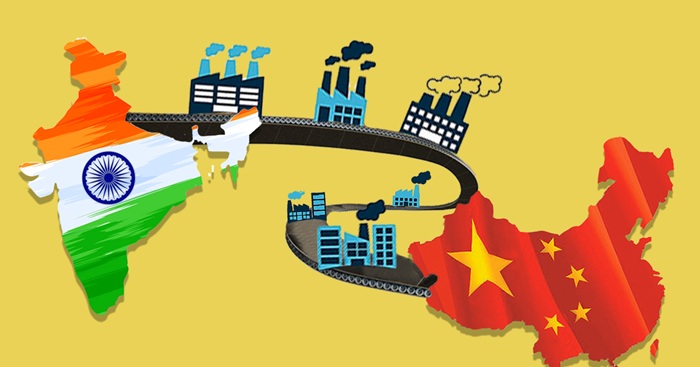
Indian textile sector braces for increased Chinese imports amid diplomatic thaw

Following high-level diplomatic engagements between Indian External Affairs Minister S. Jaishankar and Chinese Foreign Minister Wang Yi, a new chapter appears to be opening in the India-China trade relationship. While a basic summary of the meeting points to a renewed focus on dialogue to ease border tensions, the most concrete outcome on the trade front has been China's decision to lift export restrictions on key commodities, including rare earth magnets and fertilizers.
This strategic shift is being closely watched by India's textile and apparel sector, where analysis indicates that while there may be some benefits, the most likely outcome is a further increase in imports from China, particularly of raw materials and machinery.
The Economic Reality: Increased imports are likely
The fundamental reason for this lies in the sheer scale and efficiency of China's textile industry, which far surpasses India's. This dominance creates a trade dynamic where India relies heavily on China for crucial inputs, a reliance that is only set to deepen with the lifting of export curbs.
Key imports from China for Indian textiles
|
Category |
Old Scenario (Restrictions) |
New Scenario (Easing) |
Likely Impact on Imports |
|
Machinery Components |
Supply Chain Disruptions |
Smoother Access, Less Downtime |
Increased. Indian manufacturers will import more to upgrade technology and ensure production stability. |
|
DAP Fertilizers |
Price Volatility, Scarcity |
Improved Supply, Cost Stabilization |
Increased. Cheaper and more reliable access to fertilizers will boost cotton yields, but imports will likely rise to meet agricultural demand. |
|
Raw Materials (Yarn, Dyes) |
Volatile Supply, Higher Costs |
Potential for Stable Supply and Lower Costs |
Increased. Lower costs and stable supply will make Chinese inputs more attractive, further cementing reliance. |
|
Finished Goods |
Competition and Trade Barriers |
Potential for Eased Access, Cheaper Goods |
Increased. China's scale advantage means it can flood the Indian market with cheaper finished products. |
This dynamic is already reflected in the significant trade deficit that India maintains with China in the textile and apparel sector.
|
Category |
India Imports from China (USD Billion) |
India Exports to China (USD Billion) |
|
Textiles & Articles |
3.5 |
0.8 |
|
Raw Materials (Yarn) |
1.2 |
0.1 |
|
Garments & Accessories |
0.8 |
0.3 |
|
Total |
5.5 |
1.2 |
Source: Ministry of Commerce and Industry, Government of India (latest available data, FY 2022-23)
The bilateral trade reality and the case for caution
While the new developments could help Indian textile manufacturers become more price-competitive in the global market, particularly in Western countries that are seeking to diversify their supply chains, the direct bilateral trade with China remains a significant challenge. Analysts argue that with its colossal production capacity, China is in a prime position to increase its exports of cheaper finished goods to India. This could exacerbate the existing trade surplus and pose a direct threat to India's domestic manufacturing base.
Tirupur and Surat industries’ heavy import dependence on China
The knitwear cluster in Tirupur and the synthetic textile industry in Surat both rely heavily on raw material imports from China. The recent developments could indeed stabilize their supply chains for inputs like yarns and dyes. However, this same opening exposes them to fierce competition from cheaper Chinese finished goods. This underscores a crucial point: the lifting of restrictions benefits India's ability to produce competitively for global markets but does not inherently provide an advantage for exporting finished goods directly to the Chinese market. Instead, it makes the Indian market a more attractive destination for China's products.
Diplomatic thaw, a double-edged sword for India's textile sector
The recent diplomatic thaw and the lifting of China's export restrictions, while seemingly beneficial, are a double-edged sword for India's textile sector. The likely outcome is a deeper reliance on Chinese raw materials and machinery, leading to an increase in imports. This, coupled with China's superior scale, could allow it to further dominate the Indian market with cheaper finished goods. While the developments offer an opportunity for India to strengthen its domestic production for global export, the challenge of a significant trade imbalance with China remains a complex and critical issue that requires strategic long-term planning.
The stretch revolution, spandex redefining fabric weight and cost

The addition of spandex yarn in the textile industry has changed the sector in many ways. While traditional metrics like yarn count (NE) and GSM (grams per square meter) have long dictated fabric quality and feel, the inclusion of spandex is adding a new layer of complexity, impacting not just a fabric's stretch but also its weight, cost, and design possibilities.
Understanding the yarn count and GSM
At its core, fabric quality is defined by two fundamental metrics:
Yarn Count (Ne): This number indicates the fineness of the yarn. A higher count (e.g., 60s, 80s) signifies a finer, more lightweight yarn, ideal for soft, breathable fabrics. Conversely, a lower count (e.g., 20s, 30s) indicates a coarser, heavier yarn used for more durable and structured materials.
Fabric GSM (grams per square meter): This metric measures the fabric's weight and density. It's a crucial indicator of a garment's intended use.
• Lightweight (100–150 GSM): Perfect for summer shirts, linings, and innerwear.
• Medium-weight (150–250 GSM): The standard for everyday T-shirts, dresses, and casual wear.
• Heavy-weight (250+ GSM): Reserved for durable items like hoodies, sweatshirts, and towels.
Adding weight and complexity
Spandex, also known as Lycra or elastane, is a synthetic fiber renowned for its exceptional elasticity. When blended with natural fibers like cotton, it provides stretch and recovery, making garments more comfortable and form-fitting. However, its impact extends beyond just elasticity; it directly influences a fabric's GSM and, consequently, its cost.
How spandex impacts GSM
Contrary to popular belief, adding spandex to a fabric blend, even in small percentages, typically increases the overall GSM. This is because spandex yarn, despite its fine appearance, is denser than most natural fibers like cotton or polyester. When a spandex filament is wrapped by or twisted with a cotton yarn, the combined yarn becomes slightly heavier. This results in a finished fabric that, for the same given yarn count, has a higher GSM than its 100 per cent cotton counterpart. For example, a 30s cotton single jersey might have a GSM of around 150-160, while a 30s cotton/5 per cent spandex blend could easily jump to 170-180 GSM.
The cost equation
The introduction of spandex also adds a layer of complexity to costing. While the primary cost is the spandex fiber itself, there are other factors at play. For example, raw material cost as spandex is a petroleum-based product and is significantly more expensive per kg than cotton or polyester. Even a small percentage can increase the raw material cost of the yarn. Moreover, special machinery and more delicate handling are often required during knitting and weaving to prevent the spandex from breaking or losing its elasticity. This can slow down production and increase operational costs.
Spandex also requires specific dyeing processes and chemical treatments to ensure the color consistency with the blended fibers. These specialized finishes can add to the overall cost. Fabrics with spandex are often marketed as "stretch" or "performance" fabrics, allowing brands to command a higher price point. This allows them to pass on the added costs to consumers who are willing to pay for the comfort and durability benefits.
GSM and cost comparison
The following hypothetical data table illustrates the impact of a simple 5 per cent spandex blend on a common single jersey fabric.
|
Fabric composition |
Yarn count (Ne) |
Typical GSM range |
Estimated cost per kg (raw fabric) |
|
100% Cotton |
30s |
150-160 |
$4.00 - $4.50 |
|
95% Cotton / 5% Spandex |
30s |
170-180 |
$5.50 - $6.00 |
|
100% Cotton |
40s |
120-130 |
$4.50 - $5.00 |
|
95% Cotton / 5% Spandex |
40s |
140-150 |
$6.00 - $6.50 |
|
Note: Costs are illustrative and subject to market fluctuations. |
As seen in the table, the 5 per cent spandex blend not only increases the fabric's GSM but also adds a substantial premium, making the fabric approximately 25-30 per cent more expensive at the raw material stage.
The bottom line for designers and consumers
The "spandex effect" is a critical consideration for designers and manufacturers. While it offers a pathway to creating more comfortable and functional apparel, it requires careful planning to balance the desired hand feel and performance with the increased weight and cost. For consumers, the price tag on a spandex-blended garment reflects not just the stretch but also the specialized processes and premium materials that went into its creation. The takeaway is clear: the modern textile landscape is no longer a simple calculation of yarn count and weight; it's an intricate dance of fibers, function, and finance, with spandex leading the way.