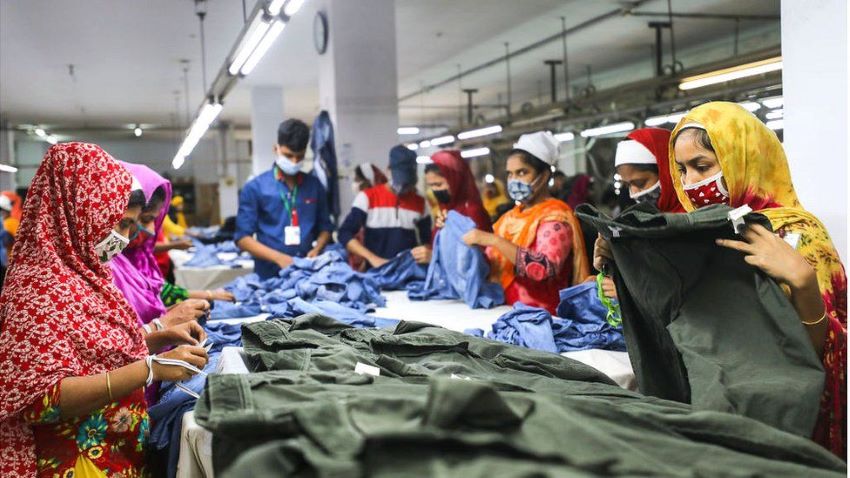
The Ministry of Textiles has officially countered a recent CNN International report that characterized Panipat as a dumping ground for Western fast fashion. In a detailed rebuttal released on May 14, 2026, the government asserted that India’s textile recycling ecosystem is a sophisticated Rs 22,000 crore ($2.29 billion) economy driven predominantly by domestic needs, not foreign waste. Contrary to claims of environmental negligence, a 2026 Ministry study, Mapping of Textile Waste Value Chain in India, reveals, 90 per cent of processed waste originates locally, with imports accounting for a mere 7 per cent. This data underscores a robust internal circularity where nearly 97 per cent of pre-consumer industrial scrap is recovered and reintegrated into the supply chain.
Scientific validation and the shift toward formalization
Addressing allegations of pollution and health risks, the Ministry cited a Life Cycle Assessment by IIT Delhi, which confirmed that recycling activities in clusters like Panipat reduce greenhouse gas emissions and fossil fuel depletion by 30–40 per cent compared to virgin fiber production. While the government acknowledged friction points - such as the management of blended synthetics and safety protocols in informal units - it highlighted the transition toward formalization via the Atal Centre of Textile Recycling and Sustainability. Isolated instances of non-compliance should not overshadow a sector providing vital resource efficiency and livelihoods, the Ministry stated. This defense marks a strategic effort to protect India’s reputation as a global sustainability partner in the evolving retail landscape.
India’s textile recovery network
The Ministry of Textiles oversees India's $150 billion+ textile industry, focusing on production, exports, and circularity. Key hubs like Panipat and Tiruppur lead in fiber recovery and upcycling. Future growth centers on the National Technical Textiles Mission, targeting high-value recycling to boost global competitiveness and environmental compliance.