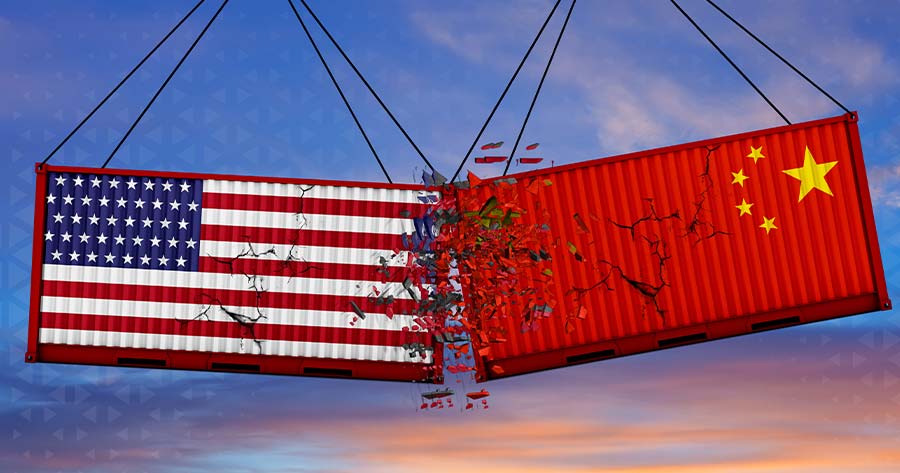
Sri Lanka’s apparel sector commenced 2026 with a controlled contraction, as January export revenues settled at US$ 425.44 million. While the 2.66 per cent Y-o-Y decline reflects broader global economic cooling, the industry is increasingly focused on the structural advantages provided by shifting trade policies. Despite a 2.73 per cent dip in shipments to the United States, the implementation of a uniform 10 per cent temporary US tariff on February 24 has replaced more volatile country-specific duties, offering Sri Lankan manufacturers a critical window of pricing certainty that competitors under higher tariff brackets currently lack.
Capitalizing on the DCTS and UK market stability
The United Kingdom has emerged as a rare pillar of stability, recording a 0.23 per cent increase to reach US$ 61.71 million. Industry analysts attribute this resilience to the revised Developing Countries Trading Scheme (DCTS), which became fully operational on January 1, 2026. This framework provides Sri Lankan exporters with enhanced sourcing flexibility, particularly regarding fabric origin rules, allowing for more competitive landed costs. Manufacturers are now utilizing this regulatory tailwind to position the island as a specialized alternative to mass-market hubs, focusing on high-value categories like intimate apparel and performance activewear where the UK’s ‘affordable luxury’ segment remains robust.
Resilience through structural efficiency and innovation
Facing a 1.93 per cent decline in European Union volumes, the Joint Apparel Association Forum (JAAF) is accelerating a transition toward high-tech vertical integration. To offset rising domestic operational costs, firms are adopting automated cutting and digital prototyping, aiming to reduce lead times by 15 per cent. The moderate January decline is a signal for deeper market diversification beyond our traditional anchors, noted a senior trade consultant. By leveraging the newfound tariff clarity in the US and the duty-free advantages in the UK, Sri Lanka aims to bolster its reputation as a high-compliance, low-risk sourcing partner in an increasingly fragmented global supply chain.
Sri Lanka’s apparel industry is the nation's primary industrial export, specializing in high-end intimate wear, activewear, and sustainable textiles. Targeting US$ 8 billion in annual revenue by 2028, the sector focuses on ethical manufacturing and global trade compliance. Historically a pioneer in ‘Garments without Guilt,’ it now leads in green manufacturing technology.