For decades, India’s apparel industry’s growth revolved around densely packed urban clusters such as Bengaluru, Tiruppur, Noida and Gurugram, where supply chains, export houses and labour pools created economies of scale. In 2026, however, the commercial centre of gravity is beginning to shift toward rural districts in Odisha, Bihar and Madhya Pradesh as global manufacturers and domestic brands collectively commit more than Rs 2,000 crore to new production ecosystems.
The shift is not merely geographical. It is a strategic rethinking of labour economics, infrastructure development and sustainability-led manufacturing. Companies are increasingly abandoning the high-cost, high-attrition urban model in favour of rural districts where labour availability remains deep, operating costs are lower and state governments are aggressively competing to attract industrial capital.
The clearest signal of this transition came on April 29, 2026, when Hong Kong-based Epic Group inaugurated its Rs 850 crore Trimetro Manufacturing Campus in Khurda, Odisha. Spread across 40 acres and backed by IFC debt financing, the facility is designed to produce 20 million garments annually, positioning Odisha as a serious player in global apparel exports.
The Odisha expansion is part of a broader rural industrialisation wave. Page Industries, which operates the Jockey India business, has simultaneously expanded its eastern India footprint through a Rs 750 crore high-tech manufacturing facility in Cuttack. Meanwhile, Bihar’s industrial ambitions received a substantial push through Savi Global, which committed Rs 300 crore to a new unit in Madhubani’s Pandaul industrial area.
Together, these investments exemplify how manufacturers are reworking production strategies around labour accessibility rather than proximity to urban consumption centres. The logic is increasingly straightforward: instead of transporting millions of workers from rural India into southern manufacturing belts, companies are now transporting factories closer to the workforce itself.
Rural NEET population a catalyst
At the centre of this change is India’s large rural NEET population, young people who are not in education, employment or training. For labour-intensive industries such as apparel manufacturing, this demographic represents both an opportunity and a challenge. Manufacturers are assessing districts through a trade-off matrix that balances workforce size against educational readiness and labour participation rates.
Table: Trade off matrix in manufacturing centres
|
District level |
Khurda (Odisha) |
Madhubani (Bihar) |
Morena (MP) |
|
Youth Population 15–29 |
7.5–8.0 Lakh |
12–13 Lakh |
5.5–6.0 Lakh |
|
Female Literacy Rate |
76.28% |
46.16% |
55–58% |
|
Est. Female NEET Persons |
1.2–1.4 Lakh |
3.5–4.5 Lakh |
1.5–1.85 Lakh |
|
Female Labor Participation |
48% |
30.10% |
51.90% |
|
Secondary Dropout Rate |
27.30% |
26% |
>15% |
The data reveals why different companies are selecting different regions depending on their operational models.
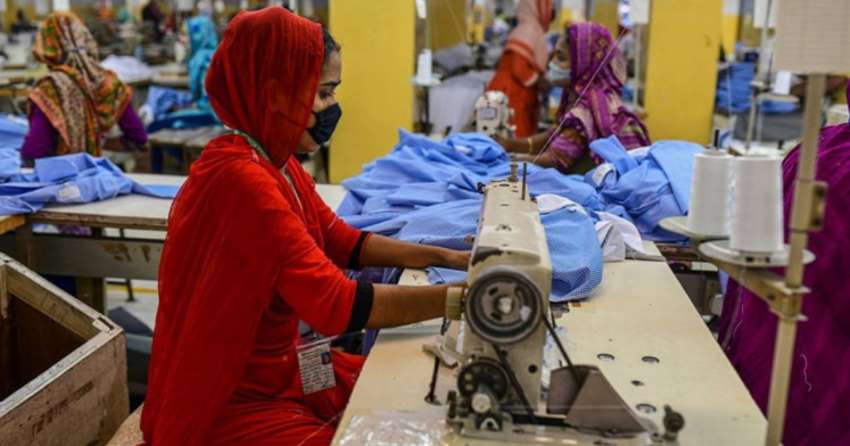
Khurda in Odisha for example offers relatively high literacy rates and a more technically trainable workforce, making it attractive for export-oriented manufacturers operating advanced assembly lines. Morena, in MP despite its smaller labour pool, benefits from higher female labour participation, which is increasingly critical in apparel production where women constitute the backbone of sewing-floor operations.
Madhubani district in Bihar presents a different equation altogether. It offers one of the largest untapped labour reserves in the country, but low female literacy levels create a heavier training burden. Companies entering the region are effectively making a long-term wager that skill development infrastructure can eventually convert raw demographic potential into productive industrial labour.
This difference reflects a larger truth about India’s rural manufacturing ambitions: labour abundance alone is no longer sufficient. Global apparel supply chains increasingly require semi-skilled workers capable of handling digitised production systems, compliance processes and quality-control standards demanded by international retailers.
Sustainability a growth booster
The rural manufacturing push is also being shaped by ESG-driven investment priorities. International brands sourcing from India are under mounting pressure to demonstrate environmentally responsible procurement practices, particularly in European and North American markets. This has increased green manufacturing from a branding exercise into a competitive necessity.
Epic Group’s Trimetro Campus has emerged as a flagship example of this shift. Positioned as India’s first net-zero carbon and net-zero water garment facility, the project integrates solar energy, biomass systems and advanced water recycling technologies into its production ecosystem.
The sustainability focus is not incidental. Western buyers are increasingly linking sourcing contracts to measurable environmental compliance metrics, making ESG-certified infrastructure a prerequisite for export competitiveness.
State governments have recognised this transition and are adapting industrial policies accordingly. Odisha’s wastewater reuse roadmap and Bihar’s industrial park expansion programmes are designed to attract sustainability-focused investors seeking circular manufacturing ecosystems.
For policymakers, the stakes extend beyond industrial output. Rural apparel clusters are also being viewed as tools to encourage reverse migration by attracting skilled Odia and Bihari workers currently employed in southern manufacturing hubs back to their home states.
Operation risk, logistics critical factors
Despite the optimism surrounding rural manufacturing, operational risks remain significant. One of the most pressing concerns is workforce readiness. Secondary school dropout rates exceeding 25 per cent in districts such as Khurda and Madhubani highlight educational gaps that could complicate the creation of middle-management pipelines. Entry-level stitching operations may be trainable within months, but supervisory and technical roles require higher educational stability.
Logistics infrastructure also remains uneven. Morena benefits from proximity to the NCR industrial corridor, allowing relatively efficient freight movement and market connectivity. Madhubani, in contrast, remains heavily dependent on rail freight upgrades and broader infrastructure improvements to remain viable for fast-fashion export cycles where delivery speed determines competitiveness.
Another critical variable will be the implementation of India’s new National Labour Codes. Rural apparel units will need to balance productivity expectations with worker welfare standards, particularly as international buyers intensify scrutiny around labour compliance. For manufacturers, the success of the rural shift will ultimately depend on whether lower operating costs can offset the added investments required for training, housing, logistics and social infrastructure.
Building India’s next export engine
The movement of apparel manufacturing into rural India marks one of the most consequential industrial realignments in the sector’s recent history. It reflects the convergence of demographic realities, sustainability mandates and shifting global sourcing strategies.
For companies such as Epic Group, the rural model offers scale, labour continuity and ESG alignment. For states such as Odisha and Bihar, it provides an opportunity to convert demographic surplus into industrial growth. What is emerging is not simply a decentralisation of manufacturing, but the creation of entirely new apparel ecosystems designed around the economics of rural India. If infrastructure execution, workforce skilling and logistics networks evolve at the pace investors expect, India’s hinterland could become the country’s next major export engine reshaping both the domestic labour market and the global apparel supply chain in the process.