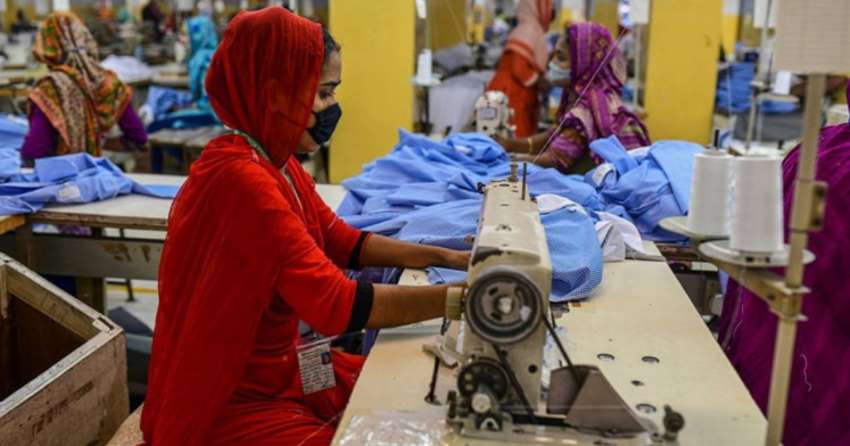
In Bangladesh, employment opportunities, climate change, natural disasters, and marriage are key triggers for migration movements from the rural to the urban sector. Dhaka and Chattogram are the destinations of 80 per cent of the country’s internal migrants. However, lack of awareness about labor standards and ethical recruitment practices are among the factors that exacerbate the vulnerabilities of migrant workers. These workers are at risk due to lack of awareness and limited capacity to implement appropriate corporate policies and management systems also contribute to vulnerabilities of workers.
Bangladesh is the world’s third largest exporter of clothing, Asia’s third in commercial services and recently an important player in the export of agricultural goods. Bangladesh has a significant market opportunity for businesses to secure their connection to a global market where the legalization of corporate responsibility, including ethical recruitment, is increasingly becoming mandatory. If Bangladesh ensures sustainable sourcing and ethical recruitment, it will increase the country’s competitiveness. There is a need to follow labor laws and promote a sustainable business model which has a good supply chain. Labor intensive business models inadvertently expose companies and workers to risks due to limited transparency in recruitment, employment and working conditions as well as migration processes.
- 1
- 2
- 3
- 4
- 5
- 6
- 7
- 8
- 9
- 10
ICRA sees apparel export recovery in FY27 as margin pressure eases, FTAs gain tr…
India’s apparel export sector is moving out of a year defined by tariff-led disruption and into one shaped by market... Read more
From Price to Purpose: India’s textile leaders chart a sustainable future at CMA…
The Indian textile industry is standing at a historic crossroads. For decades, the sector has been fueled by its reputation... Read more
Industrial automation and AI take center stage at Garment Technology Expo (GTE) …
The conclusion of the 39th Garment Technology Expo (GTE 2026) in Greater Noida has signalled a decisive shift in South... Read more
The End of Geographic Masking: Shein and peers reclaim Made in China as a strate…
The era of the corporate ghost is ending. For years, the world’s most aggressive retail disruptors operated under ambiguity, relocating... Read more
$120 Crude, Zero Margin: How India’s textile hubs are paying the price
For India’s textile clusters, the current West Asia crisis is no longer a distant geopolitical headline. In Surat’s polyester corridors... Read more
Luxury under pressure as stagflation and geopolitics redefine the winners’ circl…
The 2025 earnings for Europe’s listed luxury majors have delivered a verdict that has far more implications than the prevailing... Read more
Luxury resale goes global, sneakers, handbags, archival fashion redrawing border…
The luxury resale market in 2026 is no longer a monolithic global block. According to the RB Insights January 2026... Read more
China out but can India deliver? The realities of the global sourcing shift
With the US imposing a flat 15 per cent tariff on Chinese imports under Section 122 as of February 2026,... Read more
Luxury in Retreat: Why the aspirational consumer is gone for good
The global luxury industry is confronting an unprecedented situation. The active consumer base, which peaked at 400 million in 2022,... Read more
The Invisible Bleed: How a single chemical is slowing India’s apparel machine
The global fashion industry has spent the better part of the past two years obsessing over visible disruptions viz. volatile... Read more