Earth Logic Action Plan urges businesses across the global fashion sector to radically transform their models in such a way that places nature ahead of short-term financial gain.
This program has been devised by a group of academics, businesses and thought leaders to help fashion firms align with planetary boundaries and address the climate and nature emergencies. The plan wants the fashion sector to reduce its use of virgin resources by 75 per cent by 2030. In order to make this transformation, the plan offers advice on changing business processes, forging new collaborations and managing the financial and social implications of growing out of growth. It also offers advice on the processes needed to maintain and upscale fashion with Earth Logic at its core, including policymaker engagement.
The fashion industry is involved in climate and nature crises. Humanity is now consuming almost twice as many natural resources as the planet can produce. Fashion is estimated to account for around ten per cent of global emissions annually – more than international shipping and aviation combined. It has also been strongly linked to deforestation and water pollution. Between 80 billion to 120 billion garments and 20 billion pairs of shoes are manufactured annually.
- 1
- 2
- 3
- 4
- 5
- 6
- 7
- 8
- 9
- 10
Global cotton enters a deficit year in 2026 as supply drop meets logistics risk
The global cotton economy has entered a fragile and sensitive phase. Early projections for the 2026-27 season suggest that world... Read more
India’s textile trade gets a Pacific push as New Zealand FTA removes tariff barr…
India and New Zealand have inked a ‘once-in-a-generation’ Free Trade Agreement (FTA), one that will have a profound impact on... Read more
Lululemon’s world-first nylon circularity push signals a new apparel arms race
The global apparel industry’s circularity narrative is entering a more technically demanding phase. Polyester recycling once the flagship of sustainable... Read more
Beyond the DTC Rush: Levi’s hybrid channel strategy sets a new retail benchmark
The global apparel sector is entering a phase where channel strategy is no longer a tactical lever but a core... Read more
The New Rules of Resale: EPR turning secondhand into fashion’s strategic growth …
The global fashion industry is facing a decisive regulatory and commercial reset. What began as a sustainability narrative around reuse... Read more
The 2027 Mandate: Why denim’s future hinges on verifiable data
For decades, the global denim industry has relied on a narrative of durability, heritage, and authenticity. That narrative is now... Read more
Europe’s textile core unravels as costs, imports and policy pressure bite
Europe’s textile and apparel sector, long seen as a benchmark for craftsmanship and industrial depth, is slipping into a prolonged... Read more
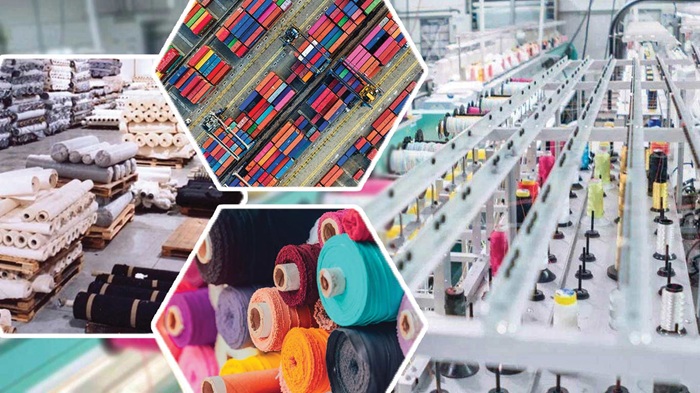
Automation, innovation, regulation are the forces shaping textiles in 2026
The global textile sector has entered a new era. Early 2026 saw the industry breach a $1.06 trillion valuation, reflecting... Read more
The new Brussels rulebook, every EU apparel order is now a balance-sheet risk
The humble export order sheet is undergoing a transformation. What was once a straightforward commercial instrument: SKU, volume, FOB price,... Read more
Why 2026-27 could be a defining cotton year for India’s farm-to-fashion economy
The global cotton economy is entering a more constrained phase, and for India, the implications run far beyond the farm... Read more