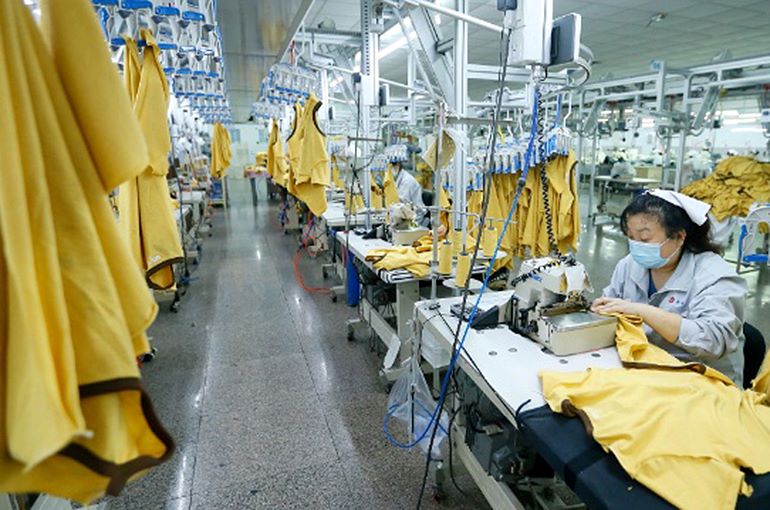
The sourcing caravan is moving on to the next hotspot. Bangladesh's garment industry has grown at an annual average rate of 16.9 per cent since the multi-fiber agreement was abolished in 2005. And there is further room for growth. Japan is now actively seeking to diversify its garment import base away from China. Chinese investors themselves are seeking to source from Bangladesh, given rising wages in China.
Bangladesh is likely to be the best destination that has the ability to grab the lion’s share of the global readymade garment market presently held by China. If Bangladesh can address the key constraints hindering exports, it could take some of the market share being gradually vacated by China.
Capturing even 20 per cent of China’s garment export markets would more than double Bangladesh’s total exports. China is currently either vacating some price competitive product segments or investing abroad in more competitive locations, offering great opportunities for Bangladesh.
Bangladesh can potentially become an important player in manufacturing based on a strong comparative advantage in labor-intensive industries. This comparative advantage, matched with a large population, has translated into very strong price competitiveness in the garment sector and possibly could, with the right policies, translate into competitive positions in other manufacturing industries.
- 1
- 2
- 3
- 4
- 5
- 6
- 7
- 8
- 9
- 10
The End of Geographic Masking: Shein and peers reclaim Made in China as a strate…
The era of the corporate ghost is ending. For years, the world’s most aggressive retail disruptors operated under ambiguity, relocating... Read more
$120 Crude, Zero Margin: How India’s textile hubs are paying the price
For India’s textile clusters, the current West Asia crisis is no longer a distant geopolitical headline. In Surat’s polyester corridors... Read more
Luxury under pressure as stagflation and geopolitics redefine the winners’ circl…
The 2025 earnings for Europe’s listed luxury majors have delivered a verdict that has far more implications than the prevailing... Read more
Luxury resale goes global, sneakers, handbags, archival fashion redrawing border…
The luxury resale market in 2026 is no longer a monolithic global block. According to the RB Insights January 2026... Read more
China out but can India deliver? The realities of the global sourcing shift
With the US imposing a flat 15 per cent tariff on Chinese imports under Section 122 as of February 2026,... Read more
Luxury in Retreat: Why the aspirational consumer is gone for good
The global luxury industry is confronting an unprecedented situation. The active consumer base, which peaked at 400 million in 2022,... Read more
The Invisible Bleed: How a single chemical is slowing India’s apparel machine
The global fashion industry has spent the better part of the past two years obsessing over visible disruptions viz. volatile... Read more
The Closet Paradox: How ‘nothing to wear’ is driving global overconsumption
In an era of overflowing wardrobes and instant fashion gratification, a striking paradox has emerged: the more clothes we own,... Read more
US trade rulings and labor slowdown reshape 2026 cotton supply chains
The global cotton industry is entering a period of adjustment, shaped by legal rulings, trade policy recalibrations, and a softening... Read more
Zero-tariff paradigm drives strategic re-sourcing at Global Sourcing Expo 2026
Projected to reach a valuation of $30.3 billion this year, the Australian textile and apparel market is entering a period... Read more