FW
China’s knitted fabrics exports decline by 6.1% in 2023
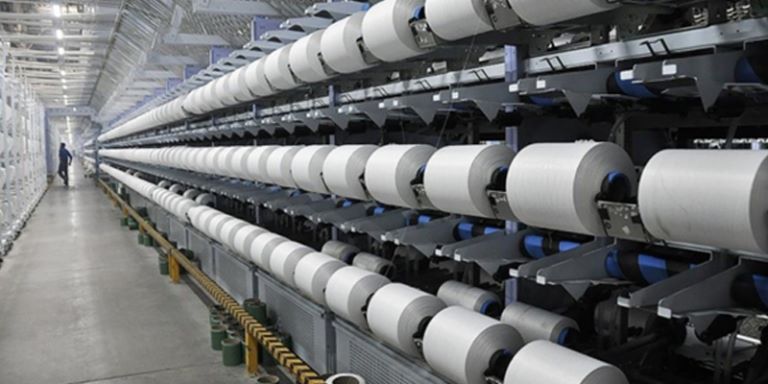
In 2023, China’s exports of knitted or crocheted fabrics declined by 6.1 per cent to 2.4 million tons. In value terms, knitted fabricsexports by the country contracted to $12.9 billion during the year
From 2013-23, 5he total value of China’s knitted fabrics exports grew at an average annual rate of 4.2 per cent, with fluctuations noted throughout the period. The highest growth of 35 per cent totaling $14.9 billion was recorded in 2022
Brazil was the primary destination for China’s knitted fabric exports, receiving 355,000 tons and accounting for 15 per cent of total exports. This was followed by Argentina and Turkey, with exports of 159,000 tons and 158,000 tons of knitted fabrics respectively. China’s knitted fabrics exports to Brazil grew at an average annual rate of 14.7 per cent while those to Argentina increased by 20.5 per cent, and exports to Turkey expanded by 15.2 per cent.
In value terms, Egypt, Mexico, and Brazil emergedas the largest markets, collectively accounting for 31 per cent of total exports. Egypt experienced the highest growth rate in export value at 36.7 per cent, while Mexico and Brazil saw more modest growth.
The average export price of knitted fabric declined by 7.7 per cent to $5, 325 in 2023 from the previous year. Prices varied significantly among major markets, with Mexico at $12,183 per ton and Guatemala at $2,376 per ton.
Global brands team up with DBS Bank to decarbonise fashion industry
In collaboration with the DBS Bank, global fashion brands Gap, H&M, Bestseller and Mango are launching a new groundbreaking financing model to decarbonise the fashion industry.
Termed as the Future Supplier Initiative, the initiative is being facilitated by The Fashion Pact and supported by the Apparel Impact Institute and Guide house along with the DBS Bank.
To debut in Bangladesh, the initiative will be further expanded toVietnam, India, China, Italy, and Turkey. It will focus on sharing financial risks and responsibilities associated with Tier I and II textile and garment factories transitioning to renewable energy sources.
Designed as a brand-agnostic mechanism, the Future Supplier Initiativeaims to develop and finance projects to help brands and suppliers meet their Science Based Targets (SBTs) and adhere to the 1.5°C climate trajectory.
The initiative will use a combination of technical support and financial incentives to help overcome barriers that prevent factories from adopting electrification and renewable energy solutions. Encouraging other brands and investors to join the initiative, Daniel Ervér, CEO, H&M Group, highlights, collective action is needed to address the fashion industry’s climate impact.
Eva von Alvensleben, Executive Director, The Fashion Pact, notes,the initiative provides a unique opportunity to fashion retailers to collaborate and drive progress towards science-based targets. Anders HolchPovlsen, CEO, Bestseller, adds, it offers innovative, joint solutions to address emissions within the value chain.
Offering technical support, the initiative also helps suppliers identify and implement low-carbon technologies and solutions. Additionally, it monitors baseline emission reductions to demonstrate the impact of financed projects.
Reflecting on the initiative, Richard Dickson, CEO, Gap Inc, reiteratesthe company’s commitment to collaborate with supply chain partners to reduce emissions. Tan Su Shan, Group Head-Institutional Banking, DBS Bank, highlights the need to expand low-carbon technologies and innovative financing modelsto drive adoption.
Toni Ruiz, CEO, Mango, echoes Lewis Perkins’, President, Apparel Impact Institute demand for collective action by brands and retailers. GauravMenon, Partner, Guidehouse, emphasises on the importance of accelerating supplier decarbonisation to meet scientific climate targets while Adam Karlsson, CFO, H&M Group, affirms the company’s commitment to the initiative.
Shima Seiki Italia to participate in 95thPittiImmagineFilati exhibition
Italian subsidiary of Japan's leading computerised knitting solutions provider Shima Seiki Mfg, Shima Seiki Italia SpA is set to participate in the 95thPittiImmagineFilati exhibition being held in Florence, Italy from June 25-27, 2024.
Exhibiting in the CustomEasy section, the company will showcase various aspects of customisation aspects through its Wholegarments knitting machines and ApexFiz design software.
Having gained significant attention in the industry, the Wholegarment technology addresses the shortage of skilled sewing and linking personnel in the industry. Shima Seiki has nearly 30 years’ experience of using this technology. The company has launched a flagship machine - the SWG-XR that sets a new benchmark for Whole garment knitting.
Featuring four needle beds for high-quality knitting, the SWG-XR is also equipped with Slide Needle, a redesigned sinker system, and a compact, lightweight carriage with four systems and auto yarn carriers. These help boost the machine’s productivity by over 25 per cent compared to previous models and allow for a broader product range, supporting knits for all seasons and higher quality fabrics and silhouettes, including punch-lace patterns, variable stitch knitting, and intarsia knitting.
The company will also showcase the Mach2X Whole garment Knitting Machine in 5S guage to demonstrate coarse gauge knitting. This machine features Slide Needle on four needle beds. Shima Seiki will also showcase an improved version of the Original SPG from 1979-new SPG-R computerised pile flat knitting machine.
Shown in 7 gauge, the SPG-R features a new movable sinker system with a selectable loop presser function and a new belt-driven carriage for efficient production of high-quality pile gloves.
Shima Seiki's ApexFiz subscription-based design software supports fashion creativity from planning and design to colorway evaluation, realistic fabric simulation, and 3D virtual sampling. Virtual sampling, accurate enough to serve as prototypes, reduces time, cost, and material waste, promoting sustainability and digital transformation in the fashion supply chain. ApexFiz's capabilities are enhanced by web services like Shima Data mall for digital content and yarn bank for digitised yarn sourcing.
Kraig Biocraft achieves major milestone in spider silk production
Kraig Biocraft Laboratories has successfully completed the first commercial production run of its BAM-1 hybrid spider silk cocoons, launching 30 days ahead of schedule. This achievement follows the overwhelming success of their spring production trials, during which two separate BAM-1 parental lines were raised and cross-mated to produce the BAM-1 hybrids.
The recent production run marks a significant milestone, with a tenfold increase in production volume compared to the spring trials, yielding over 325 pounds of recombinant spider silk cocoons. This is the largest batch of recombinant spider silk cocoons ever produced by the company.
The BAM-1 hybrids were specifically engineered for enhanced robustness to meet the demands of large-scale spider silk manufacturing. With proven production efficiency, Kraig Labs is preparing for further commercial expansion of the BAM-1 parental lines and a significant scale-up of the BAM-1 hybrids, aiming to achieve metric-ton-level spider silk production.
Company Founder and CEO, Kim Thompson, announced that the first commercial rearing of BAM-1 hybrids was a significant success, marking their largest single batch to date. He emphasized that this achievement is just the beginning of an exciting and rapid expansion of spider silk production in 2024. Thompson also highlighted the company's commitment to taking smart risks as they lead the commercialization of cost-effective and eco-responsible spider silk.
Comfort vs Chic: Beyond skinny jeans, the rise of wide-leg denim

The world of denim is experiencing a fascinating shift. Skinny jeans, the dominant force for over a decade, are facing a challenge from a resurgence of wider-leg styles. But is this a full-fledged comeback, or are we witnessing a more nuanced trend story?
Current trends: A celebration of variety
Wide-leg is rules: From straight cuts to flares and everything in between, wide-leg jeans are dominating the market. Think barrel legs, balloon silhouettes, and relaxed fits – comfort is key. Data from Edited, a retail intelligence company, shows a rise in wide-leg styles on retail websites, with the barrel jean leading the pack especially in retail websites in the US and UK. Levi Strauss & Co., too confirms this shift, stating that looser fits now make up half their women's business. Similarly, Marks & Spencer in the UK has witnessed a doubling of sales in wide-leg styles, even launching their widest-ever palazzo jean.
Slimmer silhouette emerges Influenced by social media trends like Y2K fashion and the resurgence of ballet flats, there's a renewed interest in slimmer fits. Brands like Miu Miu are showcasing skinny jeans on runways, and influencers are experimenting with figure-hugging styles. Interestingly, skinny jeans haven't entirely vanished for some demographics. Marks & Spencer reports that skinnies still comprise a significant portion (around a third) of their women's jeans sales, dominated by their best-selling Ivy skinny jeans.
In fact, social media platforms like Instagram and TikTok are democratizing fashion trends, creating a fast-paced cycle. This has led to a renewed interest in slimmer silhouettes, particularly those reminiscent of the Y2K era (low-rise cargo pants and crop tops) and early noughties (micro-miniskirts and skinny jeans). Additionally, a significant portion of consumers, particularly millennials, remain loyal to the slimmer fit, keeping it relevant in the market.
Regional variations, a mixed bag
While wide-leg styles dominate globally, there are some regional nuances. In the US and UK, the shift away from skinny jeans is more pronounced, with wider legs selling out faster and at higher price points. However, in Asia, skinny jeans might still hold stronger ground due to cultural preferences and body types. In the US, the shift towards looser fits is evident, with Levi Strauss reporting that half their women's business comes from these styles. Marks & Spencer saw sales of wide-legs double in a year, and they're launching their widest jean ever – the palazzo style in the UK.
Influences shaping denim
The pandemic's influence on our clothing choices is undeniable. After months in sweatpants, comfort became a priority, leading to a preference for looser fits over restrictive skinny jeans. Indeed, after lockdowns, a return to skinny jeans felt restrictive. This, coupled with the influence of oversized silhouettes, made wider-leg styles more appealing.
Then there was the influence of social media. Platforms like Instagram and TikTok fuelling a trend cycle on overdrive. Y2K aesthetics and nostalgia for the 2010s are bringing back slimmer fits. The influence of high-fashion houses like Loewe and Alaia, promoting looser fits, has also trickled down.
Can denim save the day against activewear?
The proliferation of denim trends, particularly the wider-leg styles, is indeed boosting sales. This variety offers something for everyone, potentially encouraging people to buy more than one pair. However, the dominance of athleisure wear – yoga pants, leggings, and activewear – has undoubtedly impacted denim sales. The true test lies in its ability to compete with the ever-popular athleisure and activewear categories. While denim offers a more fashion-forward alternative, its comfort level compared to leggings and joggers might remain a point of contention.
The current denim scene is exciting, offering a multitude of options. Whether you favor wide-leg comfort or prefer a slimmer silhouette, there's a denim style for you. This diversity, coupled with the ability to create various looks with denim, positions denim for a potential revival. However, brands must stay agile, catering to the ever-evolving trends and consumer preferences. As WGSN, a fashion forecaster, aptly terms it, the ‘Internet of Trends’ demands constant adaptation.
Global cotton benchmark prices decline as July futures contracts drops: Cotton Incorporated
Over the past month, most global benchmark cotton prices have decreased. Set to expire soon, the July NY/ICE futures contract dropped from 77 to 72 cents per pound. However, a surge in the second half of May saw July prices rise as high as 82 cents per pound. Similarly, the December NY/ICE futures contract fell from 75 to 72 cents per pound, despite a late May rally that brought prices up to 79 cents per pound, according to Cotton Incorporated.
The A Index also declined from 86 cents to 83 cents per pound. The Chinese Cotton Index (CC Index 3128B) slightly decreased from 104 to 102 cents per pound in international terms, and from 16,500 to 16,200 RMB per ton in domestic terms. The exchange rate of the RMB remained relatively stable against the dollar, near 7.24 RMB/USD, Cotton Inc reported in its Monthly Economic Letter - Cotton Market Fundamentals & Price Outlook for June 2024.
In India, spot prices for Shankar-6 quality cotton fell from 88 to 85 cents per pound, with domestic values decreasing from Rs 57,500 to Rs 55,900 (~$688 to $669) per candy. The rupee held steady around Rs 83 per US dollar. Meanwhile, Pakistani spot prices remained stable near 86 cents per pound, with domestic values constant at 19,700 PKR per maund. The PKR was steady around 278 PKR/USD.
DVF and Lenzing partner for sustainable fashion collections
Lenzing Group, a global leader in wood-based specialty fibers, has announced a partnership with renowned fashion brand Diane von Furstenberg (DVF) to integrate Tencel and LenzingEcoverofibers into DVF’s fashion collections. These fibers, derived from sustainably managed wood sources, offer resource-efficient production and are certified with the EU Ecolabel for environmental excellence. This collaboration emphasizes both companies’ dedication to sustainability and responsible fashion.
DVF’s iconic designs, known for empowering women, now feature Lenzing’sfibers, enhancing the brand’s aesthetic with sustainable materials. The partnership has already debuted in DVF’s online store and global locations, with new collections launching from Q3 2024.
The 2024 Summer collection, “The Festival of Color,” highlights vibrant garments inspired by global festivals, incorporating LenzingEcoverofibers alongside silk, linen, and cotton. This collection underscores the versatility and environmental benefits of Lenzing’sfibers, known for their rich colors, breathability, and softness.
Jessie Chen, DVF’s Global Strategic Partner and CEO of Greater China, expressed excitement about the partnership, stating it reflects DVF’s commitment to fashion that empowers women and contributes positively to the world. Harold Weghorst, Lenzing’s Senior Director of Marketing and Branding, emphasized the collaboration's role in promoting sustainable fashion, noting that TencelLyocell and LenzingEcoverofibers significantly reduce carbon emissions and water consumption.
This collaboration between Lenzing and DVF exemplifies a shared vision for a more sustainable fashion industry, merging style with environmental responsibility. New flagship collections featuring these fibers will be available from Q3 2024, with further details to follow.
Global sports apparel market to total$302.98 billion by 2032: Report
Valued at $202.64 billion in 2023, the global sports apparel market is projected to grow at CAGR of 5.2 per cent annually to reach a value of $302.98 billion by 2032.
As per a report by ABNewswire, designed for physical activity and performance, sports apparel provides comfort, flexibility, and performance enhancement to athletes and sports enthusiasts. This category includes jerseys, shorts, pants, jackets, socks, and shoes, tailored to the specific demands of different sports and athletic pursuits. The materials used to makethese sports apparel are lightweight, breathable, moisture-wicking, and stretchable, optimising comfort, mobility, support, and durability.
Increasing global health consciousness is driving the demand for specialised clothing that enhances not just performance but also comfort during physical activities. Blurring the lines between sportswear and casual wear, the rise of athleisure wear, has made sports apparel more versatile and appealing to a broader consumer base.
This trend is being further fueled by social media and digital platforms, where celebrities and influencers showcase their active lifestyles, inspiring others to adopt similar habits. The popularity of athleisure wear, which combines performance-oriented features with fashionable designs, has grown as a result. The COVID-19 pandemic has also accelerated the adoption of home-based fitness activities and outdoor recreational pursuits, increasing the demand for versatile, weather-resistant sports apparel suitable for various conditions.
Aggressive advertisements featuring bold messaging, visuals, and strategic placement are a powerful tool for brands to penetrate the market. These ads highlight the functionality, style, and performance of apparel, creating urgency and desire among consumers. Celebrity endorsements further enhance marketing strategies by aligning brands with athletes, fitness influencers, and celebrities who embody values of athleticism, excellence, and success. These endorsements lend credibility and aspirational appeal to the apparel line, making consumers more inclined to purchase.
North America is expected to experience significant growth in the sports apparel market during the forecast period. On the other hand, expenditure on sports apparels by the European Union is expected to rise.
Meanwhile, a large young population and high consumption rates in countries like India will drive the growth for sports apparels in the Asia Pacific region. Growth in this region will be driven by a rising demand for clothing items such as t-shirts, pants, joggers, and shorts
During the forecast period, the global sports apparel market is expected to be dominated by shorts and tights. Popular among men for various sports activities, these itemsprovide protection and support besides reducing painful rubs and burns. Tights also improve blood flow, delivering more oxygen to muscles, which is crucial for athletes. They support and stabilise muscles during training, speeding up muscle repair and reducing post-workout fatigue.
Tamil Nadu launches Skill Development Program in textiles
Recognising the sector’s significant role in the regional economy and its substantial employment potential, the Tamil Nadu government has launched a comprehensive skill development program in textiles through the state's Skill Development Corporation. The initiative aims to train young people with industry- relevant skills across various aspects of textile manufacturing and production.
As per government officials, including a detailed curriculum combined with hands-on training, the program will offer participants practical experience and valuable insights to enhance their career opportunities in the textile sector. Available to both women and men, the training will be conducted by the renowned South India Training and Research Society (SITRA).
The program reflects the state government’s commitment to empower youth and enhance industry’s competitiveness, states the state textile minister. A cornerstone of the state's economic development, the textile industry contributes significantly to employment generation and export earnings in Tamil Nadu.
Designed to strengthen the industry's workforce, the skill development program providesvarious upskilling and career advancement opportunities to the region's youth.
India’s T&A exports rise by 9.7 % in May 2024: CITI
Giving a huge boost to the domestic industry, India’s textiles and apparel exports rose by 9.7 per cent in May this year compared to the same period in 2023.
As per a report by the Confederation of the Indian Industry (CITI), India’s textile and apparel exports increased to $3,089.19 millionduring the month, from $2,816.1 million registered in the corresponding month of the previous year. Textiles exports rose by 9.59 per cent Y-o-Y while apparel exports increased by 9.84 per cent.
However, India’s import of textile yarns, fabrics and made-ups declined by 0.45 per cent during April-May 2024 compared to the same period last year. Apparel imports fell by 16 per cent in April 2024 compared to April 2023. From Jan-Apr’24, India’s apparel imports declined by 18.4 per cent compared to corresponding period last year.
According to ChandrimaChatterjee, Secretary General, Confederation of Indian Textile Industry, a slight improvement in global demand has spiked India’s textile and apparel exports.
Bangladesh and China continued to be the primary destinations for garment imports by India. However, apparel imports by India have been on a decline due an increased demand from Western markets and higher production costs in Bangladesh. Whether this trend continues, remains to be seen.