FW
Kingpins Amsterdam showcases Spring/Summer 2021 denim trends
Exhibitors at Kingpins Amsterdam last week presented their Spring/Summer 2021 investments in denim’s future, prioritiaing alternative fibers, smart blends and biodegradable components. Arvind presented Hemp Exotica, a range of hemp blended denim touted for its durability, anti-microbial, UV and abrasion-resistant properties. Hemp was a small piece of ADM’s collection, which emphasised recycled materials and alternative organic chemicals. The mill is using a liquid black without sulfate, reducing its impact on the environment by 60 percent.
Kaltex presented a focused group of 37 SKUs besides highlighting areas where it is using Repreve polyester, post-consumer waste, scraps from its own factory, and recycled ring-dyed yarn for efficient laser finishing. The mill’s Stacked grouping combines these eco concepts to tell a complete sustainable story.
For its Modern Retro collection, Cone Denim is pumping up the amount of Tencel and Tencel x Refibra going into fabrics, and post-consumer black polyester. Meanwhile, the mill’s new collaboration with apparel manufacturer Crystal International builds on Cone’s Sustainblue Collection of fabrics featuring responsible cotton, recycled content and environmentally friendly processing.
The Crystal x Cone collaboration includes a range of rigid and stretch denims made with recycled post-consumer waste cotton, Repreve, and Cone’s Distilled Indigo eco-friendly dyes. Candiani bowed ReSolve, the third member of its “Re” Family fabrics. ReSolve fabrics are made with organic cotton and a customised Roica V550 degradable stretch yarn developed exclusively for Candiani by Roica’s parent company, Asahi Kasei.
Lenzing collaborates with Indonesia’s Murata
Lenzing is collaborating with an Indonesian company Murata to improve the agricultural maintenance industry. The wood-based rayon fiber produced by Lenzing is the most productive, functional and sustainable textile fiber for Murata Vortex Spinning. With this collaboration, Lenzing and Murata are able to meet the market demand for yarn raw materials from the textile and garment industry. Lenzing is increasing partnerships with leading textile manufacturers who have environmentally friendly credentials in the textile and nonwoven sector. Blending the fiber with the Vortex spinning system is expected to result in a better quality yarn product.
Murata Vortex Spinning is the fastest yarn spinning system, reaching 550 mt. per minute with a short process. This system makes it possible to process fiber raw materials into new threads that are already arranged. Lenzing also facilitates opportunities and trends to develop products and utilize new fiber for Tencel, Lenzing and Ecovero and their blends through testing at the Lenzing Center of Excellence and developing partnerships with trading partners and partners related to textile value chains. Sustainability is something Lenzing stresses on and this is a strength required by Vortex. Lenzing’s decarbonization targets make it a frontrunner, not only in the world of fiber producers but also among major industrial companies.
Filatex goes into home textiles
Filatex is considering entry into the home textile segment. The company’s expansion includes ramping up facilities at Gujarat and also adding new lines to its plants for manufacturing fully drawn textured yarns. Drawn textured yarns are mainly used in weaving and knitting of fabrics, for making clothes, home furnishings, seat covers, bags, among others. Filatex is a manufacturer of polyester and polypropylene filament yarn and polyester chips. Its current capacity across the Dahej and Dadra and Nagar Haveli facilities together stand at 3,82,000 tons per annum that includes a recent addition of 60,000 tons.
The company is also putting up a captive power plant. The plant is expected to come up in the January to March period of 2021. Post the capex cycle coming through (capacity addition and new value addition line), Filatex India is looking at a near Rs 600 crore boost in its topline and a Rs 70 crore improvement in bottom line. Ebitda margins are expected to improve to 8.5 per cent to nine per cent from the existing 7.5 per cent to eight per cent levels. The company has a debt to equity ratio of 1.2:1 and repayments are being made on time.
Denim companies adopt sustainable methods
Companies throughout the denim supply chain are developing techniques and fabrics designed to streamline traditional processes in new sustainable ways.
Garmon’s Smart Foam can be used to create a broad sweep of designs, from traditional finishes to unique fashion concepts. Water is replaced with a special foam. Smart Foam allows savings of up to 80 per cent of water compared to traditional washing processes. Additionally, the treatments are performed at room temperature, therefore reducing the energy required. Tonello’s OBleach is a new process that achieves a true bleach effect with minimal environmental impact. The process requires low temperatures to achieve contrasting effects. It is also highly replicable, allowing brands to follow a fixed recipe.
Naveena is exploring ways to roll out laser-friendly fabrics across its entire collection. The mill has introduced Beam Denim, a range of fabrics that easily chip off to achieve natural shade, abrasion and marking effects. This innovation reduces finishing time and saves energy and water without harsh chemicals. Artistic Fabric Garment Industries’ solution for laser-friendly fabrics is M-Power fabrics, a collection of denim fabrics that is designed to empower the use of lasers. The fabrics are made with 100 per cent cellulose fibers to avoid heat damage and melting under the light.
Canada hosts ethical apparel conference Wear
World Ethical Apparel Roundtable (Wear) was held in Canada, October 7 to 8, 2019. The Sustainable Fashion Toolkit was launched at the conference. Available free initially on the internet, it brings together curated content where resources are centrally located, easy and quick to navigate.
Wear is an unique platform to share examples of both local and global leadership, best practices and innovative solutions with the North American apparel and textile industry. Globally, fashion industry stakeholders are engaging in one of the fastest and most progressive plans to change a system that is broken on so many levels. In some cases this shift has made it challenging for those who are just embarking on their sustainability journey. With so many solutions, tools and resources, and without a clear strategy or direction, it can create an overwhelming sense of confusion as to how and where to begin. Wear aims to remove that barrier by providing the most relevant, up-to-date content, through many engaging sessions and in a format that allows for deeper participation and collaboration. Since 2014, Wear has succeeded in bringing together diverse perspectives from across the entire fashion system. Its intimate format allows for meaningful connections and break through learning that lead to a clear path to action.
Brand battles waste and inventory
Son of a Tailor, based in Denmark, offers tailored outerwear for men. The brand takes an innovative approach to production to combat the problem of chronic waste. The company adheres to two core values – no fabric waste and no unsold inventory. Garments are made to order and cut from one piece, using the latest Shima Seiki 3D knitting machine technology, preventing overproduction and textile waste in the form of cut-offs. Customers provide their weight, height, age and shoe size when making an order. An algorithm uses these four criteria to create the perfect fit, based on data gathered from 30,000 men worldwide. The resulting customised fit is designed to ensure a low product return rate. All items are manufactured in the EU to ensure a high-quality product and fair working conditions.
The apparel industry produces an estimated 92 million tons of textile waste while garment production and transportation accounts for around ten per cent of global CO2 emissions. Conventional clothing production wastes up to 21 per cent of fabric in the cutting process. At the same time, 15 per cent to 20 per cent of clothes are wasted in unsold inventory and 60 per cent of purchased clothes are discarded after just one year.
ColorJet to expand in Chinese textile market
ColorJet India, one of India’s largest manufacturers of digital textile printing technology, plans to expand its operations in China to derive volume growth in the world's largest textile market.
As per an IDC suggested report, ColorJet, with more than 33 per cent market share in the super-wide format digital ink printers in India, commands absolute leadership in the world’s third-largest textile exporting and fifth-largest garment exporting country in the world.
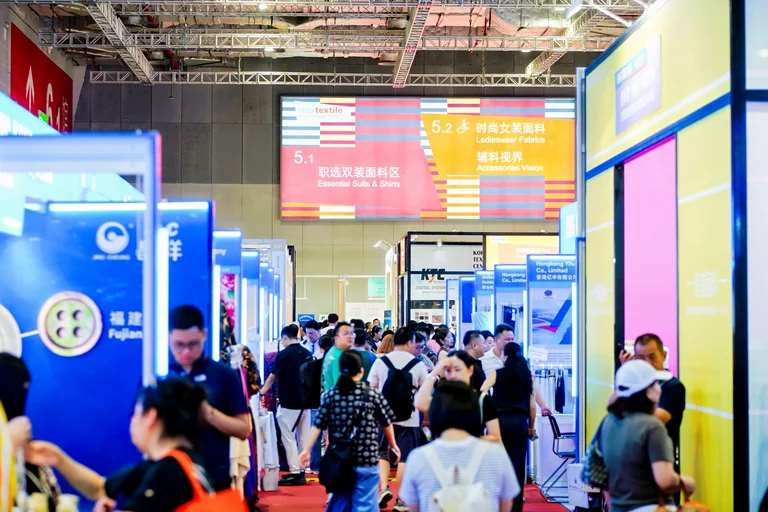
The Chinese textile market, currently estimated at US$ 230 billion, is expected to reach US$ 400 billion by 2022. ColorJet targets to capture 5-7 per cent of the pie, looking at the vast potential market of super wide format digital ink printers. ““Order volumes this year have been exceptionally strong, so we look forward to continuing the momentum by having live systems running at ShanghaiTex. China is the biggest market and we look forward to make our presence felt in China,” said Jitender Pal, Singh, Vice President-Textile of the brand. “We aim to capture 5-7 per cent of the digital inkjet printer market in China in the coming years. With our existing product lineup, we provide more sustainable and efficient solutions that deliver maximum productivity as compared to its nearest competitor,” he added.
Maroc in Mode - Maroc Sourcing focuses on sustainable fashion line
"This year, Maroc in Mode focused on sustainable aspects and fast fashion in line with the visitors' interest. Increasingly more exhibitors into sustainability certified, i.a. from Oekotex, BSCI, GOTS, ISO, through individual customer audits, etc. Exhibitors and visitors unanimously confirmed that sustainable production is the textile future. The signage of the partnership agreement with France, UIT - Union of Industries Textiles and UFIMH - Union Francaise Mode & Habillement - was a further step towards internationalisation of the show."
 This year, Maroc in Mode focused on sustainable aspects and fast fashion in line with the visitors' interest. Increasingly more exhibitors into sustainability certified, i.a. from Oekotex, BSCI, GOTS, ISO, through individual customer audits, etc. Exhibitors and visitors unanimously confirmed that sustainable production is the textile future. The signage of the partnership agreement with France, UIT - Union of Industries Textiles and UFIMH - Union Francaise Mode & Habillement - was a further step towards internationalisation of the show. The new association structure of AMITH will work intensively on further innovations for the trade fair and the Moroccan textile industry.
The event witnessed more than 140 participants this year with increasing international exhibitor’s also large number of production specialists presenting themselves. The event covered 1,000 trade visitors at the Moulay Hassan racetrack in Marrakech. Visitors from 16 countries, such as Spain, France, Portugal, Italy, UK, Germany, etc., including high-profile companies and vertical top providers used the show as a platform to expand their product portfolio, intensify existing contacts and finalise production projects.
With more than 185,000 employees, textile industry is the largest industrial employer in Morocco. The industry accounts for a quarter of national exports, and in 2018 Morocco exported goods worth € 3.6 billion. Among the Mediterranean countries, it is on number two in terms of exports to the EU, ranks seventh overall among the major suppliers of textiles and clothing to the EU. The more than 1,600 companies have an annual production capacity of 1 billion parts. Morocco to develop all-around solution provider adjectives focusing on internalization strategic development plans.
HKRITA collaborates with Gap Inc
The Hong Kong Research Institute of Textiles and Apparel has collaborated with Gap Inc to develop eco-friendly production processes and technology solutions that enable the industry to move from a linear model to a circular model across the life-cycle of textiles. The institute has identified two initial research areas that include separation of spandex from used garments and denim decolourisation for recycling.
The textile industry is currently unable to separate spandex in an eco-friendly and circular way from blended fabrics, such as cotton-spandex blend. The research project, which sees HKRITA partnering with creative textile manufacturer Artistic Milliners, is being designed to develop an eco-friendly separation method that removesspandex using bio-solvents. In this way, the separated materials can be re-used by the textile industry.
The research area will also tackle denim decolourisation, a long-standing problem in the textile industry. Currently, common industry practice involves chemical treatment, but this method can harm fabric properties and create negative environmental impacts. This project will also join hands with leading denim manufacturer Arvind Limited to develop a physical method to decolor the denim so that the cotton can be more easily reused or re-dyed.
Brands up sustainability quotient through products and process transparency
"KPMG along with Fashion Summit and HSBC recently released a new report titled ‘Sustainable Fashion: Committing to a Sustainable Future Through the Fashion Industry Charter for Climate Action’. Released to coincide with the commencement of the Fashion Summit 2019 held recently in Hong Kong, the report stated though companies have been incorporating sustainability initiatives in their operations for a long time, lot still needs to be done to achieve a truly sustainable fashion industry."
 KPMG along with Fashion Summit and HSBC recently released a new report titled ‘Sustainable Fashion: Committing to a Sustainable Future Through the Fashion Industry Charter for Climate Action’. Released to coincide with the commencement of the Fashion Summit 2019 held recently in Hong Kong, the report stated though companies have been incorporating sustainability initiatives in their operations for a long time, lot still needs to be done to achieve a truly sustainable fashion industry.
Less than 15 per cent companies surveyed in the KPMG report stated their supply chain-related greenhouse gas (GHG) emissions help them to formulate better climate strategies. This is mainly due to the fact that measuring these GHG emissions is a complex process and can prove to be a big challenge for many signatories.
Increased awareness with sustainable operations, products
The KPMG report reviews the publicly available information on sustainability performance of 43 signatories of the UN’s Fashion Industry Charter for Climate Action, including their sustainability reports and corporate websites. One of the key findings is that brands still need to enhance their consumers’ awareness on sustainability. Around 60 per cent brands surveyed had a section on sustainability on their consumer websites while around 35 per cent had a sustainable product line.
Some signatories also strive to raise their consumer’s sustainability awareness by publicly disclosing their initiatives on various e-commerce channels. Of the signatories, 67 per cent brands made their sustainability data available in either their sustainability reports or annual reports, while 93 per cent had a sustainability section on corporate websites.
Transparency aids sustainability in fashion brands
Further, the Sustainable Fashion report states, in order to help consumers make responsible decisions brands need to make information about products, sourcing and environmental impact, accessible to all buyers. They also need to create a new sustainability labeling system that would encourage consumers to purchase sustainable fashion.
One of the ways brands can achieve this is by leveraging existing tools and standards such as the Sustainable Apparel Coalition formed in 2011, and the Higg Index, and Kering’s Environmental Profit & Loss (EP&L) account. The industry has developed these tools through many years of efforts. Now, brands need to leverage their potential to create a tangible impact.