FW
DyStar’s Color Solutions releases latest colour report
The 6th Color Analysis report by Color Solutions’ for Autumn/Winter 2020 features 54 ColorWall colors along with additional color validation, color evolution, and direction by hue. Color Solutions is a member of the DyStar Group. Color Solutions is passionate about the impact color has on mindset, lifestyle, art and culture and is continually rediscovering how colors intermix together and how each hue flows from deep intensity to softer tints. From a time gone by to this moment of now, themes take shape as they transform historic elements into modern day life, intertwining together to create a new existence full of creative energy and vitality. Color Solutions looks from the past to present day reality to shape the themes of trends reflected in the spirit of present time.
New for this season, Color Solutions has delved deeper by giving more detail for each color using its proprietary Relative Color Popularity process. RCP is a marriage of color validation with trend color forecasting. The RCP report has been organized into four categories to help validate color selection.
Color forecast is essential for product designers, color managers and buyers working in textiles, apparel, accessories, decor, interiors, and cosmetics. Color Analysis includes seasonal color palettes selected from a wide range of approximately 3,700 colors.
CCI introduces quality norms for cotton
This season onwards, Cotton Corporation of India has introduced stricter quality norms for ginning and processing units in cotton-producing states. Until now, there was a loophole in trash and moisture content that was exploited by some ginners. Indian cotton is of a lower grade as it contains higher trash content and moisture but India is the only exporter which gives trash and moisture guarantees in the global trade. India introduced mandatory traceability in cotton a couple of months ago but its implementation is likely to take some time. Because of stricter norms, the inventory with CCI is of good quality and most buyers have expressed satisfaction with it.
CCI has procured 11.6 lakh bales so far, nearly four times the amount collected during the same period the previous year. Procurement is likely to touch 15 lakh bales by the end of this season. Prices have firmed up and therefore the purchase under procurement is down. The 348 centers are active and will remain open throughout the season to ensure that the market remains stable.
Of the total procured stocks, around 80 per cent have been purchased from Telangana, followed by Maharashtra. Cotton was also procured from Andhra Pradesh, Karnataka, Madhya Pradesh and Orissa.
Adidas hikes recycling goals, aims to reduce greenhouse gas by 30 by 2030
Apparel brand Adidas is focusing on corporate social responsibility. Sustainability at Adidas goes far beyond recycled plastic. Adidas also continues to improve its environmental performance during the manufacturing of products. This includes the use of sustainable materials, the reduction of CO2 emissions, and waste prevention. In 2018 alone, the company saved more than 40 tons of plastic waste in its offices, retail stores, warehouses, and distribution centers worldwide and replaced them with more sustainable solutions.
In 2018, Adidas produced more than five million pairs of shoes containing recycled plastic waste. The company plans to more than double that figure this year. To reach this goal, the company has partnered with global collaboration network Parley for the Oceans, which intercepts plastic waste on beaches before it can reach the oceans. The waste is then made into a yarn, which becomes a key component in Adidas footwear. The company also produces other apparel from the recycled material.
The company plans to reduce greenhouse gas emissions by 30 per cent by 2030. In addition, it is committed to using only recycled polyester in every product and on every application where a solution exists by 2024. The company sources only sustainably produced cotton. In addition, the company hasn’t used plastic bags in its stores since 2016.
Shaping socio-political growth through fashion
"Fashion and politics have always complemented each other in paving the future growth of a nation. The term Fashion Activism, coined by famous designer Céline Semaan, Founder of Tech Lab Slow Factory denotes the use of fashion to implement social and political change. Semaan championed the term by retailing an assortment of socially conscious fashion garments and accessories for social causes, such as the ‘Banned’ scarf to revolt against American President Donald Trump’s Muslim Ban or the ‘First Amendment Jacket’ featuring the First Amendment written in Arabic to show disagreement towards crimes against American Muslims."
 Fashion and politics have always complemented each other in paving the future growth of a nation. The term Fashion Activism, coined by famous designer Céline Semaan, Founder of Tech Lab Slow Factory denotes the use of fashion to implement social and political change. Semaan championed the term by retailing an assortment of socially conscious fashion garments and accessories for social causes, such as the ‘Banned’ scarf to revolt against American President Donald Trump’s Muslim Ban or the ‘First Amendment Jacket’ featuring the First Amendment written in Arabic to show disagreement towards crimes against American Muslims.
Globally peace sign symbols have broken the market during the hippie movements whereas Trump supporting hats saying ‘Make America Great Again’ were retailed during the 2016 electoral campaign to show profits up to 40 per cent for small retailers.
Fashion shapes the political landscape
Several movements throughout history were promoted better using the power of attire. Suffragettes used color to communicate and spread the idea of votes for all: purple for dignity, white for purity and green for hope. Recently, high fashion retailers Liberty and Selfridges showcased an assortment of tricolour ribbons, underwear, bags and soaps on retail to uphold the dignity of the woman in everything.
Several fashion movements are conforming to the new fashion strata to emphasise a point. The Black Panther spirit of 1960s and 1970s was evoked by a simple accessory of the era: the beret. Maria Grazia Chiuri, Creative Director of Dior unveiled a new collection of leather berets by Stephen Jones that represents an army of strong and independent women.
Rise of the inclusive fashion
Amidst diverse consumer groups influencing social, broadcast and print media, ‘inclusive fashion’ was born. This trend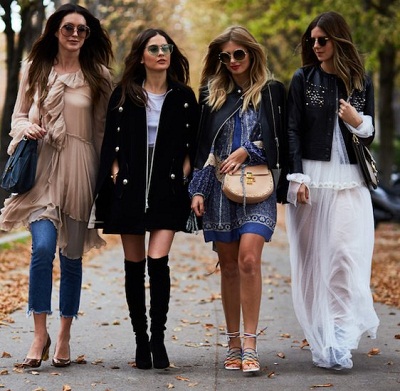 became popular in 2017, when the American President called transgender community a ‘burden. This resulted in a sudden outburst of rainbow colors laced over layers of garments. Numerous fashion retailers introduced collections supporting the community.
Calvin Klein launched Calvin Klein Pride capsule and donated the revenue collected to Human Rights Campaign, while Gap Inc. launched the ‘Wear Your Pride’ collection and H&M introduced its first-ever ‘Cohesive Collection’ dedicated to support the LGBTQ community. Other major names that were soon to join the movement were Kenneth Cole with the Pride Kam Sneakers, J Crew’s ‘Love First’ collection, Tommy Hilfiger’s inclusion of rainbow colours in their logo and Speedo’s rainbow swimwear collection.
Emergence of smaller retail groups
The movement also gave rise to smaller retail groups such as e-retailer Ease-In-Tees and Queer Theory which retail clothes, accessories and jewellery reprising the LGBTQ along with. Gender norms no longer dictate the runways. The trends are changing globally as was seen in the gender-neutral Spring and Fall 2019 collections of designers such as Stockholm’s Selam Fessahaye; Copenhagen’s Stine Goya; Dutch designers Viktor Horsting and Rolf Snoeren; Hedi Slimane of French fashion brand Celine; American designer Harris Reed and quirky fashion house Moschino.
With body positivity as a trending notion, Michael Kors showcased its first body positive collection in NYFW Fall 2017, while Dolce & Gabbana presented its Spring 2019 RTW collection through a plethora of models without any age, size, race or gender bar. Brands like Good American and Nike launched the plus size collection for sportswear, while e-retailers like ASOS and ModCloth introduced their plus-size lines for e-commerce.
Thus, the utilisation of fashion offers two-way benefits – it not only involves the consumer in bigger cause but also ensures subsequent profits for the retailers.
Men’s dress shirt gets a new look
"Even though ‘casual Fridays’ have loosened up the men’s formal dressing style, the classic shirt, paired with a suit, remains a staple for office going men. The trend is being customised across many apparel categories ranging from jeans and T-shirts to shoes and suits. Suits are taking more casual forms with unstructured tailoring, oversized fits and unconventional designs. However, the classic dress shirt still remains a staple pairing. As per Drury, mass marketers in the US are following suit, recording a 5 per cent increase in dress shirt arrivals in 2018 compared to 2017."
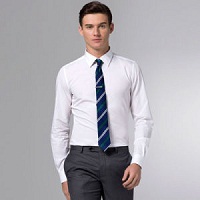 Even though ‘casual Fridays’ have loosened up the men’s formal dressing style, the classic shirt, paired with a suit, remains a staple for office going men. The trend is being customised across many apparel categories ranging from jeans and T-shirts to shoes and suits.
Suits are taking more casual forms with unstructured tailoring, oversized fits and unconventional designs. However, the classic dress shirt still remains a staple pairing. As per Drury, mass marketers in the US are following suit, recording a 5 per cent increase in dress shirt arrivals in 2018 compared to 2017.
In 2018, there was a 12 per cent sellout of styles, more than double the year before. Of those that sold out, majority was split between two brackets: the $40 to $60 range and the $60 to $80 range. J.C. Penney, Express and Kohl’s have had the most sellouts in the last three months.
Demand for more personalised look
The trend of customisation is boosting the sector as consumers are increasingly seeking a more personalised look. Tailored Brands aims to custom suit accessible for anyone who plans to buy a suit. The company has a sustainable competitive advantage in meeting its customers’ needs with custom, given its expansive store footprint, highly trained wardrobe consultants and our at scale supply chain. For the third quarter of 2018, its custom sales averaged over $5 million per week, an increase of a 150 percent compared to $2 million per week for the same period a year ago.
In September, Tailored Brands reduced the delivery of Joe and 1905 custom suits to three to four weeks from the earlier four to six weeks. It also accelerated the rollout of Custom Express to just seven days to all Jos. A. Bank, Men’s Wearhouse and Moores stores. Each of these three brands offers more than 250 custom suit fabrics, over 100 linings and roughly 200 shirt fabrics from which to choose in making a custom garment.
Fabrics with new features a hit
In the third quarter, customised shirts in performance fabrics were introduced in Kenneth Cole at Men’s Wearhouse. Moores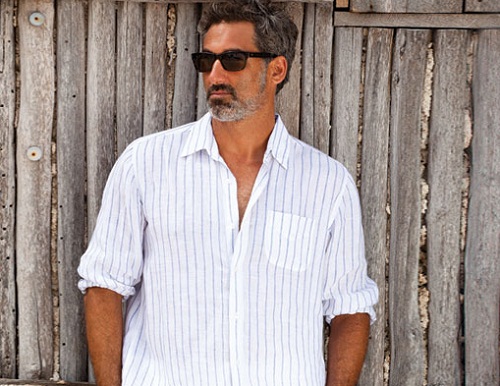 also introduced stretch fabrics and construction that allow for greater range of motion and comfort. At Jos. A. Bank, traveler custom in both suiting and shirts was launched, as was travel tech custom, featuring moisture-wicking technology.
Although athleisure is booming and casual clothing dominates, a formal suit still remains the uniform for a high proportion of men in the US. But now, there is an opportunity for brands to focus on the fit and variety of these shirts. They should be made more high-tech just as the sportswear. In fact, brands like Brooks Brother’s, J.Crew, Banana Republic and Express are incorporating new features like moisture wicking technology, water repellent properties and, most importantly, stretch fabrics in these shirts. Way to go
Zara Home will be part of Zara
Inditex will progressively incorporate Zara Home into the Zara brand. Since 2003, Zara Home, a chain dedicated to homeware and loungewear, has existed as an independent brand within Inditex. The long-term goal is to consider Zara Home as a fourth section of Zara. The strategic decision to integrate Zara Home operations into Zara was motivated by the brands’ increasing synergies. Zara Home will continue to operate with an online shop and 603 standalone stores (of which 524 are directly operated and 79 are franchises), but a selection of its products will also roll out across selected Zara stores as part of a new section, dedicated to homeware and home decor, joining the existing Woman, Man, TRF, and Kids.
Zara Home will become an extension of its sister brand, following in the footsteps of Zara Kids, which is featured as an section within Zara stores and also operates as a standalone brand with 128 stores worldwide. Additionally, plans are to progressively incorporate Zara Home products on the Zara website in some markets starting from next autumn/winter. This will make Zara Home available in many more countries, and allow Inditex to run trials to test the demand for its products, as well as customer behavior, in new markets.
Zara revenue up three per cent
In 2018, Zara increased its revenue by three per cent. Online sales, which already account for 14 per cent of turnover in the markets where the group has an online presence, went up 27 per cent. Zara increased its e-commerce presence to 202 markets in the past year. The brand, together with Zara Home, saw a 3.2 per cent rise in net sales. Zara has the best conversion rate in the Spanish online fashion sector.
Zara, Inditex’s largest retail chain, is exploring personalisation with a customization service. The concept will be introduced in the denim category and allow customers to add embroidered words to the front or back of denim shorts, skirts and jackets. The price of these pieces will be the same as non-personalised items.
This test collection will be launched March 27 and be available in exclusive brick-and-mortar stores in Spain, the Netherlands and Italy. Customers will also be able to personalise pieces online or through the Zara app, where they can select the area they wish to customise as well as the font and color of the embroidery. In this way, the service will be made available in Spain, Italy, the UK and the Netherlands through the retailer’s e-commerce platform.
No deal Brexit: UK exporters to face tariffs
In the event of a no-deal Brexit, the UK will impose tariffs on manufacturers and exporters. All import of yarn and fabrics will become duty free. The majority of exports will be subject to tariffs under World Trade Organization rules. The rates will be up to 12 months while a full consultation and review on a permanent approach to tariffs is undertaken. Out of around 1000 tariff lines for imports of textiles and fashion, 80 product codes will have a duty rate of up to 12 per cent. These products include men’s blazers, T-shirts, women’s underwear, baby garments, jeans and polo shirts. The rest will not have any tariffs. So the move is positive for importers of yarns and fabrics, but at the expense of UK manufacturers and exporters. An Italian woolen manufacturer will be able to sell into the UK at a zero per cent tariff. But UK manufacturers would face up to 12 per cent tariffs when exporting to the EU.
Product movements between the UK and Turkey will be affected. Turkey is a major supplier to the UK fashion industry and under this proposal many imports from Turkey would be 12 per cent more expensive.
South African cotton projects create employment
Almost 50,000 jobs have been created in South Africa’s cotton industry as a result of the increased number of hectares planted. In 2014, the cotton industry was offered funds to establish a cluster. This connects the entire cotton supply chain under one umbrella: farmers, ginneries, yarn manufacturers, weavers and knitters, dyers, finishing plants, retailers and consumers. Its aim is to improve capacity and competitiveness and create jobs in the country’s cotton, textile and apparel industry. Production has increased from 25,000 bales in 2013 to roughly 2,00,000 bales in the 2017-18 season, with a further increase of 20 per cent expected in the new production year.
During the 2017-2018 season, five cotton projects involving 1,300 small farmers were supported as part of the program. They planted a total of 5000 hectares of cotton. Every three hectares of cotton planted creates four jobs – three on the farm and one in the processing and retail sectors. This means that almost 50,000 jobs were created or maintained by the program since its inception in 2014.
The significant growth in the cotton industry has also resulted in capital investment from the private sector in cotton processing. Farmers are putting their hands deep in their pockets to buy new harvesting machines to deal with the bigger crop.
Shanghai Fashion Week to host show by British brands
The British Fashion Council will launch a showcase of British brands during Shanghai Fashion Week, March 27 to April 3, 2019. A series of events will be hosted with key industry partners to celebrate British design talent in the market. The project is part of the British Fashion Council’s China Partnerships Strategy, which aims to solidify the organisation’s commitment to making access to the Chinese market easier for British designer businesses by supporting talent through networking, content and access partnerships and business support. The British Fashion Council will also celebrate British designer businesses that are already in the market.
Designers will have the opportunity to meet not only with key retailers from China and the wider Asian region but also media, stylists, key opinion leaders, creative industry influencers and high-net worth individuals. The legacy from the March 2019 activation is to pave the way to involving a larger number of designers with the support of new and existing commercial partners.
Shanghai Fashion Weekend is a consumer-oriented fashion event. With 15 years of nurturing and growing the industry, Shanghai Fashion Week has established a comprehensive fashion ecosystem that stimulates industry parties to create progressive and energetic events. Features include exhibitions of works, trade, and promotion of fashion consumption.