


FW
Arvind Envisol mulls water treatment plant in Bangladesh
Arvind Envisol plans to execute water treatment projects in Bangladesh, whose economy depends heavily on the heavily polluting textile and clothing industry. Arvind Envisol, the waste water treatment arm of the textile conglomerate Arvind, expects to accelerate growth in India by launching its components business Kaigo. It expects this unit to contribute 25 per cent to its overall revenue in the next three years and establish the company’s presence in the consumer sector by supplying directly to original equipment manufacturers and end users. The company has emerged as one of the major focus areas within the Arvind group ever since a demerger last year split the parent into four listed companies.
Arvind Envisol is looking for collaborations across India, Africa, Bangladesh and China for driving growth and is in the final stages of signing a joint venture agreement with a Chinese textile company. Envisol is active in water and wastewater treatment and municipal solid waste management.
Arvind has an annual production capacity of more than 100 million meters in denim, 132 million meters in woven fabric, 10,000 tons of knit fabric and 48,000 meters of voile. The group has built a strong portfolio of brands that straddles consumer segments across the income pyramid.
Ethical fashion gains ground with growing awareness on socio-environmental issues
"Young consumers today are concerned about social and environmental causes that are defining issues of our times. They support their beliefs by favoring brands aligned to their values. Studies indicate nine out of 10 GenZ consumers feel companies have a responsibility to address environmental and social issues. However, this concern about environmental and social issues is not restricted to younger consumers alone. Around two-thirds consumers worldwide would switch, avoid, or boycott brands that do not agree with their stance on controversial issues."
Young consumers today are concerned about social and environmental causes that are defining issues of our times. They support their beliefs by favoring brands aligned to their values. Studies indicate nine out of 10 GenZ consumers feel companies have a responsibility to address environmental and social issues. However, this concern about environmental and social issues is not restricted to younger consumers alone. Around two-thirds consumers worldwide would switch, avoid, or boycott brands that do not agree with their stance on controversial issues.
Trend towards making principled purchases
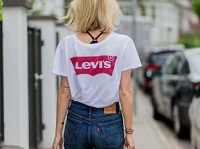 Over the past three years, one third consumers worldwide have incorporated principled views and values in their purchasing decisions. Fashion companies are becoming alert to injustice in society. Brands and retailers, including Levi’s and Nike have taken a clear stance on social issues in recent months. Nike supporting Colin Kaepernick, the face of the NFL’s “anthem protests,” and Levi’s fronting a campaign against gun violence. Gucci has also supported that cause, supporting a student-led march calling for more gun control.
Some fashion players have attached collections and ranges to specific causes. For example, H&M launched a Pride collection in 2018 in support of the LGBTQ+ community, and Balenciaga collaborated with World Food Programme, donning its slogan, “Saving Lives, Changing Lives”.
Increase in B-certified corporations
There are growing number of B-Corporations, which are certified to have considered the impact of their decisions on people, society, and the planet (exhibit). Companies including Ben & Jerry’s, Danone, and Patagonia are B-certified. In the fashion, apparel, and beauty sector, the number of B-corps rose to nearly 200 by April 2018, compared with just seven in 2010.
Notably, environmentally and socially focused companies are considered by younger cohorts as better prospects for employers, and they would be more loyal to companies that are aligned with those values.
Identifying ‘real’ from ‘fake’
However, not all causes that fashion brands advocate are universally popular, and these can come with significant risks. The NFL “anthem protest” was a divisive issue in the United States, creating a mixture of applause and backlash for Nike. Still, it created earned media exposure worth more than $163 million, within just days of the campaign launch. Besides potential controversy from supporting divisive causes, brands may also risk being perceived as hypocritical if they do not carefully ensure consistency in their messages and actions.
Another reason brand alignment with causes can backfire is that discerning consumers can easily spot the difference between gimmicks and a genuine purpose that aligns with the values of the organization. Companies can expect consumers to closely examine the level of continuity across campaigns and the nature of their strategic and operational decisions, as well as their tone.
More consumers to increase commitment levels
While consumers in Western markets currently tend to dominate the movement towards environmental and social conscience this is likely to change. In future, a rising number of consumers in other markets will increase their levels of commitment.
Despite many associated risks, some large brands willingly court controversies to express beliefs, particularly luxury players, which attract younger consumer groups. And while expression of controversial views may deter some, loyalty rewarded by remaining customers matters more.
Zara to launch first denim capsule collection
Zara plans to offer its first capsule collection of customisable denim apparel via pop-ups later this month. The pop-ups start on March 27 in three Zara locations in Europe: Vittorio Emanuele, Milan; Kalverstraat, Amsterdam, and Plaza Cataluña, Barcelona. Customers who shop Zara’s online stores in Spain, the U.K., the Netherlands and Italy will also have access to the customisation features. Customised product from a store can be delivered immediately, while those ordered online will be sent to the buyer via Zara’s usual delivery times.
The service Zara is testing allows consumers to have embroidered one word–up to 11 characters–onto any of nine different denim products in the capsule. The apparel options include jeans, denim skirts, jackets and shorts. Customers will also be able to choose a range of fonts and six different embroidery thread colors.
Under Armour lauded for labor rights
Under Armour has secured a stamp of approval from Fair Labor Association (FLA). The US-based sports apparel maker’s social compliance program includes strong policies for monitoring and fixing problems affecting workers in the supply chain. This includes a commitment at the board and executive level to protect workers and improve conditions, regular training on workplace standards, clear channels through which workers can report grievances and a comprehensive monitoring program that involves meeting with unions.
FLA is a labor group which monitors labor practices covering factory workers around the globe. As a part of accreditation process, Under Armour published a list of apparel and footwear factories in nearly 30 countries where about 90 per cent of its products are made, including places such as China, Indonesia, Jordan, Mexico, Vietnam and the United States. Other factories are located in Brazil, Egypt, El Salvador, Haiti and Malaysia. Under Armour has been working on improving operations, including supply chain initiatives that are expected to help boost 2019’s gross margins. The company’s accelerated innovation agenda, disciplined go-to-market process and powerful consumer-centric approach gives it increasingly greater confidence in its ability to deliver for Under Armour athletes, customers and shareholders. The company has guided gross margin to an improvement of 60 to 80 basis points from 2018’s adjusted gross margin.
Australian buyers unwilling to pay right price for Bangladesh RMG
Australian brands pay pitiful prices for the garments they source from Bangladesh. They have resisted paying a better price and so raising the wages of the multitudes who paradoxically, make world-class wear for those who can afford to pay more. Readymade garment workers making clothes that are sold across Australia are trapped in a cycle of poverty, no matter how hard they work. Women in Bangladesh and Vietnam making clothes for the Australian fashion industry go hungry because the wages are as low as 51 cents an hour. Paying better prices for readymade garment products can enable workers to have a better life.
Practices by Australian companies are contributing to driving wages down. They undertake fierce price negotiation, often jump between contracts instead of working with factories over the long term, squeeze lead times for orders and operate with a separation between their ethical and standards staff and their buying teams, who negotiate directly with factories.
On an average, just four per cent of the price of a piece of clothing sold in Australia goes towards workers wages. If brands absorb the cost of paying living wages, it would amount to less than one per cent of the garment price.
UK Materials Show in May to attract manufacturers, brands
Materials Show will be held in the UK from May 1 to 2, 2019. This is the first European event of Materials Show. Brands will get an opportunity to meet hardware, textiles and components manufacturers at the event. The popular NE and NW trade shows, which took place in Portland and Boston earlier this year, are frequently used to provide inspiration for future product lines, with global companies like Nike and Under Armour sending product development teams to tour the exhibits. This event aims at sharing similar innovations and insights with a new audience of international footwear, outdoor and performance and apparel brands. The February and March shows in the US saw consistent trend for sustainable technologies and multipurpose textiles, which are expected to be seen in this edition as well.
Leather industry, popular in England, in particular is to watch out for. Footwear companies from across Europe will gather under one roof, offering unprecedented brand access to European attendees. Materials Show also coincides with the 100-year anniversary of Satra, a footwear research and testing non-profit and one of the event’s sponsors.
PolyU lingerie fashion show in June
The Hong Kong Polytechnic University (PolyU), Department of Textile and Apparel will host the annual "PolyU lingerie fashion show" in Hong Kong in June 2019. The event will feature 12 students who will create three sets of underwear and casual sportswear each to showcase their creativity and day copies.
In addition, four senior industry stalwarts will be on the judging panel of the event.
Pakistan’s hosiery company Interloop sets IPO record
Interloop, Pakistan’s largest hosiery producer, has launched an IPO which is the biggest equity issue ever by a Pakistani private sector company. The company has set out to raise fresh capital, representing a 12.5 per cent stake in the company. There has been an overwhelming response to the book building process on social media. Interloop’s book building has been oversubscribed by 30 per cent. The company plans to utilise the raised amount to finance a new facility to expand hosiery production capacity and set up a denim production facility.
The company, founded in 1992, extended beyond Pakistan and has established a production facility in Bangladesh. It ranks as Pakistan’s seventh largest exporter and generates approximately 90 per cent of its revenue through exports, supplying yarns, hosiery and apparel items to some of the world’s leading brands including Nike, Puma, Reebok, H&M’s and Levi’s. The company’s plans for future growth include increasing its global footprint by increasing hosiery production by around 22.6 per cent and expanding its product mix by adding knitted apparel and denim jeans.
Following the completion of its issue, the company would be among the top 50 companies listed on the Pakistan Stock Exchange by market capitalisation.
Global sports merchandise market to reach £36 billion by 2024
The global sports merchandise retail market is likely to reach £36 billion by 2024. Growth is being driven worldwide by continuous innovation and development by major producers. These producers design and manufacture some of the most gorgeous sporting accessories, sports apparel and general memorabilia. Now-thriving economies like India and China are contributing enormously to the growth of the industry, as millions of new customers spend vast combined sums of cash on sporting merchandise.
The advent and expansion of ecommerce has also played a role in driving industry growth. Online retail reduces overheads that quality sports merchandise can be picked up at far lower prices than would be the case with any traditional retailer. Enormous global marketing campaigns have been credited with contributing to the growth of the industry. Additonally, US powerhouses like Major League Baseball (MLB) and the National Basketball Association (NBA) achieve spectacular merchandise sales each year.
Designers and manufacturers continue to ink lucrative deals with major franchises, sporting celebrities and individual clubs. Just a few examples of which include Adidas – Reebok, Nike Inc., VF Corporation, G-III Apparel, Dick’s Sporting Goods, Jarden Corporation, Knight Apparels, New Era Cap, Under Armour and Great American Products.
Mukta Group to venture into garmenting
Mukta Group of Industries plans to start a garment factory of 500 machines. The factory will initially manufacture formal and casual shirts for the domestic market.
In the initial stage, 150 machines will be installed and later the facility will be expanded completely. Production is expected to start within April.
Producing 2.5 lakh meters per month, Mukta Group of Industries is known for woven fabric production. The company is very enthusiastic about its new initiative and is expecting good growth in the coming years.











