FW
Bangladesh fights for better prices
Bangladesh has not been receiving high prices for its garments. The main reason is its exports of products like woven shirts and bottoms have many competitors. To get better prices Bangladesh apparel manufacturers need to make value-added apparel items and improve their negotiation skills. As buyers have alternatives, they pay low prices. Competitors like Myanmar and Ethiopia manage better prices than Bangladesh.
After the Rana Plaza building collapse Bangladesh’s apparel sector has improved a lot. Apparel manufacturers are working to brighten the image of the country and have been following compliance strictly and strengthening workplace safety. But the positive image has not been projected properly in the West. Only 20 per cent of the exports now are value-added garment items. Bangladesh will get more prices if it manufacturers outwear, lingerie, jackets, suits etc. The ease of doing business has to be substantially improved. At the moment Bangladesh is one of the lowest performers on ease of doing business. At the moment Bangladesh is one of the lowest performers in the World Bank’s ease of doing business index. It is 176 out of 190 countries. The country needs improving its rankings. Human capital transformation is a must as the efficiency level of workers is enhanced. It is nearly 50 per cent whereas in other countries it is 80 per cent.
Bangladesh shops for Indian clothes
Clothes from India and Pakistan dominate Bangladesh’s apparel market ahead of the peak sales season of Eid-ul-Fitr thanks to their affordability and attractive designs. Many consumers, especially women, prefer foreign dresses. From comparatively cheaper shopping destinations like New Market, Gausia and Chandni Chowk to posh shopping malls such as Bashundhara City, Pink City and Jamuna Future Park, people are flocking everywhere in search of suitable foreign dresses. Besides, some aristocratic fashion houses including Shoppers World, Nabila, Prem’s Collections, Zaara, Vasavi and Style Sell are also selling foreign dresses. Once the business of foreign dresses was limited to the capital and other big cities of Bangladesh, but now this trade has spread even to the village areas.
So Eid shoppers in Bangladesh are buying Pakistani salwar suits, lasas and shararas, Thai jeans, T-shirts, shirts, lasas, tops, and palazzos, Chinese gowns, skirts and children’s wear and Malaysian skirts, tops and hijabs.
Among men’s wear Indian punjabis and kurtas, Pakistani punjabis and kablis, and Chinese shirts and pants are also on the priority list. Especially the demand for Indian saris, salwar kameezes, lehengas, kurtis and tops is high. Bangladeshis still prefer to make round trips to India for Eid shopping. This time, an estimated 1,50,000 shoppers are expected to travel to the neighboring country.
Aarvee Denims & Exports registers 0.39 crore net profit in Q4
Aarvee Denims & Exports has posted net profit of Rs 0.39 crores for the period ended March 31, 2019 as against Rs 0.32 crores for the period ended December 31, 2018. The company reported net sales of Rs 180.96 crores during the period ended March 31, 2019 as compared to Rs 176.94 crores during the period ended December 31, 2018. The company has reported EPS of Rs.0.16 for the period ended March 31, 2019 as compared to Rs.0.14 for the period ended December 31, 2018.
The company reported net sales of Rs 180.96 crores during the period ended March 31, 2019 as compared to Rs 226.54 crores in the same the period last year. It clocked in a net profit of Rs 0.39 crores for the period ended March 31, 2019 as against Rs 0.81 crores for the period ended March 31, 2018.
Trade war, political uncertainties alter US apparel supply chain
"The US-China trade war and other disruptions like labor issues in Cambodia and political unrest in Central America have deeply impacted sourcing patterns in America. An analysis of the country’s men’s wear imports and shifting production proclivities reveals that the emergence of certain countries or regions as specialists for import of certain products over the years."
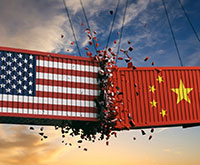 The US-China trade war and other disruptions like labor issues in Cambodia and political unrest in Central America have deeply impacted sourcing patterns in America. An analysis of the country’s men’s wear imports and shifting production proclivities reveals that the emergence of certain countries or regions as specialists for import of certain products over the years.
Mexico emerges top jeans supplier
As per the data from the Commerce Department’s Office of Textiles & Apparels, Mexico emerged as the top supplier of men’s and boys’ blue jeans to the US in the first quarter of 2019. The country held a 36.81 per cent share of US imports of the category for the year. Despite the uncertainty over the fate of the US-Mexico-Canada Agreement (USMCA), jeans imports from Mexico increased by 16.64 per cent to $172.19 million during the January to March period. The country holds a 5.73 per cent share of the women’s and girls’ blue jeans import market, currently dominated by China, Bangladesh and Vietnam.
Bangladesh and China are the next two biggest suppliers of men’s and boys’ jeans. However, Bangladesh’s shipments increased by only 0.93 per cent to $51.24 million in the first quarter while imports from China declined by 3.39 per cent in the period to $39.9 million.
Pants and shorts dominate from Bangladesh
Bangladesh leads the men’s and boys’ cotton trousers, breeches and shorts category with a 24.58 per cent imports share. The country’s imports in the quarter increased 13.59 per cent to $442.31. Bangladesh was followed by Mexico with a 16.62 share in the imports market. Imports from the country’s increased by 9.57 per cent to $234.63 million while those from China declined by 14.06 per cent to $203.36 per cent.
Bangladesh also captures the shirts market
Bangladesh also holds the top position in export of men’s and boy’s cotton woven shirts. The country holds a 21.67 per cent share with its exports increasing by 23.38 percent in the first quarter to a value of $146.97 million. China, on the other hand, holds a 18.94 percent share with its shipments declining by 22.27 per cent to $109.91 million Vietnam has 11.86 per cent share. Its shipments increased by 5.66 per cent to $76.81 million. Among their neighbors, imports from Indonesia increased 17.94 percent in the period and Sri Lanka’s were up 6.39 percent to $28.68 million, but India’s shipments declined 12.05 percent to $57.13 million.
The import market for men’s and boys’ cotton knit shirts is led by China with a 14.06 percent share for the year through March, with Vietnam holding 11.8 percent of the market and Honduras 9.87 percent.
Vietnam’s shipments increased by 24.76 percent in the first quarter to a value of $200.92 million, while imports from China rose by 4.6 percent to $180.55 million and Honduras’ shipments were up 1.38 percent to $146.25 million.
China exports maximum number of suits and coats
China dominates import share in men’s and boy’s outerwear. The country holds a 44.4 per cent market share with Vietnam occupying the second spot with a 25.6 per cent market share. However, China exported 1.47 per cent less of men’s and boy’s outerwear in the first quarter, while Vietnam’s exports increased by 31.56 percent in the period to a value of $107.02 million.
Controlled by three main suppliers -- Italy, China and Canada; the wool suit supply market declined in the first three months in this year. Italy’s supplies increased by 6.52 percent in the period to $23.81 million, while China’s shipments were basically flat at $18.74 million and imports from Canada declined 9.96 percent to $16.07 million.
US apparel exports grow despite emergence of new markets
"With growing preference for ‘Made in America’ products, US textile and apparel exports increased by 0.9 per cent to $5,776.88 million from January to March 2019. Apparels exports during this period increased 5.04 per cent compared to the same quarter of 2018. Within these, export of functional apparels increased by 14.4 per cent to $401.05 million, while exports of other products including sports apparels, knitted apparels, sweaters and coats also recorded high growth."
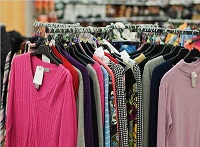 With growing preference for ‘Made in America’ products, US textile and apparel exports increased by 0.9 per cent to $5,776.88 million from January to March 2019. Apparels exports during this period increased 5.04 per cent compared to the same quarter of 2018. Within these, export of functional apparels increased by 14.4 per cent to $401.05 million, while exports of other products including sports apparels, knitted apparels, sweaters and coats also recorded high growth.
A growing market for the US apparel, China accounts for 2.32 per cent of total US apparel exports. Other important markets for US apparel exports are: Italy, Ukraine, Saudi Arabia, Colombia and Peru. Countries including Thailand, Sri Lanka, and many African countries are other growing US export markets.
Short lead times, advanced technology favor western countries
A recent report on the apparel industry shows, nearshoring will be a reality by 2025 with more clothes being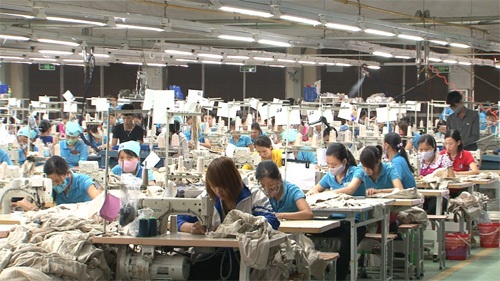 made in the US and nearby countries. Though higher production costs in the western markets are still an obstacle, McKinsey reveals cheaper freight and lower duties make it less expensive for companies to produce their goods in western countries like Mexico than in China for the US market.
Companies can also compensate for some of their labor cost disadvantage by shortening their lead times and increasing the share of clothes sold at full price. Automation decreases production costs. For instance, sewing a pair of jeans takes an average of 19 minutes. However, as McKinsey and RWTH Aachen note, robots can reduce this time by 40-90 per cent. Another important technology is the one used to create distressed jeans. This technology, used by Levi’s, reduces lead time from 20 minutes to 90 seconds.
China maintains lead
McKinsey reveals that around 82 per cent of sourcing managers plan to automate their production process by 2025. If they’re right, production is coming back – but the jobs aren’t. And China isn’t likely to fritter away its current advantage even as it becomes more expensive: Chinese garment companies are building factories in cheap labour countries closer to Europe such as Ethiopia. With these caveats, it’s likely that the buyers of mass market clothes, not just expensive designer threads, will be dressing in garments from geographically closer countries soon.
With the US imposing tariffs on China from July 2018, US apparel retailers and buyers began exploring newer sourcing destinations. However, China offers a lower average UVR than many other supplying countries as its industries thrive on government subsidies and incentives even. Also, China is automating its manufacturing and supply chains to cut costs, and delivery times. The technology costs for China are much lower than other competing countries which enable it to command a better price for its apparels.
Itma to feature Planet Textiles
Planet Textiles will take place on June 22, 2019, as part of Itma, Spain. Senior executives from Nike, HSBC and H&M will join big names from across a wide variety of textile and apparel businesses in taking to the stage at the sustainable textile summit. The show is expected to attract up to 1,20,000 visitors from 147 countries and, this year, Planet Textiles delegates will receive special discounted access to Itma. Three leaders of the world’s largest textile chemical and dyestuff producers will take to the stage together to discuss the state of the industry and what the future - both immediate and long term - will look like. A further breakout session will focus on the progress made as a result of the SAC’s Higg Index.
The ‘Pitch for the Planet’ session will feature brief pitch-style presentations of new technologies before questions are opened up to the floor. The ‘Innovation Zone’ is a platform to showcase the latest breakthroughs from across the apparel and textile sectors. This will offer visitors the chance to hold in-depth discussions with exhibitors to gain a better understanding of the latest industry developments that could directly improve their organisation’s environmental credentials. This year’s event will be kicked off by a keynote address from H&M’s head of production sustainability.
VF Corp Q4 revenue up five per cent
VF Corp’s total revenue rose 5.5 per cent in the fourth quarter. Revenue from Vans, known for its iconic classic slip-ons, rose 14 per cent in the quarter, compared with a 45 per cent increase in the same period a year earlier. North Face saw an eight per cent growth in revenue, down from 11 per cent the same period last year. Full-year sales for VF Corp’s active segment are expected at six per cent to seven per cent compared with a 16 per cent growth in 2019.
Apparel maker VF Corp is known for its popular outdoor wear label North Face and sneaker brand Vans. The company also forecast a four to five per cent sales growth in the outdoor segment that includes North Face, compared with a nine per cent increase in 2019. Vans is the largest brand in the portfolio. VF Corp wants to better focus on the high-margin brands, and is, therefore, spinning off its less profitable jeans business, including Lee and Wrangler. The company launched new collections under the brands to drives sales, kept a tight lid on inventories and sold at full price. But the efforts didn’t pay off. The company now expects sales growth in its active segment, which includes Vans, to slow down further.
Ukraine invests in technical textiles
Ukraine will invest in the development of the technical textile and nonwovens industry. This is seen as a response to the recent plans of Russia to make heavy investments in the development of technical textiles, mainly to be supplied for the ever-growing needs of the Russian defense sector.
Most of these facilities are expected to be established in central part of the country, as well as in western Ukraine, a region not traditionally well-known for textile production. Historically, most Ukrainian technical textile and chemical production has been concentrated in the eastern part of the country. However, due to the current control of the area by pro-Russian rebels, most of the existing production facilities have been lost.
Most of the funding will be done by private domestic and foreign investors, while the remaining will be allocated from government sources. Ukraine is counting on support from US businesses, which in recent years have significantly increased the volume of investments in different sectors of the Ukrainian economy, including technical textiles. In addition, the country has recently started developing a special agreement with the US in the area of technical textiles. Such an agreement would help US businesses better protect their investments and interests within Ukraine.
Prada joins the list of fur-free brands
Prada has become the latest luxury player to go fur-free with the group’s brands, including Prada itself plus Miu Miu, Church’s and Car Shoe, to stop using fur from its S/S ’20 womenswear collection.
The group is committed to innovation and social responsibility. It recently held a dialogue with Fur Free Alliance, LAV and the Humane Society of the United States on the misuse of animal fur in creating fashion garments. It would henceforth focus only on innovative materials that would allow it to explore new boundaries of creative design while meeting the demand for ethical products.
The group is also urging the UK government to make Britain the first country in the world to ban the sale of animal fur. Brands like Gucci, Versace, Burberry, Zadig & Voltaire, 3.1 Philip Lim, Jean-Paul Gaultier, Coach, Diane von Furstenberg, Furla, DKNY, Michael Kors, etc have recently gone fur free.
Kraig Labs’ provisional patent applications to reduce future R&D costs
The five new provisional patent applications by Kraig Biocraft Laboratories, Inc can reduce future R&D costs and break open new markets for recombinant protein products, reaching far beyond silks and apparel. These applications cover a broad range of technologies in the creation, screening, and production of new recombinant proteins. They expand beyond the company’s publicly disclosed silkworm and silk technologies, to include advanced construction systems, methods, and non-native proteins.
In November, of 2018, the company retained Workman Nydegger as its Intellectual Property counsel and expects to utilise their expertise in prosecuting these, and all future, patent applications. Kraig Biocraft Laboratories is a fully reporting biotechnology company focused on the commercialisation of new textiles and high performance fibers including spider silks. As the leading developer of genetically engineered spider silk based fiber technologies, Kraig Biocraft has been able to achieve a series of scientific breakthroughs in the area of spider silk technology.