FW
Kering to group Swiss logistics activities into a single hub
French Luxury group Kering recently announced grouping most of its Swiss logistics activities into a single hub by relocating those to Italy over the next three years. The new hub near Novara will raise Kering’s stock-keeping capacity and improve its logistical efficiency. The company’s logistics activities in Switzerland will be substantially sized down, but will stay in use. Kering has also decided to move its central US warehouse to a new location in New Jersey, which is under construction, and will also need to make new investments in Asia.
Earlier this month, Kering settled a charge with the Italian tax authorities regarding its Swiss logistics subsidiary, Luxury Goods International SA, for a high amount of $1.39 billion.
Grasim adds air-jet spinning machine at TRADC in Gujarat
Grasim Industries, a flagship company of Aditya Birla Group (ABG), has added Rieter’s latest air-jet spinning machine J 26 at Textile Research and Development Centre (TRADC) in Kharach, Gujarat. The Rieter air-jet spinning machine J 26 includes unique characteristics that differentiate it from other air-jet machines. This machine coupled with industry benchmark autoleveler draw frame RSB-D 50 guarantees the perfect combination of spinning preparatory and end spinning system.
The unique Com4®jet yarn structure that excels by its low pilling tendency, high washing resistance and dimensional stability offers great potential in the development of new, innovative products. The state of the art TRADC is a pilot plant involved in addressing the downstream textile value chain and to provide comprehensive Research and Development (R&D) for all the VSF manufacturing units belonging to the ABG conglomerate.
The technology center helps upholding ABG’s strong commitment towards contributing technological advancements and producing eco-sustainable products. TRADC’s Lifestyle Studio, which displays fabrics and garments primarily made of VSF of Grasim, is an additional highlight in the technology center. The joint co-operation between Grasim and Rieter will provide benefits both in downstream processing and in the fabric. The conducted trials and development work results in distinct end products with yarns spun from mature technologies and sustainable fibers.
Jeanologia to present new model at ITMA
Jeanologia will present a new production model at Itma 2019. Based on digitalization and sustainability it reduces times and simplifies processes, reinventing the way of producing jeans. The company will show a complete solution that achieves 100 per cent ecological production, speeding up time to market through the perfect integration of hardware and software. This new agile and efficient way of producing drastically reduces lead time from months to weeks or even days, adapting to the new market needs.
This innovative process also reduces to a minimum the use of water and chemicals, obtaining significant savings and eliminating discharge, helping companies to reduce their environmental footprint, lower costs and take care of workers’ health. The production model is completely technological, efficient, ethical and sustainable without compromising product authenticity.
Since 1994, Jeanologia’s mission has been to create an ethical, sustainable and eco-efficient industry through disruptive technology and knowhow. Its laser, G2 ozone and e-flow systems have revolutionized the textile industry. The company offers infinite design and garment finishing possibilities and has clients in five continents through its ten subsidiaries. The export of its machines and services represents 90 per cent of its total billing, reaching 61 countries. The biggest market brands place their trust in Jeanologia, using technology developed by the company.
Hosiery gets enhanced with Lycra Fusion
Lycra’s Fusion fiber creates ultra-sheer, run-resistant hosiery with natural-looking shine.
Legs appear better than bare, which minimises imperfections and also make them look and feel stunning, with hosiery crafted out of this technology. This method alternates knitted courses of covered Lycra Fusion fiber with courses of bare Lycra Fusion fiber, which is plated with polyamide. What results is an unique garment offering several desirable benefits to the value chain. Mills can benefit from this as no special equipment is needed and it can be produced on a normal hosiery machine. They can reduce production costs due to the ability to use bare knitted Lycra Fusion fiber. And differentiated benefits to drive sales down the value chain are offered by patent pending innovation. Retailers and brands can benefit from this new garment as they can offer hosiery styles with natural shine, thus filling the need gap for women across the world. It offers improved table layout in stores and opens up design possibilities in ladder/run-resistant hosiery.
Ultra-sheer hosiery gives a natural appearance to the legs. However, consumers do not wish to forgo garment strength and durability for this and want transparent hosiery, which halts runs and ladders in their tracks and helps in augmenting the garment’s life.
Grasim’s Q4 viscose revenue up 18 per cent
Grasim’s viscose business increased 18 per cent year on year in Q4. The share of domestic sales rose to 86 per cent from 83 per cent in the same quarter last year.
Grasim’s popular viscose staple fiber brand Liva has been extended to the home textile category with the launch of Liva Home. Today, Liva partners over 40 retail brands and is available across 3,500 outlets in exclusive business outlets and large format stores in India in addition to many more multi brand outlets in 250 cities of India. This has resulted in doubling viscose fiber consumption in the country over the past four years.
Grasim’s viscose business will continue to focus on expanding in India by partnering textile value chain, achieving better customer connect through its brand Liva, extensions into new categories and enriching the product mix through a larger share of the specialty fiber. The viscose business has been registering double digit growth in the last few years and the market share of viscose in the overall fiber basket has gone up from 3.5 per cent to five per cent in the last four years.
European textile chemicals market grows at four per cent
The textile chemicals market in Europe is growing at 4.20 per cent. Categories of the European textile chemicals market are finishing agents, coating and sizing chemicals, colorants and auxiliaries, surfactants, bleaching agents, desizing agents, and yarn lubricants. Coating and sizing chemicals are the largest segment in the market. However, the finishing agents segment is expected to catch up owing to the growing demand for high-quality fabrics.
On the basis of application, the market is segmented into: indutech, sportech, mobiltech, buildtech, hometech, meditech, clothtech, protech, agrotech, packtech, geotech and oekotech. Mobiltech registered the highest growth in the market and accounts for a 25 per cent market share. The growth of the segment can be attributed to its extensive demand from industries such as railways, automotives, spacecraft, ships, and aircraft.
The agrotech segment is expected to be the most rapidly developing application segment by 2020 owing to the extensive use of agrotech chemicals in horticulture, forestry, landscape gardening, floriculture, and agriculture. Rapid increase in the number of organic farms in Europe will further fuel the demand for agrotech chemicals.
However, growing environmental concerns regarding the use of textile chemicals will restrain the overall market. Some textile chemicals are also known to be carcinogenic.
Eurojersey reuses water
Italian warp knit fabrics producer Eurojersey reuses 30 million liters of water in its manufacturing process. The company has reduced its consumption of methane gas by approximately 3,50,000 cubic meters. Because of these savings, part of the company’s noted commitment towards sustainability, there has been an annual saving of 4,000 meters of cellophane and 9,000 cardboard packaging tubes due to these efforts.
Eurojersey and Framis Italia have joined hands for a collaboration that combines the functional aspect of heat-bonded taping with the comfort of innovative sensitive fabrics. Framis Italia is a leader in the application of polyurethane heat bonded applications for the apparel industry.
Sensitive fabrics are endowed with excellent technical and aesthetic properties. Comfortable and perfectly smooth, thanks to an ultra-flat surface, resistant to frequent washing and endowed with a remarkable elastic memory, they provide the perfect fabric ground for the most innovative manufacturing technologies, by artfully combining functionality and tailoring. Thanks to NoSo Bonding Technology by Framis Italia, the heat bonded tapes applied directly onto the flat surface of sensitive fabrics support the muscles of the body while facilitating its movements. Without restriction, they conform naturally to the body, shaping the silhouette with just the right amount of support and a calibrated compression.
Bangladesh caters to sportswear brands
Bangladesh’s sportswear export value is 10 per cent of the country’s total exports. Sportswear brands like Nike, Adidas and Puma buy from Bangladesh and their buying volume is increasing each year. There are many textile mills in Bangladesh, producing various types of knit and woven fabrics. They can also produce sportswear fabric by using their existing set-up of machinery and manpower. Bangladesh can easily handle sportswear fabric manufacturing. The same machinery which is used for cotton fabric manufacturing can be used for synthetic fabric except for the jacquard and seamless items.
However, there is a need to have more synthetic yarn spinning mills. There are 425 spinning mills in Bangladesh but only three or four spinning mills produce synthetic yarn. Synthetic fabrics are considered to be the ideal choice for sportswear as they are able to provide a good combination of functional properties of moisture management, softness, lightweight, insulation and dry relatively quickly. Bangladesh is an expert on cotton and cotton blended items but has very few textile mills that can produce synthetic fabrics.
The global sportswear market is growing at 3.3 per cent. With increasing demand for trendy sportswear, manufacturers are now launching innovative products. Insulator, microfiber and nano-technologies are used for producing sports apparel.
Athleisure to grow 7 per cent CAGR by 2023
A new report from ResearchAndMarkets.com on “Global Athleisure Market 2019-2023” projects that the athleisure category will register a CAGR, of nearly 7 percent by 2023. According to the report, millennials are driving demand in this category with high fashion brands embracing athleisure. The report concluded rising adoption of athleisure wear by millennials and the working population will further boost market growth in the forthcoming years.
Brands like Lululemon and Gap are also increasing their sales of men’s athleisure apparel with a greater focus on technical fabric innovations designed to advance their offerings. Last October, Gap launched Hill City, its high performance men’s apparel brand that uses technical fabrications for apparel those transitions with the wearer throughout the day, from working out to work and to the weekend.
Retail consultant Gabriella Santaniello, who founded research firm A-Line Partners, believes that the category is stabilising and there is still room for growth for companies that continue to provide innovation and execute well. For instance, Lululemon has used innovation as a tool to grow the already established women’s line, with the introduction of new fabrics and categories like intimates, while the men’s line is slated to be the firm’s growth vehicle.
Customisation fuels denim’s popularity amongst masses
"A wardrobe staple today, the blue jean was first created in 1873 by Tailor Jacob Davis and fabric supplier Levi Strauss who were granted a patent to supply their copper-riveted denim cotton bottoms. The jean still remains a favorite amongst customers of all age groups and classes despite the advent of new trends such as athleisure."
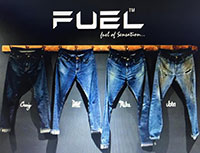 A wardrobe staple today, the blue jean was first created in 1873 by Tailor Jacob Davis and fabric supplier Levi Strauss who were granted a patent to supply their copper-riveted denim cotton bottoms. The jean still remains a favorite amongst customers of all age groups and classes despite the advent of new trends such as athleisure.
Jeans market to see robust growth
A survey by Cotton Incorporated Lifestyle Monitor™reveals, Levi’s is one of the most favorite jeans brands amongst U.S. consumers, followed by Lee, Wrangler, American Eagle, Old Navy and Gap. Zion Market Research estimates global denim jeans market will grow to $85.4 billion by 2025 with North America and Europe holding major share. These regions are likely to witness significant growth as brands here offer customised products to their consumers.
Monitor, CCI and Cotton Incorporated’s Global Lifestyle Monitor™ Survey shows that over half of US consumers either ‘love’ or ‘enjoy’ wearing denim. The women in this country own six pairs of denim jeans, while men own five. Nearly two-third consumers wear denim jeans or shorts at least three times a week.
Creating core denim through advanced technologies, process
While denim today may resemble the early blue jeans, brands and companies are trying to change the way jeans are made. They are using advanced technologies, natural resources, cleaner production processes, artificial intelligence, etc to create core denim products that comply with environmental standards. Jeanuine, a New York-based denim brand, allows consumers to personalise their denim via its Jean Maker app, which helps create and modify every pair of jeans. Consumers can design their jeans online or visit the Consortium showroom in Manhattan. To start the design process, the brand uses a try-on set to identify the consumer’s waist size. The jean is either designed online or shoppers can make an appointment and come to the Consortium showroom. Despite this bespoke design process, the Jeanuine jeans retail from $229.
This process of offering customised jeans helps the brand to foster loyalty amongst its consumers. As The Monitor™ research shows, 7 in 10 consumers pledge loyalty to brands that customise their clothes according to their needs.