FW
Taiwan presents ‘smart’ machinery at ITMA 2019
"Taiwanese textile companies Pai Lung, Logic Art, AK Dyeing, ACME, CCI Tech, Tai Ho Shing and Taiwan Giu Chun exhibited their intelligent/smart machinery and innovative solutions for the textile industry at ITMA 2019. With the support of TAITRA, these companies showcased Taiwanese cutting-edge technological advancements."
 Taiwanese textile companies Pai Lung, Logic Art, AK Dyeing, ACME, CCI Tech, Tai Ho Shing and Taiwan Giu Chun exhibited their intelligent/smart machinery and innovative solutions for the textile industry at ITMA 2019. With the support of TAITRA, these companies showcased Taiwanese cutting-edge technological advancements.
These technological advancements aimed to redefine all the different processes of the textile manufacturing industry. Systems to digitalise and standardise all the knitting process, color eye for observing the wasted water when dyeing all kinds of fabric, fully automated dye stuff weighing systems, or an intelligent automatic Servo Loom are some of the awe-inspiring state-of-the-art‘smart’ machinery that will be showcased in ITMA 2019.
The Taiwan path towards the‘smart’ machinery
The Taiwanese textile industry has gone from a low-cost fabrics manufacturer to a global reference in textile production. Strategic trade agreements, the support of government institutions and, above all, the empowerment of smart machinery are the cause of this remarkable growth. Since 2016, Taiwan launched the "Industrial Innovation Plan 5 + 2", which aims to develop applications and manufacturing solutions based on AI, encouraging players in the manufacturing industry to adopt them in order to make a transition to a "smart industry".
Companies such as Pai Lung, Logic Art, AK Dyeing, ACME, CCI Tech, Tai Ho Shing and Taiwan Giu Chun, as well as representatives of TAITRA, presented their cutting-edge innovations related to the textile machinery industry.
Mayer & Cie. exhibits weft knit machine study at ITMA 2019
"Mayer & Cie. (MCT) is exhibiting weft knitting machine study at this year’s ITMA exhibition. The study will demonstrate a new technique of manufacturing textile fabrics. The long-established German firm is taking a fresh look at a proven procedure, weft knitting, and combining it with circular knitting. Especially in view of the bearded needle technology used the new procedure offers benefits in terms of needle service life and gentle yarn processing."
 Mayer & Cie. (MCT) is exhibiting weft knitting machine study at this year’s ITMA exhibition. The study will demonstrate a new technique of manufacturing textile fabrics. The long-established German firm is taking a fresh look at a proven procedure, weft knitting, and combining it with circular knitting. Especially in view of the bearded needle technology used the new procedure offers benefits in terms of needle service life and gentle yarn processing. The company sees further potential in the higher working speed that bearded needle technology makes possible.
The most striking difference between a conventional circular knitting machine and the Weftnit 3.2 is the needles it uses. In the past, all Mayer circular knitting machines have used latch needles; the Weftnit 3.2 relies on bearded needles. That has several advantages for the user. As the head of a bearded needle is thinner than that of a latch needle, stitch formation is especially gentle. This effect is enhanced if the stitch forming is based on the weft knitting principle using only two steps and requiring a lower yarn tension than circular knitting does. Bearded needles can be expected to have a longer service life – an effect that will be reflected in production costs. The same is true of the fact that a machine with bearded needles is easier to use overall. With a conventional circular knitting machine the operator must open the needle latches after sack removal and before knitting on again, which calls for some experience. With the Weftnit 3.2 that is no longer required.
Another key feature of the Weftnit 3.2 is its product. Single jersey fabric manufactured on this machine differs in look and feel from fabric produced on a circular knitting machine: “The knitted fabric is a little firmer overall than what we are used to; you can feel and see that,” says Marcus Mayer.In addition, the Weftnit 3.2, working with four needle tracks, produces all of the popular single jersey structures, such as piqué and double piqué, terry cloth, two-thread fleece and single jersey plated. Due to its distinctively gentle stitch formation the Weftnit 3.2 also scores points for processing critical yarns, as extensive tests by the circular knitting technology leader have shown.
Fong launches new dyeing systems
Fong’s has developed a new central control system called SmartCentre which can organise all the tasks within a dyeing factory and generates necessary reports upon request. It receives order information from the ERP system and arranges production schedules on the dyeing machines automatically. It directs the auto dispensing system to output appropriate amount of chemicals to corresponding dyeing machine according to specific batch order. It drives the AGVs in the workshop to deliver fabrics or necessities among machines and facilities inside the factory.
For package dyeing factories, Fong has developed the Lobowin, an innovative automatic package loading machine. The machine reduces loading time by minimising the travelling distance between picking and dropping packages. The loading process is continuous which gives no pause between packages or spindles.
For piece dyeing factories, Fong has enhanced the automatic experience in stenter operation. Starting from the feeding entrance of the stenter, the automatic loading clamper can replaces human worker for bringing fabric rolls and sew it to connect to the fabric tail at upstream. The loading clamper can determine and rectify the direction of the fabric roll.
This can make sure every time when the fabric roll rotates, the fabric end opening can be fed into a suitable position and the robot clamper can pick it up for loading and sewing to connect to the upstream fabric tail. The core of the fabric roll will be collected into a box which will be collected by AGV when the containing level triggers an order to the central control system.
Fong's delivers comprehensive central dispensing system for dyeing chemicals. This ALC automatic liquid chemical measuring and dispensing system measures accurately the required amount with a unique mass flow meter. The SPD and APD automatic powder dyestuff weighting, dissolving and dispensing system replace human operation and eliminate mistakes made by workers. The APC automatic powder chemical measuring and dispensing system created a whole new delivery method for powder chemicals.
Datacolor® collaborates with Adobe to launch new innovative solution for textile industry
Datacolor®, a global leader in color management technology has collaborated with Adobe to launch a set of innovative tools to help streamline the process of digitally designing prints for fabrics. The collaboration pairs Datacolor’s professional color lookup tool, ColorReaderPRO, with Adobe’s newest plugin for Adobe Photoshop: Adobe Textile Designer. The integration of ColorReaderPRO with Adobe Textile Designer software allows designers to measure color inspiration in the real world and transfer the data to Photoshop automatically via Bluetooth connection. The Adobe Textile Designer solution and ColorReaderPRO will debut at ITMA in Barcelona from June 20-26.
Many designers use Photoshop when starting fabric designs, but with the introduction of AdobeTextile Designer, users can now build and preview repeating patterns, define separations, work with colorways and keep every element editable in Photoshop until a design is print ready. With this Adobe plugin, designers can use Datacolor ColorReaderPRO to measure any source of color inspiration and translate the color data directly to Photoshop.
The ColorReaderPRO works seamlessly with third-party color standard libraries, including Color Solutions International’s (CSI) ColorWall™, and brands’ color libraries. This integration offers tremendous time and cost savings in the textile design process by eliminating the need to manually search and match textile color samples with swatches or color codes.
HGH India unveils ‘Beyond Shapes’ –The Home Fashion Trends for 2019-20
"HGH India 2019, India’s largest trade-show in the home textiles, home décor, houseware and gifts category recently launched ‘Beyond Shapes’ - the latest trends forecast in home fashion and lifestyle at a press conference in Mumbai. The book designed exclusively for trade visitors and professionals showcases the latest trends and insights which will help the industry to cater to the needs of the consumer. The trends are forecasted by an experienced European design team based on their intenseresearch and expertise in the India market."
 HGH India 2019, India’s largest trade-show in the home textiles, home décor, houseware and gifts category recently launched ‘Beyond Shapes’ - the latest trends forecast in home fashion and lifestyle at a press conference in Mumbai. The book designed exclusively for trade visitors and professionals showcases the latest trends and insights which will help the industry to cater to the needs of the consumer. The trends are forecasted by an experienced European design team based on their intenseresearch and expertise in the India market.
 The Trends Book was unveiled by Arun Roongta, Managing Director, HGH India, Dr Geert Bottger, Director, HGH India and Dr Alokendr a Banerjee, Chief Executive Officer - Retail, The Bombay Dyeing & Manufacturing.
The Trends will also be showcased at HGH India 2019 to be held from July 02-04, 2019 at the Bombay Exhibition Center. Beyond Shapes - Universal Future captures the essence of future in the Home products industry. The inspiration comes from the necessity to find our individual place in this world.
In the future, a ludic and free commitment is expected; fashion and lifestyle will be bright and colourful. The Trends will showcase courageous individualism, new handling of resources, new materials, slow food & slow fashion.The overarching theme for this year’s trends is “Beyond Shapes – Universal Future”.
These trends are an assimilation of in-depth research of strongly emerging colours, designs and materials for the year 2019-20. It depicts comprehensive design directions to create or source new collection. With one of the youngest populations in the world, Indian market is bound to be largely influenced by the lifestyle, taste and preferences of its consumers. These educated, extrovert, technology savvy, financially affluent and influenced by high international and social media exposure, want a blend of modern and traditional ethnic products in their home.
Seams announces winners of Sewn Products Reshoring Awards
Seams with strategic partner the Reshoring Initiative, announced the winners of the inaugural Sewn Products National Reshoring Award competition during its Spring Networking Conference here in May. Awards were presented in three categories – Textiles, Cut & Sew Manufacturing and Brands & Vertical Retailers.
The Textile Award was presented to Contempora Fabrics, while Unionwear was presented with the Cut & Sew Manufacturers Award and Mara Hoffman Brand the Brands & Vertical Retailers Award. Each recipient was presented with a certificate and received accolades from Seams and the Reshoring Initiative.
Rossari Biotech elevates Punnet Arora as its Global Textile Chemicals Business CEO
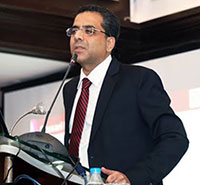 Rossari Biotech recently elevated Puneet Arora as the CEO for its Global Textile Chemicals Business. He was earlier the country head of the textiles business. Arora has been employed with Rossari Biotech since its inception and has been instrumental in making the company the largest textile chemical manufacturer and exporter in India.
One of India’s leading manufacturers and exporters of textile chemical auxiliaries, enzymes, polymers and animal health care products, Rosari has stayed true to its philosophy of “Making you more competitive” by constantly trying to work collaboratively and ensure that its efforts lead to the betterment of every one of its stakeholders.
Uzbek to engage in complete cotton processing by 2020
As per official estimates, Uzbekistan will engage in complete processing of cotton fiber by 2020. The country will also increase its global share of finished products from 40 per cent to atleast 60 per cent. As a result of the creation of new capacities and organisation of cluster activities in 2019, as many as 78 per cent of the harvested cotton fiber will be processed in the country, which is twice as much as in 2017.
According to the State Statistics Committee, in January-May 2019, total exports of textile products amounted to $653.7 million and increased by 21.9 percent compared to the same period of 2018, which is 10.2 percent of total exports. Russia is the main consumer of textile products from Uzbekistan. The country consumed over 38 percent of Uzbekistan’s textile exports during January-May 2019.
Over the past three years, Uzbek textiles exports to China more than doubled, from $90.9 million in January-May 2017 to $190.3 million in the same period of 2019. Turkey is also one of the largest consumers of textile products from Uzbekistan. From the beginning of the year, products worth $63.6 million were shipped to Turkey.
The main share in the structure of textile exports is taken by cotton yarn (58.6 percent), as well as finished knitwear and garments (22.4 percent). Since the beginning of the year, more than 336 types of these goods have been exported to 50 countries.
Global cotton production to increase by 5 per cent: USDA
As per ‘Cotton and Wool Outlook’ report of June 2019 by US Department of Agriculture (USDA), global cotton production in 2019-20 is forecast to rise by 5 per cent over the previous year to 125.3 million bales. This would be the second largest crop on record after 127.2 million bales produced in 2011-12. Cotton yield shall remain similar to the average of the last 2 years.
A major part of this production will be led by the United States (+3.6 million bales) and India (+2.5 million bales). For 2019-20, India is forecast to return as the leading cotton-producing country, surpassing China.
For 2019-20, India’s cotton crop is projected at 28.5 million bales—10 per cent above the previous year—as both higher area and yield are expected. India is forecast to account for 23 per cent of the world’s cotton production in 2019-20. Production in China is projected to remain unchanged t 27.75 million bales, as slightly lower area is offset by a higher national yield of 1,751 kg/hectare (1,562 pounds per acre). Cotton production in Pakistan is forecast at 8.0 million bales in 2019-20, a 4 per cent increase from 2018-19, as a rebound in area and a nearly unchanged yield lift the crop above the 3-year average.
Meanwhile, cotton production in Brazil and Australia is expected to decrease in 2019-20 as lower area and yield are projected. For Brazil, production is forecast at 12.0 million bales, 6 per cent (800,000 bales) below the record 2018-19 crop currently being harvested.
Cone Denim, Westex unite to provide flame-resistant denim fabrics
Industry powerhouses – Cone Denim® and Westex by Milliken, the flame resistant (FR) textiles business of global manufacturer Milliken & Company – have extended their exclusive partnership to provide innovative flame-resistant denim apparel fabrics for the industrial workwear market through 2025. The partnership began in 2015 with a joint collaboration to merge fashion with protection and supply an unmet need for guaranteed FR denim to provide the same comfort and style of everyday denim clothing for industrial workers.
Under the extended agreement, Cone Denim is the sole supplier of indigo, dyed greige denim fabric for Westex by Milliken to engineer to be flame resistant. Westex Indigo® fabrics combine market-proven FR protection with upgrades in look, feel and comfort, and advancements in fabric design that offer better mobility and durability for premium performance, without compromising safety.
This partnership has been well received by the marketplace and has grown consistently every year since it began. It allows Westex to provide quality denim fabrics with guaranteed FR protection that make adopting everyday FR apparel easy.”