


FW
Primark extends use of sustainable cotton
Primark aims at using 100 per cent sustainable cotton in all its product categories. The brand currently uses sustainable cotton in women’s pajamas, denim, towels and bedding. Men’s wear and T-shirts are next in line.
As a part of this program, the fast fashion retailer has set a new target of training 1,60,000 farmers in India, Pakistan and China in eco-friendly farming methods by 2022. Different farming methods being taught include efficient irrigation, planting in rows with trenches to maximise drainage and introducing pesticides and fertilizers such as cow dung to reduce the use of chemical options. Some farmers in India have increased their incomes by 200 per cent since enrolling on the program. Primark is minimising the use of fertilizers and pesticides on crops but not doing away with them altogether. Completely organic farming means a much lower yield which would affect the livelihoods of farmers.
UK-based Primark is one of the biggest names in value-focused fashion. Its fourth quarter sales growth has been faster than in the previous nine months of the financial year due to an improving like-for-like performance. Primark has performed well in the UK even though the country’s fashion market has been weak. Its new store in Birmingham High Street showcases its full product range and new food and beverage and beauty services.
Kering to trim remaining stake in Puma
French luxury group Kering plans trim its remaining stake in Puma by issuing bonds worth $550 million that can be exchanged for shares in the German sportswear brand. These bonds will be equivalent to 3.5 per cent to 3.7 per cent of the share capital of Puma, which has been performing strongly, thanks in part to sports partnerships including with English soccer club Manchester United, and celebrity marketing deals.
Kering, which owns fashion brands like Gucci, Saint Laurent and Balenciaga, still has a 15.7 per cent stake after spinning off 70 per cent of its stake to shareholders last year. These investors include Artemis, the holding company for the Pinault family that founded and controls Kering, and which is now Puma's leading investor with a stake of just under 29%.
In recent years Kering has been increasingly focused on its high-margin luxury businesses, but even within this portfolio it has disposed of smaller brands like Christopher Kane.
Indian cotton company to invest $7 million in Zambia
Inonge Wina, Vice President of Zambia recently visited Indian company Shree Vagmi Cotton, which plans to invest $7 million in the next three years to build a cotton lint processing factory in Zimbia. The company has acquired a 26-acre land in Mwembeshi area of Chibombo district in the Central Province and would engage 23,000 cotton farmers in the country in two years.
Vagmi already has a cotton factory in Indore. The company plans to evolve into a full textile company in 2020 and resuscitate the once vibrant textile industry in Zambia. It will run a scheme under which it will supply farmers with seed, chemicals, wool packs and collect cotton from farming areas. The company will also build houses for some Zambian staff running the factory.
VF Corp’s Q! revenue up six per cent
VF Corporation’s first quarter revenues have jumped six per cent. Growth was distinct in China and in the company’s digital channels. The US-based company, owns brands like Vans, The North Face, Timberland and Dickies. The company plans a digital-led transformation into a consumer-minded and retail-centric enterprise. VF Corp will also be seeking to drive and optimize its portfolio, distort investments to Asia, and elevate its digital channels. Revenues are expected to grow at a five-year compounded annual growth rate of between seven per cent and eight per cent with progress being driven by the company’s largest brands, the international market and the direct-to-consumer channel. Earnings per share are expected to grow at a five-year CAGR of 12 per cent to 14 per cent compared to fiscal 2019’s adjusted EPS.
The past two-and-a-half years represent one of the most transformative periods in VF Corp’s 120-year history. The group has emerged with a sharpened focus on what’s required to become even more consumer minded and retail centric. With greater clarity to the opportunities ahead, it is confidently updating its five-year strategic growth plan and financial outlook. To reflect the latest evolution in its strategy, VF has also revealed a slick new corporate logo, accompanied by an overhaul of its branding, the company’s first change of this kind in 21 years.
Nike Q1 revenues up seven per cent
For the first quarter Nike revenues rose 7.2 per cent. Gross margins rose to 45.7 per cent. In North America, its biggest market, revenues rose 3.6 per cent while sales in Greater China, its fastest growing market, jumped 22 per cent. The sportswear maker's strategy to sell sneakers and apparel directly to consumers through its own stores and online retailers has powered growth.
The world’s largest footwear maker now sells more products directly to customers through online platforms rather than through wholesalers. Nike has also launched pop-up stores that cater to loyal fans of the brand in several big US cities in an effort to build a strong relationship with its customers and gain market share. The move has helped the company sell more products at full prices.
Nike’s women's category grew double digits in fiscal ’19 accelerating in the back half of the year. The Air Max Dia, a women's sneaker, helped drive double-digit growth in the women's category last quarter. As of now the category makes up less than a quarter of total revenue. The Nike app provides the complete shopping experience on mobile for the brand, and growth has been strong here, too.
Torpor grips Indian yarn market
The yarn market in India is dull. China and Bangladesh are not buying yarns and prices are low. China is a major market for Indian yarns but the trade war between the United States and China has affected the Chinese textile sector. The Indian textile sector has been heavily spinning based and this is the problem.
Gujarat is the number one cotton producing state in India. This year’s crop is expected to be of good quality due to the rains. The yield will be high and due to good quality yarn realization is also expected to be high. Ginning begins soon after Diwali. Gujarat has ramped up its spinning capacity since 2012, due to the state’s supportive schemes such as power and interest subsidies. Currently, the state has about 3.5 million ring spindles and has proximity to cotton—a positive aspect. But the upstream sector such as garmenting and finishing does not have the necessary capacity to cater to big markets. There is still a demand for value-added products to markets like the United States, which cannot be currently handled by the Indian textile sector. A structural shift is needed to focus on building value-added sectors such as garments and technical textiles.
India’s textile sector feels RCEP will open the door for China
Indian textile manufacturers and exporters feel opening up the domestic market for China under the proposed Regional Comprehensive Economic Partnership (RCEP) is not a good idea. They feel added competition from cheaper Chinese goods may put pressure on domestic sales at a time when international business has been under threat from Bangladesh and Vietnam.
Based on India’s existing free trade agreement with Asean, RCEP will include all the nations with which Asean has trade deals — New Zealand, Australia, China, India, Japan and South Korea.
Export of readymade garments, in which India’s export competitiveness has fallen over the past fiscal, contracted by 2.44 per cent in August. While the ongoing US-China trade war presents an opportunity for Indian textile manufacturers to enhance exports to the US, China too would be looking for new markets for its products. Meanwhile, India is preparing a final list of products on which it may retain import tariffs for China, painfully aware of a huge trade deficit. Such a list is based on its plan of a differential tariff reduction for various nations. Also under consideration is a mechanism to fix an import ceiling, again particularly for China. This is the first time India will fix such a ceiling in any trade deal.
F&F uses upgraded Lycra for contour jeans
F&F will incorporate Lycra T400 fiber with EcoMade technology into the F&F Contour Jean Range with Lycra Beauty fabric. This will make the range not only F&F’s most popular but also one of the brand’s most sustainable jeans offerings. The F&F Contour Jean with Lycra Beauty fabric was launched three years ago and became F&F’s best-selling jeans range. The high-performance fabric ensured that the product delivered on its promise to comfortably shape the wearer’s curves with no sagging or bagging. Now, with the upgrade to Lycra T400 fiber with EcoMade technology, the jeans will maintain all its previous features and good value-for-money offering while providing customers with a more sustainable option.
Lycra T400 fiber with EcoMade technology is made from a combination of recycled materials, such as PET bottles and renewable plant-based materials. The original Lycra T400 fiber is the building block for the brand’s popular Lycra dualFX technology – a small percentage of this fiber gives the performance-enhancing results. Lycra T400 fiber with EcoMade technology offers the same benefits of lasting comfort, fit and performance as the original, but with the value-added offer of sustainability.
Since introducing Lycra Beauty technology into its jeans, F&F’s denim business has grown by 40 per cent.
Bangladesh economy expected to grow at eight per cent
Bangladesh is expected to grow at eight per cent this year, the highest in Asia. The country continues to be among the fastest growing economies in Asia and the Pacific. Buoyant exports, robust private consumption, higher remittance, accommodative monetary policy and ongoing reforms to improve the business climate and high infrastructure spending are helping Bangladesh.
Favorable trade prospects are expected to continue. Exports and remittances are likely to be further strengthened. Strong public investment and expedited implementation of large infrastructure projects are also envisaged.
Public investment expanded from eight per cent to 8.2 per cent and total investment contributed 2.8 percentage points to growth. But private investment edged up to 23.4 per cent in fiscal 2018-19 from 23.3 per cent a year earlier. Apart from that, private sector credit growth slowed to 11.3 per cent from 16.9 per cent, partly due to a decline in deposit growth. Inflation is expected to edge up to 5.8 per cent from 5.5 per cent on upward adjustments to domestic gas prices, higher price of goods and services due to expansion in value-added tax coverage, and the depreciation of the currency against the dollar. The revenue shortfall is expected to be offset by lower public spending, holding the budget deficit under the ceiling of five per cent of GDP.
Indian apparel exports to stabilise in FY20 despite odds
"Credit rating agency ICRA’s latest research suggests, Indian apparel exports will continue to grow for the rest of the year, however the pace of growth will slow down as multiple challenges looming on the horizon, are a challenge for exporters to meet targets. Reviving after two consecutive years of decline, apparel exports in India are growing by 4 per cent Y-o-Y during four months FY2020. This growth is primarily driven by a 7 per cent Y-o-Y increase in exports to the US market, while exports to the key European and the UK markets have fallen by 2-3 per cent Y"
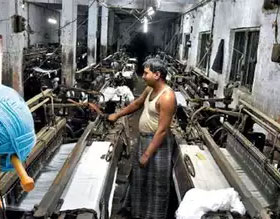 Credit rating agency ICRA’s latest research suggests, Indian apparel exports will continue to grow for the rest of the year, however the pace of growth will slow down as multiple challenges looming on the horizon, are a challenge for exporters to meet targets.
Reviving after two consecutive years of decline, apparel exports in India are growing by 4 per cent Y-o-Y during four months FY2020. This growth is primarily driven by a 7 per cent Y-o-Y increase in exports to the US market, while exports to the key European and the UK markets have fallen by 2-3 per cent Y-o-Y. In addition, India’s position has also been adversely affected by the preferred access to key competing nations such as Bangladesh and Vietnam, through free trade agreements. These trade agreements including the Comprehensive and Progressive Agreement for Trans Pacific Partnership (CP TPP) and EU-Vietnam Free Trade Agreement, are making it increasingly difficult for Indian apparel exporters to maintain their competitiveness in the EU market.
Compliance issues and lack of reliable supplier base pose challenges
Besides these challenges, discouraging retail trends in the US are also exerting additional pressure on order flow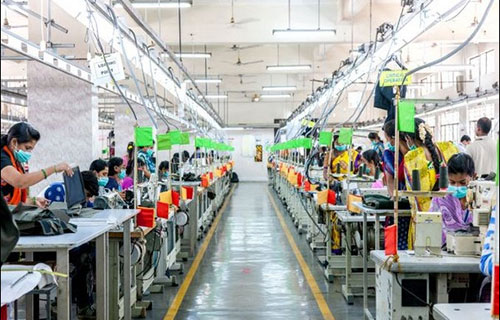 of Indian apparels. Sales of clothing and clothing accessories in the US have largely remained flat during 8 months of current fiscal vis-a-vis the corresponding period last year 4.6% during CY2018. This could potentially result in renegotiation of realisations as well as elongated receivable cycle for the exporters.
Though currently large buyers in the US face huge exit barriers both in the form of compliance requirements and lack of a reliable supplier base for large quantities, their position will become clearer once the trade data for Q4 ’19 is released as it will also factor in the additional 15 per cent tariffs that become effective from September 1, 2019. Though large Indian exporters can benefit from this opportunity, they would first have to scale up their operations, maintain strict delivery schedules and meet stringent compliance requirements of the buyers in a short span of time.
Government schemes for exporters
The Indian government has also taken some steps which could provide a relief to the Indian apparel exporters. It has introduced a new scheme called Remission of Duties or Taxes on Export Products (RoDTEP) recently in September 2019.The scheme aims to replace all existing export incentive schemes besides adequately incentivising exporters. This would stablise the growth of domestic apparel exporters at 8-10 per cent during FY20. Renegotiation of apparel realisations by key buyers amid a slowdown in retail demand and continued competitive pressures from peer nations, together with high raw material costs and higher air freight charges are likely to put a pressure on margins.
No major impact on small companies
The impact though, is expected to be cushioned by the transitory increase in export incentives till December 2019, post the replacement of ROSL with ROSCTL. As a result, large exporters may report range-bound operating margins vis-a-vis last year. The sector is likely to witness a slight correction owing to higher working capital requirements amid elongated receivable turnover period. Nevertheless, it will remain largely comfortable. The slowdown will mainly affect smaller companies who have limited bargaining power and depend on smaller US retailers. However, as a large proportion of such entities already have weak credit profiles and fall in the non-investment grade categories, no major movements are expected in their credit ratings.











