


FW
Pakistan eyes $28 billion textile exports by 2025
"The recently approved Textile Policy 2020-25 of Pakistan sets an ambitious target of increasing the country’s textile exports to $28 billion by 2025. To achieve this target, the country aims to boost cotton production from nine million bales to 20 million bales within five years. It also aims to improve the quality of cotton seeds besides introducing latest farming and picking practices will be introduced. The government will also emphasise on the production of long staple cotton to reduce dependence on imported cotton."
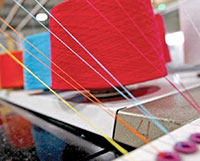 The recently approved Textile Policy 2020-25 of Pakistan sets an ambitious target of increasing the country’s textile exports to $28 billion by 2025. To achieve this target, the country aims to boost cotton production from nine million bales to 20 million bales within five years. It also aims to improve the quality of cotton seeds besides introducing latest farming and picking practices will be introduced. The government will also emphasise on the production of long staple cotton to reduce dependence on imported cotton.
The policy highlights the issue of lack of availability of Man Made Fiber (MMF) at competitive prices. At present, Pakistan’s consumption is around 30 per cent as compared to its 70 per cent consumption of cotton. In future, it aims to increase this ratio to 50:50.
Simplifying application for temporary import schemes
So far, limited access to raw materials has prevented Pakistan from achieving its full export potential and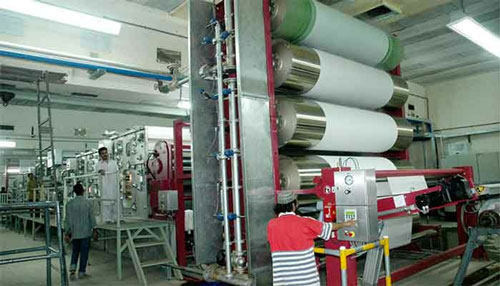 product diversification. It now plans to simplify the application process for temporary import schemes besides allowing inter/intra-bond/scheme transfers of intermediate products to direct or indirect exporters and commercial importers. This will enable the country to achieve price competitiveness and product diversification.
The withdrawal of zero rating or SRO 1125 has created a serious liquidity crisis for the export sector. Though the government had withdrawn the zero rating system to collect sales tax from domestic sales, it has completely failed and billions of rupees of refunds are stuck in the system.
Increase in overall LTFF limit
The textile policy also increases the overall limit of LTFF (long term financing facility) by $1 billion per year for each upcoming year. The LTFF scheme will now be extended to the entire value chain including building infrastructure costs of garments and knitwear sectors. LTFF for projects will be provided to achieve international sustainability requirements i.e. effluent plants, etc.
The policy also reveals that the ministry aims to set up state-of-the-art industrial zones to accelerate exports by providing Plug and Play facilities, specially for garmenting units. Workers’ residential colonies are to be developed through the prime minister’s housing scheme around SEZs.
Limiting DLTL to garments and made-ups
Under the Textile Policy 2020-25, after 2021, the provision of Drawback of Local Taxes and Levies (DLTL) will be limited to garments and made-ups. Currently, it is provided to segments that include four percent for garments, three percent for made ups and two percent for processed. Additionally, 2 per cent duty drawback is provided for non-traditional markets and 50 per cent is given unconditionally and remaining on 10 per cent growth.
The textile policy also highlights that through the Finance Act 2013, the government had raised the General Rate of Minimum Turnover Tax under Section 113 of the Income Tax Ordinance 2001 to 1.5 per cent through the Finance Act, 2019. However, now it plans to revert to 0.5 per cent tad and also include indirect exporters under this tax.
Despite FDI relaxations, single brand retailers choose local partners for India
"The Department for Promotion of Industry and Internal Trade (DPIIT) recently clarified that single brand retailers, owned by foreign companies, can fulfill their local sourcing requirements by procuring goods produced in units based in special economic zones (SEZs). It further clarified these goods to be sourced by the single brand retailers need to be manufactured in India."
 The Department for Promotion of Industry and Internal Trade (DPIIT) recently clarified that single brand retailers, owned by foreign companies, can fulfill their local sourcing requirements by procuring goods produced in units based in special economic zones (SEZs). It further clarified these goods to be sourced by the single brand retailers need to be manufactured in India.
India allows 100 per cent FDI for single brand retail. However, till 2018, these firms needed DPIIT’s permission to invest above 49 per cent in this sector. In 2019, the government amended the FDI policy to allow single brand retailers to set up their online operations without having a physical store in the country. This enables retailers to test the market before making large investments.
The amendment also stated that foreign retailers with more than 51 per cent FDI in the fashion sector need to source a minimum 30 per cent of the value of purchased goods domestically. However, they can meet this requirement incrementally within the first five years of operations in India.
Regardless of these new amendments, foreign retailers are not too keen to invest in India as the government does not support them in either procuring land and local sourcing or setting up their manufacturing facilities. Lack of skilled labour and weak infrastructure also dissuade them from investing in India’s single brand retail sector. Lack of supply chain, skilled labor prevents brands from shifting production.
The Indian retail sector has been attracting foreign investments through such intermittent relaxations in the last five years. This has enabled globally known retailers like H&M, Starbucks, Walmart, Nokia, Sony, and IKEA to establish and reinforce their presence in India
Licensing agreements over FDIs
In the past, single brand retailers, such as Zara and Marks & Spencer, have partnered Indian retail conglomerates through license agreements instead of taking the FDI route. For instance, Forever 21 recently filed for bankruptcy in the US – with plans to exit international locations in Asia and Europe. However, its India operations, will continue but as a franchise operation run by Aditya Birla Fashion and Retail.
Despite these much-touted relaxations, several single-brand retailers might prefer entering the Indian market through partnerships as it gives them access to local expertise in navigating India’s highly segmented though vast market.
Indian companies face a 30 per cent loss
Garment and clothing companies in India face a 30 per cent drop in their sales and profitability if the COVID-19 crisis continues. C losure of shopping spaces such as malls and high street stores, along with the general advisory to avoid public spaces, has crippled demand. Many other issues are likely to crop up if the current crisis continues. Mainly, there will be the problem of working capital shortage. The money flow will be inadequate for payment of taxes, discharge of bank interest, repayment of loans, statutory dues etc.
India can expect a 0.5 per cent hit on economic growth this fiscal if the Coronavirus pandemic lasts longer. The economic impact will be significant and long term if the virus continues for longer. Widening of the fiscal deficit is also feared. NPA levels in the banking sector are expected to increase. Exports and imports are likely to contract. While hospitality, tourism, aviation, auto and auto ancillary will be hit hard, pharma and healthcare will benefit from the pandemic. Indian garment manufacturers will need to look at other alternatives, including local sourcing, which in turn may increase the cost of finished goods by three per cent to five per cent. In addition to this, identifying vendors in such a short time can take a toll on lead times, quality and cost.
Make it British goes virtual
Make it British was to be held in the UK, March 17 to 18, 2020 but has been postponed because of COVID-19 and now a virtual event will take place online at the end of May. The virtual show will exactly be the same as the real show and will include everything that the live event does, including the conference, the networking and the workshops. Each exhibitor will have their own virtual booth that they will be able to man for the duration of the show using a webcam that can be attached to any computer. All visitor tickets will automatically be transferred to the virtual expo in May, as well as being redeemable against tickets for a rescheduled live show.
Make it British plays a vital service in championing manufacturing close to home. It draws attention to those who are operating in the UK and then encourages people to place orders that respect the unique position manufacturing in the UK can bring. Across the UK, fashion manufacturing employs over 43,000 people with nearly 3,900 companies. Textile manufacturing in the UK is also constantly developing.
Virtual trade shows could be the future of events in the coming months. They create a sense of community while everyone can’t be together.
Indian exporters faced with order cancellations, depletion
Export orders from India are being cancelled or deferred. This is true especially of supplies of material like cotton yarns and fabrics. The spread of COVID-19, especially in the United States, and leading markets of Europe like Spain, Portugal, Italy and even the United Kingdom has stopped order flow from these countries on a large scale. Buyers and major retail shops importing home textiles from India have put further business on hold. This has caused considerable anxiety among exporters as production has been cut back and fears of layoffs loom large. Exports are expected to decline by over 40 per cent in the coming months if the situation does not improve in the next 15 or 20 days.
Some measures which may support the ailing textile industry which has a significantly large dependence on the international market are extending the RoSCTL scheme to cotton yarn and fabrics so that India’s export competitiveness is enhanced; extending the interest subvention of three per cent beyond March 2020 and also covering cotton yarn within that to ease the financial burden; expediting GST refunds; and urgent policy interventions in order to provide fiscal relief and ensure credit flow.
The virus is spreading rapidly not only in China but other parts of the world including India.
Demand for imported yarn declines in China
Yarn traders in Guangdong, Jiangsu, Zhejiang, etc say demand for imported cotton yarn over the past week have declined. Demand for yarn from countries like India, Vietnam, Pakistan and other national combed yarn, OE yarn fell slightly larger than the high combed yarn due to its unsatisfactory shipping
Some cotton yarn importers and middlemen have been on the brink due to increasing prices in recent years. However, prices have fallen below 58 cents / pound with the ICE cotton main contract with the price of cotton yarn CNF (or FOB) dropping more than ever in Vietnam, India and Pakistan. On the other hand, Zheng cotton has fallen below 11,500 yuan / tonne, and the downstream textile and garment enterprises have resumed their work and resumed production.
The progress is relatively slow (the main consumer group of imported cotton yarn is small and medium weaving enterprises in coastal areas), and domestic cotton yarn is only a flash in the pan. Since March, a small diving mode has been opened. Up to now, OE yarn has been lowered by 200-300 yuan / tonne, and the price of the ring combed and combed yarn has dropped by 300-500 yuan / tonne.
Global exports of worn clothing and articles decline 6.92 per cent
Data from TexPro shows, global trade of the worn clothing and other worn articles has declined by 6.92 per cent from 2017 to 2019. The global trade of worn clothing and other worn articles was worth $7,656.65 million in 2017, which dropped to $7,126.98 million in 2019. Total trade of worn clothing and other worn articles has reduced by 12.34 per cent in 2019 over the previous year and is anticipated to slash to $6,415.79 million in 2022 with a rate of 9.98 per cent from 2019.
The global export of worn clothing and other worn articles was $4,853.56 million in 2017, which declined by 7.10 per cent to $4,508.77 million in 2019. Total exports diminished by 10.07 per cent in 2019 over the previous year and is expected to curtail to $3,989.07 million in 2022 with a rate of 11.53 per cent from 2019.
The global import value of worn clothing and other worn articles was $2,803.10 million in 2017, which decreased 6.60 per cent to $2,618.22 million in 2019. Total imports cut by 15.99 per cent in 2019 over the previous year and is expected to weaken to $2,426.72 million in 2022 with a rate of 7.31 per cent from 2019.
COVID Impact: China may regain top position
Countries like Vietnam, Cambodia and Bangladesh continue to rely heavily on China for intermediate inputs like raw materials and unfinished goods and services. Once the stock imported from China is depleted, global textile and apparel industry is expected to face the brunt of supply chain disruption. Fast-fashion retailers, who rely on releasing new lines every few weeks and holding as little stock as possible, would be particularly vulnerable to supplier disruptions. China is gradually resuming manufacturing after weeks of factory shutdowns and logistical restrictions, but the impact on global apparel firms may continue for the foreseeable future as the virus spreads.
Many businesses were shifting manufacturing to Vietnam, Cambodia and Bangladesh even before the virus struck China due to rising labor costs and uncertainty around the US-China trade war.
In the fourth quarter of 2019, US imports of apparel and textiles from China fell by 25.4 per cent year while rising 14.3 per cent from Cambodia, 8.6 per cent from Bangladesh and six per cent from Vietnam. The pattern continued in January with Cambodian exports to the United States rising by 23.8 per cent compared to a 31.7 per cent slump in shipments from China. But China may still remain the top supplier once it recovers from the outbreak.
Falling sales lead to big global brands halting production
The likes of H&M, Zara and Mango have halted production. With sales plummeting and store closures are happening manufacturers are facing daily order cancellations. H&M has for now closed stores or will close in the US, Germany, two of its key markets, Canada, Portugal, Belgium, Switzerland, Greece, Slovakia, Lithuania, Peru, Ukraine, the Philippines, Malaysia and Cyprus. Inditex has temporarily closed 3,785 stores in 39 markets.
Since these apparel brand have halted production, vendors are at a loss for their next step—and others in the supply chain are at risk of losing their jobs as evaporating orders will see some factories hard pressed to pay their workers. If there’s any light at the end of the supply chain’s present tunnel, it will take a quick turnaround of events and a lockdown lift in the next couple of weeks that would see spending and production start to pick back up. Both situations, however, may be unlikely to unfold in short order. Beyond stalled production, the worry now is whether manufacturers will get paid. As a consequence of the substantial drop in global demand, they are now carefully scrutinizing and evaluating how to adjust and mitigate negative effects, both from a cost and risk perspective.
Everlane to use only certified organic cotton
Everlane plans to use only certified organic cotton by 2023. Two years back, Everlane began sourcing ethical cotton from Madhya Pradesh. Now the brand will up its use of the region’s cotton, which is certified organic. The new commitment will begin with organic cotton T-shirts--a homage to the brand’s debut T-shirt launched in 2011.
US-based Everlane, is known for its ethical brand promise -- including its radical transparency policy regarding the pricing and sourcing of its products. Everlane, launched in 2011, has a revolutionary message about material and supply chain traceability. The organization works with brands and manufacturers to improve operations throughout their supply chains. The brand has mindful of its impact on the environment through the materials and processes it uses. Previous environmental efforts include: a pledge in 2018 to eliminate all virgin plastic from its supply chain by 2021; launch of an eco-friendly footwear line in 2019, et al. All silk produced by Everlane will be dyed and washed with 100 per cent recycled water and 100 per cent renewable energy by 2022.
Cotton farming uses more toxic pesticides per acre than any other crop worldwide, damaging local groundwater, streams and rivers and endangering local people and wildlife.











