FW
Weaving sustainability into business will help industry tide over pandemic crisis
 The fashion industry was slowly warming up to the concept of sustainability before the outbreak of COVID-19. However, the crisis has reemphasized its importance to brands and retailers. A recent study titled ‘Weaving a better future: Rebuilding a more sustainable fashion industry after COVID-19’, published by the Boston Consulting Group (BCG), the Sustainable Apparel Coalition (SAC) and technology company Higg Co, reiterates the importance of following sustainability goals to these brands, retailers and other industry stakeholders not just during but also after the pandemic as well.
Abandoning sustainability to lead in irrevocable losses
The report says, closed stores across the world are likely to result in a business loss of 30 per cent for fashion retail in 2020. In this scenario, concerns regarding sourcing of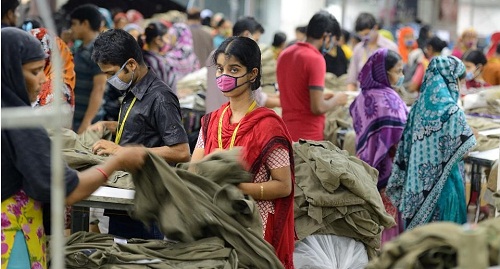 sustainable materials, reduction in carbon levels and issues of workers’ rights are likely to be relegated to the background as companies will focus on managing short-term economic distress. However, the industry may face irrecoverable losses if it abandons sustainability and value chain partnerships in the face of COVID-19, warn experts. In fact a recent survey suggests, only companies that embrace sustainability will emerge as leaders of the resurgent fashion industry post the pandemic.
Need to protect critical assets, upgrade facilities
Post COVID-19, the BCG survey advises fashion companies to protect their critical assets such as workers, employees, capital, value chain partnerships, channels and the trust and support of customers. Till now, these companies focused on maintaining their cash flows. However, now they need to shift this focus to upgrading facilities with the recommended health and safety requirements, opines Nikhil Hirdaramani, Director, Hirdaramani Group. These companies also need to abide by their contracts, pay for completed and near complete orders and avoid cancelling orders. They should also engage in an open dialogue and constructive partnership across their value chain to find shared solutions for protecting worker livelihood and sustaining trust.
Make sustainability integral to operations
COVID-19 is likely to change the value system of fashion companies. Brands will make sustainability central to their post-pandemic decision-making. Another BCG COVID-19 consumer sentiment survey of almost 6,000 consumers in the US, UK, Germany, Italy, and China, indicates brands that pay furloughed employees, repurpose facilities to produce PPE or donate to their communities will be viewed favorably by consumers. The standards of clothing will also change to include durability and good quality as customers will now associate them with their well-being and the collective good.
Adopt transparent business models
In order to demonstrate the positive environmental and social impact of their operations to stakeholders, fashion companies will leverage innovative business models and end-to-end solutions. They will also adopt a transparent model to showcase their verified sustainable practices, points out Sanjeev Bahl, Founder and Chief Executive, Saitex.
Based on their sustainability initiatives, the BCG study divides companies in three groups: companies that have not yet prioritized sustainability; those on the path; and trailblazers. According to the study, companies that have not yet prioritized sustainability need to immediately make this transition, while those on the journey need to safeguard operations by recommitting to goals. On the other hand, the trailblazers need to hasten the adoption of sustainability within the entire sector.
Though it won’t be easy for fashion companies to manage this once-in-a-generation economic crisis besides taking up the mantle of environmental and social concerns, leaders who weave sustainability into their business strategies will emerge clear winners.
COVID-19 to transform global trading patterns
 Experts say, COVID-19 pandemic could trigger the biggest economic contraction since World War II. Already, it has led to a 3 per cent drop in global trade values in the first quarter of 2020. These values could further decrease by around 32 per cent in 2020 with global growth declining by 3 per cent. COVID-19 has also caused supply chain disruptions in many globalized industries such as precision instruments, machinery, automotive and communication equipment, textiles. Catering to non-essential needs of consumers, the fashion industry faces a greater risk as lockdowns across the world could lead to a global decline in demand for clothes.
US, Europe emerge as new trade hubs The accession of China to the World Trade Agreement in 2001 and the expiry of the WTO Agreement on Textiles and Clothing in 2005 made China an important centre of textile and clothing global value chains. As a result, most of the global apparel production and sourcing shifted to China and other Asian countries that offered cheaper labor.
However, wages gradually rose in China and Chinese plants moved to other low-wage countries like Bangladesh, Pakistan and Vietnam. Yet, at the global level, China remains an important supplier and consumer of fashion goods. In terms of fashion trade, besides China, United States and European countries like Belgium, Germany, France and the UK are the emerging fashion trade hubs. China was also the first country to stop production post COVID-19, followed by other countries. This led to many European and American retailers canceling their orders and shippers invoking ‘force majeure’ clauses within their contracts to halt their payments.
Bleak future for developing countries
As the epidemiologic situation has impacted the availability of skilled workforce and multimodal logistics in China it could lead to a shift in production of fashion goods to other sourcing countries that are resuming production faster and are also closer their retailers.
As most developing countries do not have financial means, health systems or social safety nets to respond to the economic impacts of the COVID-19 pandemic crisis, the International Monetary Fund, the World Bank and others have announced various assistance packages for them. Yet, the future prospects of these low-costs sourcing countries appears bleak as they are highly dependent on textile and garments exports for revenues. How these weakest links of the supply chain emerge out of this unplanned humanitarian and financial crisis remains to be seen. Whether the current crisis generalizes new models such like season-less designs’ or increase local sourcing, it will definitely impact the trading patterns in future.
PRGMEA urges for industrialization and enhanced exports
Pakistan Readymade Garments Manufacturers and Exporters Association (PRGMEA) in its budget proposals for 2020-21 called for various steps to promote industrialization and enhance exports. PRGMEA urged for coming budget business friendly, lowering cost of production, paying early refunds to solve liquidity crunch, relaxing import policy for industrial raw material and uplifting exports across the country.
According to the budget proposal, PRGMEA seeks revival of SRO 1125 in its true shape and reintroduce the system of No Payment No Refund of Sales Tax for the five export-oriented sectors for one year. All stuck up claims of exporters Customs Rebates Sale Tax rebates should be released. The liquidity crunch is a major stumbling block in the way of improving exports. Apparel industry should be allowed to import fabric under SRO 492 scheme as weaving industry of Pakistan is unable to fulfil the demands of fashion wear. It is proposed that cotton yarn, the major raw material of the apparel sector should be exempted from all duties and taxes to encourage value addition.
PRGMEA suggested that the custom duty of seven per cent on import of polyester staple fibre including a range 20 per cent anti-dumping duty should be abolished to reduce the cost of production to compete in the market. Apparel industry should be allowed to import fabric under the SRO 492 scheme as the weaving industry of Pakistan is unable to fulfil demand of fashion wear.
FIEO urges acceleration of India-EU FTA
Exporters' body FIEO has urged Commerce and Industry Minister Piyush Goyal to fast-track the long-pending free-trade agreement (FTA) between EU and India and conclude it in an expeditious manner.
India and the EU are negotiating a comprehensive FTA, officially dubbed as the Bilateral Trade and Investment Agreement (BTIA), but the talks are stalled since May 2013 due to differences on several matters.
FIEO President S K Saraf said Vietnam, a strong competitor of India, has already signed a similar agreement with the EU, which is likely to be operational by July-August 2020.
With the signing of the agreement, Vietnamese products will get further edge in the EU markets as the landed price of their products would become cheaper as compared to Indian products, he said.
He said the EU-Vietnam Investment Protection Agreement has also been signed and, due to this, Vietnam will be attracting a lot of investments moving out of China particularly those with the EU as their market.
He added that due to these developments, Indian exporters are quite concerned and would request for acceleration in the process of completion of a similar agreement with the EU.
Textile Exchange releases 2025 Sustainable Cotton Challenge report
US-based global non-profit Textile Exchange recently released the 2025 Sustainable Cotton Challenge report. The purpose of the 2025 Challenge is to raise the uptake of organic and preferred cotton, which can increase smallholder farmers’ income, eliminate hazardous pesticides, reduce the use of water, pesticides and synthetic fertilizers, and improve water quality and soil health.
The Challenge was formed in 2017 when His Royal Highness The Prince of Wales convened a group of chief executive officers (CEOs) through the work of his International Sustainability Unit that existed to address critical challenges facing the world.
Those original 13 CEOs committed to working together to accelerate the use of sustainable cotton, which paved the way for other industry leaders to follow, resulting in 82 companies now committed to sourcing 100 per cent sustainable cotton by 2025.
The Challenge serves as a cornerstone for change in the apparel and textile industry by encouraging brands and retailers to commit to source cent per cent of their cotton from the most sustainable sources by 2025, a press release from Textile Exchange said.
Nepal textile association closes down on lack of government stimulus
Nepal Textile Industries Association has decided to close down as Nepal government has failed to offer any stimulus package for the textile industry which is on a verge of collapse. According to the President of the association Shailendra Lal Pradhan, the textile sector was not listed among the 44 industries in the government decision that were allowed to open partially, even though it had been severely hit by the virus lockdown with 95 percent of the factories shuttered.
The association said the government's annual financial plan did not contain any relief measures for the textile industry despite the suffering brought about by the prolonged stay-at-home order. The government had proclaimed that the textile industry would get interest subsidies, but it did not happen. And now the budget statement says the electricity tariff exemption has been removed. A lot of money has been poured into the domestic textile industry. In 2014 alone, investors pumped in another Rs1.5 billion, encouraged by the government announcement that they would get a 70 percent value added tax refund.
However, all that investment has been jeopardised with the government withdrawing the VAT adjustment facility that fabric manufacturers have been getting for the past 20 years
Under pressure for rent payments, American retailers reopen malls
Pressured by financial concerns, retailers across the US are rushing to open malls in the country. A new report from CBRE, the US commercial real estate services and investment firm, said these retailers could only pay around 10 per cent of their rents in April due to a dip in sales. Shopping centers anchored by grocery stores could also pay only 80 per cent of their normal rent payments.
Even with e-commerce options, these retailers saw a 8.7 per cent decline in sales in April as against sales in March. The estimate for total monthly sales for the retail trade and food services industry fell to $483 billion, effectively erasing three years of growth. Also, some retailers prioritized the retention of sales and management staff over making rental payments.
Simon Property Group, the largest operators of shopping malls and outlets in the US, has reopened 77 out of its 209 properties, more than a third of its portfolio, in 38 states after national closures in late March due to the pandemic. The company plans to open “approximately half” of its U.S. portfolio within the next week.
Similarly, Macerich, another large owner of malls, has also re-opened 13 of its 52 US properties in Texas, Colorado, Missouri, Iowa, Indiana and Arizona.
Indonesia exempts Indian fabrics from new import tariffs
In order to protect its domestic upstream industry from a recent surge in imports, Indonesia exempted fabrics made in India and Vietnam and synthetic yarn and curtains made in South Korea and Hong Kong from new import tariffs imposed on some textile products from May this year till November 2022, according to the country’s finance ministry.
In 2019, the Indonesian government imposed temporary additional duties on imports of textiles and textile products up to 67.7 per cent, according to Vietnamese media reports.
Moody’s Investors Index had earlier warned that the US-China trade tensions could lead to an influx of Chinese yarn, fabrics and garments into Indonesia, potentially disrupting the stable levels of demand and supply in the country.
Bangladesh RMG to lose $5 billion revenue in 2019-20: BGMEA
Due to the COVID-19 pandemic, the Bangladeshi apparel sector is likely to lose $5 billion revenue in 2019-20, says BGMEA president Rubina Huq. She revealed buyers have cancelled orders worth as much as $3.15 billion since the unfolding of the pandemic. This has led to factories running at only 55 per cent of their capacity with imported unused raw materials piling up in warehouses.
BGMEA estimates global consumption of clothes to fall by 65 per cent in future leading to 30 per cent slump in work orders. Due to this, factory owner may also have to lay off workers from th.is month.
However, the US’s move to cut its order from China by 52 per cent may make Bangladesh a good sourcing destination for apparel goods, views Huq, who heads the Mohammadi Group.
Therefore, to make the Bangladesh RMG industry and its supply chain sustainable, BGMEA urged manufacturers to focus on virtual marketplaces.
Increase in MSP good for cotton sowing, threat for spinners
According to ICRA, the recent decision of Cabinet Committee on Economic Affairs (CCEA) approving an increase in the minimum support prices (MSPs) for kharif crops (including cotton) for the Cotton Year 2020-21 is likely to be unfavorable for the domestic spinning sector.
The CCEA recently hiked the MSP for the medium-staple variety by Rs 260 per quintal to Rs 5,515 per quintal, while that of long-staple variety by Rs 275/quintal to Rs 5,825/quintal, translating into an increase of 5 per cent over the level fixed for CYi2020.
According to Jayanta Roy, senior VP and group head, Icra Ratings, this move may heighten challenges for the domestic spinning companies, as this comes at a time when the COVID-19 pandemic has resulted in severe demand-side pressures in the international textile markets.
Though increased MSP, timely onset of monsoon and expectation of normal monsoons augur well for cotton sowing in India, cotton crop remains highly vulnerable to pest attacks, and output/yield expectations remain contingent on these. In this context, the locust swarm which has hit several parts of western and northern India including Rajasthan, pose a looming threat for the crops as these insects feed on a large variety of crops.