


FW
Secondhand clothing retail platforms in America record robust sales
With millions of Americans becoming unemployed, the market for second-hand clothing is growing in the country. Recent data by the Commerce Department indicates second hand clothes retail platforms in the country continued to record robust sales as consumers became increasingly price-conscious. ThredUp’s recent annual report also revealed that from mid-March to the end of May, its weekly gross transaction volume grew by 20 per cent compared to the same time period last year. From mid-April to mid-May, Poshmark too experienced a 50 per cent increase in clothing and accessories sales compared to the previous year while the traffic on Depop’s platform increased by 100 per cent year-over-year in April.
Compared to traditional thrift stores or the first wave of resale sites like eBay, digitally-native resale sites like Depop, Poshmark, and ThredUp offer more of a social experience. For instance, Poshmark hosted in-person meetups for sellers. It also added a Stories feature, similar to Instagram’s and Snapchat’s, to its app in April. That has been a benefit during the stay at home orders, when people were spending more time online.
However, one challenge that all of the secondhand apparel sites are facing right now is that items are taking longer to ship — which can turn away first-time customers if their items take too long to arrive. Unlike some other resale sites, ThredUp sellers don’t directly ship items to buyers — they instead ship them to ThredUp warehouses, where the company cleans and inspects items before making them available for purchase on its website. Hence it takes ThredUp longer to process items thanks to social distancing and stricter cleaning measures that it has implemented in its warehouses.
Surat textile mills attract migrant workers with daily wages
Abdul • Jun 16, 12:59 PM Facing severe shortage of skilled workers, textile mills in Surat, Gujarat are offering daily wages to laborers. Recently, Yajuvendra Dubey, a textile mill worker from Bihar was offered daily wages by his textile mill in Pandesara GIDC Surat. Similarly workers in over 40 textile mills located in Sachin and Pandesara GIDC areas have switched to daily wage payment looking into the demand of workers who stayed back and are facing financial crunch.
As per estimate, out of total two lakh workers, only 30,000 have decided to stay back in Surat. Textile mills that have resumed work in the city are running at less than 30 per cent capacity. Most of them are engaged in completing pending orders only without any fresh orders. According to Binay Agarwal, a textile mill owner in Sachin GIDC, these mills will have continue paying daily wages to workers until workers who have relocated to their villages return.
Pakistan’s cotton production in marketing year 2020-21 to touch 1.37 ton
Pakistan’s cotton production during marketing year (Aug/Jul) 2020/21 is forecasted to be 1.37 million tons. This year, the area under cotton cultivation in the country is projected to decline by 12 per cent to 2.2 million hectares (MHA), due to a shift to other remunerable crops like corn, rice, and sugarcane. Cotton yield is expected to recover from the last year as only core cotton farmers will utilize their experiences to enhance productivity. The yield for marketing year 2020-21 is projected at 623 kg per hectare, 8 percent higher than the current year’s estimate of 575 kg per hectare.
In marketing year 2019/20 production, Pakistan produced 1.4million ton of cotton which was 13 percent lower than the previous year’s production of 1.65 million ton. The key factors that result in lowering of this production included extremely high temperatures during the critical month of September 2019, which hampered the development of fruiting bodies, severe attacks of whitefly and pink boll worms, and lower seed cotton prices.
Impose anti-dumping duty on Chinese footwear urge Indian leather manufacturers
Indian leather manufacturers and traders have urged the government to impose an anti-dumping duty on Chinese footwear to decrease the amount of cheap imports and make Indian businesses more competitive. The leather industry has also demanded an increase in import duty on chemicals used in the leather treatment process. Leather businesses have demanded increase in import duty on chemicals imported from China including basic chrome sulphate and sodium sulphide from the current rate of 8.2 per cent to 35 per cent.
Numerous Indian industries have also urged their customers to boycott Chinese goods in order to boost Indian manufacturing in the wake of lockdown and following border tensions between India and China. The Confederation of All India Traders has also been vocal about boycotting Chinese products, claiming that Chinese imports are costing Indian workers their jobs.
According to the Council of Leather Exports, a large number of Indian factories that manufactured the chemicals used to treat leather have closed down as they were unable compete with Chinese imports. China also manufactures a far greater volume of footwear than India and Chinese footwear exports to India have risen in recent years as India’s annual footwear consumption has increased.
JD Sports puts Go Outdoors into administration
Athletic apparel and footwear powerhouse JD Sports has bought back the assets of its adventured-oriented Go Outdoors for £56.5 million ($70.7 million), putting the outdoor retailer into administration. As a part of the administration process, JD Sports will soon begin restructuring the unit. The onset of COVID-19 pandemic made future viability of Go Outdoors “materially uncertain” as it was forced to shut 67 stores on March 23. Hence, JD Sports’ board of directors decided it was not in the best interest of the company and its shareholders to provide continued financial support to Go Outdoors in its existing form.
A company statement states, the terms of the present property leases Go Outdoors had been locked in were extremely inflexible. Leases have an average remaining expiration period of approximately 10 years with rent prices that can either go up or stay the same, but never go down, which is designed to protect the landlord from unforeseen market circumstances. Many of the leases are fixed at rates above inflation regardless of the market rent in the stores’ locations.
With the company put into administration, its Peter Cowgill, Executive Chairman looks forward to have positive conversations with landlords and agreeing to new flexible lease contracts to reflect the widely reported challenges of reduced consumer footfall.
JCPenney to shut 13 stores in July
In order to revamp its business, JCPenney plans to shut 13 more stores in the first week of July. Last month, the retailer had announced its plans to shut 192 stores by February 2021 and then close another 50 stores in 2022. It recently released a list of 154 stores and initiated liquidation sales at 136 locations.
The 13 stores that the retailer plans to close are located in the Mid Valley Mall, Sunnyside, WA; Greenville West Mall, Greenville, MI; Owosso in MI; Omache Shopping CTR, OMAK, WA; Big Rapids, MI; Northtown Village, Alma, MI; Bay City Mall, Bay City, MI; MT Pleasant Shopping CTR, MT Pleasant, MI; Mall at Prince George’s, Hyattsville, MD; Meridian Mall, Okemos, MI; South Shore Mall, Bay Shore, NY; Poughkeepsie Galleria, Poughkeepsie, NY and Sun Valley Mall, Concord.
Functional apparel market to grow at 7.4 per cent CAGR by 2027
The global functional apparel market size is expected to grow at a CAGR of 7.4 per cent between 2020 and 2027 to be worth around $550 billion by 2027, says a research report by US-based Acumen Research and Consulting. The report expects suppliers to shift away from China with the intention of reducing potential market costs and growing the cluster in a given country to ease supply chain.
The report says, increased awareness about healthy lifestyle led to a rise in demand for sportswear, which in turn will allow the global market for functional apparel to expand. Moreover, the growth of the target market is driven by a growing number of sports and other recreational events, including trekking, cycling, etc. Growing demand for convenient apparel and accessories, as well as the rising youth participation in various fields of sport, are two of the main factors for the growth of the target market.
Another element expected to boost demand for medical wearing laboratory apparel is increased research and development activities in medical laboratories to propel growth of the world market. Increasing mobile and Internet penetration boosts demand for many functional wear products like activewear, wear safety, etc., which, on the other hand, are projected to drive growth of the global market for functional wear over the anticipated period.
A second aspect projected to impede growth of the target market is the emergence of replication goods at a lower rate.
Fashion brands cancel orders, refuse to pay workers
Resorting to unfair trade practices, fast fashion brands are not just cancelling orders but also refusing to pay their workers in India. A recent example of this is H&M which cancelled orders after a major chunk of it was completed. Most of these fast-fashion brands and companies, and even some high fashion brands, do not have their own factories or ateliers. Instead, a bulk of the manufacturing work is outsourced to India, Bangladesh, and other developing nations where the labor is cheap and raw material is easily procurable.
The factories where the work is outsourced to, is responsible for procuring the raw materials, creating a product, say jeans or a shirt, ship a batch of the finished product to the nearest headquarter of the brand, where it undergoes a quality and check, and then sent across the world. Normally, once the finished product passes inspection, the brands release a majority of the payment. Few brands, do give the factories a token advance, but not all of them. Workers in these factories are barely given the minimum wages. On top of that, most of these factories flout basic safety measures. The workers in these factories often work under appalling conditions, with practically no job security.
EU face masks production to increase 20-fold by November: EDANA
The production of face masks in EU is set to increase 20-times more by November 2020, compared to pre-crisis times. This means EU-based producers will be able to make the equivalent of 1.5 billion three-layer masks a month, say the recently released figures by EDANA, the leading global association serving the nonwovens and related industries. At the start of the pandemic in March the main bottleneck in global supply chain for face masks was a shortage of ultra-fine meltblown (MB) filament web, which is the indispensable high-tech filter layer used in all nonwoven masks. Once electro statistically charged, this nonwoven fabric is able to stop very fine particles and droplets carrying bacteria and viruses.
However, thanks to the efforts of EU-based producers there would be enough meltblown capacity in the EU by November to produce the equivalent of 1.5 billion three-layer surgical masks per month. In contrast with the rest of the supply chain, where European players were no longer in a leadership position, the world’s most sophisticated technology platforms producing meltblown nonwovens belong to European machinery companies.
Over the last three months, EDANA has been liaising with partner associations including MedTech Europe, ESF, and EURATEX to ensure sufficient supplies of essential public health equipment. EDANA has been recognized by the European Commission as the voice of industry on all issues relevant to the nonwoven-based face masks supply chain.
Last week EDANA convened a new sector group representing face mask converters, nonwoven suppliers, testing laboratories and equipment manufacturers to work together to develop an independent and self-sufficient supply chain for medical face masks and personal protective masks in the EU. The group will work to ensure adherence to applicable European Standards and to encourage responsible product stewardship throughout the life-cycle of face-masks from raw material sourcing to end-of-life solutions.
India seeks opportunity in adversity mulls PPE exports
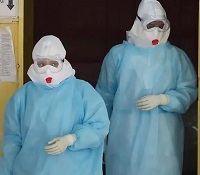 Seeking opportunities in times of adversity, Indian government is seriously thinking of allowing PPE makers to export nearly 50 lakh personal protective equipment (PPE) suits a month. Several industry bodies like AEPC and others have been urging the government to allow PPE export . As AEPC chairman, A Sakthivel points out exports would help manufacturers cover the financial losses suffered due to the COVID-19 pandemic. He says countries like Bangladesh, Indonesia, Pakistan and others have already lifted their ban on PPE exports and are receiving huge orders. Pakistan recently received $100 million worth export orders, which is likely to go up to $500 million. Similarly, Bangladesh has also received huge orders from countries like the US, Nepal, Sri Lanka and Kuwait. Hence, India too should tap this opportunity, Sakthivel urges.
As of now, India’s exports for Covid-19 primarily comprise: hydroxychloroquine and paracetamol. While the former is being explored as a treatment, the latter is used to address Covid-19 symptoms such as fever and body ache.
Ramping domestic production capacity
Meanwhile, the government recently ramped up India’s capacity to manufacture PPE kits and ventilators in collaboration with private players. Production is being led by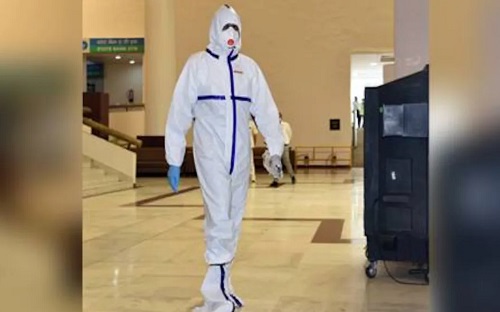 Empowered Group III under ‘Make in India’ initiative of the central government. The group includes top officers from the Ministries of textiles, external affairs, home affairs, and health & family welfare, besides officers of the Central Board of Indirect Taxes and Customs, the Defence Research and Development Organization, the Prime Minister’s Office, and the Cabinet Secretariat.
Before February, India just had 20 PPE manufacturers but these have now grown to over 600. Similarly, the number of ventilators has grown to over 50 from eight before February. In all, India currently manufactures an estimated eight lakh personal protective equipment (PPE) kits and around 1,000 ventilators daily. Hence, industry leaders had been urging the government to allow them to first export PPE followed by ventilators, masks and later RT-PCR (testing) kits, along with reagents and swabs, among other products.
Growing export prospects
In response, the government has asked industry leaders to prepare their PPE equipment for global certification. For this, manufacturers would have to acquire a Conformité Européene or CE marking that would enable them to export their PPEs to the European Union, and a certification from the Food and Drug Administration (FDA) for the US market. This certification can be done in two ways - either the seller sends the PPE samples to these authorities or these agencies allow their accredited labs in India to certify manufacturers here. There are also certain functional requirements such as health and safety for different countries that these manufacturers would have to follow.











