FW
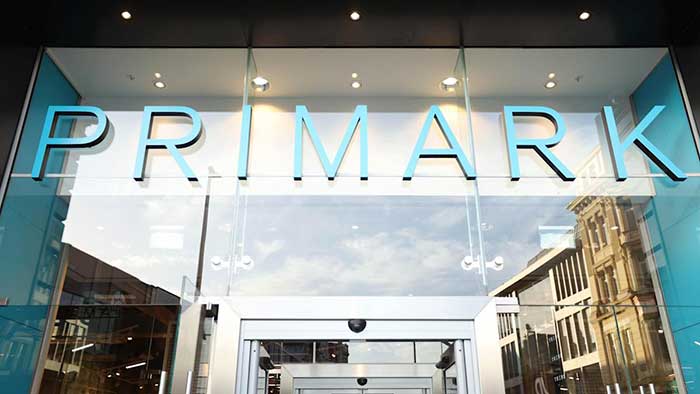
Primark’s sales recover quicker than expected
Primark’s sales have recovered quicker than expected since stores reopened from lockdowns. The retailer has reopened 367 stores while eight stores still remain shut. The retailer also opened five new stores in this quarter and plans to open another five during the rest of the year, including two in the US. Its parent company AB Foods expects Primark’s profit to slump by about two-thirds this year because of the shutdowns. The UK conglomerate said the discount chain should generate adjusted operating profit of as much as £350 million ($437 million) in the current fiscal year, compared with £913 million last year.
As Primark does not sell via e-commerce, its revenues fell 75 per cent in the fiscal third quarter. The chain also suffered a cash outflow of £800 million. Sales at its other divisions, including sugar, agriculture, grocery, and food ingredients, offset some of the impact on its fashion business.
Bangladesh’s export earnings decline by 18.45 per cent: BGMEA
BGMEA reveals the Coronavirus pandemic has led to a significant decline in the country’s earnings from its apparel exports. According to the data, earnings declined 18.45 per cent year-on-year to $27.83 billion in the outgoing fiscal year. This is $6.3 billion less than fiscal 2018-19 and falls $10.37 billion short of the target set for fiscal 2019-20. The target for the immediate past fiscal year was $38.20 billion. Bangladesh exported $34.13 billion-worth apparel in fiscal 2018-19.
In June, the earnings were $2.12 billion which is 11.43 per cent lower than a year earlier but up 72.4 per cent from the previous month. The sector experienced a historic low in shipments in April this year. Earnings from the garments sector reached only $0.37 billion, the lowest receipt since the sector started taking shape four decades ago.
The receipts from apparel, which typically makes up 84 per cent of national exports, was lower mainly because of two reasons fuelled by the pandemic coronavirus. Primarily, thousands of retail stores were shut in the Western world and secondly, factories were shut in Bangladesh due to the pandemic.
Clean Clothes Campaign launches new website for authentic data
The Clean Clothes Campaign (CCC), the garment industry’s largest alliance of labor unions and non-governmental organizations, has launched a new website, called “The Fashion Checker” to provide garment workers, activists and consumers access to real data from supply chains of the worlds’ biggest fashion brands including Primark, Bestseller and Topshop.
CCC will use data on the website to put pressure on brands and policymakers to implement living wages for all workers in the garment industry by Dec 31 2022. A recent survey conducted by the alliance found that 93 per cent brands failed to provide evidence of paying a living wage to any of their suppliers while 63 per cent could not disclose names or addresses of suppliers or only partially comply with the transparency pledge.
According to the CCC, brands have continued to ruthlessly seek lower prices for goods, forcing suppliers to operate on narrow profit margins and squeezing the wages of workers who are already living on the poverty line. Muriel Treibich, from the CCC said for decades, brands and retailers have built profits through a low-wage, labour- intensive model. Lack of transparency in the garment industry has enabled them to distance themselves from workers and evade their responsibility to address low wages and exploitation in supply chains.
TEA accuses customs of jeopardizing knitwear units in Tirupur
Tirupur Exporters Association (TEA) has accused the customs department of putting the knitwear manufacturing units in the city in trouble by refusing to clear consignments from China. The consignments include accessories and raw materials which are urgently required by the knitwear units. The Customs Department has refused to clear them unless they get approval from the Central Government.
This refusal comes at a time when garment exports are facing severe competition in the global market from countries like Bangladesh, Vietnam, Cambodia apart from China. Foreign buyers are always keen to get quality product with competitiveness couples with delivery schedule, said M Shanmugham, President of the association.
Any further delay in delivering the products would force the buyers to categorise the Indian exporters as unreliable suppliers which would sound the death knell of the knitwear industry in the country, Shanmugham added.
Hugo Boss hires Oliver Timm as new chief sales officer
Hugo Boss has roped in Oliver Timm its new chief sales officer as chief executive Mark Langer will step aside to a consultative role later this month. Due to take up his role in January next year, Timm will be responsible for the German fashion brand’s own retail operations as well as its wholesale and ecommerce businesses. He has been working with PVH Corp for over 20 years, working his way up to chief commercial officer with responsibility for driving commercial strategies for Tommy Hilfiger and Calvin Klein across the EMEA region.
Meanwhile, Hugo Boss is also expanding its online store to an additional 22 countries, after stepping up investments as part of the retailer’s strategy to become ‘digital first.’ Soon, Canada, Mexico and India will soon join Hugo Boss’ online store portfolio list, making a total of 25 countries rolled out in 2020 and an overall online presence encompassing 40 countries.
Diesel to expand into sneaker market
Massimo Piombini, who took over as the new CEO of Diesel SpA in late January, plans to expand in the sneakers market to turn around the denim brand that had its heyday in the 1990s. The pandemic is accelerating the brand’s expansion plans as its 436 stores across the world remain unaffected. Diesel also now plans to set up flagship stores in a number of hub cities, from New York and London to Berlin and Tel Aviv.
A part of the OTB group, founded by the Italian fashion entrepreneur Renzo Rosso, Diesel remains by far the biggest brand, generating about €900 million ($1 billion) of the group’s €1.5 billion revenue last year. In the 1990s, it became one of the best known Italian-designed global lifestyle brands and helped push denim into a premium category for the first time.
The brand sells 700,000 sneakers a year and hopes to potentially quadruple that number. The company will also revamp its merchandising and marketing strategies besides accelerating its digital transformation.
COVID-19 impact, apparel sales decline across the globe
Though the stalled automotive sector has taken a toll on the global fiber market, declining apparel sales have made it more vulnerable to the ongoing global recession. Apparel sales in the US declined by almost 63 per cent year-on-year in May this year, following an 87 per cent decline in April. In the EU27, retail sales at specialist textile, apparel, footwear and leather goods stores declined by 55 per cent and 64 per cent in March and April, year-on-year. In Spain, these sales declined by 90 per cent in April, while in Sweden they declined by 38 per cent.
Plummeting sales hit retailers hard. In the US, five national companies with revenues in excess of $22billion in 2019 filed for Chapter 11 bankruptcy by the end of May. And global brands such as Gap and Inditex reported significant operating losses in Q1. From January to April, the value of apparel imports by the US declined by 19 per cent, year-on-year, and a massive 42 per cent in April alone. In Europe, apparel imports dropped by around 13 per cent in the first four months of the year, compared with the same period in 2019. In April alone, the decline was 38 per cent year-on-year.
Capri Holdings’ Q4 revenue declines 11.3 per cent
The fourth quarter revenues of Capri Holdings, a US-based global fashion luxury group, declined 11.3 per cent to $1.19 billion in fourth quarter (Q4) FY20, ended on March 28, 2020 compared to revenue of $1.34 billion in same quarter last year. The company reported a net loss of $551 million during the quarter compared to net income of $19 million in Q4 FY19.
Its gross profit for the quarter was $631 million as against $793 million in the corresponding quarter of last fiscal. The company incurred a loss from the operations of $536 million compared to income of $40 million in same quarter last year.
The company’s revenue in the Versace segment's jumped by 55.5 per cent to $213 million. Sales of Versace in the Americas grew to $53 million while in EMEA (Europe, Middle East and Africa) they grew to to $109 million and Asia to $51 million.
However, revenues of Jimmy Choo fell by 23.0 per cent to $107 million and those of Michael Kors dropped by 18.4 per cent to $872 million. Sales of Jimmy Choo during Q4 FY20 in Americas was $22 million, EMEA $54 million, and Asia $31 million. The revenues of Michael Kors decreased in all the regions with Americas declining by $600 million, EMEA by $169 million and Asia by $103 million.
CLE to sign agreements with two US associations
India’s Council for Leather Exports (CLE) plans to sign an agreement with Washington-based Footwear Distributors and Retailers of America and the United States Fashion Industry Association to tap emerging opportunities for Indian exporters there.
From September 2020 onwards, CLE expects exports to normalize. The council plans to tap the growing opportunities in India which has become a preferred sourcing destination for major markets in the United States and Europe.
CLE’s major markets of Europe and USA were severely affected by COVID-19. Many of its buyers are filing bankruptcy which is leading to cancellation of export orders. Exporters are facing difficulties as ECGC coverage (insurance) is not extended for pre-shipments.
Recently, CLE participated in the virtual B2B meetings with Korean and Vietnamese entrepreneurs and buyers. The council is also in touch with the EU, the UK and Russian markets. It plans to hold virtual exhibitions with Russian buyers on July 20 and 21 and with Peru on August 5 and 6.
Growing wool demand attributed to its well-researched benefits: AWI study
A study funded by Australian Wool Innovation (AWI) finds the growing market demand for wool base-layer garments can be attributed to the already well-researched benefits of superfine Merino wool, including its softness next to the skin, moisture management, breathability – and fire resistance. Increased demand is driven by the incidence of injuries to military personnel in the Middle East, where battle techniques such as improvised explosive devices (IEDs) were used. Considerably more severe skin injuries occurred when synthetic base-layers were worn, as they can melt onto the skin at high temperatures.
The study found that the wool and wool rich fabrics, used as base-layer garments for military and first responders like firefighters, are the best in fire resistance, while the 100 per cent synthetic fabrics (polypropylene and polyester fabrics) scored the worst due to their propensity to melt and damage the skin.
AWI studied the fire resistance of various fabrics used as base-layer garments for military and first responder personnel such as firefighters. The study concluded that the wool and wool rich fabrics in the study performed the best, while the 100 per cent synthetic fabrics performed the worst due to their propensity to melt and damage the skin.