FW
Calik Denim reschedules Amsterdam Conference
Travel restrictions and safety concerns about the COVID-19 have forced Turkish denim mill Calik Denim to reschedule its third annual Ever Evolving Talks event in Amsterdam to April 2021. The conference was scheduled to take place the day before Kingpins Amsterdam in October, which announced last week its plans to cancel the trade show as well.
Calik Denim launched the annual conference in 2018 as a catalyst for change for the fashion industry as a whole. The first event focused on innovation, technology and sustainability. The second event dove deeper into topics like blockchain, Gen Z consumption habits and climate change.
Based on the company’s motto ‘Ever Evolving,’ which emphasizes continuous development, the Ever Evolving Talks by Calik Denim event is intended to bring industry stakeholders together and support their collective development.
RFID Lab completes Chain Integration Project
The Auburn University RFID Lab, GS1 US and several leading retail companies have completed the Chain Integration Project (CHIP). The groundbreaking proof-of-concept demonstrated the effectiveness of using blockchain in combination with RFID to gather serialized product information. Three brands, Nike, PVH Corp., and Herman Kay, as well as two retailers, Kohl’s and Macy’s, contributed live data to the project. Though blockchain’s potential is still undefined in retail, CHIP represented an important step in helping to solve supply chain challenges that have plagued the industry for decades.
CHIP participants named claims and chargebacks as one of the costliest problems for brands and retailers. There's simply little to no communication of serialized data between the stakeholders involved. Claims are often settled in the absence of sufficient shipment information on both brand and retailer sides.
Though blockchain technology can hold them accountable for their agreements and create more order transparency, trading partners need to focus on the basic tenets of supply chain visibility to fully maximize blockchain for this purpose. Companies pursuing blockchain should have globally unique product identification in place (not proprietary identification numbers) as well as a uniform way to capture how the product changes hands throughout the supply chain, such as RFID. Without supply chain visibility and data completeness, order accuracy cannot be improved.
India’s Cotton textile exports to China decline by 74%: TEXPROCIL
Data by The Cotton Textiles Export Promotion Council (TEXPROCIL) reveals, India’s textile exports to China declined by 74 per cent to touch $90 million during the April-June quarter this year. China’s share in India’s total exports of cotton textile products also halved to 6.9 per cent during the quarter as against 14 per cent in the corresponding quarter last fiscal.
This decline is a result of reciprocal measures carried out by Indian and Chinese governments such as detailed shipment inspections at ports, delaying clearing of goods, thereby also contributing to decline in exports, says KV Srinivasan, Managing Director, Premier Mills. Substitution of textile imports from China as well as contemplation of anti-dumping duties on certain Chinese products may further impact these imports, he said.
Overall, India’s cotton textile exports during the first quarter declined by 47 per cent to $1.29 billion against $2.42 billion in the same quarter last year. One of the main reasons for the decline was supply chain disruptions. Delays in documentation, especially Certificates of Origin in countries like China, Vietnam, Thailand and Malaysia also delayed deliveries, hitting exports, said Siddhartha Rajagopal, Executive Director, TEXPROCIL.
CFA appeals for postponement of partial withdrawal of EBA
The Cambodian Footwear Association (CFA) has appealed to the European Commission to postpone partial withdrawal of its Everything but Arms (EBA) trade benefits. As per CFA, the withdrawal will cause economic damage well beyond what has been foreseen when the European Council undertook its assessment in 2019 and issued its Cambodia EBA decision in early February 2020.
COVID-19 has already resulted in the loss of 30,000-40,000 jobs in the country’s footwear sector. According to a recent membership survey by CFA, footwear production volumes in the first half of 2020 declined on an average 20-40 per cent per factory compared to 2019, and sectoral employment reductions led to loss of 30,000-40,000 jobs.
The survey forecasts worse outlook for the second half of 2020. There is not a single member factory that reported an increase in orders compared to the first half of the year, with most factories forecasting a further drop in production for an overall decline of 40-60 per cent for full year 2020 compared to 2019.
Based upon existing order volumes for the second half of 2020, 70 per cent of member factories are preparing to cut jobs or suspend production. Most of the remaining 30 per cent have already reduced employment and forecast production only at already reduced levels.
A blow to Asia as companies diversify supply chains post COVID-19
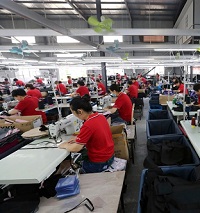 Disruptions caused by COVID-19 is inducing 57 per cent textile and apparel organizations to diversify their sourcing away from Asian countries like China, Vietnam and Bangladesh, says the Supply Chain Resilience Report 2020 by BCI. Many apparel companies plan to shorten their supply chains due to the pandemic, with Asia becoming the biggest casualty, says the BCI report. Around 30 per cent companies intend to reduce their sourcing from Asia, while another 13.2 per cent expect to reduce their sourcing from China.
The BCI Coronavirus Preparedness report published in March also revealed that within two months of January-March, the number of organizations who moved to local sourcing jumped from 16.3 to 36.4 per cent. The figure further surged to 66.2 per cent in June.
Companies to scrutinize suppliers locations, documents
Widespread global shutdowns have made it extremely important for companies to know the geographical location of their suppliers. The BCI report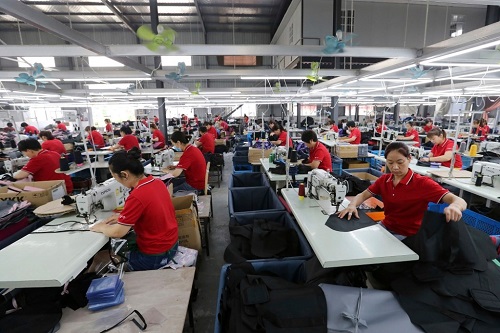 suggests, while 63.4 per cent respondents are aware of the location of their critical Tier I suppliers, only 36 per cent know the location of their Tier II suppliers. Post COVID, around 60 per cent respondents intend to do a deep analysis of all their suppliers, while 45.3 per cent organizations intend to determine the location of all their Tier-II suppliers. Some respondents also plan to scrutinize the documents of suppliers to determine their success rate, says Rachael Elliot, Head-Thought Leadership, BCI.
AI for demand forecasting
The report also analyzes respondents’ plans for future inventory holding. Around 46.1 per cent intend to maintain the same inventory level as usual whereas 19.6 per cent plan to increase their inventories. Of those planning to retain inventory levels, 58.1 per cent plan to change their supplier base to quicken the speed of their deliveries.
Apparel retailers plan to leverage their predictive capabilities to determine changing consumer trends. While 43.7 per cent already use demand forecasting, 26.8 per cent plan to adopt this technique in future. Thirty-eight of the organizations also plan to add inputs such as AI into their demand forecasting. These techniques can help organizations mine data from multiple inputs more effectively. Around 73 per cent retailers believe AI and machine can add significant value to their demand forecasting processes. Majority of small organizations do not use any dedicated logistics services. In case of larger organizations, 31.9 per cent have their own in-house logistics, 30.8 per cent use a third-party logistics (3PL) company and 30.2 per cent use a combination of in-house and 3PL.
Post-COVID, 79.7 per cent organizations intend to retain their third party logistics services providers, while 7.8 per cent intend to reduce their dependence on them and instead opt for in-house logistics services.
Diversification is key to future success of Lithuanian textile and clothing sector
 In April’20, the Lithuanian Association of Clothing and Textile Companies (LATIA) predicted one third of its clothing and textile companies would go bankrupt and a quarter of people would lose their jobs. The association welcomed the government’s post-quarantine assistance measures, in particular the subsidies provided to these sectors for up to six months. However, to maintain sustainable jobs, the share of these subsidies needs to increase, especially in the fifth and sixth months, viewed Kestutis Dauksys, President, LATIA. In addition, export guarantees and support for companies with over 250 employees also needs to be increased, he added.
Consumption decline leads to loss of export orders
COVID-19 restrictions have severely impacted apparel and textile production volumes in Lithuania. The country exports around 80 per cent of its textile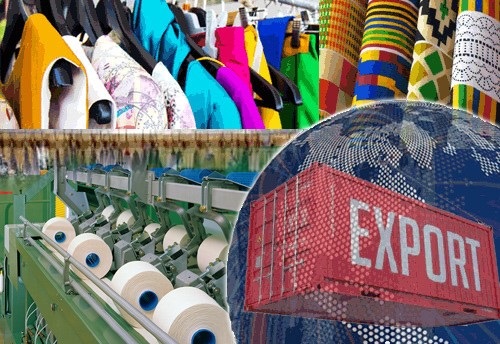 and apparel products to Europe. In 2019, its tailors sold 70 per cent of their products to five European countries namely Germany, Sweden, the United Kingdom, Denmark and Norway. Decline in consumption in any of these markets results in reduced orders for Lithuanian clothing manufacturers. The pandemic has caused a significant decline in clothing consumption in Germany which has adversely impacted the performance of many Lithuanian clothing and textile companies.
A shift to casual clothing and other market
To deal with this situation, LATIA members urge textile and clothing companies to diversify their activities. Vidas Butkus, Head, Kauno Baltija AB recommends a shift to casual wear which is currently in high demand. The company currently produces certified work and medical clothing. It has also diversified exports from Scandinavia to Germany.
The pandemic has neither affected the volume of work for Omnitekas UAB nor its income. Though the company recorded 20 per cent sales decline in the first half of this year, it aims to stabilize operations by diversifying to new markets and products. It focuses on customers’ needs and opportunities and plans to launch its Autumn collection depending on the weather and pandemic situation.
Cambodia proposes 5-year plan for garment-textile, footwear sectors
Cambodia is preparing a five-year (2020-2025) development strategy for the garment, footwear and travel bags sectors from to promote their competiveness, according to the ministry of economy and finance (MEF). The sectors are now facing some challenges that require more development and competitiveness by the end of 2025, said Aun Pornmoniroth
This strategy will set out a vision to transform Cambodia’s garment, footwear and bag industry into a high-value, supportive, diversified and more competitive industry.It will continue to strengthen human resources, increase productivity and create business lines for workers.
It will as well as continue to improve working conditions and the welfare of workers, promote direct domestic and international investment in value-added products, attract investment in industries that support the sector and promote export market diversification, according to the brief draft.
The strategy aims to set common development directions, increase independence, strengthen the appraisal and stability of the garment, footwear and bags sector to further promote the sector’s sustainability and environment.
VF Corp collaborates with suppliers to minimize COVID-19 disruptions
VF Corporation is working with suppliers to minimize COVID-19 disruptions. Majority of the company’s vendors have resumed operations with full compliance to government rules. The company has opened all stores in the APAC region, including Mainland China, which re-opened during the first quarter while in the EMEA region, 90 per cent stores re-opened during the same period. In North America, 75 per cent of all retail stores opened by the end of the first quarter. Additional stores have re-opened since the end of the quarter, partially offset by over 120 retail stores that have since temporarily re-closed due to localized resurgence of COVID-19 outbreaks and resulting Government action and public health advisories.
VF Corp has announced the financial results of the first quarter ended on June 27, 2020. Revenue from continuing operations fell 48 per cent to reach $1.1 billion while revenue from the active segment revenue decreased 54 per cent and outdoor segment revenue slumped 44 per cent, including a 45 per cent decrease in The North Face® brand revenue.
The only positive aspect in this result was an increase of 78 per cent in digital revenue. Overall, international revenue decreased 39 per cent. While revenue from Europe was down 48 per cent, Greater China revenue was flat. The company also expects second quarter’s revenues to decline to 25 per cent.
COVID-19: Turkish Denim mills turn to digital solutions to boost growth
To offset the effects of COVID-19 and shape the future of denim in the country, Turkish denim mills are turning to new innovative digital solutions, says Tricia Carey, Director-Global Business Development, Lenzing. Foremost amongst these is Orta Anadolu which recently launched a new sales kit featuring concept boxes with a fabric swatch and information card that includes a QR code. Users can scan the code on their mobile device and be taken directly to the fabric’s wash gallery to see exactly which washes are available for the specific material, as well as the Lifecycle Assessment (LCA) of the garment.
Similarly, Calik Denim has doubled down on its mobile app to include both a video and content component. Users can turn to this app for videos on each of the mill’s concepts as well as the latest news surrounding the denim industry. The company, which currently operates at 60 per cent capacity, has seen an uptick in online business. Likewise, Bossa, which operates at 70 per cent capacity, is collaborating with partners to help its business recover from the pause and spread positivity. The mill now receives new payments and orders regularly.
Texworld USA and Apparel Sourcing USA host inaugural digital event
Texworld USA and Apparel Sourcing USA hosted its inaugural digital event from July 21-23, 2020 at the Javitts Centre in New York. Organized by Messe Frankfurt North America, the event attracted visitors with its innovative approach. Almost 4,000 visitors attended the event. Jennifer Bacon, Show Director- Fashion and Apparel, Messe Frankfurt North America, also noted a 20 per cent increase in attendance of industry professionals from 93 countries over previous shows for its global presence. In the virtual space.
Texworld USA vendors found the virtual show to user-friendly and an efficient way to tell buyers about their products. Design Knit Inc, a Los Angeles–headquartered textile knitting mill, exhibited new fabrics and sustainable textiles, while Fashiondex’s Local Loft provided attendees with fabric and apparel manufacturers providing nearshore-sourcing opportunities. Max Andrew, President, Local Loft noted the presence of emerging designers starting off with an ecologically sound or ethical mission.
David Prentice, Co-Founder and Senior Vice President, OnPoint Manufacturing opined that the virtual model would provide great accessibility to fresh designers. Smaller exhibitors also welcomed the shift to a more-affordable show option. Ben Hostetler, Operations Manager, Mountain Meadow Wool, found that he spent about 10 times less to exhibit at the virtual show. He connected to buyer meetings at an office at his mill, which allowed his mill colleagues to help conduct meetings, an impossible option for a trade show in New York.
Lori Wyman, the representative for North America at the Global Organic Textile Standard, felt the event was organized well and afforded useful tools to connect with attendees.