


FW
Mexico’s Inova Textiles adopts digitization with FastreactPlan
Vertically integrated knitted garments manufacturer Inova Textiles is focusing on the digitization of best practice planning and control processes with the FastreactPlan from Coats Digital, which aims to deliver rapid and significant improvements in capacity utilization, speed to market and agility, while reducing excess costs.
The FastreactPlan will be implemented at Inova’s sewing and cutting facilities. It will deliver a fast, detailed and accurate order confirmation process and production plan, optimized for delivery, efficiency and speed. The FastStart project will include detailed planning of sewing lines using the highly visual tools of the FastReactPlan planning board, as well as the scheduling and visualization of load on secondary processes such as cutting and printing.
Material requirements (MRP) and pre-production product development activities critical for on-time start of production, are dynamically driven by the latest plan on a LEAN pull basis, ensuring clear visibility and alignment of priorities across departments and with suppliers.
Established in 2003, Inova Textile has three facilities in Estado de México, covering knitting, finishing, cutting, printing and sewing. The company’s passionate commitment to customer service excellence and fast turn-around, has been at the heart of its business’s success and underpinned a strong export business to the US and Canada, with customers including Target, Wal-Mart, and Disney.
Intertextile Shanghai Apparel Fabrics to use digital solutions to reconnect suppliers and buyers
The organizers of Intertextile Shanghai Apparel Fabrics will be using digital solutions to support for exhibitors and visitors who originally intended to participate in the Spring edition of Intertextile in Shanghai this March, as well as those unable to join the upcoming Autumn Edition from September 23-25. This month’s show expects about 3400 exhibitors from over 20 countries and regions.
Organizers have launched Intertextile mobile app, an online business matching platform that continues to utilize its diverse network in the textiles industry to help address sourcing needs and generate new business opportunities. They have been closely in touch with overseas exhibitors and visitors to prepare for the Autumn Edition of Intertextile.
The digitized solutions will cater for all scenarios – domestic and overseas suppliers and buyers -- who have been eager to connect with each other fter missing out the Spring Edition of Intertextile, while serving as pre-event promotion, business and networking opportunities for the Autumn edition. This will facilitate a seamless exchange of information for doing international business online and offline before, during and after the fair to truly support the industry’s recovery
Intertextile’s digitized solutions will allow exhibitors to gain access to its valuable database of over 100,000 buyers from over 100 countries and regions. Exhibitors will also have access to buyers’ contacts so that they can schedule online or onsite meetings in advance via the app’s built-in messenger function. Intertextile is also extending its offer for exhibitors and visitors to access its online business matching platform, Connect PLUS which allows exhibitors to check out overseas buyer profiles from Intertextile’s valuable database and proactively send out requests to connect.
China’s share of global PPE exports increases to 80 per cent
China’s share of global PPE exports has increased from 60 per cent in January to more than 80 per cent. The country accounts for 96 per cent of medical mask imports by Japan. The reason for increased dependence on China is that the country has expanded its exports to meet the surge in global demand. Major countries rely on China to ensure adequate personal protective equipment. The US government restricted PPE exports from April and exempted additional tariffs imposed on personal protective equipment made in China, which promoted imports.
Although Japan, the US and Europe are concerned about this overdependence on China for life-related medical supplies, and strive to achieve diversification of domestic production and procurement, the threshold is still high. United Nations trade statistics show, as of May, the world trade of the four main items including masks, medical covers, protective clothing, and protective glasses used by medical workers to prevent COVID-19 has increased sharply. Due to this, the dependence of global imports on China increased from 59 per cent in January to 83 per cent in May.
Japan plans FTA with Cambodia
Japan plans to sign a Free Trade Agreement (FTA) with Cambodia to maximize benefits from its regional trade framework and gain advantages from its regional trade with China, South Korea and other countries. Hun Sen, Prime Minister, Japan also called for speedy negotiation of RCEP which also covers South Korea, New Zealand markets, among others.
The Regional Comprehensive Economic Partnership (RCEP) is a proposed free trade agreement in the Asia-Pacific region between the ten member states of the Association of Southeast Asian Nations (ASEAN), namely Brunei, Cambodia, Indonesia, Laos, Malaysia, Myanmar, the Philippines, Singapore, Thailand, and Vietnam, and four of ASEAN’s FTA partners—Australia, China, Japan, New Zealand, and South Korea.
Negotiations for RCEP were formally launched in November 2012 at the ASEAN Summit in Cambodia. In 2018, the 16 negotiating parties accounted for about half of the world’s population and 39 per cent of the world’s GDP. Without India, the 15 negotiating parties account for 30 per cent of the world’s population and just under 30 per cent of the world’s GDP. Cambodia-Japan trade volume decreased slightly by 3.7 per cent to $1.01 billion in H1, 2020, figures from the Japan External Trade Organization (JETRO) indicate. From January-June, Cambodia exported $791.6 million worth of products to Japan, a year-on-year decrease 0.2 percent.
COVID-19 to inspire a different kind of creativity in fashion
 Like the phoenix rising from ashes, the fashion industry is slowly rising from the disruptions caused by the COVID-19 pandemic. Showing tremendous resilience, the industry put aside all its profitability goals and dedicated itself to relief, research and emergency efforts.
As Italy turned into an epicentre of the pandemic, fashion brands rolled up their sleeves to help affected population. The Armani Group donated €1.25 million to Italian hospitals, while Prada Group donated six intensive care and resuscitation units to three Milan-based hospitals. Donatella and Allegra Versace each pledged €100,000 to Milan's San Raffaele hospital. Moncler, Kering, Tod’s, Bvglari and Dolce & Gabbana also contributed to research efforts focused on finding cure.
Initiatives to contain virus impact on fashion
As the virus spread across Europe, some of the biggest fashion's brands stepped up to contain business losses. LVMH diverted its perfume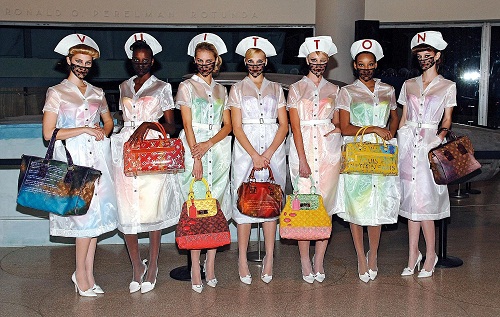 production to the making of hand sanitizers while Prada started manufacturing medical gowns and masks, as did the Zegna Group.
Similarly, British brand Burberry retooled its Yorkshire factory to make masks and gowns besides funding vaccine research and making donations to contain food poverty. The Yoox Net-a-Porter group donated its Premiere Delivery Service to Age UK outposts, for making essential deliveries to elderly and vulnerable. Not to be left behind, American brands Ralph Lauren and PVH Corp committed millions of dollars to support employees, healthcare workers and smaller American fashion businesses impacted by the pandemic.
Pandemic hits luxury industry hardest
Though admirable, these actions are not enough to fill the gaps that coronavirus has caused in global socioeconomic structure. As the joint report published by Business of Fashion and McKinsey & Company reveals, the global fashion industry - worth $2.5 trillion before the pandemic - is expected to shrink by 30 per cent in revenues in 2020.
Moreover, personal luxury goods sector will be hit harder with revenues shrinking by upto 39 per cent. This is evident from the anticipated 20 per cent sales dip by LVMH in the first quarter and 14 per cent sales drop projected by Kering during the period.
Burberry also predicted China sales to fall almost 30 per cent while Capri Holdings lost 58 per cent of market value in the first week of April. The shares of Tapestry, which owns Kate Spade and Coach also dipped 45 per cent and Ralph Lauren's by 37 per cent during the period. Fashion shows scheduled during the course of the year have either been cancelled or postpones.
Inspiring a different kind of creativity
Though these changes have made it difficult for brands to make any long-term plans, it has given them sufficient time to reconfigure their business strategies and create an innovative and engaging fashion world. As Jean Touitou, Founder, APC points out, this will inspire a different kind of creativity within the industry. Just like the end of World War II birthed a new kind of beauty and 2008 recession stripped away frivolity for philo-driven practicality and empowerment, COVID-19 will curtail overproduction and help the industry become more sustainable.
Stable environment, FTAs can help India counter Vietnam’s growing trade prowess
 While obsessing over China’s dominance of world trade, India seems to have completely overlooked the growing prowess of Vietnam. In the last decade, Vietnam’s total merchandise exports have grown at an annual average rate of 18 per cent as against India’s 5 per cent. Similarly, the country attained a trade surplus of $47 billion in 2019, over its trade deficit of $13 billion in 2010. On the other hand, India’s trade deficit during the period increased to $156 billion
Electricals, apparels dominate Vietnam’s exports
Vietnam’s top exports in 2019 were electrical machinery and equipment, apparel, footwear, and machinery and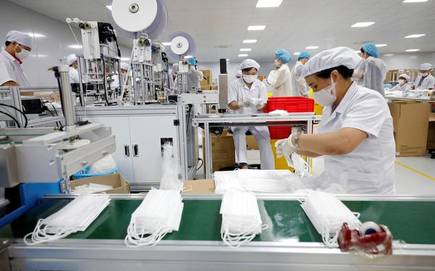 mechanical appliances. The country exported around 42 per cent of the world’s electrical machinery and equipment in 2019. The US, UAE and Austria were major markets for Vietnam’s mobile phones in 2019 with a 40 per cent share. As against this, India largely exported low-tech manufacturing products like mineral fuels, pearls, machinery, organic chemicals and vehicles. Its share of hi-tech exports stood at only 9 per cent in 2018 as against Vietnam’s which had a 40 per cent share. Vietnam’s newly ratified FTA with the EU allows European producers to invest in Vietnam further widening India’s loss of EU market share. From 2009-2018, India’s exports to EU increased by 1.6 times as against Vietnam’s 4.4 times.
Policy rethink needed by India
To recover lost ground, India’s needs to rethink multiple policies — from the erstwhile National Manufacturing Policy to present day Make in India. It also needs to quicken its pace of reaction to the evolving global scenario. One of the qualities that benefit Vietnam is its ability to swiftly adapt to changing global trade and offer attractive corporate tax rates for large firms planning to relocate.
The country offers two common preferential corporate tax rates of 10 per cent and 20 per cent for eligible large manufacturing projects for 15 years and 10 years. In contrast, India offers 40 per cent tax rate for foreign companies and their branches.
In the first six months of 2020, Vietnam’s exports grew at an average annual growth rate of 3 per cent, while Indian exports declined 24 per cent during the same period. Vietnam mostly exports through seaports while despite having double size of coastline, India has not been successful in using it due to dredging issues. To compete with its Asian competitors, India needs new free trade agreements, stable business environment, last mile connectivity and low-cost quality labor. Only then it will be able to attract global companies to set up their plants here.
India’s garment exports to the US increases
As OTEXA released July ’20 import data of US, the data shows India managed to increase its share in the US market following months of lockdown to attain gradual normalcy. The country, however, fell by 33.28 per cent on Y-o-Y basis in January-July ’20 period to ship $1.75 billion worth of garments to US, but it increased by 87.93 per cent over June ’20 to ship $213.21 million worth of garments in its largest exporting destination.
China’s shipment of apparels to US in year-to-date valued US $ 7.35 billion, which is 49.34 per cent lower than January-July ’19 period. The monthly surge is certainly there as it grew 37.39 per cent in July ’20 over June ’20 to value $1.58 billion. On Y-o-Y basis, the shipment from China saw a decline of 50 per cent in July ’20 as US imported $3.17 billion worth of garments in July ’19 from China.
The second largest apparel exporter to US – Vietnam – saw a decline of 11.06 per cent in January-July ’20 period and shipment was worth $6.94 billion as against $7.80 billion in the same period of 2019.
In July ’20, there was a fall of 11 per cent in US apparel import from Vietnam over July ’19 and it valued at US $ 1.29 billion. However, as compared to June ’20, Vietnam’s shipment increased by 51.76 per cent.
As far as Bangladesh is concerned, US imported $2.90 billion worth of garments, noting 18.54 per cent Y-o-Y fall. Particularly in July ’20, US’s import from Bangladesh stood at US $ 436.34 million with a significant monthly growth of 52.74 per cent over June ’20.
Global cotton fabric exports declines by 17.95%: Texpro
The global export of cotton fabrics decreased 17.95 per cent to $32,990.56 million in the year 2019 compared to $40,206.37 million in 2017. Whereas, total exports slipped 18.17 per cent in 2019 over the previous year. Further, the export is expected to move up to $34,925.72 million in 2022 with a rate of 5.87 per cent compared to 2019.
The global import value of cotton fabrics was $19,189.97 million in 2017, which dropped 13.27 per cent to USD 16,643.85 million in 2019, according to Fibre2Fashion’s market analysis tool TexPro. Total imports plunged 16.48 per cent in 2019 over the previous year and is expected to rise to $17,121.28 million in 2022 with a rate of 2.87 per cent from 2019.
China, Pakistan and India were the key exporters of cotton fabrics across the globe in 2019, together comprising 75.06 per cent of total export. These were followed by Italy, Turkey and China Hong Kong.
From 2016 to 2019, the most notable rate of growth in terms of export value, amongst the main exporting countries, was attained by China (47.80 per cent) and India (9.57 per cent).
Vietnam, Cambodia and Indonesia were the key importers of cotton fabrics in the globe in 2019, together comprising 29.35 per cent of total import. These were followed by China, US and Italy.
From 2016 to 2019, the most notable rate of growth in terms of import value, amongst the main importing countries, was attained by Cambodia (73.27 per cent) and Vietnam (39.80 per cent).
Associated British Foods’ trade exceeds expectations
Primark’s owner Associated British Foods trade in Q4 exceeded expectations. In the latest four-week UK market data for sales in all channels, Primark achieved its highest-ever value and volume shares for this time of year.
Its cumulative sales since reopening to the year-end are expected to be £2 billion and Primark’s own adjusted operating profit on an IFRS16 basis for the year, before exceptional items, is now expected to be at least at the top end of the previously advised £300 million-£350 million range.
The company also said the average basket size was initially significantly higher, reflecting some pent-up demand. And while this outperformance has reduced in recent weeks, it remains higher than a year ago. Primark has managed to avoid an excessive level of markdowns too.
Sales in retail parks are higher than a year ago. Shopping centre and regional high street stores are broadly in line with last year. But large destination city centre stores, which are heavily reliant on tourism and commuters, have seen a significant decline in footfall. Its 16 largest destination city centre stores contributed 13 per cent of total sales pre-COVID and only 8 per cent of sales after reopening.
Meanwhile sales in Europe are expected to be 17 per cent lower on a like-for-like basis, reflecting increased public health restrictions, particularly in Spain and Portugal. Again, the city centre impact is key and excluding its 11 destination city centre stores, like-for-like sales are down 13 per cent. Sales in the US are expected to be 9 per cent lower on a like-for-like basis but are actually 2 per cent ahead excluding its Boston store.
New report calls for exploration of fashion’s innovation capacity
In its latest report, Forum for the Future calls on the fashion world to collectively explore the huge untapped potential of manufacturers’ innovation capacity to speed up sector’s circular transformation. Titled ‘Making the leap to circular fashion’ the report prepared in collaboration with leading fashion manufacturers like Cobalt Fashion, Ramatex Group and Yee Chain International distinctly states, through their ability to make sourcing and supply chain decisions, mass apparel and footwear makers can shape the fashion sector up and down the supply chain.
The report explains how a collective circular future for fashion can be built. Brands and retailers across the globe have been urged to not only study points of interaction with supply chain partners that inhibit collaboration, but also engage these partners at the stages of problem scoping and ideation. According to the report, manufacturers too need to build capacity within their organization to engage with circularity. It advises manufacturers to move from ‘market taker’ approach to ‘market maker approach.
Similarly, research and innovation ecosystems need to take initiatives to bolster local networks while staying globally connected. Supporting stakeholders like investors and financiers need to create enabling condition. The report’s insights have been drawn from ‘Circular Leap Asia’ (CLA). Funded by Laudes Foundation, CLA is a program focused on empowering Asian fashion manufacturers to lead the adoption and scaling of circular solutions.











