


FW
J Crew completes bankruptcy proceedings
J Crew has officially concluded Chapter 11 bankruptcy proceedings and has Anchorage Capital Group as its new majority owner. Looking forward, the company aims to focus on three core pillars: delivering a focused selection of iconic, timeless products; elevating brand experience to deepen relationship with customers; and prioritizing frictionless shopping. It remains committed to serving the changing life and style of today’s multifaceted consumer and to delivering long term, sustainable results.
Following its exit from bankruptcy, J. Crew has a new capitalization structure that includes a $400 million term loan due 2027 provided by Anchorage, as well as GSO Capital Partners LP and Davidson Kempner Capital Management, among others. The specialty retailer also has access to a new $400 million asset-based loan credit facility due 2025.
In addition to operating its core J Crew brand, the company owns the Madewell brand, which it had hoped to spin off. However, the company pulled the plug on a planned initial public offering in March as the economic landscape quickly took a nosedive. The financial restructuring converted over $1.6 billion of secured debt into equity in the reorganized company.
The American apparel retailer became the first national retailer to file for Chapter 11 bankruptcy court protection in the wake of the pandemic under its former parent company Chinos Holdings.
EU, government to end association with Uighur suppliers
The European Union and European governments aim to work multilaterally to end transnational companies' operations with suppliers in China's Uighur region. Across the continent legislators, government officials, the media, academics, and non-governmental organizations have expressed their dissatisfaction. Europeans are questioning their governments about forced sterilizations, organ harvesting, and trade with China. They are also calling for action on the issue of Uighur forced labor where Europe can make a definitive impact.
Several well-sourced reports have exposed the stain of Uighur forced labor, including research from the Australian Strategic Policy Institute (ASPI), Center for Strategic and International Studies (CSIS), and the Congressional-Executive Commission on China (CECC). A recent CSIS briefing noted apparel and footwear as being the leading exports from the Uighur region with a combined value of $6.3billion, representing over 35 percent of total exports.
On July 23, a coalition of over 250 organizations urged leading brands and retailers to ensure that they do not support or benefit from the pervasive and extensive forced labor of the Uighur population and other Turkic and Muslim-majority peoples. In response, Adidas and Lacoste agreed to cut ties with implicated suppliers and subcontractors.
US’ denim apparel imports pick up by 58.67%: OTEXA
According to OTEXA stats, import of denim apparels by the US picked up 58.67 per cent to value $309.79 per cent in July ’20 over June ’20. However, on Y-o-Y basis in July ’20, imports has declined 24.38 per cent, whereas they declined by 35.26 per cent in terms of YTD figures, which stood at $1.39 billion during the January-July ’20 period.
YTD data suggests China’s denim apparel shipments to US dropped by 63.23 per cent to $169.82 million in July as against $461.88 million in the January-July ’19 period.
Bangladesh became the top denim apparel exporting country to the US as it shipped denim apparels worth $64.13 million in July ’20. However, on Y-o-Y basis, Bangladesh’s exports declined by 16.98 per cent to $254.27 million.
Vietnam’s apparel shipments increased by 55.08 per cent to $49.16 million in July’20 as against in $31.70 million in June ’20. In YTD figures, the country saw a marginal surge of 0.14 per cent on Y-o-Y basis to clock $192.72 million from its denim apparel shipment to the US.
Cambodia to increase minimum wage for garment workers
The Cambodian government has decided to increase the minimum wage for garment and footwear industry workers by $2 to $192 per month for 2021. Earlier, the National Council on Minimum Wage (NCMW) had approved $190 minimum wage for 2021, marking no increase over 2020, following sensitive negotiations in which unions requested a raise of nearly $12, and employers asked for a cut of $17. The government then decided to add a $2 raise, which will take effect on January 1.
This year’s minimum wage increase is the smallest since the wage went unchanged from 2010 to 2013. It affects about 800,000 workers from more than 1,000 factories in the textile, garment, and footwear industries. Union leaders held an internal meeting on August 28 to choose their desired minimum wage raise, agreeing on $11.59, which is similar to their requests made in previous years and amounts to a 6.1 percent raise. An employer representative said that the party would wait until the final day to put forth its suggested figure. Nang Sothy, Vice President, Cambodian Federation of Employers and Business Associations, said, the employers may continue to struggle in 2021 as it has been difficult for them to attract investors.
This year was an especially difficult to negotiate the minimum wage because of the combination of the Covid-19 crisis and the cuts due to the EBA. The reduction in the tariff scheme affects 20 percent of Cambodia’s garment and footwear exports to the EU, worth nearly $1.2 billion annually, according to the European Commission.
Canada reports 53.93 per cent growth in RMG imports in July ’20
Canada’s RMG imports grew 53.93 per cent in July’20. The country imported $870.24 million worth of apparels in July ’20 as compared to $565.33 million in the preceding month. However, the country’s RMG imports declined 28.63 per cent to $4.23 billion on YTD basis.
All major Asian countries benefitted from demand recovery in Canada. On month-on-month basis, China registered 93.96 per cent growth in July ’20 shipment over June ’20. Shipments by India grew 33.87 per cent in July ’20 over June ’20 to $16.67 million. However, the country fell by around 50 per cent in its yearly shipment in July ’20 and by over 39 per cent in the YTD. In YTD, though Bangladesh suffered around 41 per cent loss from 2019 export level, the country upped its shipment by a whopping 80.52 per cent in July ’20 over June ’20 to $84.88 million.
Extend preferences to only originally intended beneficiaries, urges AGOA
African Growth and Opportunity Act (AGOA) Action Coalition has urged US House Ways and Means Subcommittee on Trade to resist extending AGOA’s apparel preferences to beneficiaries beyond those originally intended. The coalition states, proposed changes to the US Generalized System of Preferences program (GSP) threaten to vitiate key provisions of the Act that has been the cornerstone of US economic engagement with the nations of Africa since the past 20 years.
If adopted when GSP is renewed, these changes would cause gratuitous hardship in a region already reeling from the impact of COVID-19. Also they would also severely damage Africa’s standing in as a strategic development and trade partner and would hand global competitors, China in particular, a massive free win, said the coalition.
From its inception, GSP has specifically excluded preferential treatment for textiles and apparel. This has given US policy makers a powerful tool to advance US goals and interests by granting exceptions designed to help selected trading partners to attract investment in their textile and clothing sectors in order to fight destabilizing poverty and grow as markets for US goods and services, it added.
EU and pan-Euro-Med textile businesses to get a boost with new legislation on nearshoring
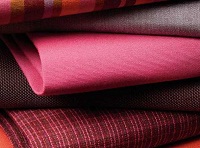 The European Commission will soon introduce a new legislation to make it easy for textile manufacturers in the region to work with nearshore partners. The legislation will help textile businesses in the EU and pan-Euro-Med countries. It would enable EU textiles firms to make their fabric in Italy and send it to their Mediterranean partners for dyeing, thus avoiding the payment of trade duty on the finished product. The rollout of these new rules is subject to the approval of ministers from EU member states in coming months.
A green signal from the European Commission
Textile manufacturers had been urging for these rules for the last decade. However, objections by Tunisian and Moroccan governments had stalled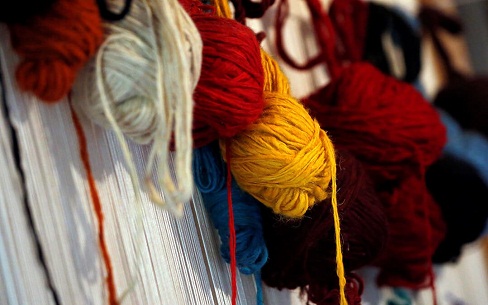 negotiations. The European Commission has now directed countries agreeing to the new rules to go forward and implement them. The Commission also recommends amendment of trade agreement by EU with 20 out of 24 fellow partners in the pan-Euro-Med (PEM) trade zone. The zone includes Balkan countries and countries in the Mediterranean region such as Algeria, Egypt, Israel, Lebanon, Morocco, Tunisia and Turkey.
Thumbs down from British textile firms
British textile firms have refused to conform to these rules as they believe rules incentivize European fashion firms to shift out of Asian countries such as Bangladesh and China. Paul Tostevin, Director-World Research, Savills, opines, these rules benefit like Ukraine, Serbia and Turkey more. The rules aim to further develop the Euro-Med region, says Dirk Vantyghem, Director General, Euratex, the umbrella body representing textile manufacturers in Europe. They confirm to manufacturers’ urgency of moving production closer to the market
Facilitate textile production
The new rules also enable production processes to qualify textile products for preferential trade treatment. They allow manufacturers to split production across more than two countries within the zone and still qualify for preferential treatment even if the initial product comes from outside the zone. In recent years, nearshoring has benefitted many fashion firms such as Boohoo and Inditex. As Ross Denton, Senior Counsel, Baker McKenzie says the rules make the PEM zone a more attractive place to integrated supply chains. However, Denton is skeptical about this concept as some firms have built highly optimized supply chains across the global as it helps them solve labor and taxation issues: The new rules are not applicable in UK as the country plans to develop its own bilateral deals with trade partners since it has already exited the European Union, adds Adam Mansell, CEO UK Fashion & Textile Association.
Bangladesh RMG can recover lost ground with new initiatives
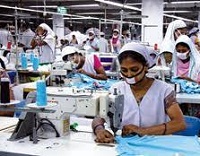 Since its inception 40 years ago, the RMG industry in Bangladesh has faced many regulatory hurdles. The sector now risks losing its position as the world’s second-largest apparel manufacturer to Vietnam. The RMG sector generates more than 84 per cent of Bangladesh’s export earnings. It also employs around 80 per cent of its female workforce. In the first five months of this calendar year Vietnam surpassed Bangladesh in ready-made garments exports. Data compiled from various sources reveals, Vietnam exported garments products worth $10.50 billion from January to May 2020, while Bangladesh exported garments worth $9.68 billion during the same time.
RMG is a flexible business in Bangladesh with unstable production. The sector lacks adequate level of trade union partnership which helps RMG factories entice foreign investors with cheap labor. Since a long time, Bangladesh scholars had been urging factory owners to change this strategy and invent a suitable way to attract more foreign investors to Bangladesh. However, since this did not happen, the Bangladesh's RMG sector has faced criticism from media channels across the globe.
Vietnam targets 7 per cent GDP growth
With an aim to supersede Bangladesh in the world RMG market, Vietnam has been pursuing different strategies since 2015. The country is diversifying its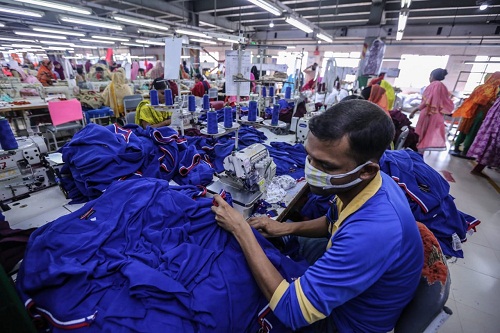 product line and looking for unique options beyond traditional themed products. Its officials aim to boost its economy by 7 percent this year, at a faster rate than even China. Reliable social and business networking aids Vietnam
According to the Asian Development Bank (ADB), If Vietnam succeeds in achieving a 7 per cent growth in this financial year, it will march ahead of China which expects a 6 per cent growth in its GDP. Besides finding a reliable business network between the Western and European belts, Vietnam also has maintained good relations with its neighbors which Bangladesh has not been able to achieve.
Vietnam’s production and service sector has been stabilized by regional investors from Japan, Singapore, South Korea and Taiwan. Its factories produce garments and auto parts as well as consumer electronics. Foreign-invested projects accounted for about $9.1 billion investments in the first half of 2019, an 8 percent increase from the same period in 2018. The country benefits from a modern and outstanding era of development of educational institutions due to massive capital injections and the right policies. Its port facilities are far ahead of Bangladesh.
Scores in technology usage
Besides, Vietnamese workforce is more skilled in information technology and other technologies. Its digital infrastructure is more stable and satisfactory. Recent e-commerce developments have also made Vietnam more successful in RMG business than Bangladesh. Its factories are built on a democratic process, and take very little time to supply products to Western and European markets, as well as regional destinations. Their shipments are also carried from time to time through both aviation and marine cargo.
International experts and theoretical structure
To recover lost position in the global RMG market, BGMEA needs to hire international academics as advocates and negotiators with international apparel buyers for sustainable business. These experts can help BGMEA analyze the situation through appropriate theoretical frameworks and provide advice on current and future trends in the business.
BGMEA must also initiate a theoretical structure like PESTLE, SWOT, VRIN through certified academics who can give better advice on the next steps to follow. It should create its own fashion houses and brands like Zara, H&M. A long term relationship with a big organization like Walmart, H&M, Zara can help BGMEA persuade them to build big factories in Bangladesh.
It should also encourage small scale production through a new marketing channel. It should also ensure good governance through an authentic monitoring system and increasing the wages of all its workers periodically.
H&M refuses to work with Xinjiang garment factories
Swedish retailer Hennes & Mauritz AB says it’s not working with any garment factories in the Xinjiang region of China.
Recently, the Trump administration banned imports from three companies in Xinjiang over Beijing’s alleged repression of Uighur Muslims. It also plans to add curbs on six more firms and target cotton from the area.
H&M has confirmed it currently isn’t sourcing any products from the region, and says it has taken measures to ensure suppliers in China aren’t employing Xinjiang workers through transfer programs, where forced labor is a risk
The Swedish company had previously bought cotton from farms in Xinjiang that were connected to a sustainability program called Better Cotton Initiative. But that program has now decided to suspend the licensing of cotton in the region
Additionally, H&M is reviewing its “indirect business relationship” with a unit belonging to textile manufacturer Huafu Fashion Co. However, H&M hasn’t conducted any business with the Chinese company’s operations in Xinjiang, Isaksson said.
Burberry to sell sustainability bond
Burberry Group Plc intends to sell a sterling sustainability bond, as the socially responsible debt market increasingly grows beyond utilities, banks and governments.
Burberry has highlighted a focus on corporate responsibility, including animal welfare and sustainable cotton farming, as it seeks to win over socially conscious consumers and investors. The planned bond sale also comes as the U.K. company starts to get over the worst effects of the coronavirus crisis, which caused sales to fall by almost half and prompted 500 job cuts worldwide.
The company has repaid a 300 million pounds ($388 million) banking facility, which it drew down at the height of the virus crisis, it said in a statement announcing its first-ever bond sale. The strength of its brand, a strong presence in China and “robust” liquidity also meant that Moody’s Investors Service Inc. gave the planned notes an investment-grade Baa2 rating.











