FW
Freudenberg Performance Materials Apparel plans new competence centers
Freudenberg Performance Materials Apparel plans to set up competence centers in Europe.
As per Textile Network, currently, the company manufactures interlinings for the European mass market at its site in Weinheim, Germany, while high-quality canvas interlinings for the European luxury market are made at the site in Sant’Omero, southern Italy. Freudenberg Performance Materials Apparel is planning to bundle its technologies in competence centers in order to enable its European interlining business to thrive in future and to better fulfill the needs of European customers.
To accomplish this forward-looking ambition, Freudenberg Performance Materials Apparel is planning to relocate two lines for finishing and coating from Weinheim to Sant’Omero, along with one line from the site in San Martín, Argentina. This line was decommissioned and disassembled in 2017.
The existing modern facility for base nonwoven production in Weinheim provides the ideal foundation for a competence center. Furthermore, weft production will continue in Weinheim.
Karl Mayer launches 4D-Knit generation of warp knitted fabrics
Karl Mayer has launched the new 4D-Knit generation of warp knitted fabrics that opens up previously unknown possibilities in design and product development. by Ulrike Schlenker.
As per Textile Network, the double needle bar raschel machine does not produce a classic spacer textile with monofilaments for spacing, but the space between the cover surfaces is filled with a bulked yarn. In addition, differently shrinking yarns are processed in intelligent combinations on the front and rear side of the warp knitted textiles and different lapping techniques are used. During the finishing process, this leads to high-low effects with differentiated markedness. Voluminous fabrics with small and flat reliefs or deep and bulky shapes with various motifs are created.
Strict geometric arrangements with high-low effects are just as possible as expansive plastic wavy arrangements, sparkling fruit looks or complex imaginative designs with different height profiles. Even hole patterns can be seamlessly and freely placed incorporated into the textiles. Functional clothing and shoes in particular provide breathability and a stylish look with the mesh parts. Additional colour and shape effects can be achieved when using suitable yarns. Especially designers and product developers in the clothing sector can enter completely new territory thanks to these articles with their futuristic looks and voluminous structure.
Chinese, Turkish textile companies to supply army uniforms to Tunisia
Chinese and Turkish textile companies plan to supply uniforms for the Tunisian armed forces over the next three years for a value estimated at around $22.7 billion.
As per Nafaa Ennaifer, President, Tunisian Textile Federation, the contracts awarded to the foreign companies are valued between $21.2 billion and 22.7 billion.
According to Ennaifer, the deal to purchase 180,000 combat uniforms per year would deprive Tunisian companies of a transaction worth between 70 and 75 million dinars over 3 years.
The Ministry of National Defense argued that over the past three years, 73 per cent of government contracts in the military uniform industry have been awarded to local suppliers, TAP reports.
The Ministry of Defense favors local products and encourages Tunisian producers to get in tune with technical requirements so as to achieve efficient production lines.
The ministry added that the participation of local producers in tenders was low and not in conformity, in majority, with the required technical standards in coordination with the Technical Center of the textile.
Digital-first strategy makes fashion companies future-ready
 To tide over disruptions like COVID-19 and become future-ready, fashion companies need to align themselves to new trends, says a new survey by IMD’s Center for Future Readiness. Pointing to the latest financial results of footwear and apparel brand Nike, the survey highlights its sales growth to $10.36 billion in the current financial year from $10.1 billion in the same period last year and credits this to focus on digitization.
Advance analytics to facilitate product movement
To discover the benefits of digitization in the fashion industry, the IMD center downloaded all reports published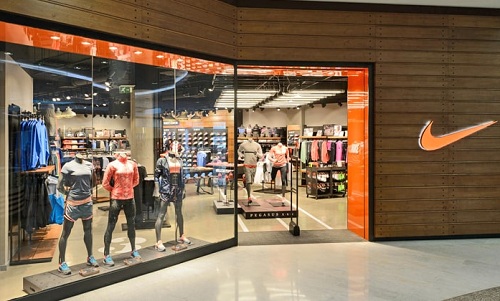 in the last 10 years by The Wall Street Journal. CNBC, The Financial Times. All corporate press releases were converted into an algorithm to track the digital evolution of fashion brands. It used hard market data to calculate the composite score. The survey measured fundamental drivers that fuel innovation in companies like their financial health, growth prospects, employee diversity, brand value, its degree of internationalization, and the early results of its innovation efforts.
The survey also analyzed the e-commerce presence of these brands in mobile apps, live-streaming, omni-channels, and their direct-to-consumer engagement. Further, it evaluated their fanbase on social media, their search volume on Google and their sustainability standards. Digitization can help companies offer customized products to customers within weeks. For this, they need to automate tracking and coordination with external partners. They also need to use advance analytics to gather the latest market insights. This can help them to categorize and move products based on demand. The survey also advises companies to discover stores that need specific products and deliver accordingly.
Not just an option
The survey showed, beginning its digital journey much earlier in 2017 helped Nike counter the negative effects of the lockdown-related store closures during the recent pandemic. The brand reopened almost 90 per cent of its stores. Yet, its digital sales are expected to continue growing in double digits, helping it to rebound faster. Therefore, digitization is no more just an option for fashion brands, it’s the only way they can stay relevant in the current turbulent market.
Cutting consumption can reduce industry’s reliance on polyester
 With lockdowns increasing demand for activewear, there has been 80 per cent rise in use of recycled polyester since 2019, says a report by The Gaurdian. A recent McKinsey & Company survey also finds a 151 per cent rise in search for sustainable activewear while 67 per cent consumers were seen scouting for clothes made from sustainable materials. This has encouraged brands like Adidas and Reebok to replace all virgin polyester (PET) in their collections with recycled polyester (rPET) by 2024. Asics also aims to achieve this by 2030, while Puma plans to scale up its use of recycled polyester to 75 per cent by 2025.
Recycled polyester is often described as polyester made from plastic waste like water bottles and discarded textiles. However, most of the recycled polyester, available today, is made from downcycled plastic. Francois Souchet, Ellen MacArthur Foundation, affirms, this polyester is removed from the closed loop system and retains the dye color from first iteration. Hence, it can only be recycled into similar colors.
Chemical recycling can help overcome these problems by breaking down the polyester to its raw materials, purifying it and converting it into new particles. Removal of all contaminations and dyes can facilitate its recycling on a loop. However, its availability at a viable commercial scale remains limited.
Need for large-scale recycling programs
Cyndi Rhoades, Founder, Worn Again Technologies, has launched a pilot plant in North England to separate cotton and polyester fibre blends, capture the cellulose for other applications and recycle the polyester to be spun into new fibres. Her firm aims to use virgin resources as inputs to cater to the demand for new polyester. She advises brands to improve their infrastructure for collecting and sorting post-consumer textile waste to meet this demand. For this, brands need to invest in large-scale recycling programs to increase collection rates besides technologies that can detect fiber content and process high volumes of textile waste.
New technologies for textile recycling
Currently, segregating textile fibers for recycling is a manual process. However, Seattle-based textiles innovations company EVRNU, has developed a technology that can accurately identify and scan fibers using artificial intelligence. Christopher Stanev, Co-Founder and President, ERVNU, cellulose from cotton can be used to extrude fiber with the same or better performance. In contrast, a synthetic garment sheds millions of plastic microfibres during its washing process. These plastic microfibres could accumulate to 22 million tons by 2050.
The National Plastic Plan, announced in Australia recently, aims to instill microfiber filters in all residential and commercial washing machines by July 1, 2030. Eco-activewear brand Patagonia has also identified wastewater treatment plant that can filter 65-92 per cent microfibres release. However, Souchet suggests creating new fabrics to limit the release of microfibers.
But, this needs highly evolved systems for collecting and sorting waste and creating chemically recycled polyester. The McKinsey report opines, this technology is several years away from being launched. It advises the industry to reduce its reliance on polyester by decreasing production and discouraging over-consumption.
Spinning machines leader Marzoli India to relocate operations

Textile machinery manufacturer, Marzoli India plans to relocate its India assembly line from Hosur to Coimbatore. Incorporated in October 1994 in Bengaluru, Marzoli India’s parent company Marzoli International has over 170 years experience in manufacturing spinning machines. It was established in 1851 as a part of the Camozzi Group that combines traditional expertise in fibers making and spinning process with the most advanced technologies.
Marzoli is a supplier of spinning machines from blow-room to ring spinning. The company supplies spinning mills across the world. It introduced and patented 19 innovations in spinning at ITMA 2019. For this, Marzoli invested 140,800 manhours in R & D and established 4,500 new drawings. Marzoli’s new unit in Coimbatore is spread over 50,000 sq ft and caters to the machinery requirements of customers across India and overseas. The factory will assemble all spinning machines for exports and the domestic market.
Reliable and eco-friendly range of spinning machines
An ISO 9001: 2015 certified company Marzoli uses innovative methods to offer products and services. It collaborates with its suppliers and customers from the design phase itself. It has developed Open Innovation programs with technological partners to expand competences. The company offers full range of spinning and nonwoven machines. All products guarantee maximum efficiency, reliability, quality of the output and energy efficiency.
Marzoli aims at reducing the environmental impact of productive processes during all phases of the equipment life cycle, from production to use within the client’s plants. The various phases of product development - design, development, production, and utilization - are driven by Marzoli’s efforts to create and offer equipment with low energy consumption, and save scarce resources.
Broad network ensures timely supply
Marzoli’s broad sales network guarantees the timely supply of original components. In addition, its team of technicians and product managers guarantee effective service to optimise the performance of both individual machines and spinning process. Its extensive knowledge of IoT technologies makes the company ideal partner for plant digitalization projects.
Leader in industrial automation
Established in 1964, the Camozzi Group is a global leader in the production of components and systems for industrial automation. The Italian multinational also operates in a variety of other sectors, from machine tools to textile machinery and provides many solutions involving the processing of raw materials. The range of Camozzi products includes the creation of customised Industrial Internet of Things (IIoT) solutions and products through cyber-physical systems (CPS) for the digitalisation of production processes in which data are constantly processed to improve performance.
Textile PIM grows to 60.8% in February
According to the latest Institute for Supply Management (ISM) ‘Report on Business,’ the February Manufacturing PMI (purchasing manager’s index) grew by 2.1 percentage points to 60.8 percent from the January reading of 58.7 percent.
As per China Textiles report, the New Orders Index grew by 3.7 percentage points to 64.8 percent from January, while the Production Index grew by 2.5 percentage points to 63.2 percent.
The New Export Orders Index grew by 2.3 percentage points to 57.2 percent while the Imports Index registered 56.1 percent, a drop of 0.7 percentage points. Textile mills, and apparel, leather and allied products were among the 18 manufacturing industries to report growth in February.
Labor-market difficulties at panelists’ companies and their suppliers continued to restrict manufacturing-economy expansion and will remain the primary headwind to production growth until employment levels and factory operations can return to normal across the entire supply chain.
Australian Wool Innovation plans coalition to ensure sustain for natural fibers
Australian Wool Innovation (AWI) plans to form an international coalition to ensure that the European Union’s Product Footprint Scheme does not harm the current demand for plant and animal fiber clothing.
Under its Sustainable Products initiative, the EU proposes to draft legislation aimed at selling more sustainable products but the International Wool Textile Organization believes the EU’s current labeling laws, by not rewarding the attributes of natural raw materials nor penalizing key environmental impacts of fossil fuel-based raw materials, will lead to falling demand for wool and cotton.
Angus Ireland, Program Manager-Fiber Advocacy & Eco-Credentials, AWI, said, EU’s intention is to inform consumers about eco-friendly purchases to benefit the planet; however, AWI and the IWTO believe consumers will be misled and that their purchases of synthetic clothing are bad for the planet.
Australian Wool Innovation and the IWTO are coordinating closely on the Sustainable Products Initiative and are planning a much broader collaboration involving more than the wool and cotton industries.
AWI is also working the Australia’s Department of Foreign Affairs and Trade team in Brussels to maximise its impact, and is coordinating with other Australian RDCs to influence PEF methodology.
Shima Seiki introduces new subscription-based design software at 36th Spineexpo
Shima Seiki along with its Hong Kong subsidiary Shima Seiki (Hong Kong), is participating in the 36th Session of Spinexpo, that is being held in Shanghai, China from April 01-03, 2021.
As per Knitting Industry, the leading Japanese manufacturer is introducing its new APEXFiz subscription-based design software. APEXFiz is the latest addition to Shima’s proven SDS ONE APEX series design system line-up, but with an unprecedented twist.
Whereas previous APEX-series design systems were offered as an all-in-one proprietary hardware/software package, for the first time in its nearly 40 years of design system development, Shima has released its new APEXFiz as subscription-based design software that can be installed on customers’ individual computers.
Together with virtual sampling performed on APEXFiz, Wholegarment offers smart production for realizing a sustainable fashion supply chain APEXFiz software supports the creative side of fashion from planning and design to colourway evaluation, realistic fabric simulation and 3D virtual sampling.
Otherwise known as ‘digital twins’, virtual samples are a digitized version of sample making that are accurate enough to be used effectively as prototypes, replacing physical sampling and consequently reducing time, cost and material that otherwise go to waste, Shima says. APEXFiz thereby helps to realize sustainability and digitally transform the fashion supply chain.
Also, on display will be Shima’s new yarnbank, the world’s first online web service for searching and viewing the latest yarns, developed with cooperation from yarn companies from around the world. Registered users can download yarn data for free, for use in fabric simulation and virtual sampling on APEXFiz, avoiding the need to scan yarn on their own.
PVH Corp’s Q4 revenues decline by 20%
The fourth quarter revenues of US-based clothing company PVH Corporation decreased by 20 per cent to $2.090 billion and the same decreased by 28 per cent to $ 7.133 billion in full year compared to the prior year period.
As per Apparel Resources, the company’s revenue through digital channels grew 57 per cent in Q4 and 43 per cent in full year.
Stefan Larsson, CEO, said, the company delivered Q4 revenue in line with expectations despite more extensive lockdowns in Europe, as it successfully navigated the uncertainty and unprecedented impacts caused by the pandemic to drive towards an accelerated recovery.
He further added that the company will increasingly continue to shift its global business towards these channels and categories. In addition, it executed disciplined expense management, significantly improved its inventory position, and ended the year with over $3 billion in liquidity. The company expects its revenue to grow by 22 per cent in 2021.