FW
Huntsman Textile Effects, Scieesent team up for new microbial solutions
Huntsman Textile Effects and Scieesent have partnered to launch new microbial and odor-control solutions for textile mills and brands worldwide. As per Home Textiles Today, these solutions can be integrated into finishing process by combining with other finishes such as Huntsman Textile Effects’ water repellents and comfort systems. They help the company produce cost-effective, high-performance textile products that are safe and sustainable.
Paul C Ford, CEO, Sciessent says, through this partnership both companies aim to extend their reach to manufacturers and enhance their offerings by coupling them with Huntsman Textile Effects’ broad range of innovative and sustainable protection technologies.
The partnership also makes Huntsman Textile Effects the exclusive distribution partner of Sciessent’s Agion Antimicrobial, Lava XL anti-odor solution, and dual-action Active XL. The company offers one of the industry’s most complete end-to-end systems for high-performance protection effects, with a full range of innovative and sustainable protection and comfort technologies, says Rohit Aggarwal, President.
Cotton quotas to harm China’s domestic market
Cotton exports by the US, Brazil and India to China have increased significantly in recent months despite 1 per cent tariff or under sliding-scale duty on cotton imports. In 2020-21 season from September 2020 to February 2021, China imported 1.66 million tons of cotton. If it uses the 2 million ton quotas, its imports may reach 3.66 million ton, says a report by the CCF Group.
Allocation of quotas will increase cotton supply to China and drag down its domestic cotton prices. Lower cotton prices will restrain growers' planting enthusiasm, leading to more competition of cotton and food crops on fields. With the decline in domestic cotton production, it is bound to increase imports to make up for the domestic supply gap. The short-term release of the 2 million tons of sliding-scale duty quota will inevitably lead to damage to this policy.
The report advises the government to issues quotas step by step according to domestic conditions, which will be more conducive to protecting the development of the domestic cotton textile industry.
Federica Marchionni appointed CEO of Global Fashion Agenda
Federica Marchionni has been appointed the new CEO of Global Fashion Agenda. As per Global Fashion Agenda, Marchionni will help the organization accelerate its growth and build on its ten-year foundation based on a collective commitment to make sustainability fashion’s first priority. Marchionni will mainly focus on elevating the organization’s prestigious forums including Copenhagen Fashion Summit and CFS+. She has a vast experience in the industry having served in various leadership roles across companies in Europe, US and China. Most recently, she was the International CEO of Secoo, a Chinese e-commerce platform and one of the largest online luxury retailers in China.
Prior to this, she was CEO and Board Director at Lands’ End and President of Dolce&Gabbana Inc., based in New York. She started her career in the telecommunication industry in Italy, working for global players such as Samsung, Philips and Ericsson.
Marchionni will commence her role on June 1, 2021 and will relocate to Copenhagen, where she will lead the energised and dedicated Global Fashion Agenda team.
Uniqlo’s revenues decline 0.5 per cent in H1 FY2021-22
Revenues of Japanese brand Uniqlo declined only 0.5 per cent to ¥1.2 trillion in the first six months of the current financial year ending February 2021. Operating profit of the brand rose 22.9 per cent to ¥167.9 billion. Pre-tax profit increased by 13.7 per cent to ¥171 billion while net profit increased by 5.6 per cent at ¥109 billion.
In Japan, Uniqlo’s revenues increased by 6.2 per cent to ¥492.5 billion with operating profit increasing by 36.6 per cent to ¥97.8 billion. Same-store sales increased by 5.6 per cent due to strong sales of products such as loungewear and HeatTech blankets that fulfilled customer demand for stay-at-home items, as well as buoyant sales of core Fall/Winter items along with ultra stretch active jogger pants.
International Uniqlo’s revenues fell 3.6 per cent to ¥521.8 billion, although operating profit rose by 25.9 per cent to ¥67 billion. Europe and North America struggled most due to the pandemic yet e-commerce sales remained strong, rising in each market.
PrimaLoft launches new version of ThermoPlume
PrimaLoft, has launched a new version of its best-selling synthetic insulation material ThermoPlume made entirely from post-consumer recycled materials. As per Innovation in Textiles, the company first launched ThermoPlume in 2017. The material is manufactured with small, silky fiber plumes that collectively form a loose fill insulation. It mimics the fluidity, hand-feel and aesthetics of down, but also has the proven water-repellent properties of PrimaLoft fibers to provide a soft, compressible thermal output, even in wet conditions.
ThemoPume simplifies the manufacturing process for brands besides allowing product designers to create versatile garments that combine the look and feel of down with the water-resistant performance of a synthetic, says Vanessa Mason, SVP – Engineering, PrimaLoft. It also helps to simplify the supply chain, combat the volatility of down prices and ensures ethical sourcing of materials.
Asos H1 revenues increase 25 per cent
In the six months ending February, Asos’s group revenues increased 25 per cent at constant currency — to £1.976 billion. Retail sales rose to £1.92 million while gross margin declined to 45 per cent from 47 per cent. Asos’s adjusted EBITDA during these six months increased 90 per cent to £180.8 million while its pre-tax profit rose 253 per cent to £106.4 million. Adjusted pre-tax profit was up an even bigger 275 per cent at £112.9 million.
The company’s customer base increased 1.5 million to 25 million over the six months. Its UK sales increased by 39 per cent while sales in EU grew by 18 per cent, the US 16 per cent and the rest of the world (RoW) sales grew by16 per cent. The company’s body category grew by a record 114 per cent, while activewear rose by 95 per cent and casualwear 69 per cent. It bought a few of Arcadia’s brands during the including its star Topshop label.
Its existing brands also performed well during the period. ASOS Design delivered 24 per cent growth year-on-year while ASOS 4505 posted a 68 per cent growth. Its brand Reclaimed Vintage saw a “stellar performance” with 92 per cent growth, expanding its share of product mix by +30bps.
Asos also added 100 new delivery points during the six months besides expanding its Click & Collect offering to 166,000 locations globally.
USTR recommends tariff on fashion imports in reply to digital service tax on US companies
 In January this, year, USTR announced plans to indefinitely suspend Section 301 tariffs on certain luxury goods from France. This was in response to the discriminatory digital service tax levied France on certain US digital companies. A report by the Fashion Law terms this tax as being inconsistent with the principles of international taxation and burden US companies.
Tariffs on fashion to damage exports, raise tensions
Fashion is one of the goods that USTR plans to tax in response to the digital service tax levied by countries like UK, India, Austria, Italy, Spain, etc. In UK, USTR plans to add upto 25 per cent tariffs on fragrances, different types of makeup, skincare products, ‘women’s or girls’ dresses, knitted or crocheted, of synthetic fibers, women’s’ and men’s’ overcoats, and different types of footwear, etc. The government agency plans to tax handbags, footwear, women’s or girls’ suits, jackets, blazers and men’s or boy’s track suits.
The proposed tariffs have raised concerns amongst various fashion experts. Helen Brocklebank, CEO, Walpole, believes, they have a tremendously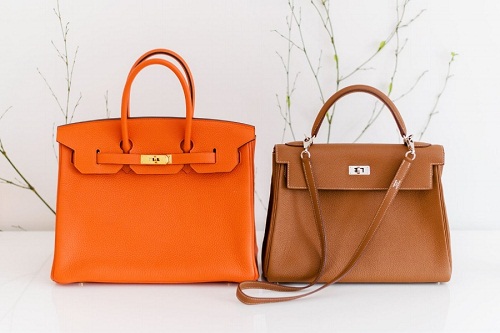 damaging impact on businesses’ ability to export to the US while Amie Ahanchian, Donald Hok, Philippe Stepbanny and Elizabeth opine, the proposed tariffs may increase trade tensions amongst countries besides increasing the cost of business for many companies.
Call for duty drawback programs
In a Bloomberg Tax article, these experts urge for duties to be made eligible for duty drawback under two conditions: first, these goods being subsequently re-exported and second, being incorporated as products manufactured in the US. Duty drawback rules are becoming increasingly popular as they enable companies to recover 99 per cent of the duties originally paid on the imported merchandise when exported, say Ahanchian, Hok, Stephanny, and Shingler.
Another popular duty reduction program that can be used includes the First Sale for Export (FSFE) duty reduction program. However, to use this rule, the US importer needs to prove the marked exports destined for the US market, say Ahanchian, Hok, Stephanny, and Shingler. This program has often been used by retail and apparel importers facing steep duties. It is now becoming popular in other industries too.
The American government aims to resolve international taxation related disputes by building a consensus among members of the Organization for Economic Co-operation and Development, say Husch Blackwell LLP attorneys, Camron Greer and Turner Kim. Katherine Tai, US Trade Representative, reaffirms US’ commitment to resolving concerns related to digital services taxes through an international consensus through the OECD process. Until it reaches such a consensus, USTR aims to maintain its options under the Section 301 process, including imposition of tariffs.
Pakistan’s cotton production declines by 34%
Despite an upward trend witnessed by Pakistan’s textile industry during last year, the Punjab government failed to keep up cotton production resulting in a decline of 34 per cent compared to last year.
According to experts, textile exports increased by 7.8 per cent during the first six months of the current financial year which led to earnings of $7.4 billion but the industry had to import cotton worth 321 million during the same period.
The country is currently facing a historic shortage of cotton due to the reduction in the main cash crop cultivation.
The State Bank of Pakistan in its report on the agricultural sector has revealed that the area under cotton cultivation has been steadily declining up to its lowest level ever, 2.2 million acres, since 1982. The negligence of the authorities has waned farmers off the country’s main source of foreign exchange for the past many years.
Half of UK consumers bought home workout products during pandemic: GlobalData
As per GlobalData research, 50 per cent UK consumers bought home workout products during the pandemic and three-quarters intend to continue working out at home post-pandemic. The firm surveyed around 2,000 consumers of which 52.2 per cent of UK consumers reported participating in home workouts since March 2020 and 53.3 per cent of them buying workout products. The average amount spent in the UK on these per person in the last 12 months is £162.
Of the UK consumers who opted for home workouts since March 2020, nearly 32 per cent didn’t exercise regularly before the pandemic and 76 per cent said, they plan to continue exercising post-pandemic.
Jonathan Rock, Retail Analyst, GlobalData, said, 28.2 per cent of survey respondents bought workout clothing such as tops, shorts and leggings, while 21.3 per cent bought footwear. Such items were also bought because of their versatility as they could be worn while working at home as well as while working out at home.
GlobalData also highlighted Adidas’s emphasis on direct-to-customers sales which resulted in 20.9 per cent in its consumers.
Saks Fifth Avenue to go fur-free by 2023
Fashion retailer Saks Fifth Avenue aims to go fur-free by closing all its fur salons by the end of fiscal 2021 and phasing out all fur products by the end of fiscal 2022. Through this initiative, the retailer joins other department stores such as Macy’s, Nordstrom etc n shifting away from selling furs.
Tracy Margolies, Chief Merchandizing Officer, Saks said the retailer would phase out products made with fur from wild animals or from animals raised for their fur. The store plans to keep selling leather, shearling, goatskin, down, feathers and faux fur products. Numerous luxury fashion brands have gone fur-free in recent years, including Gucci, Chanel, Burberry and Prada. In 2019, Queen Elizabeth II's official dresser revealed that the British monarch switched to faux fur. Brand Canada Goose has decided to stop buying new fur from trappers by 2022, though it will keep using recycled fur.
California has banned sale of animal-fur products with a law that goes into effect in 2023. However, International Fur Federation has argued that such laws raise environmental concerns because faux furs are often made with plastics and get discarded in landfills. Last week, a federal judge ruled against the trade group.