


FW
Italian hosiery sector opt for eco-textiles, innovations to move ahead during pandemic
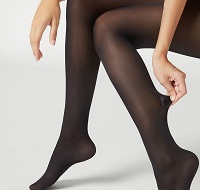 Driven by technological innovation and sustainability, the Italian hosiery sector is growing at a robust pace even in the midst of the global pandemic. As per a Knitting Industry report, pandemic has increased the sector’s sustainability awareness and its use of eco-textiles. Alessandro Gallesi, President, ADICI, the Hosiery and Intimate Wear District Association point out, 63 per cent young consumers opted for sustainable products in 2020, as per a PwC survey. Gallesi advises companies to consider this trend while creating products.
Investments in sustainability increase
Hosiery producers are investing a lot of money in low environmental impact technology and materials. They are including green materials in their fashion collections, says Massimo Bensi, President, CSC, and Owner Manager, Calze BC. The CSC Enterprise Services Centre has offered its laboratory and skills to companies to develop sustainable and environmentally respectful products, informs Davide Bonassi, Director.
A world class company specialising in the creation and distribution of manmade fibers, Fulgar has committed to make its entire production process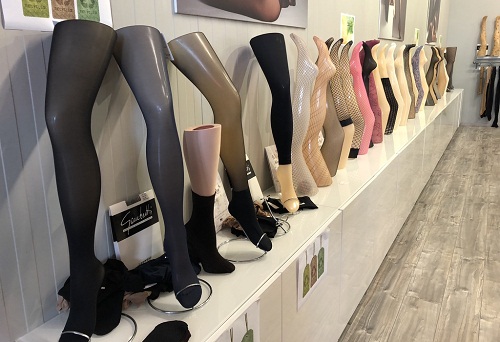 sustainable. Its eco-sustainable product portfolio includes EVO, a bio-based yarn made from castor oil, Q-NOVA, a fibre made from regenerated raw materials and AMNI SOUL ECO, a biodegradable polyamide.
Favored by national and international brands
Fulgar’s products are being used by many Italian and international hosiery brands. For instance Calzedonia has once again chose Nylon 6.6 green Q-Nova yarn by Fulgar. This 100 percent Made in Italy eco-sustainable polyamide 6.6 yarn is Global Recycled Standard (GRS 2015-005 certified by ICEA) and EU Ecolabel certified.
Similarly, Sarah Borghi, a luxury Italian-made hosiery brand has chosen the Amni Soul Eco biodegradable yarn by Fulgar for its new capsule collection known as the Green Collection. The new-generation sustainable yarns offer outstanding comfort and durability to the consumers. Sarah Borghi has also included other Fulgar products like EVO and Q-NOVA in its Green line.
Duelegs Bbf Group’s contemporary band Tightings uses Fulgar’s EVO yarn for its Celeste model and Fulgar’s Q-NOVA fibre for its Ambra model. These help the company combine looks, comfort and environmental awareness.
Maker of high-quality Made in Italy hosiery, Calzificio Schinell has also launched a range of eco-friendly tights using Q-NOVA recycled fibre by Fulgar while Donna BC has opted for Q-NOVA and EVO by Fulgar for products made with eco-friendly yarns. Fulgar has also launched its latest polyamide with antiviral and anti-microbial properties, reflecting its futuristic approach to sustainability.
Wrangler launches new sustainability platform
Wrangler®, a global icon in jeanswear and casual apparel, has launched a new sustainability platform- WeCare Wrangler™ As per Textile World, the platform unites the brand’s legacy of sustainability with measurable goals designed to bring consumers the apparel they know and love while reducing the brand’s environmental impacts.
Coinciding with the launch of the WeCare Wrangler platform, the brand has launched the new Retro® Green Jean assortment which improves on favorite Wrangler styles with a variety of natural fibers, recycled hardware and eco-friendly materials from the hem to the waistband and everything in-between.
The WeCare Wrangler platform is guided by three key focus areas: Planet, Product and People. From protecting the soil, to saving water, to reducing waste and energy use, Wrangler is dedicated to challenging itself to leave less of an impact on the planet. It is committed to doing right by all people with the products it makes.
Distortion in free-market mechanism to destroy Pakistan’s textile exports: APTMA
All Pakistan Textile Mills Association (APTMA) has warned that any distortion in the policy of free-market mechanism will be a disaster for the textile exports of Pakistan.
As Pakistan faces its biggest crop failure this year, cotton manufacturers have claimed that yarn prices in Pakistan are more than the international prices which have caused financial stress to value-added textiles and increased their cost of manufacturing.
However, APTMA has stated that international prices of cotton are at 90 cents delivered to Pakistan from Brazil, the USA, and West Africa, and are consistent with the international market.
The press release also highlighted that the local requirement of 14 million bales of cotton is not fully met as according to APTMA, only 7 million is produced and half of it is exported. Apart from this, the spinning industry of Pakistan, which is the 3rd largest after China and India, is also exporting finished products at $5 billion.
As per APTMA, this has caused an artificial shortage and has disrupted the market. In another recent press release by APTMA on Tuesday, it was stated that monthly yarn production in Pakistan is around 200,000 tons which is in fact, a surplus.
The Association has further clarified that these false claims of shortages and high international prices are nothing but a bid by the manufacturing industry to get out of paying international prices, even though the prices have faced a dip due to the pandemic.
Gucci emerges the most popular brand online: Study
A Luxe Digital study has ranked Gucci the most popular brand online for the fourth consecutive year. The 100-year-old Italian fashion label accounted for 15.2 per cent of the total search interest online in 2021 followed by Chanel and Hermès, with 11.6 per cent and 10.2 per cent of the online search interest respectively.
Only one US, Tiffany & Co, was included in the list on the seventh place. A part of luxury conglomerate giant LVMH, the jewelry brand accounted for 6.2 per cent of online search interest. Online purchases for luxury goods increased 12 per cent to reach 23 per cent percent of total sales in 2020. Luxe Digital estimates, online luxury purchases to account for one-third of all luxury sales by 2025.
As per the study, global luxury brands continue to experiment with ways to engage China's growing affluent consumers online. China is on track to become the world's largest luxury market by 2025, with Tmall's luxury pavilion and dedicated
WeChat boutiques the most used channels at the moment. Brands also emphasized on the localization of their campaigns for the Chinese market, avoiding cultural faux pas.
World entering a new denim cycle says Chip Berg, CEO, Levi’s
Chip Bergh, CEO, Levi’s feels, the world is entering into the early stages of a new denim cycle with shoppers flocking to loose-hanging, wide-leg and flared jeans. Bergh says Levi’s started to notice an uptick in sales in new styles of jeans when it launched two different fits early last year: One pair of jeans that ballooned out at the bottom, and another that was high-rise at the waist and loose fitting.
The shift has been driven in large part by young consumers, says a CNBC report. It has been endorsed by all teens’ favorite websites, including Shein, Princess Polly, Urban Outfitters and Revolve. A separate note from UBS’ retail team earlier this week noted how fashion trends within the denim category are shifting. It completed a global, Google search analysis that found a significant spike in browsing online in January 2021 compared with January. 2020 for new jean styles, including ‘baggy/wide jeans’ and ‘straight jeans.
In the first quarter of this fiscal Levi’s reported double digit sales decline as ongoing store closures in Europe and weaker foot traffic in the US due to the COVID pandemic weighed on results. However, the brand boosted its sales and profit outlook for the first half of the year, assuming the global health crisis doesn’t become worse from here. The brand expects to reach its 2019 growth levels by the fourth quarter.
Shahi Exports invests in energy efficient infrastructure
To achieve its target of 100 per cent renewable electricity, Shahi Exports is taking various steps like investing in solar energy, wind energy and energy-efficient infrastructure. As per Apparel Resources, the company is using agro-waste as biomass fuel for steam generation through boilers. It has also converted most of high-speed diesel-fired boilers into agro-waste or PNG-fired boilers.
Shahi Exports has two solar power plants of 32 MW and 52 MW capacities in Bellary and Bidar districts of Karnataka, respectively, which catered to 65 per cent of its electricity requirements in 2019-20. The company also has an 8.57 MW wind energy plant in Maharashtra. Combining energy generation through process steam turbines, wind and solar plants, 77 per cent of electrical energy consumption across the company was carbon-neutral.
The new facilities of the company incorporate green building design principles from the planning stage, be it using sunlight illumination on the production floors leading to minimal energy consumption. New factories are being designed to use the maximum amount of daylight and good ventilation.
MUJI, Flying Tiger Copenhagen launch App Clips
Leading retailers MUJI and Flying Tiger Copenhagen have launched App Clips alongside MishiPay’s mobile self-checkout solution. With MishiPay’s ‘Scan & Go’ technology, in store shoppers can scan and pay for their shopping, eliminating the need to waste time waiting in line at a checkout. App Clips Codes are visually distinct codes that help users tap or scan to quickly access the experience. Each App Clips Code is encoded with a URL and can support NFC tagging.
When shopping in-store, holding the iPhone near the App Clips Code in-store launches the MishiPay App Clip through which the customer can checkout with Apple Pay without the need to download the full app. If a customer already has the MishiPay app installed on their device, they can hold their iPhone next to the App Clips Code to immediately launch the app, enabling them to scan items and checkout at ‘warp speed’.
By eliminating the need for shoppers to touch any in-store hardware and simultaneously avoid needing to wait in any lines in the store, MishiPay’s innovative mobile self-checkout system can help to keep both shoppers and staff safer. Deploying App Clips enables even quicker user adoption, eliminating the need to wait for the app to download.
CAI expects cotton production to increase to 360 bales this season
Cotton Association of India has hiked the production estimate to 360 lakh bales from previously estimated 358.5 lakh bales for the season. The upward revision of 1,50,000 bales is attributed to a brightened crop prospects in the Northern part of the country, i.e. 50,000 bales each in Haryana, Upper Rajasthan and Lower Rajasthan.
CAI has retained its cotton export projections of 60 lakh bales for the season, but it has noted that cotton imports will be lower by about one lakh bales at 11 lakh bales against earlier estimates of 12 lakh bales.
As for stock position, spinning mills are estimated to have about 95 lakh bales in their warehouses as on March 31, with an average of 107 days’ cotton stock. CAI informed that over 90 per cent of the cotton crop for current season, spanning October 2020- September 2021 has arrived in various markets across the country as on March 31.
As per the trade body, against the projected 360 lakh bales for the entire season, 326.76 lakh bales had already arrived in various parts by March-end.
In all, the market received 459.26 bales of cotton in the first six months of the season. This included 7.50 lakh bales of imports and a record opening stock of 125 lakh bales at the beginning of the season.
Of this, 165 lakh bales have been utilized by the end-users, says CAI. The trade body expects 330 lakh bales of cotton to be consumed during October 2020-September 21.
Atul Ganatra, President, CAI, says, cotton consumption is estimated to increase by 80 lakh bales compared with the previous year’s offtake estimate of 250 lakh bales. "The consumption is estimated to reach its normal level this year after the disruptions and labour shortage caused by the lockdown imposed in the country to arrest the spread of COVID -19 pandemic, he adds.
The Cotton Corporation of India (CCI), Maharashtra Federation, Multinational companies, ginners, traders and MCX are estimated to have a total stock of about 156.26 lakh bales of stock as on March 31. CAI expects to close the current cotton year with a closing stock of about 106 lakh bales.
Medical textile market to grow at 4.10 per cent CAGR by 2025: Study
A report by Market Study Report LLC forecasts medical textiles market will grow at a CAGR of 4.10 per cent from 2019-2925. During this period, the value of medical smart textile market will increase from $1,151.80 million to $1,351.30 million, says Apparel Resources.
The data has been prepared after an intense study of the industry segments, distinct geographic regions and major companies, with special importance to the production-consumption ratio. It underlines the major driving forces, identifies the key opportunities and also suggests methods for addressing the existing as well as upcoming challenges. It also unravels the expected market patterns besides predicting the growth rate for the forecast period 2019-2025.
The term medical textile refers to all textiles which are used for first aid, clinical, surgical and hygienic purposes. Recently knitted products are most widely used in medical textiles and its market share is much higher than medical textiles in other forms due its advantages over other techniques of fabric formation.
Although all types of knitting machine available in the market are suitable for producing medical textiles, new range of computerized flat bed knitting machine is ideal for medical textile applications, because the machinery can be used in both small and large batch production.
Bangladesh manufacturers panic as orders from US fall
Falling work orders from the US is creating fear in the minds of Bangladesh RMG makers. Fazlul Haque, Former President, BKMEA says, buyers are taking all types of work orders but in less quantity. He expects business to take time to bounce back in the wake of spike in coronavirus infections. Buyers may take decision based on forecast for next 6-7 months, Haque said. If Covid-19 situation doesn’t improve quickly, RMG export may experience downtrend. Although buyers haven’t given any such massage as yet, he added
Global export of apparel products to the US fell by one-fourth in 2020 as the coronavirus pandemic battered the country more than any other parts of the world. Apparel export to the US rose slightly in the first two months of 2021 after the coronavirus situation slightly improved.
Bangladesh also gained from it, but fear looms large again over the export of apparel products to the US market because of new spike in coronavirus infections. As per OTEXA reports, US buyers imported apparel products worth $64.07 billion (6,407 crore) in 2020. US import of apparel products dropped by 13.85 per cent to $10.91 billion (1,091 crore) in the first two months of 2021.
Bangladesh’s export of apparel products to US dropped by 13.11 per cent to $1 billon (100 crore) equal to Tk 85 billion (8500 crore) in the first two months of 2021. Bangladesh is the third largest apparel exporter to the US market after China and Vietnam.
Vietnam’s export to the US dropped by 12.9 per cent to $2.09 billion (209 crore) in January-February of 2021. Vietnam exported apparel products worth $2.34 billion (234 crore) in the corresponding period of 2020. India and Indonesia also saw downtrend in their apparel export to the US. India’s export of apparel products to the US dropped by 21.89 per cent to $590 million (59 crore) in January-February of 2021.











