


FW
AMAC partners ITA for new developments in composites
Industrial and business consulting company AMAC is strengthening its position in new textile-based developments in partnership with the Institute for Textile Technology, (ITA) at RWTH Aachen University. As per Innovation in Textiles, ITA develops complete solutions, from manufacturing fibres to the processing of textile intermediates with thermoplastic and thermoset resins and textile-based parts manufacturing, based on technologies such as braiding, pultrusion and the in-situ impregnation of textile preforms. The company focuses on transportation industry, particularly the e-mobility sector, as well as building and construction and wind energy. Its partnership with AMAC will help it benefit from its network in the composites industry.
ITA is a one-stop source for composite solutions from the fibre to the cost-efficient manufacturing of final parts. With 250 different technologies at is machine-park in Aachen, it offers further valuable networking opportunities to the composites industry as well as access to relevant complementary fibre-based excellence.
Online shopping to become permanent post COVID: Euromonitor Survey
As per a survey by Euromonitor International, around 74 per cent of global retail and consumer brand professionals expect the crisis-led rise in online shopping to become permanent. Respondents also expect half of the absolute value growth for the global retail sector over 2020-25 period to be digital. Of this, China and the US will account for 55 per cent of that value growth. Emerging e-commerce region Latin America is likely to see increase adoption of e-commerce adoption with more consumers shopping online to obtain necessities.
In 2020, the region posted the strongest growth in goods sold online with 60 per cent jump. MercadoLibre was one of the biggest corporate beneficiaries of the digital shift in Latin America. Euromonitor expects the region to continue growing during the forecast period, propelled by Mexico, which is narrowing the gap between itself and the region’s largest e-commerce market, Brazil. Traditionally, e-commerce in Mexico was driven by the travel sector. However, the desire to shop online out of safety concerns led consumers to overlook some of the hurdles like fraud and logistics that had previously dampened online sales.
The Lycra Company launches new fibers from textile waste
The Lyrcra Company has launched a range of fibers made from 100 per cent textile waste. Known as CoolMax and Thermolite, these fibers are made from recycled PET bottles. They have been developed in collaboration with Itochu Corporation, a general trading company with holdings in consumer-related sectors, including the textile business.
As per Sourcing Journal, this is the first of several innovations that The Lycra Company is working on in textile and garment recycling. The company aims to lay the foundation for a more circular future for its Planet Agenda Sustainability platform.
The fibers provide consumers with the performance attributes they seek. They are made with a unique depolymerization and refining process which consists of scraps from garment manufacturers, into fibers with properties comparable to virgin polyester. The company will continue to offer these products in parallel with those made from textile waste.
Fast fashion brands come under fire for involvement in forced labor
 Fast fashion brands, Uniqlo, Inditex, Skechers USA and French apparel group SMCP have come under fire after a French legal association Sherpa, human rights NGO Collectif Ethique Sur L’etiquette, the Uyghur Institute of Europe and an individual Uyghur victim filed a complaint against them with the Paris Prosecutor Office. As per The Fashion Law, the complaint accuses these brands of encouraging forced labor by maintaining ties with Xinjiang suppliers despite evidences of systematized forced labor in the region. The failure of these companies to cut ties with Xinjiang suppliers exposes their apathy towards human rights, says Sherpa.
Skechers says, it maintains a supplier relationship with Dong Guan Lu Zhou Shoes, a manufacturer employing Uyghur individuals. The company also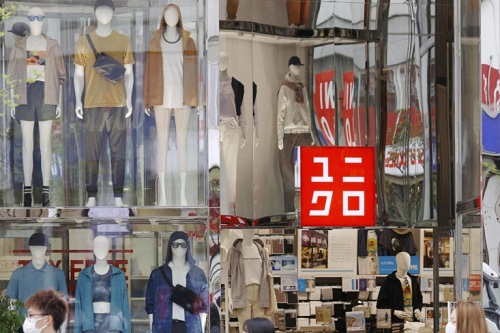 conducted multiple audits of Dong Guan Lu Zhou Shoes in 2017, and found no evidence of forced labor. The Uyghurs at Lu Zhou factory are employed on the same terms and conditions as all other factory employees, and are free to leave whenever they wish to, the company added.
Legal action against violators
Meanwhile, Sherpa has decided to initiate legal action against these companies to highlight their role in exploitation of Uyghur people. The organization is being supported by members of European Parliament Raphaël Glucksmann and Reinhart Butickhofer, as well as by the World Uyghur Congress.
The complaint filed by Sherpa is likely to have many legal ramifications for the accused. The French Corporate Duty of Vigilance Law, particularly in lieu of an EU-wide ESG due diligence law directs French companies with over 10,000 employees to regularly monitor their supply chains for human rights and environmental protection violations.
Maintaining safety and health standards in factories
The law also directs companies to maintain proper health and safety standards in factories. It allows third parties like trade unions and NGOs to seek an injunction against violators of this law and force them with compliance. The law also introduces a corporate negligence cause of action for harm suffered due to non-compliance of this law.
Since the passing of this law, 11 French and American NGOs filed cases against French retailer Casino for its alleged involvement in deforestation of the Amazon rainforest. Currently, the case is being closely monitored by NGOs and fashion companies.
Klaus Heinrichs to retire from Monforts
After almost 30 years with the company, Monforts Vice-President Klaus Heinrichs is to retire at the end of May.
A very well-known and respected figure in the industry, Klaus began working in marketing for the company in 1992.
“From the beginning Klaus used his flair and networking skills to secure and improve the company’s international presence and public relations, especially at seven successive ITMA textile machinery exhibitions, beginning with the show in Milan in 1995,says Nicole Croonenbroek, Marketing Manager, Monforts. Later, he moved to the customer service, sales administration and exports departments.
Heinrichs has also involved in the successful product launches for Monforts technical and technological highlights such as the TwinAir principle of independent airflow regulation, the Hercules LTM stenter chain, the Econtrol® dyeing technology or the Montex®Coat device - to mention only a few. He has also been active on the VDMA’s Exhibition and Marketing Committee since 1993, which he chaired from 2005 to 2008.
Klaus always enriched the industry discussions with practical and future-oriented proposals and thus also advanced ITMA, adds Thomas Waldmann, Managing Director, VDMA Textile Machinery Association.
Textile MSMEs face business uncertainty in coming weeks
Indian textile MSMEs are staring at business uncertainty in coming weeks. Fresh COVID restrictions including lockdown, night curfew, weekend curfew, etc, across the country, are threatening production. Over 60-70 per cent of MSMEs units are operating at a production capacity of around 70-80 per cent while it should have been 100 per cent till now, says Ashok Juneja, President, The Textile Association (India).
Juneja expects MSMEs to ensure labor doesn’t migrate back to hometown again. The sector is largely unorganized with no comprehensive information regarding the impact of last year’s lockdown even as the level of production fell in jute, silk, etc, he says.
As per Udyam Aadhaar Portal, the total textile manufacturing MSMEs registered between September 2015 to June 2020 were 651,512 while apparel MSMEs were 428,864. According to Udyam Registration, which replaced Udyam Aadhaar in July last year, 115,855 textile manufacturing MSMEs and 85,564 apparel MSMEs were registered between July 1, 2020, and February 9, 2021.
Up to March last year, all these textile units were running up to 80-90 per cent of their capacity before they contracted in production capacity to 30-40 per cent. The activity picked up in September and by December it scaled to 80-90 per cent production capacity.. However, the performance has been sliding again from March 2021 due to COVID and currently, it stands at 60-70 per cent. If there is a complete lockdown, the production capacity might decline to previous year levels, adds TK Sengupta, Immediate Past President, The Textile Association (India)
COVID resurgence to delay apparel sector recovery: ICRA
Investment information firm ICRA expects the resurgence of COVID cases in India and some of its key export markets to delay full recovery for Indian apparel players to FY2023. However, business performance of apparel players in FY2022 is expected to be better than FY2021. The business is expected to be supported by continued favorable progress on the vaccination rollout and a material shift witnessed towards online shopping.
Most Indian apparel companies will report double digit growth in FY2022, says ICRA. They will achieve around 85 to 95 per cent of their pre-COVID turnover levels, broadly maintaining the level of recovery achieved in H2 FY2021. Besides pent-up and festive demand, which temporarily supported demand during Q3 FY2021, increased mobility amid the easing of the lockdowns increased consumer confidence in H2 FY2021.
This encouraged higher footfalls in marketplaces and drove discretionary consumer spending. For FY2022, ICRA expects top-line growth of 15 to 20 per cent for apparel exporters with range-bound margins amid continued discounting requirements, volatile demand patterns and intense competition in the global apparel markets.
Apparel retailers are expected to report a 35 to 40 per cent turnover growth in FY2022 with partial recovery in operating margins. However, margins are expected to remain lower than the pre-COVID levels by 200 to 300 bps. Apart from these continued pressures, increased raw material costs are likely to limit improvement in margins for apparel players.
Apparel brands take DTC route to boost sales: Report
Apparel brands are increasingly taking the direct-to-consumer (DTC) route to boost sales, says a report by the Loadstar. Sportswear and equipment producer Under Armour plans to quit 2,000-3,000 stores that currently sell its products and engage more in direct to consumer (DTC) sales. This will help boost profits and gain a more prominent position in the market.
Denim fashion giant Levi Strauss also plans to achieve 60 per cent sales through the DTC route. An early entrant in this segment, Nike made 35 per cent of its revenue through direct-to-consumer channels last year, up from 32 per cent in 2019. FMCG brands Kraft Heinz, General Mills and Kellogg are also eyeing the DTC segment. Kraft Heinz sells baked beans and tomato soup via its Heinz To Home website to consumers in the UK, Europe and Australia, with online sales doubling last year to more than 5 per cent of global sales. PepsiCo set up two websites last year to sell some of its brands, like Doritos and Gatorade.
However, Jason Goldberg, Chief Strategy Officer, Publicis Communications and Chairman, shop.org, a division of the US National Retail Federation, warns, direct selling may not for everybody as securing capacity for final-mile delivery will be a challenge, as demonstrated by the past peak when the integrated parcel carriers raised charges and kept ceilings on volumes from large clients.
Levi Strauss aims to tackle this challenge by increasing its more traditional sales footprint. The company is adding to its own retail outlet locations.
Lenzing expects 2021 operating results to reach pre-COVID levels
Lenzing Group expects operating result for 2021 to reach 2019 levels. The group’s EBITDA earnings Q1FY2021 increased by 36.8 percent year-on-year to €94.5 million. Lenzing Group produces eco-friendly fibers from the renewable raw material wood. Its high-quality fibers are used in a variety of textile applications ranging from elegant ladies clothing to versatile denims and high-performance sports clothing. Due to their consistent high quality, their biodegradability and compostability Lenzing fibers are also highly suitable for hygiene products and agricultural applications.
The Lenzing Group strives for the efficient utilization and processing of all raw materials and offers solutions to help redirect the textile sector towards a closed-loop economy. In order to reduce the speed of global warming and to accomplish the targets of the Paris Climate Agreement and the “Green Deal” of the EU Commission, Lenzing aims to make its dream of a zero-carbon future come true.
Egypt to build world’s largest textile factory
Egypt is constructing the world’s largest textile factory in El-Mahalla. As per Kohan Textile Journal, to be inaugurated in March 2022, the factory spans over 62,000 sq. mt. and will have a daily production capacity of 30 tons. The plans for the factory were announced in September 2019. To fulfill the needs of this and other factories, Prime Minister Mostafa Madbouli plans to grant farmers incentives to grow high-quality cotton. The government will also train workers who in turn will train 130 others to work in factories being developed in Cairo, Beheira’s Kafr Al Dawar, and other areas in the Nile Delta region.
Egypt is also planning a textiles city in the Free Zones System in Minya governorate. The city will be built over 306 feddans, and a company will be established to manage the city and all parties would have equal shares in it. Feddan is an Egyptian unit of area equal to 1.038 acre. The project will provide around 17,000 direct jobs, in addition to indirect job opportunities, and target exports to overseas markets.











