


FW
Lectra acquires all outstanding shares of Gerber Technology
With an aim to create a global Industry 4.0 player for the fashion, automotive and furniture markets, Lectra has acquired all outstanding shares of Gerber Technology. As per Innovation in Textiles, these shares worth €175 million were acquired through a loan of €140 million, available cash and transfer of €5 million newly-issued Lectra shares to AIPCF VI, Gerber Technology’s sole shareholder.
The union of both companies’ expertise, state-of-the-art technology and resources will enable Lectra offer long-term value to customers, opines Daniel Harari, Chairman and CEO, Lectra. Founded in 1973, Lectra reported revenues of €236 million in 2020 and is listed on Euronext (LSS). Like Lectra, Gerber Technology develops software and automation solutions for businesses around the world.
An US -based company founded in 1968. Gerber Technology develops software and automation solutions for fashion, automotive, furniture and other businesses across the globe.
Copenhagen Fashion Week announces finalists for Sustainability Award
Mother of Pearl, Nikolaj Storm Copenhagen and Teatum Jones are the three finalists for this season’s Sustainability Award at the Copenhagen Fashion Week. As announced by online retailer Zalando, the three finalists will present their collections during the fashion week to be held from August 10-13, 2021. The seasonal award aims to encourage brands to explore environmentally friendly alternatives and acknowledges sustainable efforts to improve the industry. It forms a part of Zalando’s sustainability strategy, do.MORE, which works to be part of the solution and aims to address the fashion industry’s waste problem.
The three finalists will receive funds to cover the production costs and will debut their designs in the Zalando Greenhouse - the official hub of Copenhagen Fashion Week that showcases the latest in sustainable fashion. The winner will receive a prize of €20,000 and a partnership with the online retailer in developing an exclusive capsule collection, which represents sustainable advancements and innovation.
India’s cotton yarn and fabric exports grow by 24.85% in May 2021
India’s cotton yarn/fabrics/made-ups, handloom products exports, grew 24.85 per cent in May 2021 over May 2019, according to the preliminary data on India’s merchandize trade in May 2021 released by the country's Ministry of Commerce & Industry. Exports of jute products, including floor covering, increased 20.99 per cent in May 2021 over May 2019.
However, India’s leather exports of leather declined -36.48 per cent while exports of readymade garments declined 27.59 per cent, and handicrafts excluding hand-made carpet declined 19.48 per cent during the month.
Import of raw cotton and waste declined 39.94 per cent while those of leather and leather products declined 37.19 per cent and textile yarn/fabric/made-up articles’ imports declined by 14.48 per cent.
India’s trade deficit increased 74.69 per cent to $6.32 billion in May 2021 from trade deficit of $3.62 billion in May 2020. Its merchandise exports increased by 67.39 per cent to $32.21 billion while merchandise imports increased by 64.54 per cent to $38.53 billion
British Wool announces winner of Training and Development Program
British Wool has declared Imogen Ogborne from Devon the winner of new Training & Development program. Member of Lewdown Young Farmers Club, Imogen, began her involvement in wool handling in October 2019 when she secured a job with a contractor in New Zealand. Ever since, Imogen has been passionate about shearing and wool handling and now seeks to improve her skills.
Launched earlier this year, the new British Wool Shearing Training & Development Program offers one winner from each UK nation the opportunity of winning 12 months of training as well as a Lister Shearing prize package worth £500.
At the beginning of the 12 month program, the training will include attending a British Wool machine shearing course, followed by a gear course, a wool handling course and completing the program with a second machine shearing course. The development aspect would give Imogen the opportunity to get advice from experienced British Wool shearing instructors and also, depending on availability and shearing ability, the opportunity to gain on farm experience working with a shearing contractor. During the 12 months program, the four UK winners will also visit British Wool’s head office and wool grading depot in Yorkshire as well as a scouring plant, to follow the wool supply chain process.
Authentic Brands Group, Shein launch new IPOs
More than 150 initial public offerings have priced so far this year with Brooks Brothers’ parent company Authentic Brands Group (ABG) and luxury fashion and China’s fast fashion e-tailer being the latest to launch their IPOs.
As per Sourcing Journal, ABG has acquired many bankrupt retailers including Barneys New York, Brooks Brothers and Lucky Brand. Rescued from a trio of Chapter 11 petitions, the labels join a stable of household-name brands including Aéropostale, Jones New York, Nine West, Vince Camuto, Juicy Couture and Nautica, in addition to Hart Schaffner Marx, Herve Leger, Hickey Freeman, Thomasville and Sports Illustrated. The company aims to grow to $25 billion in coming years. It plans to launch an IPO worth $10 billion later this year.
Chinese fast fashion e-tailer Shein is also eyeing the public markets. The e-tailer is looking at the US equity market for a listing. Founded in October 2008, the company targets the European, American, Australian and Middle Eastern markets, and relies heavily on a community of micro-influencers to reach trend-conscious consumers through social platforms. In January, Shein was an early frontrunner for bankrupt Arcadia’s Topshop and Topman brands, said to offer about $409.7 million after Next plc backed out. Asos eventually acquired the pair’s brand assets and inventory for $363.2 million, casting its cost-intensive stores by the wayside.
Benetton launches new vintage collection with Depop
Italian brand Benetton has collaborated with secondhand fashion marketplace Depop to launch a new collection of the brand’s vintage garments. As per a Spin Off, the 60-piece collection spans the 1980s to 1990 and includes men’s and women’s pieces and accessories, showcasing Benetton’s DNA and commitment to color. The collection includes rare rugby shirts, iconic colorblocked sweatshirts, patchwork denim jackets, Argyle jumpers and linen shorts.
Benetton has also launched a new campaign for the collection. The campaign sensitivizes important social issues, just as Benetton’s campaigns did in the 1990s when the brand addressed many a controversy at the time with its now famous promotions that were photographed by Olivero Toscani and now are icons of advertising.
It features @YouthClubStore who is committed to promoting more conscious consumption of fashion, @ArchiveSix who speaks to her empowerment as a POC businesswoman, dancer @Ayo, on the importance of self love and self acceptance and @Hadiyahh who is passionate about the representation of real female bodies in the media.
Accelerating Circularity launches a project in Europe
Accelerating Circularity has launched a project in Europe as the company builds on its work researching, mapping, modeling and linking circular textile-to-textile systems in the United States. As per Sourcing Journal, the project Accelerating Circularity Europe has a Steering Committee representing global retail, circular supply chains and textile recycling, including DuPont Biomaterials, European Outdoor Group, GIZ, Gr3n, Inditex, Lenzing, Recover, Recyclatex Group, Reverse Resources, Texaid and Zalando.
The Steering Committee will set the strategy and make decisions for the European project. It will convene a Brand and Retailer Working Group for the development of take-back programs and circular product specifications. Select collectors, recyclers and preprocessors will comprise a Spent Textile Working Group to address challenges in collection, sorting and feedstock preparation. As in the US, the European project will unfold in phases, starting with research and mapping, and modeling and linking, and then going into trials and evaluation.
Accelerating Circularity is a collaborative industry project developed in 2019 to accelerate the textile industry’s move from linear to circular. The project aims to establish systems that will use the embedded value and resources in existing textiles for new products, reducing the millions of tons of textile waste annually going into landfills and supporting the reduction of the industry’s GHG emissions.
Rising COVID-19 cases challenge India’s opportunity to capture US fashion market
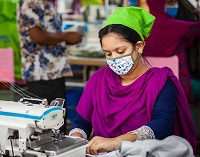 With consumer spending bouncing back in the US, India has a rare opportunity to capture American fashion market. However, growing COVID-19 cases are forcing garment factories in the country to either shut down or work at half capacity. As per NBC news reports, India accounts for 16 per cent textile imports by the US and about 5 per cent apparel and accessories . Though the percentage of textile and apparel exports to the US is quite small, India is still a major exporter of rare gems to the country. This makes it difficult for the US to move its supply chain outside India, says Mary Lovely, Senior Fellow, Peter Institute for International Economics, and Economics Professor, Syracuse University.
Supply chain issues threaten growth plans
As per US Commerce Department, consumer spending in the US increased by 10.7 per cent in the first quarter of this year. Brett Rose, CEO, United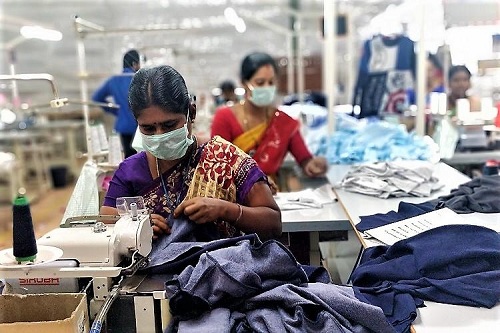 National Consumer Suppliers, believes, this is the perfect time for India to capitalize on the growing demand. However, most of its garment factories are expected to remain closed till June 7, impacting supply of manufactured goods, textile and mill products, she adds.
Sonia Syngal, CEO, Gap informs, her company is already facing supply chain and raw material challenges from countries including India. Owner of West Elm and Pottery Barn, Williams-Sonoma too has several orders pending from India due to production issues.
Impact on jobs and deliveries
Not just manufacturers, the global pandemic has also stressed India’s garment workers. Over 1,200 workers employed with Gokuldas Exports lost their jobs as the apparel manufacturer closed one of its factories due to cancelled orders. The company is now working overtime to meet order deadlines, informs Sivaramakrishnan Vilayur Ganapathi, CEO.
The pandemic is also causing logistic delays for Indian manufacturers. Orders that could be earlier delivered within 30 days are now taking 70 days, says Rose. This is leading to cargo ships being overstocked, hiking up shipping prices. However, Rose expects this pressure to ease soon as companies are bound to reach an inflection point where they can bear no more challenges.
Dismal future outlook compels The Denim World to close operations
 Industry experts had hoped demand for sustainable denims will increase post pandemic. But, the opposite is happening and people are queuing up for cheaper, fast-fashion items, says Silvia Rancani, Founder, The Denim World which is soon set to shut operations due to dwindling demand.
Founded in October 2018 and operating since January 2019, The Denim World is a collective hub for manufacturers and designers in Amsterdam to collaborate and discuss new ideas to create sustainable jeans. As per The Spin Off, the project was first launched at a closed location near Haflweg in Amstersdam. However, the pandemic soon forced it to move to Schakelstraat, near Amsterdam-Sloterdjik.
Along with the location, the mode of these meetings also changed. From single or collective with brands, designers and industry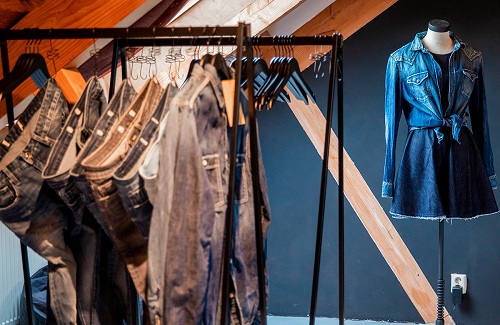 insiders, they transformed into digital discussions between Rancani and industry players though live broadcasting on Instagram.
No new orders or financial support
However, the future is not very encouraging as the denim market in Netherlands has reached a deadlock, says Rancani. Brands are ordering only staple garment items that too lie unsold in warehouses, he adds. Rancani also does not have any additional financial support besides his annual contracts. These too, he expects to stop from June due to the volatile market conditions.
Though insiders have been urging him to continue for a bit longer, Rancani is unwilling to take any additional risks. His move to a new location in August 2020 also did not help as he managed to organize only a couple of small events in September. He couldn’t even inaugurate his new office as the pandemic broke out soon after, he rues.
Through 2020 Rancani managed to organize a series of live talks via Instagram only twice a week. His first series known as ‘Spritz’ was held via the Web while the second group of meetings under the topic, ‘Kitchen’ went live with industry insiders cooking their favorite recipes. Now, with Kingspins decision to hold its next Kingspins Amsterdam edition digitally, Rancani sees no hopes for The Denim World’s survival.
Nearshoring, a growing threat to denim industry
Though highly ambitious, Rancani has no plans for the future. Being a specialist in product development, washing and fabric developments, he plans to work as a consultant for denim manufacturers. His 16 years of experience in the Mauritian company Denim De l’Ile, Hong Kong-based Coin Group, and Diesel’s Asian subsidiary, have helped him gain lots of contacts globally. Rancani has also created a line of denim clothes and accessories for pets, The Denim Dog, which were recent sold at a pet store in Amsterdam.
Currently, Rancani sees no signs for recovery for the denim industry as professionals are travelling less; especially to Asia. Due to this, brands are opting to work with nearer manufacturers and finishers. This does not bode well for the industry, he signs off.
China’s price rise threatens recovery of western apparel markets
 Increase in China’s raw material prices in the first quarter of this year has raised concerns about spiking inflation in Western fashion markets. As per the National Bureau of Statistics, China’s producer-index rose 6.8 per cent in April. The index is likely to further surge in the second and third quarters of this year, as per a report by China’s Central Bank.
The surge is likely to spill over to other consumers markets like the US. Reports indicate, America’s consumer price index jumped by 4.2 perc ent in April compared to a year earlier. Supply chain disruptions are also having a compounding effect on the prices in these markets, says Nick Marro, Global Trade Lead, The Economist Intelligence Unit. The industry’s prospects of a swift recovery are being dampened even though most western markets are reopening post lockdowns. This is happening mainly due to the resistance of brands to any prices increase, he adds.
Pandemic hangover leads to price rise
Experts view the current rise in prices as a part of pandemic hangover. The exponential rise in demand is a result of both, consumers remaining dormant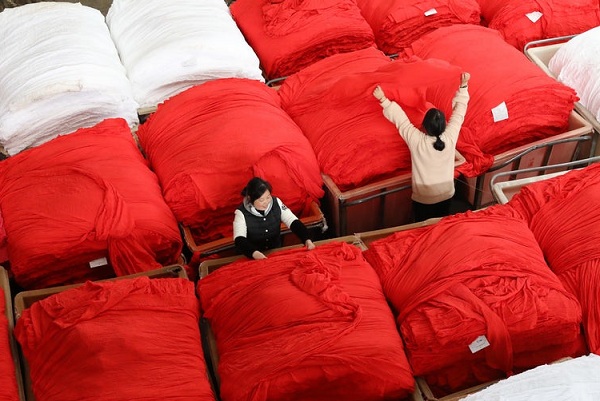 for almost a year, and stimulus cheques provided by the government. The opening of two biggest consuming countries, China and America, is also boosting prices, adds Ophelia Chen, Co-Founder, CEO-Genderless, Bobblehaus.
From January to March, Chinese cotton prices rose 4 per cent to 15,948 yuan ($2,479) per tonne, according to market intelligence firm Texpro. Prices are expected to remain above 16,000 yuan ($2,487) per tonne in the coming months, says the company.
Not just raw materials, prices of synthetic materials are also rising. Yossi Nasser, CEO, Gelmart InIt’s, informs, fueled by rising oil prices and tightening supplies, spandex prices increased almost 30 per cent, Prices of other materials have also increased, although to a lesser degree, he adds
Trade disruptions witnessed last year have also led to an increase in freight rates. Says Himood Hui, Vice President, Bombyxx. The flow of goods is turning into a costly logistical headache for most manufacturers, he adds.
Stabilization expected across the year
Manufacturers expect raw material prices and logistical costs to stabilize across the year. They are already planning to expand their capacities to alleviate some of these prices pressures, adds Robert Sierra, Economics Team Director, Fitch Ratings. However, they are also facing some other pressures. China’s falling birth rate and ageing population is raising concerns about its ability to sustain its large-scale manufacturing facilities and competitive prices. The country’s technological upgrades are also limited. Though some of its suppliers are working closely with customers to remove production bottlenecks, they face limited cost cutting opportunities.
The pandemic offers manufacturers an opportunity to reset operations and fuel a boom in cheap fast fashion. Manufacturers can also teach consumers to accept prices reflecting their true manufacturing costs.











