FW
Bangladesh should follow up Accord with a new safety agreement
 With the Accord on Fire and Building Safety in Bangladesh set to expire in the next two week, time is ticking for Bangladesh to follow it up with a new safety agreement. This Accord agreement was signed by Bangladesh in 2013 after the Rana Plaza building collapse that killed over 1,100 workers and injured many more. The agreement revolutionized factory safety inspections in Bangladesh. Its binding nature, transparent reporting, and robust grievance mechanism, helped the country save thousands of lives by reducing building collapses and factory fires.
Expanding reach to other countries
In January 2020, governing brands and union assented to follow Accord up with a new agreement covering other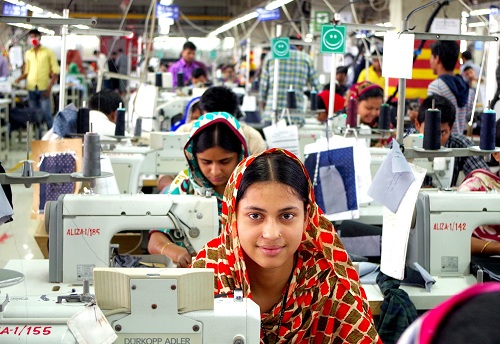 countries as well. The agreement would ensure safety rules remain binding even after the expiry of the current contract.
Negotiations for the agreement started late due to the COVID-19 pandemic and have dragged on beyond the initial deadline of May 31, 2021. The agreement did not attract brands like H&M, Aldi Nord, Otto, Auchan, and Carrefour, who failed to comply with human rights due diligence obligations, both under the French Corporate Duty of Vigilance Law or Loi de Vigilance as well as the upcoming German Act on Corporate Due Diligence Obligations in Supply Chains or Lieferkettengesetz.
Legal risks await companies leaving Accord
Miriam Saage-Maaß. European Center for Constitutional and Human Rights, believes, companies leaving the Accord risk legal proceedings under the French as well as the German law if they fail to fulfill their due diligence obligations.
Hundreds of factories in Bangladesh lack basic safety facilities such as fire alarms and sprinklers despite identifying thousands of safety hazards, reveals Accord data. The 63 Bangladeshi factories that produce for French brand Carrefour do not have a fully installed and verified fire alarm system while 43 lack completed sprinkler system. These factories pose a major risk to worker safety post Accord expiration, and a liability risk to Carrefour, says Carolijn Terwindt, Clean Clothes Campaign.
The Ready-made-garment Sustainability Council (RSC)’s mechanism alone cannot fulfill the human rights due diligence obligations in Bangladesh. The council fails to hold brands accountable for their actions. Bangladesh therefore, needs a legally binding agreement that mandates brands to continue supporting the Accord’s work -- including operating factories safely and providing them with financial assistance to so. Brands refusing to renew Accord would be solely responsible for future risks they face, adds Ben Hensler of Worker Rights Consortium.
US apparel imports surge by 26.92% in H1’21
The US apparel market has revived in 2021 following consumers’ optimism for shopping after a dreadful 2020 in both values and volumes. As per an Apparel Resources report, US’ apparel imports increased by 26.92 per cent in H1’21 to $35.38 billion from H1 ’20. Volume-wise, its imports surged by 38.39 per cent Y-o-Y to 13,365.48 million SME.
The values of US’ apparel imports declined by 11.63 per cent in H1 ‘21 to $ 40.04 billion in the first half of 2021. However, the US didn’t see any major decline in volume terms which fell marginally by just 0.23 per cent as compared to H1 ’19.
The two-year comparison and the negligible shrink in the volume-wise imports indicate that US buyers are still sourcing garment products from world over in bulk quantities. On the other hand, the decline in values says the unit prices are getting tighter – particularly for basic commodities, which will increase competition for manufacturing destinations more in the coming months!
There was steep decline in unit prices of imported apparels by the US during the first half of the year. In H1 ’21, UVR (Unit Value Realisation) was $2.64 per SME declined significantly from $2.88 in H1 ’20 and $2.99 in H1 ’19. These declining unit prices are an indication of stiff competition that apparel exporters are facing as time passes by in COVID-19 era.
Coloreel appoints Torbjörn Bäck as new CEO
Coloreel has appointed Torbjörn Bäck as its new CEO with effective from August 9, 2021. He will succeed Mattias Nordin who will transition to a new role within Coloreel as Senior Vice President Business Development.
Torbjörn Bäck was earlier employed as the President of Camfil Northern Europe, an international manufacturing group with world leading technology. Prior to this, he was the Senior Vice Persident for Nederman in Asia Pasific. Torbjörn has a long industrial experience from sales and marketing, product management including hands on leadership experience for how to create growth for products and innovative companies.
Coloreel is a Swedish textile innovation brand with a groundbreaking technology for embroidery that enables high-quality coloring of textile thread on demand, unlocking a world of potential It is a part of the movement to reduce waste and move the textile industry towards more sustainable production. By coloring the thread directly, there is no wastewater, hence no water pollution. And, using a single reel of thread and needle also means minimized thread waste and minimized microfiber pollution.
Collaborations to be key for future textile industry growth
 Collaborations are an important part of supply chain management in the textile industry. They help the industry create the right textile product for application. To highlight the importance of partnerships in the industry, MIT and the Fashion Institute of Technology (FIT) published an instruction manual describing their multi-year partnership to develop sustainable fabrics, to help other organizations replicate their success.
Titled, ‘Transdisciplinary Innovation Playbook: How to build a virtual workshop that collapses walls between design and engineering and kick-starts collaboration to solve real world problems’ is a template for building partnerships in the textile industry. The manual elaborates on ways to find the right industry partner, employ the most suitable associates and plan an effective budget for projects.
Synergy between design and engineering
In 2017, Joanne Arbuckle, Former Deputy to the President for industry partnerships and collaborative programs at FIT, and Gregory C Rutledge, the Lammot du Pont Professor in Chemical Engineering at MIT also proposed a plan to develop a synergy between design and engineering in the textile industry. To realize their collaborative vision, FIT and MIT approached Advanced Functional Fabrics of America (AFFOA), which agreed to support their work.
The result was a multiyear partnership to organize workshops on developing products using advanced fibers and fabric technologies. Being held since 2018, these workshops help the domestic textile industry develop new advanced fiber and fabric technologies. They help create next-generation workforce for the advanced fiber and fabric industry.
Students attending these workshops learn new technologies developed by MIT and FIT. This helps them respond to the challenges that emerge during the course of the project. The workshops also allow students to see some of the research in the field of technical textiles, says Chris Wawrousek, Senior Creative Design Leader, New Balance Innovation Studio.
Revolutionizing textile technologies
Over the last few years, students have launched many futuristic projects that revolutionized existing designs and technologies in textiles. Some of these projects are:
• Project to develop a biodegradable lifestyle shoe by Team Natural Futurism by using natural material alternatives, including bacterial cellulose and mycelium, and advanced fiber concepts
• A project by Team CoMIT to Safety Before ProFIT to explore various ways runners get hurt
• A project by Team Peacock to develop a color-changing athletic apparel range that analyzes the athlete's movement through an app
• A project to design apparel and footwear using PE (polyethylene) and color changing material by Team Ecollab
• A project to create a long-lasting footwear range by Team Laboratory56 that reduces waste by using PE, while connecting with the community through a recycling app program.
The playbook is expected to encourage students to work in an interdisciplinary environment, and advanced textiles. It would help create an agile, innovative, and able to apply higher-order thinking workforce to develop the future of the industry, says Sasha Stolyarov, CEO, AFFOA.
Arbuckle adds, the MIT/FIT collaboration will encourage other institutions to team up to develop new products to help define the industry’s future. Collaborations between designers and engineers will help develop new technologies having everlasting impact on the world, adds Yuly Fuentes, Project Manager, MIT Materials Research Laboratory.
Sixth Centrestage to be held from September 10-12, 2021
The sixth edition of Asia’s premier fashion event, Centrestage will be held in a physical format from September 10-12, 2021 at the Hong Kong Convention and Exhibition Centre (HKCEC). To be organized by the Hong Kong Trade Development Council (HKTDC), the show will feature over 200 brands from over 20 countries and regions and close to 30 fashion events. It will offer an ideal platform for brands and designers to showcase their creativity in the fashion arena and demonstrate their resilience in overcoming the recent challenges. For the first time, the show will open to public visitors for the entire duration of the event.
Centrestage 2021 will have "Chapter Infinity" as its central theme, encouraging those in the fashion industry to take creative approaches and reignite their inspiration in the pandemic era, exploring the countless opportunities that lie ahead. The event will feature three thematic zones: Allure - representing craftsmanship, refinement and elegance; Iconic - displaying avant-garde designs; and Metro - showcasing contemporary, minimalistic expressions of urban life. This year's event will feature over 200 fashion brands, including more than 120 brands from Hong Kong. Although travel restrictions remain in effect between Hong Kong and the rest of the world, some brands and industry organizations outside Hong Kong will send local representatives to participate in the event, including the Taiwan Textile Federation, Macau Productivity and Technology Transfer Center, Italian fashion promotion organization Ente Moda Italia (EMI) and new joiner Chamber of Entrepreneurs of Amalty from Kazakhstan.
In addition, the show has invited overseas buyers to conduct video business meetings with exhibitors include 3NY from the United States, Germany's Encode Fashion, Thailand's Bluepin and Vietnam's Runway. Local fashion buyers such as Club 21, D-mop, Harvey Nichols, I.T, Lane Crawford and online fashion store Farfetch have also been invited.
Authentic Brands Group acquires Reebok
On August 12, Authentic Brands Group Inc snapped up Reebok for $2.5 billion, adding the sneakers with the Union Jack emblem to its hodgepodge of brands that includes fast-fashion retailer Forever 21, skateboard specialist Airwalk, outdoor outfitter Eddie Bauer, and shirtmaker Brooks Brothers.
Adidas’s failure to restore Reebok serves as a cautionary tale for any business trying to reignite a brand that’s fallen out of favor with consumers. At the height of its success, Reebok eclipsed even Nike for several years in U.S. sneaker sales, but the boom faded as quickly as it came, no matter how hard Adidas tried to turn back the clock. That task now falls to Authentic Brands, which has made the revival of well-known yet tired brands its specialty.
The challenge for Authentic is whether to simply focus on the Reebok classic styles to create a more profitable niche brand or invest significantly into new styles as well as research and development to try to make a dent in the sales of its former parent and Nike. While Authentic has built its business buying tarnished brands, reviving Reebok may turn out to be a step too far, says Michael Stone, Chairman, Beanstalk
17th Interfiliere Shanghai to host over 180 exhibitors
To be held from September 29-30, 2021 at the Shanghai Exhibition Centre in China, the 17th Interfiliere Shanghai will host over 180 manufacturers and exporters of fabric, fibre, lace, embroidery, textile design, fashion trends, OEM or ODM manufacturing, textile accessories or machinery or technologies.
The exhibition will span over 12,000 square meters. It will build a business platform for raw materials and accessories for fashion underwear, sportswear, swimwear, etc in the Asia Pacific Region and will provide match services for exhibitors and visitors.
The tradeshow will also feature a number of events for its visitors. The Fashion forum by Concepts Paris, founded by JosBerry, a pioneer of lingerie industry, will keep the visitors updated about Spring Summer fashion trends 2023. The Sportiv’ Forum, title-sponsored by LYCRA and cooperated with French fashion agency, MLC, will provide the latest trends of intimate sportswear dressings for sport brand designers and product development managers.
Several workshops and seminars will also be held at Interfiliere Shanghai 2021, gathering professionals, experts and KOLs from all over the world to discuss the hottest topics in intimate apparel fashion with visitors. Some of the topics for discussions include the release of Spring Summer trend 2023, early spring sports trends, green and sustainable development, future underwear trends, etc.
Interfiliere Shanghai will also have the ‘Green Village’ that will exhibit solutions for green and sustainable development of intimate accessories. In addition, the event will launch the PPP Zone in cooperation with Asosiasi Pertekstilan Indonesia (API). Vanessa, the trend expert of Green village, will make new designs from waste fabrics from 4 textile factories in Indonesia in 2021, and will conduct the prototype fashion show at the event.
Moda announces the list of participating brands
Demonstrating its ongoing commitment and investment to the industry, Moda, also known as the National Footwear Show, has revealed a line-up of over 160 footwear, fashion, accessories, and jewellery brands as well as digital clinics by partner and Café sponsor Modular Commerce and buyer benefits for members of headline sponsor the British Footwear Association.
Benefiting from exciting new opportunities and an increase in footfall generated by its co-location with leading home and gift show Autumn Fair from the September 05 – -08, 2021 t NEC Birmingham, Moda also offers an exclusive Hosted Buyer Program providing support and onsite benefits for leading retailers.
Lisa Govier, Director of Footwear, Moda says; whilst the changing and ongoing travel restrictions have impacted a few international exhibitors, Moda is working hard to create partnerships and experiences that will give both exhibitors and visitors a return of investment and time. Over a third of Autumn Fair pre-registrations have specified a primary interest in footwear and apparel, and Moda pre-registrations are looking great despite the challenges of the last year.
US Silk trade volume declines by 6.77% in May
Statistics from the US Department of Commerce show, trade volume of silk goods registered a month-on-month decline of 6.77 per cent in May to reach $409 million. However, on a year-on-year basis, the trade volume grew by 113.48 percent, reports China Textiles. The import value declined by 7.01 per cent on a month-on-month basis to $357 million while on a year-on-year basis, it rose by 106.12 percent. The export value declined by 5.11 per cent month-on-month and increased by 182.2 per cent year-on-year to $52.283 million.
Silk imports declined by 18.16 per cent month-on-month while increasing by 86.27 per cent year-on-year to $867,100. The import volume declined 31.29 per cent month-on-month while increasing by 64.08 percent year-on-year to 16.41 ton. The value of these imports increased 20.62 per cent month-on-month to $18.6556 million 66.67 percent year-on-year.
The main sources of imports are China, Vietnam, India, Italy and Honduras The total proportion of the above five sources was 54.33 per cent. The value of silk exports declined by 44.09 per cent to $378,900 while the volume increased by 140.93 per cent year-on-year to 49.17 tonne. The value of silk and satin exports increased by 16.83 percent year-on-year; while the value of finished goods increased by70.71 percent year-on-year.
The main export markets included Mexico, Canada Honduras, El Salvador and Dominican Republic. These five markets accounted for 69.78 percent of the total exports.
The North Face to develop high-performance textiles with Spinnova
The North Face plans to develop sustainable high-performance textiles in collaboration with textile material company Spinnova. As per a SGB Media report, North Face will also access the first commercial volumes of Spinnova fiber that are devoid of armful chemicals and emit minimal carbon dioxide. They also do not contain microplastics and are 100 percent circular.
Janne Poranen, Co-founder and CEO, Spinnova says, through this initiative, his company aims to continue pushing the limits of its material together with The North Face. It aims to set a new standard for the industry in sustainability and high performance. Oliver Lang, Global Vice President, Product Development, The North Face adds, the initiative will help his company build more circular products, develop innovative materials and reduce the environmental impacts of its products.