


FW
BGMEA, GFF Fund sign MoU to finance sustainable business practices
Faruque Hassan, President, BGMEA and Bob Assenberg, Director, GFF Fund have signed an MoU to finance sustainable practices and technologies in Bangladesh’s textile and clothing industries. Both will support and strengthen the development and uptake of innovative sustainability solutions and particularly improve environmental and social sustainability within Bangladesh factories.
Good Fashion Fund will provide long term loans in addition to technical and environmental and social expertise to the manufacturers to adopt sustainable production. Good Fashion Fund launched in 2019 is initiated by Laudes Foundation and Fashion for Good and managed by Fund Manager Fount
Through these joint efforts, GFF aims to invest up to $10 million in textile manufacturing companies in Bangladesh in the next two years and up to $25 million at the target fund size, naturally subject to the availability of funds. The collaboration aims to provide manufacturers access to finance and help them in building a restorative and regenerative apparel supply chain. This means the use of recyclable and safe materials, clean and less energy, closed-loop manufacturing and the creation of fair jobs and growth.
JAAF’s new framework to ensure Sri Lankan apparel sector’s long-term growth
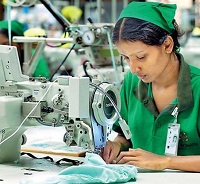 The newly framed five-point agenda by Sri Lanka’s Joint Apparel Associations Forum (JAAF) aims to organize the industry’s response to COVID-19-induced challenges and boost its relationship with investors’ to ensure a relentless and long-term growth. As per a Knitting Industry report, the agenda focuses on creating a safe working environment for employees; improving backward integration; collaborating with the authorities to improve access to major export markets; positioning the Sri Lankan apparel industry on a global level and making small and medium Enterprise (SME) players more competitive. The agenda aims to help stakeholders achieve their shared vision for Sri Lanka, believes Tuli Cooray, Secretary General, JAAF.
Worker safety with accelerated vaccinations
JAAF has already initiated action on its first priority to ensure worker safety. The association has accelerated vaccination program whereby 90 per cent of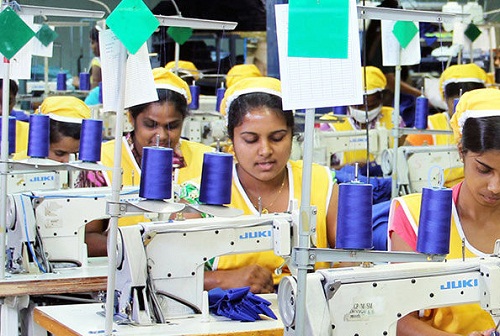 workers have received their first doses while 50 per cent have received the second dose. The association aims to vaccinate its entire staff by September 2021-end. JAAF plans to maintain its high vaccination rate by engaging with local health authorities. The next plan is vaccinating families of staff to ensure the entire employee community remains safe.
JAAF has also introduced safety protocols for workers to minimize the risk of future outbreaks. The Board of Investment (BOI) and the Ministries of Health and Labor inform, the association is working with the representatives of its employees to create safety awareness amongst them.
Exploring opportunities to boost exports
Another key development by JAAF is the Eravur Fabric Processing Park set to boost the sector’s local value addition from 52 per cent to 65 per cent. However, to achieve this, the sector needs to attract more investments. JAAF will explore new investment opportunities such as international investor forums and a renewed partnership with suppliers. It will focus on raising the standard of locally produced fabrics to globally accepted levels. JAAF will collaborate with the government to ensure EU continues with GSP+ facility for Sri Lanka. The facility will help the association retain export markets besides opening new avenues.
JAAF will also engage with Sri Lanka’s Department of Commerce (DoC) and the UK Trade and Investment (UKTI) authority to ensure GSP benefits for members. The association will urge the Sri Lankan government to allow members to use fabric originating in ASEAN countries. It will sign bilateral trade agreements to boost apparel exports to both the UK and China. Plans also include greater penetration into the Indian market.
Global standard apparel manufacturing
Making Sri Lanka a global hub for apparel manufacturing is one of JAAF’s vision. For this, JAAF will team up with local authorities to facilitate inflow of highly skilled front-end design and development job opportunities to Sri Lanka from around the world. To position, the Sri Lankan apparel sector globally, JAAF will focus on becoming a global standard for sustainable and ethical manufacturing. It will also strengthen SMEs by assisting them to enhance their compliance capabilities, urging more government support for them on aspects such as financing and export market access and improving the labor department’s awareness on their issues.
An apex body, JAAF encourages Sri Lanka’s apparel industry to become the world’s largest apparel sourcing destination. The association includes five smaller federations covering supply chain partners, the export-oriented apparel manufacturers, buying offices and representatives of international brands in Sri Lanka.
Young consumers demand regulatory changes to address fashion’s sustainability issues
 Fashion laws across West Europe and the US have been transforming for the last five years. The new labeling laws and marketing regulations in the US warn buyers to be aware of the quality and sustainability of purchases. They also direct brands to be transparent about the fiber content in their garments and source destination.
Earlier, fashion laws in the US addressed only specific issues. They did not address issues related to the environment or social justice. For instance, no protection was offered against environmental and labor violations committed by brands in production facilities located overseas. This encouraged brands to send textiles or unfinished goods to different countries to avoid unfavorable quotas and tariffs. Even within the US, brands often subcontracted cut and sew work to companies that exploited unregistered immigrant laborers.
Young consumers accelerate demand for transparency
However, as per a Fashion Law report, a new young consumer group, making up approximately 20 per cent of the population, is rising in the US since the last five years. These consumers are not only well-educated but also aware of all environmental and social issues. They use digital platforms to urge brands and governments across the US and the world to be environmentally and socially responsible, and ensure transparency in operations.
Governments across Europe and the US are introducing new initiatives to reform fashion laws in their respective countries. For instance, established in 2013, the Accord agreement helped Bangladesh bring about a certain level of transparency in the operations of Western fashion brands’ in the country. The Accord was extended last week and is seen as one of fashion’s most successful efforts to protect garment workers, at risk.
Eyeing long-term environmental goals
The EU plans to implement new reporting and corporate governance laws in continuation with the Sustainable Corporate Governance Initiative. The laws would require brands operating in the EU to shift their goals from short-term financial gains to long-term benefits including environment, human rights, and social impacts along their supply chains. Adopted by the European Parliament in March 2021, the laws also expand the definition of stakeholders to include employers, environmental organizations, and organizations along the company’s supply chain.
The French government has also passed a law that directs brands to include a ‘carbon label’ on their garments and textile informing consumers about the environmental impact of their purchases. Meanwhile, Germany passed the ‘green button’ label law in June that requires companies to meet a minimum of 26 social and environmental standards – including supply chain reporting and responsibility points – in order to use the label.
On the other hand, the US is in the process of passing the California Garment Worker’s Act, commonly known as SB62 to eliminate the long-employed piece-rate wage system that provides easy avenues for wage theft. The Act is being supported by fashion brands including Reformation, Saitex, Eileen Fisher, and Mara Hoffman, etc.
Rise of B corps in the US
The United Nation’s latest climate change report urges brands to accelerate their sustainability initiatives. The report calls for a new set of regulations to address these issues on long-term basis. Compliance to these regulations would be possible with the rise of new B corporations that exist in 37 states in the US. Though the fashion industry has time and again met consumers’ innovation and creativity needs, it thrives on constant change and newness. The emerging new set of consumers seeks nothing less than the best from the industry.
Taliban takeover dampens Afghanistan’s cashmere, silk industry propsects
A focus of the initiatives sponsored by the International Monetary Fund, USAID and a joint project unveiled by the Burberry Foundation and Oxfam in 2018, Afghanistan’s budding cashmere industry is in a state of limbo following the Taliban’s takeover. As per a Business of Fashion report, with chaotic evacuations currently underway and Taliban directing working women to stay at home, the future of the cashmere industry seems uncertain.
The silk sector also seems to be at risk as a EU-funded project launched by the International Trade Centre’s Ethical Fashion Initiative (EFI) to promote silk cultivation, has been suspended. Afghans fear the US withdrawal will spark a wave of terror that effectively erodes the civil liberties gained during the period that the hardline Islamist group was not in power.
Despite the Taliban’s claims it has changed, a senior United Nations’ human rights official has said there is credible evidence that executions are being carried out by the group against civilians and Afghan security forces. The Kabul airport is now closed to Afghan nationals, and there are reports that would-be refugees desperate to leave the country are now being turned back.
PG Denim launches Fall/Winter 22/23 collection
PG Denim has launched its new Booming Fall/Winter 22/23 collection as a hymn to rebirth, an explosion of colors, 3D effects, flock, foils, digital prints, metallic effects, anti-bacterial finishes where performance does not cover the uniqueness of an authentic denim fabric.
The collection offers five ranges. The first, Studio 54 range explores contaminations between cotton and vinyl. The second, Velvet Denim is produced using viscose flock, resulting in unique garments which achieve different effects depending on the washing processes. The third, Garage Denim range is inspired by the metallized colors of cars and Harley in the 1950s and ‘60s, with colors pastes glittering against very dark fabric backgrounds, creating an imperceptible painted effect. The Home Sweet Home collection is designed and developed to face this lock down period with super comfortable clothing but that allows us to always feel cool and fashionable. The fifth, Tatoo Denim range makes denims as a second visual skin that reproduce on the garments consumers’ love for tattoos. PG Denim strictly follows the international standards Dtox, Reach and Gots in all its processing phases; moreover it uses BCI and Organic Cotton Standards for raw materials.
Textile Ministry finalizes PLI scheme for the sector
Piyush Goyal, Union Textile Minister, has signed the proposal finalizing Production Linked Incentive (PLI) scheme for Indian textile sector. The scheme would soon be sent to the Union Cabinet for approval. Expected to provide incentives of around Rs 7,000 crore for man-made fibre (MMF) apparel, and around Rs 4,000 crore for technical textiles, the scheme aims to revive labor-intensive Indian textile sector.
In Budget 2021-22, the government has announced an outlay of Rs 1.97 lakh crore for PLI scheme for 13 sectors. The scheme aims to boost Indian textile manufacturing and increase exports. It is expected to cover around 40 MMF apparel product categories and around 10 in the technical textile category. An incentive of 3 to 11 per cent of the incremental revenues' year-on-year for five years may be provided to existing as well as proposed investments in the sector.
Pakistan: Allow duty-free cotton, yarn import from India, Turkey, urges PHMA
Pakistan Hosiery Manufacturers and Exporters (PHMA) has urged the federal government to allow a duty-free import of cotton and its yarn from India, Uzbekistan and Turkey through land routes since local market has run out of the input commodities. Muhammad Javed Bilwani, Chief Coordinator, PHMA says, cotton yarn prices have been increased 40 to 70 per cent in Pakistan and the available cotton yarn is of a substandard quality that has forced exporters to hold up signing fresh deals for global markets
The situation has also compelled the exporters to defer new orders that are likely to be diverted to other regional countries, he adds as per a Business Recorder report. Sea freight charges have also soared approximately 700 per cent with shortages of cargo containers and vessels extending delivery time from 45 days to 90 days. The government needs to support and facilitate the value-added garment and home textile exporters on war footing basis, Bilwani adds in a letter to Abdul Razzak Dawood, Advisor to the Prime Minister.
The letter suggests an effective way to deal with the crisis is to import the input commodity through the shortest possible land routes from India, Uzbekistan and Turkey. Similarly, a duty free import of cotton and its yarn should also be allowed and facilitated from Uzbekistan and Turkey through land routes, the letter adds.
India to impose ADD on PSY yarn imports
The Union minister for industry and commerce has accepted yarn manufacturers’ demand to impose anti-dumping duty (ADD) on the import of PSY from China, Indonesia and Vietnam. The demand was made by multiple bodies of yarn manufacturers including Northern India Textile Mills’ Association (NITMA), which claimed that the uncontrolled imports of PSY had eaten up a significant share of domestic markets and was hurting the local industry.
Sanjay Garg, President, NITMA said, there has been a huge surge in yarn imports post-GST, as with the removal of excise and other duties the polyester yarn is being cleared at zero duty. Imports of virgin PSY increased 943 per cent in five years and in a shocking trend, imports from Vietnam alone increased 88 times.
Aman Gupta, Vice President, NITMA, added due to increase in the imports of PSY, synthetic yarn segment of India’s textile sector was devastated, as a result most of the units had become NPAs and the rest were on the verge of it. Only a handful of PSY manufacturers in India are doing well and majority are in dire straits. The recommendation by the Union minister has come as a big relief for yarn manufacturers. Garg also urged the minister for finance to notify ADD at the earliest, as any delay will push the domestic industry backwards, jeopardizing jobs of many.
European Spinning Group launches ‘Green Collection’ offering upcyled yarn
Belgian spinning mill, European Spinning Group has launched a new ‘Green Collection’ of upcyled yarn from discarded jeans or recycled polyester, mixed with fibers such as such as Tencel®, rPET, raw white and dope dyed fibers. As per an Euratex report, the recycled yarn can be used for various high-end textile applications such as furnishing fabrics, fashion garments or technical textiles.
European Spinning Group has been continuously investing in modern machinery, besides producing in an ecological, energy-efficient way with integrated waste management systems. The Group also offers a wide range of high-quality ecological solutions. The group also launched the #hackyourjeans project as an online and offline platform. The platform focuses on stimulating circular product development and co-creation, increasing awareness and social impact by providing full transparency about the production process and visualizing products with online and offline presence.
The #hackyourjeans project offers a new and unique way of industrial collaboration, where knowledge on the production side and feedback from the end consumer is continuously shared, in a very open way. This facilitates product development and accelerates market development.
European Spinning Group also works with an impartial company, REMOkey to calculate the environmental savings of different yarns and communicate them transparently throughout the supply chain.
Cone Denim hires new Senior Vice President for commercial strategy
Elevate Textiles, owned denim mill, Cone Denim has hired Amie Borges as new Senior Vice President, commercial strategy. As per a Sourcing Journal report, Borges will lead the company’s global sales team and work closely with the product, operations and manufacturing teams to drive its key strategic objectives Borges will replace Tom Leonard who retired from as senior vice president of sales and product in July after 28 years service.
Borges is well-acquainted with the regions where Cone Denim manufacturers: China and Mexico. Prior to joining Cone Denim, She served in several leadership roles across luxury apparel brands, most recently as 7 for all Mankind’s’s Vice President-Sales for North America and Asia. Throughout her diverse roles, she successfully led brand transformations and revenue growth, while overseeing all aspects of product life cycles across North America, South America and Asia.
Borges holds a Bachelor’s degree in Fashion Merchandising Management from the Fashion Institute of Technology. She will be based out of Cone’s New York office and will begin connecting with customers over the coming weeks.











