


FW
Retailers enhance recruitment of data professionals: Nextail
Leading fashion retailers and brands are increasing the number of data-related professionals they employ as they look to build their competitive advantage, reveals a new research by algorithmic merchandising firm Nextail . The research shows, 22 leading fashion companies increased the number of data recruits by 40 per cent over 2020. The annual Retail Data-Forwardness Retail (RDI) shows that sportswear businesses and the big North American corporations are investing the most. Standout brands include Nike and Levi Strauss & Co. which head this year’s rankings.
Nextail compiled publicly available data on revenue and profit at the end of each retailer’s FY 2020, as well as the official headcount of each retailer according to its last annual report. To identify data-related talent, LinkedIn Recruiter was used to search for currently employed professionals holding titles of 60+ data-related positions.
Nextail cloud-based platform combines AI and prescriptive analytics and applies principles like hyper-local probabilistic demand forecasting and agile process automation. With Nextail, retailers transform their inventory management processes and operations in the face of market variability, proliferation of channels, and a lack of historical data.
Telangana government approves Kitex Garment’s expansion plan
The Telangana government has approved Kitex Garment’s expansion plans. The company has agreed to invest Rs 1,000 crore to set up apparel manufacturing facilities in Telegana which will create 4,000 additional employment opportunities over the next two years. It expects to reduce operating costs, shorten payback period and drive profits with liberal government policy, availability of raw material and various incentives offered by the state.
Kitex Garments is in the business of manufacturing and exporting garments. The company manufactures different types of garments such as shirts, pants, jackets, innerwear and outerwear. The company also exports infant and children's wear and jackets to the United States. Hoping to get some new orders from existing/ new buyers from across globe considering trade war between US and China, the company is continuously monitoring the current situation.
Bestseller to halt new orders to Myanmar
Bestseller plans to halt new orders to Myanmar till it conducts an impact assessment and engages in dialogue with labor experts, trade unions and other stakeholders. The decision was influenced by the death of two members of the Industrial Workers’ Federation of Myanmar (IWFM), an affiliate of IndustriAll Global Union from COVID-19 as a result of lax and nonexistent health protocols.
Along with C&A, Benetton Group, H&M and Primark, Bestseller had halted new orders from Myanmar in March a month after the coup descended the country into a hotbed of chaos and bloodshed. Of the 36 factories that produced clothing for Besteller, only seven remained operational and even then at reduced capacity.
Two months later the retailer resumed operations as a third-party audit, commissioned by Bestseller and published by independent lawyer Jonas Christoffersen, a former director of the Danish Institute for Human Rights, concluded that the retailer had complied with sanctions and not cooperated with the junta. This was despite its use of three factories in the Ngwe Pinlae Industrial Zone, which is operated by Myanmar Economic Holdings, a military-owned conglomerate that is the target of sanctions from the European Union, United States and the United Kingdom.
Bestseller said it remains committed to all previously paid orders and will ensure all workers receive full wages.
European Union to introduce new law to control textile waste
The European Union will soon introduce a new law to help the industry control its waste issues better, reports Women’s Wear Daily. Titled,’ The EU Textile Strategy, ’ the new law will boost the European Union markets for upcycling and sustainable textiles; address fast fashion, and support business models that promote more circular consumption models.
For this strategy, the EU will adopt a holistic approach that engages manufacturers as much as retailers and small enterprises. The strategy will also address the issue of environmental impact. It will consider the fact that most of Europe’s environmental impact occurs in countries outside the EU where the majority of production takes place.
The strategy will also address the problem by taxing imports on products coming from countries that don’t follow Sustainable Development Goals or the Paris Agreement.
H&M fined for a misleading ads in China
Fashion giant H&M has been fined 260,000 yuan ($40,200) in China for publishing a misleading advertisement. The Swedish multinational clothing retail company published advertisements claiming the featured products are only available in China. The authorities also confiscated 30,000 yuan ($4,638) worth of illegal income earned from selling substandard products, reports According South China Morning Post.
The regulator has ordered the company to stop creating and selling items that don’t meet quality guidelines. This isn’t the first time the fast-fashion company has come under fire in China this year. In April, H&M agreed to change a problematic map online following government criticism in China. Internet users reported to the management of H&M’s website about the map and the Shanghai Municipal Bureau of Planning and Natural Resources ordered it to be quickly corrected.
China is H&M’s fourth largest market and home to 505 of its stores, second only to the United States, which has 582. In March, the company faced a backlash over claims of genocide and forced labor in the Xinjiang.
Cotton production in Pakistan to drop by 19.42 per cent in 2021-22
Pakistan’s cotton production in the current crop year 2021-22 is likely to be 19.42 per cent lower than government's estimate of 10.5 million bales. The government estimates cotton output for the current year to reach 8.46 million bales. As a The News, Pakistan total cotton production in the current year will be less than the industry’s demand of about 14-15 million bales. However, production in Punjab is expected to increase 8.5 per cent to 4.5 million bales.
The 398.6 mm rainfall in 2020 had a devastating impact on the cotton production in Pakistan whereas this year the rainfall of 78.6 mm has improved the prospect of overall production. However, the attack of Mealybug and Whitefly and CLCuV has adversely affected the production of cotton in the country. Farmers need to be made aware of contamination control, said Syed Fakhar Iman, Minister for National Food Security and Research.
The government will be proactive with the provision of quality seed to facilitate farmers, he informed.
Sri Lanka exporters urge increased value addition to EU-targeted garment exports
Hemantha Perera, Secretary, Sri Lanka Chamber of Garment Exporters has urged the country’s apparel industry to increase value addition in exports to the EU from 52 per cent to 65 per cent. A member of the Joint Apparel Association Forum, Perera believes this will enable them to utilize GSP+ benefits to the fullest.
Perera was speaking at a panel discussion, ‘GSP Plus; Past, Present and Future’, hosted by the Federation of Chambers of Commerce and Industry of Sri Lanka and the Colombo Chamber of Commerce. He noted that certain fabrics used for apparel production are currently being imported from regions that disqualify the manufactured product for tariff reductions under the EU’s GSP+ concessions. This disqualification could be resolved through local production of such inputs, he added.
Several other speakers highlighted the need for Sri Lanka to retain GSP+ concessions to the EU, including Suresh de Mel, Chairman, Export Development Board (EDB) and Dayaratna Silva, Sri Lanka’s former Ambassador and Permanent Representative to the World Trade Organization (WTO). Silva referred to previous studies published by respected academics that highlight instances of GSP+ withdrawal had a negative impact on the country’s overall economy – with GDP declining by more than 1 per cent.
Recycling, increased consumption can accelerate shift to sustainable cotton in Hong Kong
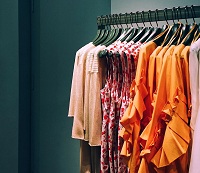 The use of sustainable cotton in Hong Kong is not prevalent in Hong Kong, shows a new report from the World Wildlife Fund (WWF). The report states, eight out of 10 fashion labels in Hong Kong either completely fail or provide only a limited range of sustainable cotton clothing. The survey is based on a study of 39 local and global brands’ ESG reports, online stores, surveys as well as on-site visits to 140 stores across Hong Kong from 2019 to 2020, informs As Green Queen report,
Limited use of sustainable cotton among brands
The WWF report shows, only six of all the surveyed brands committed to use sustainable cotton and sell their clothes at designated areas in stores. These are: H&M Baby, M&S, M&S Baby, Muji, Tommy Hilfiger, and Tommy Jeans. Only 13 brands sold clothes made from 100 per cent sustainable cotton in their stores though all of them had committed to this transition, the report highlights
This limits the availability of apparel made from sustainable cotton in the market, opines Christine Cheng, Sustainability Project Officer, WWF-Hong Kong. Only international brands are known to use sustainable cotton, while local brands do not yet prioritize on sustainable materials, she adds. Brands also fail to offer required information to shoppers to enable them towards conscious shopping choices.
Need for more investments in cotton recycling infrastructure
The WWF-Hong Kong report studies the material’s impact on the planet. One of the most widely used materials, cotton requires huge amounts of water for cultivation and causes intensive soil-degrading and emissions.Hence, it is necessary for a shift to more sustainably produced cotton, such as Better Cotton Initiative (BCI), organic cotton, recycled cotton, and Fairtrade cotton, says the report. The Hong Kong fashion market lacks the required cotton recycling infrastructure to facilitate this transition, adds Karen Ho, Head - Corporate and Community Sustainability, WWF-Hong Kong.
However, they can develop into a major cotton recycling center if it invests more resources in post-consumer waste collection, material clearing and recycling of cotton fibers, he adds. Hong Kong consumers need to boost consumption of sustainable cotton in the country, believes Ho. They need to make sustainable fashion choices by buying more secondhand clothes, swapping garments or recycling their clothes.
Welspun Group promotes Rajendra Mehta to CHRO of People’s Practices
Welspun Group has promoted Rajendra Mehta to the CHRO of the Group – People’s Practices. A $2.3 billion enterprise with global presence across differentiated sectors like line pipes, home textiles, infrastructure, steel, advanced textiles and flooring solutions. People Practices has been one of the fundamental pillars of the Group’s success with a keen focus on agility, speed and ownership philosophies.
This vertical has been adopting best practices to further the Group’s transformational objectives and has achieved remarkable feats year on year – be it technology, capability development, agile partnerships or cultural stewardship- it has paved the way for enriched employee experience and consequently having a positive impact on business.
Mehta has 26 years of experience in driving strategic and transformational HR practices across BFSI, Entertainment, Private Equity, Engineering industries. He joined the Textile division in May 2020, and since then has significantly contributed towards stabilizing and strengthening HR Functions at Welspun India He has been instrumental in driving key people practices, innovations and has actively worked in the direction of attaining the company’s ESG goals.
New Accord agreement approved by 77 brands
Signed by 77 international apparel brands, the International Accord for Health and Safety in the Textile and Garment Industry has been approved as the successor agreement to the Bangladesh Accord.
On the occasion of the start of the International Accord, Clean Clothes Campaign relaunched its brand tracker to indicate which brands have signed on and which of the major brands sourcing from Bangladesh have not yet done so.Most of the largest buyers from the country, including H&M, Inditex (Zara), C&A, PVH (Tommy Hilfiger, Calvin Klein), and Bestseller (Vero Moda) have signed on. Their signatures alone mean that workers in hundreds of factories can be assured of working in factories that are regularly monitored and proactively remediated and have access to a credible complaints mechanism.
Other major companies sourcing from Bangladesh, including Gap, VF Corporation (North Face), Primark, Desigual, and Auchan, have not yet signed the new agreement. The Clean Clothes Campaign network and its allies will start a public campaign calling out all brands that fail to prioritize their workers’ safety by signing the International Accord.











