


FW
India to benefit from China +1 strategy
The Indian textile industry is well placed to benefit from the adoption of the ‘China + 1’ strategy, says an Edelweiss Securities report. Under this initiative, global manufacturers have started shifting manufacturing operations from China to alternate sourcing destinations, in an attempt to de-risk their supply chain. India can benefit from the China + 1 strategy as it has abundant raw materials, cheaper labor, improving ‘ease of doing business’ and strong manufacturing infrastructure with presence across the value chain.
India is seeing a rise in its market as the US Senate has passed a bill banning China’s Xinjiang Cotton. This has helped it bag orders diverted from the region, adds the report.
Indian textile players have been witnessing higher export orders and are aggressively adding capacities across spinning, processing and garment manufacturing.
JM Financial Institutional Securities, adds, the structural uptick in home textile demand owing to increased ‘work-from-home’ period, higher emphasis on health and hygiene driven by pandemic, duty reimbursement by GOI and market share gain on China+1 theme will drive earnings trajectory going forward. The domestic brokerage house suggests a healthy order book for exporters, given the sharp recovery in US/EU markets. High yarn and cotton prices will enable producers to report strong earnings for 2QFY22, adds the report.
Bangladesh spinners add capacity as demand for raw material rises
Local spinning mills in Bangladesh are expanding their production capacities and setting up new units as the demand for raw materials is rising. Usually, local spinners process 13.43 million bales of cotton each year. But due to various drawbacks, they are unable to run at full steam. As a result, mills are currently processing only 8.5 million bales of cotton annually, shows data from the Bangladesh Textile Mills Association (BTMA). They will be able to process 16 million bales of cotton within the next two years, says Monsoor Ahmed, CEO. The addition of the new spinning capacity will raise investment in the primary textile sector to nearly $11 billion from $10 billion.
Of the investment, 75 per cent is in the spinning segment, and the remaining 25 per cent is divided amongst the weaving, dyeing, finishing and sizing segments. Shorter lead-time, improved quality, and private consumption are pushing the domestic demand for yarn and fabrics higher. Hence, import of yarn and other fabrics is also increasing to meet the demand, adds Ahmed. In 2020, Bangladesh imported $1.32 billion worth of knitted fabrics, $2.76 billion worth of woven fabrics, and $0.10 billion worth of yarn for the local garment industry.
Currently, local spinners can supply 80 per cent of the raw materials required by the knitwear sector and 40 per cent of the woven sector. So, local spinners are trying to expand their footprint in the market. Jinnat Spinning Mills (JTML), a concern of DBL Group, is set to receive an investment of $83 million from its parent company. The company will be operational by January 2023 with new mills at Sherpur in Moulvibazzar, says MA Jabbar, Managing Director, DBL Group.
Bangladesh can install an additional two million spindle capacity even in the next one year, adds Mohammad Ali Khokon, President, BTMA. Mahin Group is investing nearly Tk 500 crore to produce 60 tonne of yarn per day by 2023. The factory's spindle capacity is expected to reach 55,000 by then, adds Abdullah Al Mahmud Mahin, Chairman and Managing Director.
ISKO to develop new technologies with cellulose-based materials
ISKO has partnered with Swedish research and development company MoRe Research, a part of RISE Research Institutes of Sweden, to develop new, sustainable technologies made from cellulosic-based materials. This research will also help make the production of cellulose-based materials more sustainable.
ISKO will leverage MoRe Research!s expertise and resources to find ways of repurposing the clean and toxic-free cellulose powders that are created from the decomposed cotton, as well as the recycled polyester and reintegrate this back into fabric production.
As part of the company!s R-TWO™ program ISKO is also working to develop fabrics with a guaranteed minimum +50 per cent GRS (Global Recycle Standard) recycled content blend. This will significantly reduce the carbon and water footprint of a fabric, as well as make it easy to trace a garment’s sustainable journey step-by-step from the beginning of the supply chain through to the end product.
ISKO is part of Sanko Tekstil, the textile division of the Sanko Group. As the premium denim ingredient brand behind people’s most favorite jeans, it has a strong global presence in 35 countries with 60 international locations. By virtue of its Responsible Innovation™ approach, founded on creativity, competence and citizenship, ISKO works to make the world a better place bringing awareness to environmental as well as social aspects. As a result of its R-TWO™ program made with certified reused and recycled fibers, the company’s denim offer is pushing sustainable materials and innovating. Committed to an approach of continuous improvement, ISKO relies on external stakeholder engagement, striving for third-party certifications and partnerships. This has led to many achievements, including: bluesign® Partnership, STeP by OEKO-TEX®, Textile Exchange, SAC, ZDHC, and EU Ecolabel.
Pakistan textile and apparel exports surge in August 2021
Exports of home textile, men’s garments, cotton fabric, jerseys and T-shirts by Pakistan increased in August 2021 compared to the corresponding month of 2020, announced Abdul Razak Dawood, Adviser to Prime Minister on Commerce Pakistan’s exports to the US, China, the UK, the Netherlands, Germany and Spain increased while those to Afghanistan, Denmark, South Korea, Indonesia, Singapore and the Czech Republic decreased during August 2021 as compared to August 2020.
Exports of a few textile items surged owing to the forthcoming Christmas seasons, informs Zulfikar Thaver, President, Union of Small and Medium Enterprises (UNISAME). He opined the uptrend in imports would continue until Pakistan curtailed inward shipments of food items, luxury goods and cars. Sana Tawlik,, Economist, Arif Habib Limited, says, the uptick in trade deficit during August was primarily due to the increase in imports of goods.
The import growth was led mainly by machinery, petroleum and food categories. Ahmad Jawad, Vice President, Pakistan Business Forum, states, Pakistan’s trade deficit increased by 144 per cent to $4.2 billion in August 2021. The country imported merchandise worth billions of dollars every month but it could not bear such a high outflow of foreign exchange, he adds.
He urges the State Bank of Pakistan to ensure a modest recovery in Pakistani rupee. The bank uses exchange rate depreciation as a tool to make imports expensive but so far this mechanism has failed to arrest the rise in imports.
India’s RMG exports surge 13.09 per cent in August 2021
India’s RMG exports increased 13.99 per cent to $1.235 billion in August this year compared to $1.083 billion in August last year, according to preliminary data on India’s merchandise trade for the month. During the month, India’s exports of cotton yarn, fabrics, made-ups and handloom products increased 55.62 per cent to $1.297 billion compared to $833.95 million in the same month last year.
India’s merchandise imports rose 51.47 per cent to $47.01 billion in August 2021 over $31.03 billion in the same month last year. India’s merchandise imports in the April-August period this year increased by 81.75 per cent to $219.54 billion, over $120.79 billion in April-August 2020.
The trade deficit in August 2021 was $13.87 billion compared to the trade deficit of $8.2 billion in August 2020, while it is $55.9 billion during April-August 2021 compared to $22.7 billion during the same period of the previous year.
One Night Only Dubai fashion show rescheduled to October 26
The rescheduled One Night Only Dubai fashion show by Giorgio Armani will take place on October 26 this year as per a report by the Business of Fashion. The show will celebrate the 10th anniversary of Armani Hotels in Milan and Dubai, reports Abu Dhabi’s The National newspaper. The event was originally planned for November 2020, but was postponed due to the COVID-19 pandemic.
Armani has previously hosted One Night Only events in cities including London in 2006, Tokyo in 2007, Beijing in 2012, Rome and New York in 2013 and Paris in 2014. In Dubai, the brand has the Armani Hotel Dubai, inside the Burj Khalifa, and a number of stores, including locations at The Dubai Mall, Mall of the Emirates and Dubai International Airport. It also has the Emporio Armani Caffe at Mall of the Emirates, as well as junior and home stores.
Nepal to organize the Season 2 of Mt Everest Fashion Runway
After two years of nearly zero revenue from tourism, the Mt Everest Fashion Runway in Nepal will organize a fashion event this month to promote post-pandemic eco-tourism, and establish Nepal as a centre for sustainable fashion. K Films and Kasa Nepal will partner with Endemol Shine India to organize Season 2 of the Mt Everest Fashion Runway in Gokyo on September 23. As per Nepal Times report, the event will promote sustainability in the fashion industry by displaying biodegradable, renewable and ethically-sourced fabrics.
The show will be conducted near the base camp of Mt Cho Oyu, which is at 8,188 mt is the world’s sixth-highest mountain and located on the Nepal-China border 20km west of Mt Everest. It will feature numerous international supermodels and Nepali models, all of whom will be on the catwalk, wearing designs by Ramila Nemkul of Kasa, an international fashion brand based in Kathmandu.
The clothing designs will be made of biodegradable fabric, non-violent (cruelty-free) silk, and other sustainable fabrics like pashmina and wool felt. The event will also be filmed for a documentary and a web series shot by Shruti Anindita Varma, a film director who has produced documentaries and popular reality tv shows in India.
The first Mt Everest Fashion Runway was held last year at Kala Pattar (5,643m) and was hailed by the Guinness Book as the world’s highest fashion show with models and participants from 18 countries. This year’s event will beat even that record, and there will be 200 people attending the event at the scenic Gokyo Lake located alongside Nepal’s longest glacier, the Ngozumba.
Reopening of Europe, US markets will boost Bangladesh’s summer shipments
Reopening of stores across Europe and the US is expected to increase summer shipments of Bangladesh suppliers by 20 to 30 per cent. Suppliers usually receive more orders for the summer season than for winter, says Bakhtiar Uddin Ahmed, Chief Operating Officer, Fakir Apparels. The company exports comfortable knitwear items, the demand for which is greater than that of woven items as people are spending more time indoors.
Currently, Bangladesh is receiving more work orders than Myanmar and China due to its competitive prices. Many western buyers are relocating work orders from China to Bangladesh and Vietnam as the production costs have gone up in the world's second-largest economy. Narayanganj-based Kappa Fashion Wear has received nearly 25 per cent higher work orders from its buyers for the next season. The company ships T-shirts and polo shirts.
Faruque Hassan, President, BGMEA, says, confidence in Bangladesh had been restored as local manufacturers were able to supply items to international retailers and brands even during the pandemic. However, increasing work orders are pushing up the demand for yarn. Viyellatex Group, a major garment exporter and yarn producer, sold around 30 tonnes of yarn daily a year ago.
A 22 per cent rise in demand for knitwear products is also boosting demand for cotton-made yarn, says Mohammad Ali Khokon, President, BTMA. The industry’s earnings from garment exports have in recent months. As per data by the Export Promotion Bureau, it fetched $5.65 billion from exports in July and August.
Production revamp and consumer awareness can boost leather use in fashion
 Time and again, industry experts have reiterated the importance of leather as one of the most sustainable materials for the fashion industry. Yet, consumers continue to be lured by global campaigns focusing on plastic-based materials. Also, clothing and footwear manufacturers continue to use plastic-based materials originating from fossil fuels. As per a report by International Leather Maker, a large amount of these materials are ultimately dumped in landfills. In 2020, Nike discarded 4,846 metric tons of waste at locations around the world, reports Statistica.
Numerous brands ignore prescribed standards
Often products labeled as sustainable fail to conform to the prescribed standards, shows the Synthetics Anonymous report from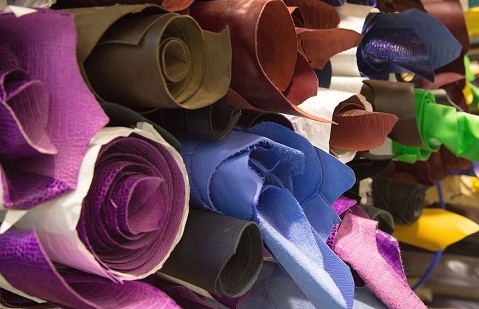 the Changing Markets Foundation (CMF). The report assesses sustainability claims from brands in the fast fashion, luxury fashion and online retailing space. It shows, of the 39 per cent products branded with sustainability claims such as ‘recycled’ and ‘eco-friendly, 59 per cent failed to stand up to Competition and Markets Authority guidelines on greenwashing.
Further, the report discloses, 49 per cent brands used virgin synthetics in their collections in 2020 but failed to disclose this information to consumers. Adidas made 90 per cent products with virgin synthetics, primarily polyester, while Nike used over 1,52,000 tons of polyester and 1,11,490 tons of rubber in the FY2020. A report by the Royal Society for Arts, Manufactures and Commerce (RSA) also accuses brands Boohoo, PrettyLittleThing, Missguided and ASOS of greenwashing as of the 10,000 recently listed items being sold by them online, 49 per cent were made of polyester, acrylic, nylon and elastane.
Animal welfare campaigns hinder leather adoption
Despite this criticism, high street fashion brands and retailers continue to ignore leather in their sustainability campaigns as they are targeted by animal welfare campaigns. Consumer perception of leather being worse for the environment than plastic also restricts their adoption. However, a recent survey by the International Leather Maker shows, 77 per cent tanners believe leather’s image as a natural material can be still be improved. In a recent campaign Real Leather, Stay Different, Steve Sothmann and Tim Lewis affirm, how these projects highlight the benefits of leather in the right way but fail to convey their environmental advantages to consumers.
To emphasize the importance of leather as one of the most sustainable materials, the industry needs to maximize production and marketing efforts, and awaken consumers to environmental benefits of leather.
Lectra acquires Gemini CAD Systems
Lectra has acquired the entire capital and voting rights of the Romanian company Gemini CAD Systems. A major global player in the fashion, automotive, and furniture markets, Lectra designs and produces industrial intelligence solutions – software, hardware, data and services – for brands, manufacturers and retailers.
Founded in 2004, Gemini CAD Systems (Gemini) has developed several innovative software solutions, essentially Computer Aided Design (CAD), for small and medium-sized fashion companies. Thanks to its network of partners, Gemini is present in over 60 countries.
This acquisition is in line with Lectra’s strategy of developing its presence in the fashion market and enriching its value proposition.
The transaction concerns the acquisition of 60 per cent of Gemini rights for €7.6 million. The acquisition of the remaining capital and voting rights will take place in two steps, in September 2024 and September 2026.











