FW
BCI sourced one million metric tonne of Better Cotton in 2018
Retailers and brand members of Better Cotton Initiative (BCI) sourced more than one million metric ton of Better Cotton in 2018. While all members contributed to sustainable cotton growth, the top users include some of the biggest companies producing fashion product globally. In volumes used, the top 15 accounted for 88 per cent of the material that was sourced last year. H&M bagged the number one position, with Ikea in silver medal spot and Gap taking bronze. Adidas and Nike rounded out the top five, ahead of Levi Strauss, C&A, PVH, VF, and Bestseller completing the top 10. The next five were Decathlon, Target, M&S, Tesco and OVS.
For some members, Better Cotton accounted for more than 90 per cent of total cotton used with Adidas, Hema, Marimekko and Stadium on that list, while for Decathlon, Fatface, H&M, and Ikea, the figure was over 75 per cent. And some brands upped their sustainable cotton usage more than 20 percentage points last year, with Benetton, Burberry, Fatface, Gant, Gap, Hema, La Redoute, Marimekko, Nike, Olymp Bezner, Peak Performance, PVH and Stadium all achieving that goal.
Ethical fashion gains ground as brands wake up to hazardous industry practices
"It took a disaster of the magnitude of Rana Plaza factory collapse in Bangladesh to stir clothing manufacturers out of their slumber and raise some pertinent questions on dangerous industry practices that were being followed across the world. The tragedy, which killed over 1,100 people besides injuring 2,500, compelled factory owners to examine whether their clothes are causing human suffering and whether their workers are being exploited or paid below living wage."
 It took a disaster of the magnitude of Rana Plaza factory collapse in Bangladesh to stir clothing manufacturers out of their slumber and raise some pertinent questions on dangerous industry practices that were being followed across the world. The tragedy, which killed over 1,100 people besides injuring 2,500, compelled factory owners to examine whether their clothes are causing human suffering and whether their workers are being exploited or paid below living wage.
Six years since the Rana Plaza collapse, many new websites and apps dedicated to rating fashion labels on their ethicality, working conditions and supply chain transparency have being created. However, as an Oxfam report states, not a single garment worker still earns a living wage with some being paid as little as 55 per cents per hours. Being aware hasn’t helped as the exploitation hasn’t stopped.
Brands overlook greenhouse effect to prefer polyester
As per McKinsey & Company, the consulting firm which releases the annual State of Fashion report, the fashion industry is responsible for 10 per cent of the world's greenhouse gas emissions. As Clare Press, presenter of the sustainable fashion podcast Wardrobe Crisis, notes, approximately 70 per cent clothes produced each year are made from synthetics. Of this, 70 per cent, polyester is one of the most common synthetic fibers used in our garments and shoes.
Kimberly Jenkins, a lecturer in fashion at Parson's School of Design in New York reveals the reason for this. She notes that as polyester has moisture wicking properties, yoga wear, sports clothing or athleisure wear is made of polyester.Baptist World Aid Australia, in its 2019 edition of Ethical Fashion Guide rated 400 brands on their systems to prevent slavery, child labour and environmental damage. However, it found that even companies that score an ‘A’ aren’t completely ethical. For instance, Adidas, the highest ranking brand, makes most of its garments with polyester. The brand has however, vowed to use only recycled polyester in its clothing and shoes by 2024.
Tackling one issue at a time
However, as per Clare Press, presenter of the sustainable fashion podcast Wardrobe Crisis, this is easier said than done. She advises brands to settle on one issue first and then go from there. On her part, Alyx Gorman, a fashion writer and engagement lead at Time Out, advises customers to check up on a brand’s parent company to evaluate its credibility.
Many labels are hiring people in the developing world. However,Kimberly Jenkins, a lecturer in fashion at Parson's School of Design in New York advises them to first provide adequate employment or educational opportunities to these people without which these opportunities are redundant.
Dealing with cultural insensitivity
Another ethical conundrum that needs to be addressed includes the cultural sensitivityshown by some of the world's biggest luxury labels in the past. For instance, a recent ad campaign by Dolce &Gabbana depicted a Chinese woman eating a pizza with chopsticks... a month later, Prada had to recall its red-lipped monkey key chains as the $550 figurines resembled blackface 'Sambo' character. This raises a pertinent question:why do brands — coincidentally, all luxury Italian labels — and many others keep making racially charged, culturally clueless gaffs?
Alyx feels, though societal standards regarding what’s appropriate and what’s not are changing, many brands are yet to catch up on these. Though these brands are jumping on the "wokeness bandwagon" — it's not always sincere.Last year, American NFL quarterback Colin Kaepernick became the face of Nike's Just Do It campaign, which marked the 30th anniversary of the slogan. Though Jenkins supports the collaboration with Kaepernick, she's still not a big Nike shopper as one who wants to see ethical treatment and a clean record in terms of what's going on in their factories and how their shoes are produced.
However, even these small step augers well for the industry as brands have now rolled up their sleeves to change the systems that harm people, animals and the planet.
Pitti Bimbo show concludes
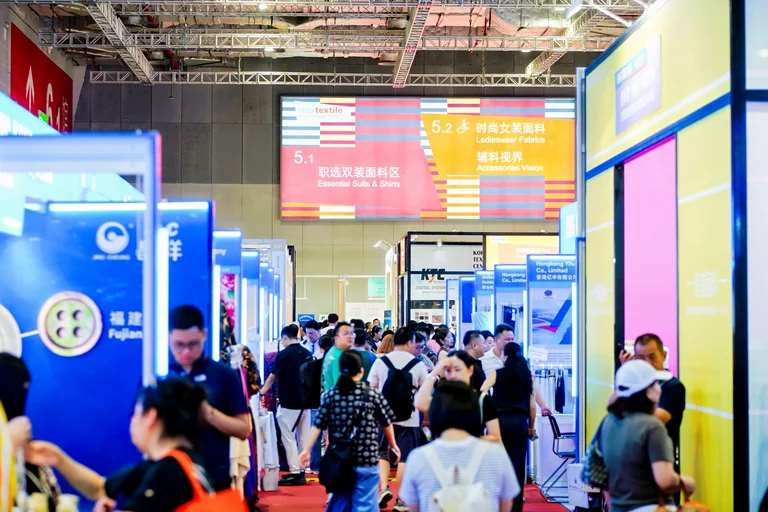
The 89th edition of the International Fair for Childrens wear, Pitti Bimbo, organised by Pitti Imagine, concluded on June 22, 2019 at Fortezza da Basso venue.
The event hosted around 603 exhibitors, which included newcomers as well those making comebacks. The Pitti Special Click was the theme of the 89th edition Pitti Bimbo show, which is composed of the energy circulating around the Fortezza.
The 89th Pitti Bimbo show exhibited the latest trends in the market and their current behaviour in sales. Nearly 5,300 buyers from about 60 countries majorly including Russia, Spain, Germany, the UK, China, Belgium, the Netherlands, Turkey, Ukraine and France participated at the event.
The Kid’s Lab was one of the eminent additions to the show and. Kidswear inclusive of innovations was one of the highlights showcased in five different sections: KidzFizz for experimental fashion; #Activelab for urban athleisure; the incubator section The Nest with its emerging brands; EcoEthic, dedicated to sustainable products; and the Mini Me capsule collections in the Kid’s Evolution section.
The Emporio Armani Junior S/S 2020 collection was amongst the most distinguished debut exhibitors like Araia Kids, G-Star Raw, Jacob Cohen Junior, Lotto, Pinko and TiA CiBANI KiDS and was displayed with a special installation in the Sala della Scherma.
Some of the renowned fashion labels that exhibited at Pitti Bimbo were Dolce & Gabbana Kids, the CWF group with the Little Marc Jacobs, Boss, Karl Lagerfeld and Billieblush labels, C.P. Company Undersixteen, Herno Kids, Miss Blumarine, Monnalisa, Petit Bateau, Philosophy by Lorenzo Serafini, Manila Grace, North Sails and Sundek.
The 89th edition of Pitti Bimbo focused on children’s fashion from Andalusia (with Calatea Kids, Abuela Tata, Beatriz Montenero, Mimosines, Nekena and Babine) and Georgia (Antsi, Giraffe Kids, Eshvinkids and Spillow).
There were also several catwalk shows, including one by the Children’s Fashion From Spain collective and Modaportugal (Cherry Papaya, Knot, Laranjinha, Patachou, Phi Clothing, Piccola Speranza and Play Up). Tuscan label Monnalisa, for 50 years a leader in premium children’s readymade garments, presented its new Spring/Summer 2020 collection.
Inditex continues focusing on store openings to boost growth
Inditex is still betting on its network of physical stores to drive growth. Though the Zara owner has shrunk its network in its home market of Spain by 15 per cent since 2012, the company has actually increased its overall selling space in Spain since 2012 by opening or expanding flagship outlets in prime locations. Inditex has nearly 7,500 stores globally, over a quarter of which are those of Zara.
Inditex is the world’s largest clothing retailer. Inditex’s net retail space in Spain increased in the last financial year on an annual basis. The retailer is bucking the trend in an industry where companies are shrinking their real estate portfolios, either by shutting shops or reducing store sizes. Shoppers are increasingly chasing bargains online, industry profit margins are declining. In fact Inditex’s business has been built on a rapidly expanding store network. The thinking behind the Inditex strategy is to close the secondary stores and enlarge and improve their flagship stores.
This year, the company expects growth of around four per cent. It has more than doubled sales over the past decade. However, Inditex’s operating margins have fallen in each of the past six years, from 19.5 per cent in 2013 to 16.7 per cent last year.
Incomes drive global denim market
Higher spending capacity and rise in disposable income are some of the important drivers of the global denim apparel market. Another driving factor is the fact that denim is a material of choice for a large number of consumers due to its comfort and style. The rise in population of young consumers who favor denim for its style quotient is propelling the denim apparel market. Manufacturing facilities set up by international brands in developing economies are expected to present lucrative opportunities for the denim apparel market.
Denim is a fabric made of cotton that is rough and thick in nature. Denim was initially designed for use in work clothes and slowly gained importance as a material used in other types of apparel. Today, denim is an important and fashionable item in every wardrobe.
One of the key trends in the market is experiments with new apparel styles using denim fabrics with lighter grams per square meter. Stretch denim is another new fabric chosen by consumers in their denim apparels. Additionally, manufacturers are experimenting with colors and distressed textures. Another trending factor in the denim apparel market is the rise in preference for recycling denim apparel. Some manufacturers are engaged in recycling campaigns where they take back used jeans from their customers.
First OutDoor by Ispo to debut in Munich
The first OutDoor by Ispo will take place from June 30, 2019 to July 3, 2019 in Munich. The fair will feature over 50 international exhibitors in nine halls with more than 96,000 sq. mt. of exhibition space in the Munich exhibition centre. In close cooperation with the industry, the Ispo team has tried to develop a modern, consumer-centred concept for the event. Their aim is to inspire as many people as possible worldwide, to break down inhibitions and to show the multitude of possibilities and varieties of "outdoor" that consumers have long been experiencing.
The focus of the fair continues to be classic outdoor activities such as climbing or hiking, however, it is also adding new segments such as mountain biking, trail running and water sports are being added. In addition, OutDoor by Ispo opens up sectors outside the outdoor industry such as environmental technologies or digital trade and technology solutions.
Another focus of the fair is on sustainability. The fair aims to reflect the pioneering role of the outdoor industry in terms of awareness of sustainability and social responsibility in the apparel sector. The trade fair has developed a holistic sustainability concept that is to be implemented as a fact-based sustainability guideline with concrete recommendations for emissions, water and waste management.
The new ticketing model at the fair is intended to motivate retailers to visit the trade fair: Retailers, wholesalers and distributors will receive their day ticket in the Early Bird tariff from 15 Euros until 20 May 2019. Other groups of trade visitors will start at a ticket price of 75 Euros.
H&M works on carbon neutral product line
Swedish fashion brand H&M has collaborated with Danish transport leader Maersk in a new carbon neutral ocean product. H&M, being the first customer of this pilot project, is exploring its transport options to reduce emissions released by the various transport methods it uses. The biofuel blend consists of wasted cooking oil which has been tested and endorsed in a trial driven in collaboration with the Dutch Sustainability Growth Coalition and Shell. It has been certified as a sustainable fuel by the International Sustainability and Carbon Certification and is showing positive results of reducing emissions caused by ocean shipping.
H&M aims at becoming climate positive by 2040 at enabling innovative solutions such as the carbon neutral ocean product for a greener commercial transport. H&M has been striving to become a sustainable fashion brand since more than a year now.
Luxury fashion brand Ralph Lauren plans to set science-based greenhouse gas reduction targets by 2020 and 100 per cent renewable energy targets by the end of this year. In May, PVH, the parent of Calvin Klein and Tommy Hilfiger, unveiled Forward Fashion, the evolution of its corporate responsibility strategy that aims at reducing its negative impacts to zero, focusing on eliminating carbon emissions by using more renewable energy sources and cutting waste to zero by avoiding landfill solutions.
Gap increases its green footprint by introducing waterless foam dyeing
Gap will produce denim using Dry Indigo, a waterless, indigo foam-dyeing technique. Utilising foam dye that adheres to yarn, the transformative Dry Indigo technique produces a denim fabric that is comparable in hand-feel, aesthetic, performance, and washability to traditionally dyed denim. The process can reduce water use by up to 99 per cent, while also using 89 per cent less chemicals reducing energy use by 65 per cent. The foam-dyeing technique occurs in a space of less than 65 feet – compared to the hundreds of feet that is typically necessary for a traditional dyeing machine – thereby significantly reducing energy needs.
Leveraging this revolutionary new dyeing process directly supports Gap’s manufacturing goal to conserve ten billion liters of water by the end of 2020. Gap has worked closely with supply chain partners to implement numerous water-saving initiatives. In 2016, Gap introduced a smart denim wash program that has enabled the company to save over 229 million liters of water when compared to conventional wash methods. The company has so far saved 5.7 billion liters of water. The brand plans to derive 100 per cent of its cotton from sustainable sources by 2025. Gap’s divisions Old Navy, Gap, and Banana Republic are launching denim with five per cent post-consumer mechanically-recycled cotton content.
Bangladesh apparel exports up 12 per cent this fiscal
Bangladesh’s apparel exports rose 12.82 per cent in the first eleven months of the current fiscal year. Earnings from woven products were up 13.13 per cent from the same period of the previous fiscal year. Earnings of the specialised textile sector saw a 33.79 per cent growth.
Since the three months from December to March are the peak season for apparel shipment, future prospects are even higher and brighter. The capacity of the country’s garment sector has also increased. On the back of value-added products, product diversification, policy support and capacity enhancement, Bangladesh’s readymade sector is maintaining a positive trend in export earnings. The cash incentive for selling in non-traditional markets has helped achieve a two-digit export growth rate. China, the world’s largest apparel supplier, has started importing products from Bangladesh and grants duty-free access to over 5,000 Bangladesh products. This has enhanced export growth of the apparel sector. The inspection by Accord and Alliance has helped remediate factories and prompted factory owners to emphasise workplace safety, which has eventually lifted the country’s image in the eyes of foreign buyers. Of the top ten green garment factories in the world, seven are located in Bangladesh. Eighty green garment factories currently in operation are completely LEED -certified and another 300 are in the process of getting the certification.
Fall in Indian cotton production likely
India’s cotton production in 2018-19 is estimated at 343 lakh bales, less than the previous year’s harvest of 348 lakh bales. Steadily falling global prices along with weak demand for cotton yarn may drag domestic prices lower in the months ahead. Output is seen taking a hit as high summer temperatures, delayed onset of monsoons and water shortage especially in key cotton growing states of Telangana, Andhra Pradesh, Karnataka and Maharashtra have affected cotton yield, which has driven prices higher. Domestic spinning mills are inclined to import and save costs. However, it is hard for small and medium enterprises to import, as they may not have the financial muscle to buy and store. On the other hand, weak garment exports have been weighing on the demand for yarn. So the trend of rising domestic cotton prices may reverse over the next few months. At present, imported cotton is nearly Rs 3,000 to Rs 4,000 cheaper than the domestic price.
Fall in global prices has tempered the rise in domestic cotton prices. In global markets, cotton prices have declined largely as the escalating US-China trade war has hit demand for the commodity. While the US is one of the largest exporters of the commodity, China is the largest consumer.