FW
Store closings to continue in 2021
COVID-19 accelerated the rationalization of retail’s over-stored environment and the pace of closures isn’t expected to slow down. “We’re not done yet. It’s going to get tougher. When the volume of purchases drops dramatically after Christmas, the expenses remain,” Terry Lundgren, Macy’s former CEO, told CNBC. He says retailers who have a weak balance sheet today aren’t going to get relief in January.
On the upside, there will be opportunities to grow again, green shoots, from that perspective of store closures and that would be soon, Lundgren added. Before the pandemic, expansion of online shopping had dragged down in-store traffic, while during the pandemic accelerated online shift and decimated in-store selling for many retailers. As much as 40 major retailers have filed for bankruptcy and more than 11,000 store closures were announced in 2020. US retail sales of apparel and accessories fell 30 per cent year on year from January through October that may lead to substantial store closure announcements and bankruptcy filings.
It really comes down to how long COVID persists and if we see vaccine roll out and a lot of cases come down, people start shopping more, that will alleviate some strain on the retail sector.
Nata Dvir promoted as Macy’s new chief merchant
Nata Dvir is being promoted to lead all Macy’s merchandising categories and private brands. She will succeed Patti Ongman, who previously announced plans to retire at the end of the 2020 fiscal year. Dvir currently serves as SVP and general business manager for beauty and “center core” merchandise, which includes jewelry, handbags, shoes, intimate apparel and accessories. She began her career as an executive trainee at Macy’s. Since then, she has held various leadership roles within the department store’s merchant organization.
“I’m confident that she will continue our merchandising transformation, influencing our customers’ personal style through accessible fashion, clear value and an enhanced digital and store experience.” said Jeff Gennette, Macy’s Inc. chairman and CEO.
NITMA wants anti-dumping duty on PSY imports from China, Indonesia, Vietnam
The Northern India Textile Mills' Association has urged the government to levy the Anti-Dumping Duty (ADD) on Polyester Spun Yarn similar to the proposed duty for viscose spun yarn imported from Indonesia, Vietnam and China. PSY imports have gone up from 5,833 tons in 2015, to 43,306 tons in 2019 from these four countries. The four countries are: Indonesia, China, Vietnam, and Nepal. Monthly average imports of Virgin Polyester Spun Yarn (under the PUC) have increased 972 per cent between 2015 and 2020. Imports from Vietnam alone increased a massive 10,512 per cent, that is, 107 times.
Average monthly imports for 2020 are 5,212 tons/month out of the total domestic monthly consumption of 22,000 tons/month, which means that imports enjoy 25 per cent of the total market share. “Import numbers have been rising substantially year after year due to an extremely and unreasonably low prices offered by Indonesian and Vietnamese spinners on account of huge idle capacities created owing to their government's incentives,” the NITMA statement said.
According to NITMA President Sanjay Garg, rise in import quantities being dumped into India has the potential to cause an irreparable injury to domestic PSY spinning sector with the cascading effect, from closure of mills to NPAs, and eventually resulting into massive loss of employment.
Pakistan exporters want customs duty waiver on cotton yarn
Pakistan’s value-added textile exporters want the government to abolish customs duty on cotton yarn imports to support the industry and ensure timely completion of export orders. In a statement, Pakistan Apparel Forum Chairman and former Pakistan Hosiery Manufacturers & Exporters Association (PHMA) central chairman Muhammad Jawed Bilwani said the government should immediately abolish customs duty on import of cotton yarn either by passing through a presidential ordinance or by an immediate act of the parliament in the interest of export industry of the country.
He said value-added textile exporters are facing a tough time due to the unavailability of cotton yarn – a basic raw material– while huge export orders are available with the value-added sector. Moreover, the cotton yarn available locally is below standard hence, exporters are unable to meet export commitment. The PHMA had earlier too demanded the government to allow duty-free import of cotton yarn to facilitate value-added textile export sector; however, the government considered removing the regulatory duty only.
Arvind Kumar Sharma is the new textiles secretary
With textiles secretary Ravi Capoor’s term expiring in December 2020, Arvind Kumar Sharma, the Secretary, Ministry of Micro, Small and Medium Enterprises (MSME), has been assigned additional charge of Secretary, Ministry of Textiles.
Prior to the appointment as MSME secretary he served as Additional Secretary in Prime Minister’s Office. He has experience in grassroot regulatory and developmental administration and is known for his contribution in Gujarat’s industrialisation as Managing Director of Industrial Extension Bureau and as a pioneer of the Vibrant Gujarat experiment.
He is also well known for his experience in infrastructure as he held the position of CEO of Gujarat Infrastructure Development Board (GIDB) for a long time. He has over a decade experience in industry and infrastructure sector.
Kingpins plans to return to physical shows in September 2021
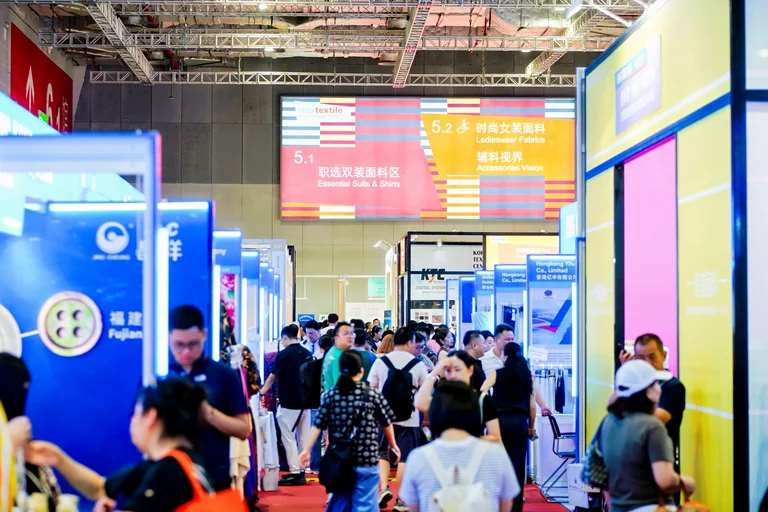
Andrew Olah, Founder of Kingpins is keen to go back physical shows once more. In an open "End of Year Letter" to the denim community, Olah has chalked out events for 2021in both digital and physical forms. He foresees a return to normal in September: “We look forward to being back in action in China in September, Amsterdam in October and in NYC in the late fall of 2021.”
Of course, Kingpins plans to continue its series of online events launched in 2020, as he wrote: “We will do more online shows starting with an event in February to serve the US market and another one in April for Amsterdam and Europe. Our online shows should not end once physical shows return. We love the idea of digital information and the challenge to find new and inspiring individuals to share their stories or their products or inventions.”
They also plan to continue with Kingpins’ Exchange platform, their online marketplace launched in October 2020. The Kingpins’ Exchange will be available in more languages such as Mandarin, Spanish and Portuguese and will feature more enhancements to make the online fabric viewing a more functional tool for sourcing.
He is optimistic that by mid 2021 the global effects of the pandemic could be under control: “The vaccines that are becoming available I’m told are excellent and reliable and this allows one to imagine that by the end of next summer a large part of the world will have immunity against the current virus.”
February edition of Copenhagen Fashion Week will be held digitally
The fall 2021 edition of Copenhagen Fashion Week will be fully digital. Due to the pandemic, Denmark has banned trade fairs until the end of February. Therefore, the organizing body cancelled all physical shows and physical iterations of its popular trade fairs Ciff, Revolver, Dansk Fashion & Textile and Wear.
Copenhagen Fashion Week was to be held from February 2-4. Now, it will take place online on a new digital platform, which debuted last August. Cecilie Thorsmark, Chief Excutive, Copenhagen Fashion Week says, even though it is unwished-for, it is undeniably the right thing to do, and they look forward to being able to meet physically again for the August 2021 fashion week. The brands participating in next month’s digital showcase include: Ganni, Rotate Birger Christensen, Soulland, Rains, Stine Goya and Baum und Pferdgarten.
Various talks, complementing the online presentations, will also be released later this month.
Mark Daley is new Esprit CEO
Mark Daley, has been appointed new CEO of the Esprit group from January 1, after the departure of CEO Anders Kristiansen. Daley, whose fashion and retail distribution career spans three decades, has been for the last two years the CEO of US apparel brand Billy Reid. Between 2010 and 2015, Daley was president Asia-Pacific for Ralph Lauren.
Along with Daley's appointment, Esprit announced hiring of Yung Ting Wan as chief product development officer. Yung Ting Wan is an academic who has also worked for several Asian fashion brands, and was formerly assistant professor at the College of Art and Design at the Beijing University of Technology.
Esprit's new management team is based in Hong Kong now, while the group’s headquarters were previously located in Germany. In the 2019-20 financial year, closed on June 30 2020, the group's sales had fallen by 23.6%, down to HKD9.874 billion (equivalent to €1.09 billion).
Vandewiele takes over Savio Group
Vandewiele, a leading supplier of carpet and velvet weaving machines and textile accessories, has announced 100 per cent acquisition of the Savio Group. Savio is world leader in the yarn finishing sector, operating in the design, manufacturing and distribution of winding machines, quality control devices and electronic boards for the textile industry.
“We are extremely proud to welcome the Savio Group with its strong tradition and technology in our group. The joining of our technological capabilities, R&D and industrial operations will allow us to grow strongly in the next few years and we are convinced that the Savio Group will be a valued member of Vandewiele,” Charles Beauduin, CEO of Vandewiele, said.
UK high street fashion brands get a boost with £830 million package
The British government has announced an £830 million package for high street fashion brands to help them recover from the pandemic. “2021 will be an immense one for the high street brands as it pursues to recover, adapt and change as a result of the pandemic, the boost package will help us build back better and make town centres a more attractive place to live, work and visit,” Robert Jenrick, Communities Secretary announced.
The UK government launched Future High Streets Fund in December 2018 as a major project to overhaul town centres across the country. The Future High Streets Fund will help areas bounce back through regeneration projects that level up opportunities and create jobs right across the country.” Chancellor Rishi said, “We are supporting our high streets to get through this pandemic through business grants, paying people’s wages and tax deferrals.”