FW
TFI held from October 21-23 in New Delhi
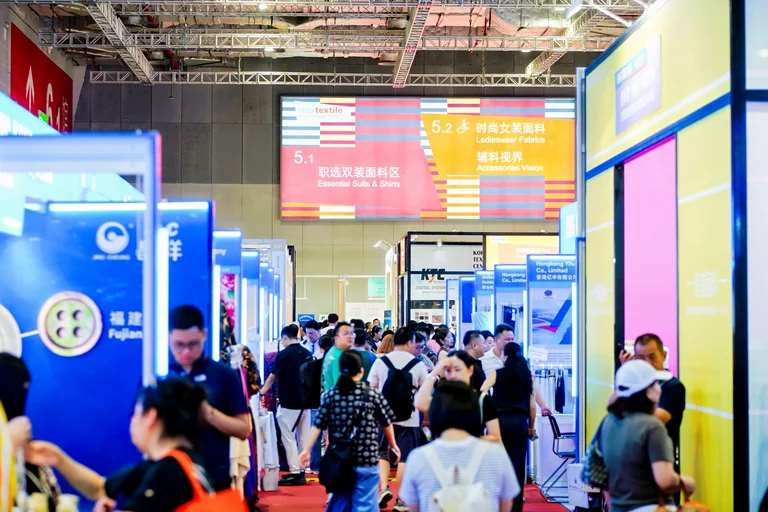
The Textile Fairs India (TFI) is being held from October 21-23, 2021 at PragatiMaidan in New Delhi.
Comprising four shows, the event aims to integrate the manufacturers and suppliers of fibers, yarns, apparel fabrics, trims, embellishments, apparels, fashion accessories, home textiles, home decor and services from India and overseas to showcase their merchandise to discerning buyers from across the world.
The event is being organized by SS Textile Media which organizes trade shows such as the. F&A Show - Fabrics & Accessories Trade Show in Bengaluru and New Delhi; India International Yarn Exhibition Yarnex in New Delhi, Ludhiana and Tirupur; Textile Sourcing Fair Texindiain Tirupur and Ludhiana and Apparel Sourcing Fair in Bengaluru and New Delhi.
Held annually, these events bring together high quality buyers and suppliers to source products and establish linkages with existing as well as new suppliers. They aim to build and consolidate upon the success of these brands and also continuously provide value-added services for the value chain.
ILO adopts Code of Practice for textile, clothing, leather and footwear industries
The International Labour Organization (ILO) has adopted a Code of Practice (CoP) for the textile, clothing, leather and footwear industries to improve the health and safety conditions of more than 60 million workers employed in these sectors around the globe.
Based on international labour standards and other sectoral guidelines, the code, adopted for the first time, provides comprehensive and practical advice on how to eliminate, reduce and control all major hazards and risks, according to the CoP draft.
The hazards and risks included chemical substances, ergonomic and physical hazards, tools, machines and equipment, as well as building and fire safety. The purpose of this code is to provide practical guidance for the use of all those, both in the public and private sectors, who have obligations, responsibilities, duties and rights regarding safety and health in the textiles, clothing, leather and footwear industries, it said.
The ILO sectoral code was adopted on October 08 which will shortly be available in Bangla, according to the ILO Dhaka office.
TuomoPoutiainen, Country Director-Bangladesh, ILO, said, the code recognized that effective OSH systems require joint commitment and consultation between the competent authority, brands and buyers, suppliers, employers, workers and their representatives.
Awareness raising of the CoP and its contents is needed as a first next step, with authorities and other stakeholders, in countries like Bangladesh, China, India, Vietnam and other manufacturing hubs of textile and footwear, he added.
Kornit Digital releases Presto Max for sustainable apparel and textile production
Worldwide market leader in sustainable, on-demand, digital textile production technologies, Kornit Digital has released its Kornit Presto Max system for sustainable on-demand production of apparel and other textile goods. The new system will make its live debut at Kornit Fashion Week Los Angeles+Industry 4.0 Event, which the company is hosting from November 02-05 to showcase technology innovations, partnerships, and proven strategies driving the business case for sustainable, on-demand production of fashion and textile goods worldwide.
Kornit Presto Max reflects the company’s commitment to expanding groundbreaking capabilities to all segments of the marketplace, building upon its continuously improving portfolio of technologies to accelerate and empower the industry’s transformation into a more responsive and responsible model.
Introducing never-before-seen capabilities to transform virtual concepts into brilliant custom fabrics for fashion, home décor, and other textile applications, Kornit Presto Max is the first digital print system to offer white printing on colored fabrics, enhancing decoration capabilities for dark colored fabrics more broadly. It is the only single-step solution—and the most sustainable solution available—for direct-to-fabric printing, delivering the highest quality and softest feel with brilliant whites and brighter neon colors. The system is ready to incorporate future iterations and evolutions of XDi technology—3D decorative applications to produce threadless embroidery, high-density, vinyl, screen transfer, and other innovative effects.
Kornit Presto MAX is compatible with natural fabrics, synthetics, and blends, and includes advanced algorithms for smart autonomous calibration, to deliver high-quality results with short cycle times and minimal manual interruptions or defects. The system was devised for compatibility with the KornitX global fulfillment ecosystem to enable anywhere, anytime production, supporting a true distributed production model that fulfills nearer the end consumer, eliminating time and logistical waste from the experience while empowering brands to ensure quality and consistency across all systems and production sites.
NCTO calls for strategic plan to onshore critical medical supplies
Klim Glass, President and CEO, NCTO has urged for urgent government support for a vital domestic PPE supply chain, while also shining a light on an agile manufacturing engine that grew out of the pandemic and is fully capable of supplying PPE.
The National Council of Textile Organizations urged the US government to take bipartisan action to re-shore vital production of PPE, critical medical supplies, and other items to the United States, incentivize private sector purchases of American-made PPE, require that U.S. taxpayer dollars be spent on US-made PPE, deploy existing government resources, such as the Defense Production Act, to spur investment in U.S. manufacturing jobs and PPE production, extend Berry Amendment procurement rules to cover more federal agencies and products, implement a strategic federal investment and production plan to revitalize U. manufacturing and the domestic public health industrial baseandina and strong trade enforcement
NCTO is a Washington, DC-based trade association that represents domestic textile manufacturers.
Ecosensor™ by Asahi Kasei Advance launches high-tech fabric collection
For its FW 22/23 season, Econsensor™ by Asahi Kasei Advance presents a high-tech fabric collection, which implements a new generation of values, with the aim of keeping nature, body and mind in harmony.
The whole collection is focused on advanced technology and environmental responsibility. Thanks to Ecosensor™ by Asahi Kasei Advance’s unique value-chain based on recycling technology, most part of its yarns are certified by the renowned GRS (Global Recycled Standard). Even the dyeing and finishing phases - key moments for performance wear - have been certified by international labels such as bluesign® and OEKO-TEX® Standard 100.
Featuring 36 fabrics, the collection comprises seven outerwear fabrics, 22 sportswear fabrics and seven innerwear fabrics
Among the compositions of the fabrics, dominant are the recycled polyamide (58%) and polyester (39%) yarns. The stretch component present in 22 articles of the collection is based on Roica™ EF by Asahi Kasei - the sustainable recycled stretch yarn made from pre-consumer waste. In addition, eight fabrics of the FW22/23 collection are made of Bemberg™ by Asahi Kasei - the high-tech yarn born from the transformation of cotton linters through a fully circular, transparent and traceable process with an amazing precious hand, optimal moisture management characteristics, whose end of life guarantees its biodegradability and it also carries GRS certification.
CAI reduces final estimate for 2020-21 cotton crop
In its final estimate of the cotton crop for the season 2020-21 beginning from October 01, 2020, Cotton Association of India (CAI) has reduced its final estimate of the cotton crop for 2020-21 by 1.50 lakh bales to 353.00 lakh bales of 170 kg each from its previous estimate of 354.50 lakh bales of 170 kg each. A statement containing the State-wise estimate of the final cotton crop, monthly cotton balance sheet and the balance sheet for the cotton season 2020-21 with the corresponding data for 2019-20 crop year are enclosed. Also given below are the highlights of the deliberations of the virtual meeting of the Statistics Committee of the CAI which was held on October 18. 2021 and was attended by 25 members including Upcountry Cotton Trade Associations representing all cotton growing States.
The cotton crop estimate for the Central Zone has been reduced by 2.50 lakh bales to 191.00 lakh bales of 170 kg. each (equivalent to 202.94 lakh running bales of 160 kg. each) from 193.50 lakh bales of 170 kgs. each (equivalent to 205.59 lakh running bales of 160 kg. each) estimated previously. The cotton crop estimate for Southern Zone has been increased by 1.00 lakh bales to 91.50 lakh bales of 170 kgs. each.
The yearly Cotton Balance Sheet finalized by the CAI works out total cotton supply till end of the cotton season i.e. upto September 30, 2021 at 488 lakh bales of 170 kg. each consisting of the Opening Stock of 125 lakh bales of 170 kg. each at the beginning of the cotton season, cotton crop for the season estimated at 353 lakh bales of 170 kg each and imports estimated by the CAI at 10 lakh bales of 170 kgs. each, which are lower by 5.50 lakh bales of 170 kg eachfrom the previous year’s import estimated at 15.50 lakh bales of 170 kg each.
GST Council to correct inverted duty structure
At its Lucknow meeting on September 17, the GST Council announced its intentions to correct the inverted duty structure in the industry by levying 12 percent GST on all textile products except cotton.
As per a SRTEPC report, this will raise synthetic prices by nearly three times. The GST Council/ The new rates will be effective from January 1, 2022. Currently, man-made fibre-based textile value chain is witnessing 5-18 per cent GST rate at different levels. GST rate is 18 per cent on mono-ethylene glycol (MEG) and purified terephthalic acid (PTA), 12 per cent on polyester partially-oriented yarn (POY) and 5 per cent on grey fabric, finished fabric and garments.
This has led to a tax structure where the rate on inputs is higher than that on the outputs, leading to inverted duty structure. Experts have pointed out that correction of inverted duty will lead to seamless input tax credits, making the impact benign on the entire value chain. Biggest impact of the proposed change in tax structure would be on man-made fibrebased textile value chain, mainly developed in Surat and South Gujarat region, claimed Ashish Gujarati, President ,South Gujarat Chamber of Commerce & Industry (SGCCI).
Knitting Lab launches new range of knitted accessories and lifestyle products
A lab for creative, ecological, and design-driven textile and apparel solutions based in the Netherlands, Knitting Lab is introducing its own line of knitted accessories and lifestyle products.
The initial collection includes scarves, socks, and bucket hats with clever technical aspects. Knitwear Lab would ‘release new goods throughout the year’ rather than working with seasonal collections. The Lab is concerned with environmental and animal welfare. The design is manufactured using environmentally friendly methods: the majority of the designs are knitted in one piece, resulting in nearly minimal waste.
All woollen scarves sold by the lab are made from extra-fine merino wool from farms that do not engage in the inhumane practise of mulesing.
The labuseesBembergCupro for the scarves.This regenerating fibre was formed from cotton linter, which is a waste material manufactured during the manufacturing process of cotton.
The line is created, produced, and manufactured in the Netherlands by the Knitwear Lab team under the creative leadership of Cherish Brouwer and ThijsVerhaar.
IFC invests $22.7 million in Hamza Textiles
International Finance Corporation (IFC) has invested $22.7 million in Hamza Textiles (HTL), a dyeing and finishing company of Dulal Brothers (DBL) Group to improve global competitiveness of Bangladesh’s readymade garments (RMG) sector. The financing will help the firm build a new factory with advanced and resource-efficient technologies. The new factory will create more than 900 direct jobs.
The new investment includes financing from the International Development Association’s Private Sector Window (IDA-PSW), set up to catalyse investment in low-income and fragile countries.
The expanded operation is also expected to contribute $8 million to Bangladesh's economy directly and indirectly through local supply chains by 2028, $15 million in expected economic activities generated by the additional income of employees, and boost opportunities for micro, small, and medium enterprises along the supply chain.
IFC’s investment will help expand HTL’s finishing capacity by 80 tonne per day to reach a total capacity of 103 tonne per day at its new factory, which will also be a Leadership in Energy and Environmental Design (LEED)-certified green building.
Renewcell, Keilheim Textiles collaborate for development ofCirculose material
Renewcell and KelheimFibres have collaborated to add a crucial link for a circular economy for textiles in Europe. Both the companies have recently signed a letter of intent for the commercial development of Renewcell’s 100 per cent textile recycled material Circulose annually.
The collaboration paves the way toward a fully European closed loop in which textile waste is collected, recycled and regenerated into new Circulose fibers for people that want to reduce their fashion footprint significantly, said Craig Barker, CEO, KelheimFibres. Made of Renewcell’sCirculose and manufactured using environmentally sound processes at theKelheim plant, these recycled cellulose fibers are an answer to the fashion industries need for a more regional and reliable supply chain, he adds.