FW
Coreva Design Store to sell 50 women’s shirts from a project between Lenzing and Candiani
The Coreva Design Store in Milan will retail 50 exclusive oversized women’s denim shirts a result of the first research project between fibre producer Lenzing and denim manufacturer Candiani. As per an Innovation in Textiles report, made from Coreva, Candiani’s biodegradable stretch denim made from Tencel Limited Edition yarns, these shirts contain 20 per cent hemp fibre.
The limited-edition fabric can be used to make personalized jeans. Recognized for its sustainability, hemp fabric is equally known for its roughness. Lenzing makes the fiber softer by applying closed-loop manufacturing process in combination with wood pulp, it has been transformed into a soft fibre for the first time.
Caroline Ledl, Head – Textile Management, Lenzing Group says, invented in 2021, the Tencel Limited Edition initiative explores the use of alternative raw materials such as hemp or orange pulp in textile production. The initiative pushes traditional boundaries of fibre production by leveraging natural resources and value by working with like-minded companies such as Candiani Denim.
India: Ban on cotton exports unproductive at this juncture, says textiles secretary
Upendra Prasad Singh, Union Textiles Secretary believes, a ban on cotton exports will not prove beneficial at this juncture as outbound shipments of cotton are unviable now, due to the rise in domestic fiber prices. The rise in logistics costs also makes exports unviable at the moment, he adds. The textile and garment industry has been seeking an immediate ban on cotton exports to boost domestic supplies and curb the exorbitant rise in fibre prices and its by-products. In the past one year, cotton prices have more than doubled to breach the Rs 100,000-mark for a candy of 356 kg.
Yarn prices, too, have skyrocketed, reflecting the jump in primary raw material (cotton) prices. The government is working with industry players to find out ways to boost domestic supplies in the short term, says Singh. It has finalized certain import deals after an effective duty of 11 per cent was scrapped recently. The government also expects a variety of cotton harvested in summer to arrive soon However, the supply from this harvest is limited—about 5-10 lakh bales. Domestic cotton production is now estimated to be just about 314 lakh bales, of 170 kg each, in the current marketing year through September. On the other hand, consumption is estimated to be about 340 lakh bales.
VS & Co Lab features company’s preferred brands and partners
VS & Co-Lab, the new platform launched by lingerie and beauty brand Victoria’s Secret on its website features some of the most preferred third-party brands and partners launched by the company including some women-founded companies. Martin Waters, CEO, Victoria’s Secret & Co says, the platform will to increase customer engagements though these businesses. In addition to the growth of its core brand, the company seeks new partnerships with innovative and relevant brands to expand its reach into the category.
Patti Cazzato, Head-Emerging Businesses, adds, VS&Co-Lab evens the playing field for unique brands that reflect the demands of the modern consumer. The platform partners small business to leverage the strength of Victoria’s Secret & Co. and its passionate customer base. At present, the platform features 19 brands including Black, female-founded swimwear brand Bfyne; swimwear and lifestyle brand Frankies Bikinis, in which Victoria’s Secret owns a minority stake, shapewear brand Leonisa and plus size intimates brand Mindd Bra.
Helena Kaylin, Founder, Mindd, adds, the partnership with VS&Co-Lab has strengthened their mission to drive the intimates industry forward through their obsession with continuous innovation. The platform represents its continued commitment to promoting inclusion and diversity throughout the market. Seventy-five percent of the brands featured are founded or led by female entrepreneurs.
The platform also reflects Victoria’s Secret’s latest efforts in transformation. The company — which includes the Lingerie, Beauty and Pink Brands – has undergone a massive makeover to curb revenue losses.
New York State Senate passes bill prohibiting PFAs use in apparel
The newly appointed New York State Senate has passed a bill prohibiting the use of perfluoroalkyl and polyfluoroalkyl substances (PFAs) — dubbed ‘forever chemicals’ — in apparels. Introduced in April 2021, the bill is supported by Assembly member Patricia Fahy and State Senator Brad Hoylman.
As per an Apparel Resources report, if passed by the end of the current legislative season, the bill will come into effect from December 31, 2023. Other bills like the Model Alliance-backed ‘Fashion Workers Act’ and ‘Fashion Act’may be passed in the next season. The American Apparel and Footwear Association (AAFA) has urged the state legislature to set January 1, 2027, as the date for implementing the bill to allow the fashion industry adequate time to research, develop and use alternate chemicals in the industry and suitable time to divert supply chains away from PFAs, says Stephen Lamar, President and CEO.
The industry supports responsible regulatory requirements that protect human health and the environment. AAFA leads efforts to aggressively phase out the use of intentionally added perfluoroalkyl and polyfluoroalkyl chemicals by 2027, he adds. Already, a bill S.8817/A.4739-C spearheaded by Senator Hoylman and Assembly member Fahy passed in 2020 limits PFAs in food packaging in New York. The appare bill also focuses on phasing out of the ‘intentionally added chemical’ or those that serve an intended function in the product.
Tariff removal, lift in processing to stabilize wool market in India
Removal of tariffs and the expected lift in processing in India are anticipated to provide some welcome relief in a challenging market.
Australia's wool market has been weathering the storm brought about by growing cash flow, bale dumping and shipment delays.
Furthermore, rising wages and ongoing pandemic-driven lockdowns in China has placed added pressure on the trade.
But industry experts are predicting the re-surfacing of India into the main arena on the back of the country's decision to remove its tariff on Australian wool will provide some much needed diversification.
The immediate removal of the 2.5per cent tariff, under the interim Australia-India Economic Co-operation and Trade Agreement (AI-ECTA) signed in early April by then Federal trade minister Dan Tehan, stripped tariffs from 85pc of Aussie exports to India.
It will be slashed to zero by the end of this year. In the long-term, the zero-tariff will help India become competitive in the re-export textile market, if it hasn't already.
Peter Cowgill resigns as Executive Chairman, JD Sports Fashions
Peter Cowgill, Executive Chairman, JD Sports Fashion resigned from his post in his company after the multinational retailer announced its plan to separate the roles of Chief Executive Officer and Officer. Currently, Cowgill holds the post.
While the company has been under pressure for some time to do just that, the departure is clearly one that hadn’t been fully planned out as it doesn’t have permanent replacements waiting in the wings. Instead, non-executive directors Helen Ashton and Kath Smith will take on the role of interim chair and interim CEO, respectively.
The move comes as a result of an ongoing review of the firm’s internal governance. But the shock nature of the announcement was clearly not welcomed by some as the firm’s share price dropped over 6 per cent in late trading before the London Stock Exchange closed for the day.
Sitip to present latest fabrics range at Techtextil
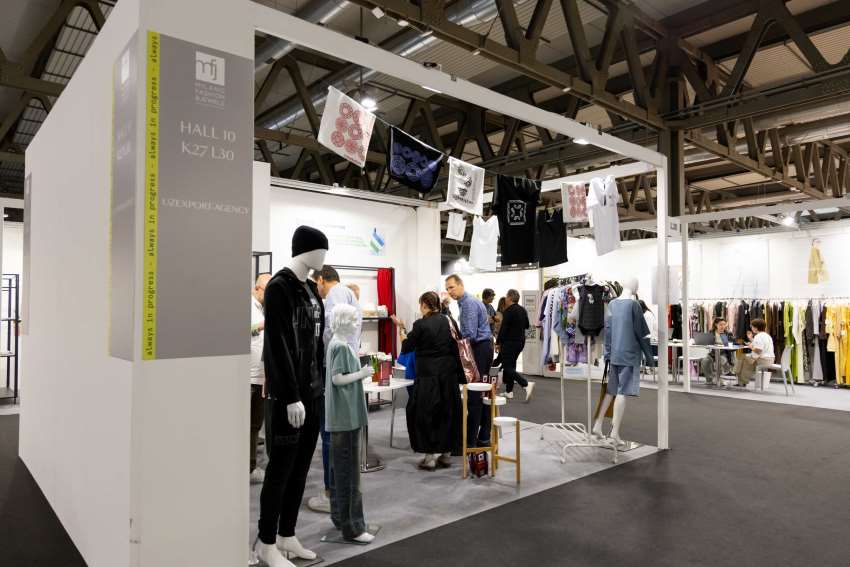
The Italian company with over 60 years of experience, specialized in the production of synthetic warp-knitted fabrics for the technical industrial world, and stretch and circular fabrics for the world of clothing, Sitip will present its latest range of fabrics at the upcoming Techtextil exhibition.
Participating in a special Forum about innovative fabrics organized by the Agency ICE, promoting abroad the Italian companies and their internationalization, as examples of the latest developments Sitip will showcase its latest Native Sustainable Textiles collection. The range will demonstrate the technology applied to fabrics made with recycled yarns and low-environmental-impact chemicals with reduced consumption of natural resources:
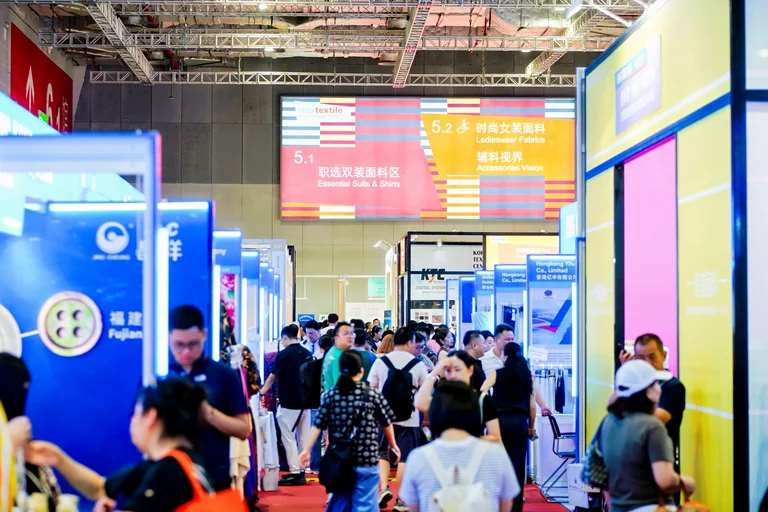
Industry experts from all over the world meet every two years at Techtextil, the trade fair about the new developments in technical textiles, functional apparel fabrics and nonwovens offered by companies from all over the world. Techtextil offers exhibitors and visitors an insight into the latest developments in the industry, as well as additional technical inspiration.
Bangladesh depreciates Taka value for the third time
Bangladesh recently depreciated the value of Taka for the third time in the view of the greenback in May. As per an Apparel Resources report, the value of Taka was depreciated by 0.40, re-fixing the local currency’s exchange rate against the US dollar at Taka 87.90.
Reports by the media claim, the concerned people have observed the disruption in the global supply chain caused by the Ukraine-Russia war in February.
The war led to a rise shipment costs and in turn led to increased demand for the US dollar even as prices of all kinds of commodities in the global market were going up owing to increasing demand all over the world in the wake of improvement in the pandemic situation.
As a result, like in many countries across the world, local currency of Bangladesh also started to lose value against the greenback.
2,200 international exhibitors register for Heimtextil 2023 Summer Special
Around 2,200 international exhibitors have already registered for the summer special edition of Heimtextil 2023. To be held from June21-24, 2022 in Frankfurt, Germany, international trade fair for home and contract textiles, Heimtextil will offer insights on knowledge transfer, networking and inspiration on the sustainability topic.
Due to the current challenges, the sustainability theme will run through all sectors of the textile value chain, triggering processes and releasing enormous innovative power in the process. At the Heimtextil Summer Special, the measures and offers relating to sustainability will be brought to life. The trends area in Hall 4.0 under the motto ‘Next Horizons’willinspire latest color trends and materials besides highlight sustainable themes.
Based on the Material Manifesto, local resources, environmentally friendly or borrowed materials will be used for the stand design. The Green Village (Hall 3.0, Stand D51) will help track official labels and certificates. Label providers and certifiers will provide exhibitors and interested trade visitors with answers to their questions and up-to-date information on current developments.
The online Green Directory will showcase all suppliers of sustainably produced textiles. The Green Tours will offer an opportunity to be guided directly to selected sustainably producing companies and to learn more about their products.
There will also be numerous specialist lectures, such as at the Heimtextil Conference: Sleep & More (Hall 3.0, Stand D 041). Here, high-calibre experts will provide valuable orientation for decision-makers in the hotel industry and hospitality trends will be examined from the point of view of sustainability and the circular economy.
Rieter to benefit from high order backlog and improved market position
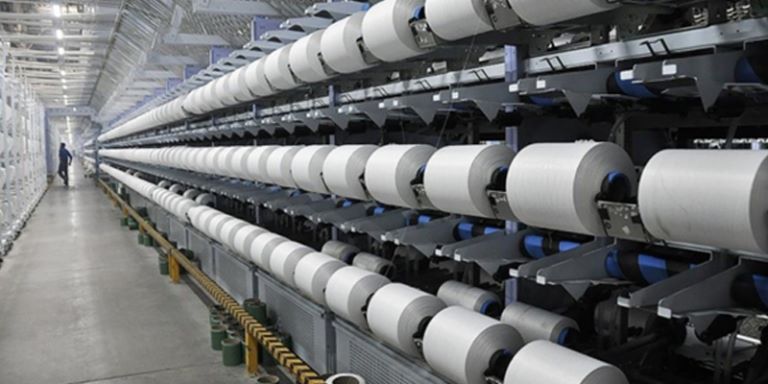
Despite an exceptionally high order backlog and sustained strong demand, Rieter faced supply chain bottlenecks, repercussions of the COVID lockdown in China and significant increases in material and transportation costs in the first half of 2022. The company’s costs also increased due to its takeover of the automatic winding business as of April 1, 2022.
Rieter expects sales to rise significantly in the first half of 2022 compared to the prior-year period. It anticipates a loss at the EBIT and net result level in the first half of 2022.
Rieter is implementing several measures to minimize the impact of the supply chain bottlenecks, the COVID lockdown in China and the cost increases. The implemented price increases have a delayed effect, particularly in the machinery business. The integration of the automatic winding business is proceeding according to plan.
As soon as the situation in the sourcing markets normalizes, Rieter will benefit from the exceptionally high order backlog and the considerably improved market position as a result of the takeover of the automatic winding business as well as Accotex and Temco