FW
GoodWeave Appoints Jon Jacoby as CEO
GoodWeave International, the global nonprofit fighting child, forced, and bonded labor in supply chains, has appointed Jon Jacoby as its new CEO, succeeding Nina Smith. Smith led the organization for 24 years and will continue as a strategic advisor until 2023.
Jacoby officially assumed the role on September 1st, bringing extensive experience in responsible business, workers' and human rights, and inclusive development, aligning with GoodWeave's mission to combat child labor. Siddharth Kara, GoodWeave International's board co-chair, expressed satisfaction with Jacoby's selection, praising his commitment to workers' rights and fundraising expertise.
Jacoby is eager to lead during a time of expansion and increased impact, pledging to work with partners to protect vulnerable children and informal workers globally. Before GoodWeave, Jacoby led global grant-making at the Open Society Foundations, co-founding FORGE and the Investor Alliance for Human Rights, mobilizing resources for workers' rights and corporate human rights due diligence.
He managed teams at Oxfam, contributing to the Behind the Brands campaign and served as associate director for International Economic Policy at the Center for American Progress. Jacoby holds an MBA and an MA in international affairs from Columbia University and a BA in social studies from Harvard University.
His appointment marks a new chapter in GoodWeave International's mission to end child labor, continuing the legacy of Nobel Peace Prize laureate Kailash Satyarthi and the exemplary leadership of Nina Smith.
CFIN Launches to Drive Circular Fashion Transformation in UK
Introducing the Circular Fashion Innovation Network (CFIN), a collaborative initiative led by industry leaders, including the UK Fashion and Textile Association (UKFT), the British Fashion Council (BFC), and UK Research and Innovation (UKRI). Our mission is to propel the UK fashion industry into a Circular Fashion Ecosystem.
CFIN unites stakeholders from various sectors, including Retail, Brand, Textiles, Manufacturing, Academia, NGOs, Innovation, Finance, and Legal, in a concerted effort to address climate challenges within the fashion industry.
Through the development of a comprehensive sustainable ecosystem transformation program, CFIN aims to lead the way in finding innovative solutions.
Its focus revolves around six key strategic themes, prioritizing acceleration in: Circular Business Models
Recycling Infrastructure
Sustainable Manufacturing
Novel Technologies
Diverse and Future-Proof Workforce Green
Growth CFIN is committed to fostering sustainability and resilience within the fashion industry, making strides toward a more environmentally responsible and prosperous future.
NEC Birmingham: EPCH India Pavilion shines
The EPCH India Pavilion at the NEC in Birmingham, UK, launched on September 4, 2023. The event showcased Indian culture and handicrafts, and ran from September 3 to 6. R. K. Verma, EPCH Executive Director, noted the involvement of regional member exporters, while Dr. Shashank Vikram, Consul General, praised EPCH's global promotion of Indian handicrafts.
Dileep Baid, EPCH Chairman, highlighted the Pavilion's diversity.
The UK market potential was emphasized, offering sourcing opportunities from India. EPCH is a handicraft export promoter that achieved Rs. 30,019.24 Crores ($3,728.47 Million) in exports during 2022-23.
GtA and Monforts pleased with return of global exhibitions
The ITMA textile machinery exhibition in Milan this June was a major success, with over 111,000 visitors. This is great news for both textile finishing technology specialist Monforts and one of its major customers, GtA.
GtA specializes in technical textiles for the digital printing market, and 70% of its business is related to trade fairs and major public events. The company was forced to go on short-time work during the pandemic, but it is now back to running 24 hours a day to meet unprecedented demand.
Monforts is also pleased to see the return of global exhibitions. The company has been investing in new technologies and equipment to meet the demands of the digital printing market. It is also working with GtA to develop new ways to save energy in the textile finishing process.
Sartoria Studio x Sartoria Carfora: Bespoke Tailoring in Soho
New York City's premier destination for men's fashion, Sartoria Studio, has announced a partnership with renowned bespoke tailor Sartoria Carfora. The partnership will bring Carfora's fresh perspective on Italian bespoke suiting to Soho, with a permanent presence at Sartoria Studio's lounge.
To celebrate the collaboration, Carfora will be hosting a trunk show event on October 12-14, 2023. Clients will have the opportunity to meet Carfora and get fitted for a bespoke garment.
Sartoria Studio is known for its curated selection of men's fashion, including custom clothing, premium off-the-rack attire, and accessories. The partnership with Carfora marks the downtown haberdashery's inaugural venture into the bespoke suiting arena.
Intex Sri Lanka 2023 concluded
The 2023 Intex Sri Lanka textile sourcing fair was a huge success, with an all-time high attendance of 4,780 visitors.
The fair brought together professionals from around the world, making it the premier textile sourcing event in the Sri Lankan and South Asian textile and apparel industry.
The fair featured a dynamic platform for networking, learning, and business collaboration, and it set new standards for excellence, diversity, and global engagement. The next edition of Intex will take place in India from December 7th to 9th, 2023.
The next edition of Intex will take place in India from December 7th to 9th, 2023.
Shamim Ahmed Re-elected BPGMEA President
Shamim Ahmed was re-elected as the president for a one-year term (2023-2024).
The election board chairman of the Bangladesh Plastic Goods Manufacturers & Exporters Association (BPGMEA), Abdur Razzaque, announced the results of the election held at the association's head office in Paltan yesterday.
KM Iqbal Hossain was elected as the senior vice-president, while Quazi Anwarul Haque and Md Enamul Haque were elected vice-presidents. Seven new directors were also elected to the board of directors.
Nanán Opens New Boutiques in Dubai and Rome
Nanán, the global brand for children's products, has recently opened two new boutiques. One is located in the Dubai Mall, Dubai, and the other is in the heart of Rome's city center.
The Dubai boutique is strategically located in the world's largest shopping mall, with over 1,200 stores. It is designed with a warm and inviting atmosphere, with pastel tones and neutral hues. The Rome boutique is located in the city's historic center and is designed with sophistication and elegance.
Both boutiques offer a wide range of Nanán products, including furniture, clothing, strollers, cosmetics, and accessories. The brand is known for its high quality and stylish designs, and the new boutiques are sure to be a hit with parents and children alike.
CENTRESTAGE 2023: Hong Kong's fashion extravaganza begins
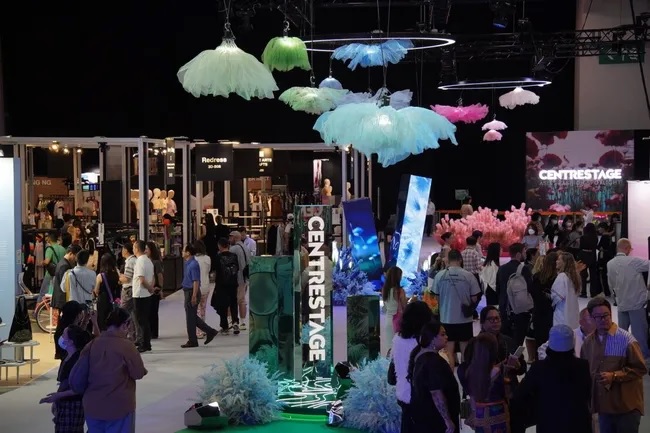
CENTRESTAGE, the annual Asian fashion extravaganza, commenced today with an exciting four-day lineup at the Hong Kong Convention and Exhibition Centre. The event's first two days are reserved exclusively for buyers, while the remaining two, from September 8th to 9th, are open to industry professionals and the general public. This year's theme, "Radiant Wellness," underscores fashion's potential impact on individual well-being.
Organized by the Hong Kong Trade Development Council (HKTDC) with sponsorship from Create Hong Kong (CreateHK), CENTRESTAGE, now in its eighth year, has become an iconic event in the Asia-Pacific region. With the reopening of the Hong Kong-Mainland China border, the 2023 edition boasts increased international participation, featuring over 240 brands from 19 countries and regions.
Hong Kong's own talent is on full display, with brands like REDEMPTIVE, Barney Cheng Couture, and Kowloon City Boy showcasing their latest collections. International brands like FETICO (Japan), SAMSARA (Japan), and CHILLOSOPHY (India) bring their unique styles to the event.
The four-day extravaganza also promises a series of captivating fashion shows, starting with the CENTRESTAGE ELITES fashion show, featuring the Spring/Summer 2024 collections of Hong Kong's REDEMPTIVE and Japan's FETICO. Notable celebrities, including Hanna Chan and Pete, will grace the runway, highlighting the fusion of fashion and artificial intelligence.
Fashion enthusiasts can anticipate the Fashion Hong Kong Runway Show, an interdisciplinary blend of fashion and ballet, and the Hong Kong Young Fashion Designers' Contest (YDC) 2023 finale, showcasing the budding talents shaping the future of Hong Kong's fashion scene. With sustainability and inclusivity at the forefront, this year's YDC finale promises to be a spectacular finale to CENTRESTAGE 2023.
Coats Digital's FastReactPlan powers Searock Apparels' production transformation
Searock Apparels Ltd., a prominent ready-made garment specialist, has chosen Coats Digital's FastReactPlan to revolutionize its production processes. This move aims to enhance productivity, ensure timely deliveries, and boost profits. The implementation of FastReactPlan is expected to increase productivity by 3%, significantly reducing idle production lines, firefighting, and material wastage. This transformation will also position Searock Apparels for substantial growth.
Established in 2018, Searock Apparels specializes in ready-made outerwear, denim/non-denim bottoms, workwear, and uniforms. With two facilities in Gazipur and Pubail, employing over 1,800 workers, and a monthly production exceeding half a million pieces, the company boasts a monthly turnover of 3 million USD. Notable international clients include Lidl, Norma, Orn International, 5 Star, and Champion Clothing.
Khandokar Fazlay Rabbi, Managing Director of Searock Apparels Ltd., praised FastReactPlan as the garment industry's leading planning tool. The previous manual planning process, reliant on scattered Excel sheets, notes, and emails, hindered visibility, causing over- and underbookings, overtime, excess material costs, and firefighting. FastReactPlan promises to enhance efficiency and profit margins, enabling effective planning and future growth.
FastReactPlan, a part of Coats Digital's Manufacturing Solution Suite, is a dynamic production planning and control tool tailored for footwear and apparel manufacturing. Its visual, flexible approach streamlines planning, integrates capacity, critical paths, and materials into a single system. Mitali Chakrabartty, Business Development Manager at Coats Digital, expressed excitement about Searock Apparels' digital journey and anticipates a 3% productivity boost post-implementation. Coats Digital is committed to supporting Searock Apparels in achieving their long-term business goals.