FW
Grasim Industries registers 66% decline in consolidated net profit during Q2, FY’25
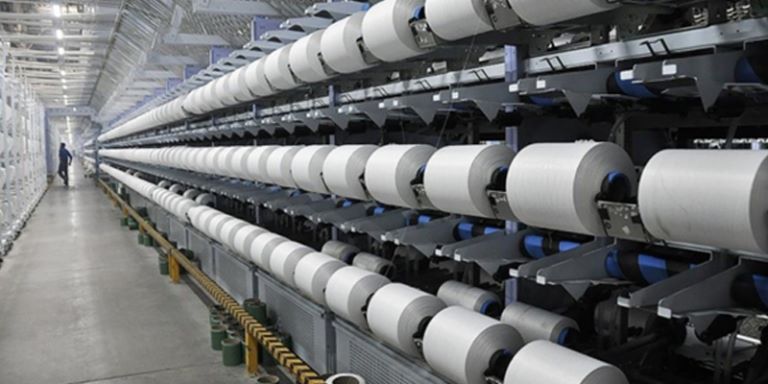
In Q2, FY25 spanning July-Sep’24, Grasim Industries reported a 66 per cent decline in consolidated net profit to Rs 390 crore, compared to Rs 1,164 crore in the corresponding period last year.
The leading fabric and yarn producer's revenue from operations rose by 11 per cent to Rs 33,563 crore in Q2, FY25, compared to Rs 30,220.68 crore in the year-ago period. This revenue growth was ‘driven by the superior performance of its Financial Services, Cellulosic Staple Fibre and Specialty Chemicals businesses, according to the company.
Grasim's revenue from its cellulosic fiber business increased by 6.07 per cent to Rs 4,125.19 crore in Q2, FY25. This growth was triggered by an improvement in CSF (Cellulosic Staple Fibre) prices. The brand’s CSF business achieved its highest ever quarterly sales volume at 219,000 tons, increasing by 4 per cent Y-o-Y, led by stable domestic demand. Its EBITDA margins improved due to higher sales volume and improving trend in global prices, the company says.
Grasim’s revenues from its other business including textiles increased by 2.13 per cent to Rs 777.37 crore during the quarter. The company’s capital expenditure for H1 FY25 reached Rs 1,884 crore. The budgeted standalone capex for FY25 is Rs 4,691 crore, of which Rs 3,000 crore is towards new growth businesses.
Kabir Impex to showcase innovative textile solutions at 9th Morocco Fashion Style & Tex in Casablanca
A leader in digital textile printing, Kabir Impex will showcase its innovative textile solutions at the 9th Morocco Fashion Style & Tex in Casablanca from Dec 04-06, 2024.
This event will feature industry professionals from Europe, Asia, and Africa who will explore cutting-edge trends in textile innovation. Kabir Impex will exhibit at Stand B16-D, where it will highlight its expertise in Reactive Digital Printing, renowned for exceptional color vibrancy, design precision, and durability.
Founded in 2008, Kabir Impex is a family-owned business based in New Delhi, with two state-of-the-art manufacturing facilities in Sonepat. Specialising in fabrics like cotton, viscose, linen, silk, and various blends, the company has become a key player in the textile industry.
Committed to sustainability, the company utilises eco-friendly printing techniques and maintaining strict quality control throughout its production process. Their comprehensive services include custom reactive digital printing, fabric design and development, as well as both large-scale and small-batch printing solutions.
Manav Kabir Chawla, CEO, Kabir Impex states, Morocco’s strategic location and the opportunity to engage with professional buyers from over 37 countries enables the company to form new partnerships and grow its presence in international markets.
Expected to attract thousands of visitors, The Morocco Fashion Style & Tex event offers Kabir Impex a prime platform to connect with influential buyers and industry leaders from key markets. With Morocco serving as a gateway to Africa and benefiting from free trade agreements with the European Union and the United States, the event represents a significant opportunity for Kabir Impex to expand its reach globally.
US cotton exports to decline to the lowest in nine year in MY2024-25: USDA
USDA has forecasted a 2 per cent decline in US cotton exports to 11.5 million bales for the MY 2024-25, marking the lowest level in nine years. As of now, the US has shipped about 1.5 million bales, only 13 per cent of the USDA’s export target, the slowest pace since the 2017/18 season.
This decline is attributed to a combination of factors, including reduced production due to adverse weather conditions in key growing regions and increased competition from other cotton-producing countries like Brazil and Australia.
In early 2024, US cotton prices surged to contract highs, making American cotton less competitive, particularly in markets like China. Brazilian cotton, which is cheaper, has become a strong alternative for Chinese buyers, further diminishing US export prospects. As a result, China has turned to other countries for cotton, impacting US shipments.
US exporters are now focusing on markets like Pakistan and Vietnam, where exports have risen significantly by 77 per cent and 60 per cent, respectively, in MY 2024-25. However, despite these gains, they have not been sufficient to offset the loss in exports to China. Much of the decline in US cotton exports can be attributed to global supply shifts, rather than broader economic concerns or reduced Chinese demand alone.
China’s cotton imports have surged in 2024, reaching 2.28 million bales by Sep’24, more than double the volume imported in the same period in 2023. Brazilian cotton has played a major role in this increase, as the country’s higher production and lower prices allowed it to overtake the US as China’s top supplier in 2023-24. As a result, US cotton exports have been further limited, despite a recovery in domestic production.
Meanwhile, Australian cotton exports, which were previously hampered by diplomatic tensions with China, are recovering. Although China’s demand for Australian cotton remains lower than before, shipments to countries like Vietnam, Indonesia, and Bangladesh continue to support strong exports from Australia.
Overall, the global cotton market is seeing shifts in supply dynamics, with Brazil’s growing competitiveness and China’s diversified sourcing strategies reshaping trade patterns.
Pakistan’s cotton imports to rise to $1.9 billion in FY24-25
With domestic production facing significant setbacks, Pakistan’s cotton imports are projected to rise by nearly fourfold to $1.9 billion in FY’24-25. According to Arif Habib Ltd, (AHL), local cotton production is expected to reach 6 million bales, creating a demand for 5.4 million bales through imports. This would be a dramatic rise from last year’s imports of 1.2 million bales (205,000 tons), valued at $448 million.
As per a report by Pakistan Cotton Ginners’ Association, the country’s cotton harvests declined by 37 per cent during July-Oct’24 to 4.29 million bales from 6.79 million bales in the same period last year. This decline was attributed to poor economics for farmers and delays in planting. Factors such as high inflation, increased costs, and limited resources have affected farmers' ability to invest in cotton cultivation.
Historically, Pakistan’s textile industry requires between 15-16 million bales annually to meet the demand for yarn and finished textile products, including garments for export. However, reduced global demand for textile exports due to high inflation has cut local consumption to around 12 million bales.
AHL notes, the decline in cotton production has been exacerbated by the failure of local policies, including the abrupt changes in wheat procurement in Punjab, which left farmers financially strained and unable to afford essential inputs like seeds and fertilizers. Delays in payments from textile mills to farmers have further hindered cotton sowing in the current season.
In addition to the domestic challenges, cotton prices in Pakistan have declined by Rs 1,000-1,500 over the past week, with prices now ranging from Rs 16,700 to Rs 18,200 per 40 kg.
Pakistan remains the largest buyer of cotton globally, purchasing 72,200 bales in FY25, according to the US Department of Agriculture. In response to the challenges, Naseem Usman, Former Chairman, Karachi Cotton Association, advocate the establishment of an apex committee to address cotton production issues, improve yield, and implement policies to boost domestic output and exports in the long term.
China's economy grows steadily in October with retail, trade boost
China's economy maintained steady growth in October, driven by strong retail and manufacturing performance, the National Bureau of Statistics reported.
Retail sales of consumer goods increased to 4.54 trillion yuan (approx. $649 billion), marking a 4.8 per cent year-on-year rise, up 1.6 percentage points from September. Sales of household appliances soared 39.2 per cent, fueled by upgrade and trade-in incentives.
Foreign trade grew by 4.6 per cent year on year, reaching 3.7 trillion yuan, with mechanical and electrical products comprising 59.4 per cent of exports, up 8.5 per cent. Fixed asset investment rose 3.4 per cent in the first 10 months, led by a 9.3 per cent increase in high-tech industries, including 8.8 per cent in manufacturing and 10.6 per cent in services.
Urban unemployment dropped to 5.0 per cent, down 0.1 percentage points month-on-month. The real estate sector showed signs of recovery, with slight price rises in key cities like Shanghai and Shenzhen. Analysts expect further improvement in the property market over the next 12-18 months as supportive policies take effect.
Global textile leaders gather for 7th Keqiao Conference
The Seventh World Textile Merchandising Conference 2024 recently brought together representatives from over 60 countries in Keqiao, Shaoxing, Zhejiang Province. Themed ‘Future Fashion Advanced by New Quality Productive Forces,’ the event spotlighted technological innovation and global cooperation in the textile industry.
Sun Ruizhe, President of the China National Textile and Apparel Council (CNTAC), emphasized China's role in enhancing global textile development through advanced machinery and affordable products. In 2023, China's textile machinery exports spanned 202 countries, showcasing its contribution to industrial growth worldwide.
Shaoxing’s innovation-led approach was highlighted by Shi Huifang, Secretary of Shaoxing Municipal Party Committee, who detailed achievements like the Zhejiang Modern Textile Technology Innovation Centre and smart industry platforms. Chen Hao, Secretary of the Keqiao District Party Committee, outlined plans to create a world-leading textile cluster, integrating the entire supply chain from polyester spinning to creative design and trade services.
Christopher Pissarides, Nobel Laureate in Economics, praised globalization's role in optimizing production and supply chains, citing improved logistics as a driver of global trade and integration.
Key trends identified in the 2025 Global Textile Outlook include green development, innovation, and advanced materials. Strategic initiatives announced include a Zhejiang workstation for patent examination, collaborations with CNMI, and the WGSN Keqiao Trend Centre project.
The conference underscored the textile industry’s evolution, combining innovation, sustainability, and cooperation to secure a competitive future.
Circulose appoints new leaders to drive circular textile revolution
Circulose has announced key leadership changes to accelerate its mission for renewable textiles. Helena Helmersson has been appointed Chairman of the Board, while Jonatan Janmark takes over as Chief Executive Officer. Both will assume their roles on December 1, 2024.
Clara Zverina, Principal at Altor, highlighted the significance of the appointments, emphasizing that Helena Helmersson and Jonatan Janmark bring valuable expertise to advance Circulose as a global leader in circular textiles. She noted that their leadership would strengthen the foundation established by Magnus, who will remain in charge of operations following his successful term as interim CEO.
Helena Helmersson, former CEO of H&M Group, is recognized for her sustainability initiatives in the fashion industry. She expressed enthusiasm about joining Circulose, highlighting the alignment between the company's ambitious agenda and her extensive experience. Helmersson aims to work closely with Altor and the team to drive transformative change in the textile sector.
Jonatan Janmark, formerly a partner at McKinsey & Company, brings extensive experience in guiding apparel companies through sustainable transitions. He emphasized the importance of Circulose's mission to shift the textile industry from a linear to a circular model and highlighted the commitment of the team to driving this transformation despite the challenges ahead.
These strategic appointments signal Circulose’s commitment to advancing circular solutions in the textile sector, strengthening its position as a sustainability leader.
Sympatex showcases Fiber-to-Fiber laminates at Portland Fair
Sympatex Technologies is set to feature its Fiber-to-Fiber (F2F) laminates at the Functional Fabric Fair in Portland, underscoring its commitment to circularity and sustainable apparel. CEO and CSMO Kim Scholze will lead discussions on the company’s F2F portfolio, offering insights into practical solutions for a greener textile future.
Sympatex’s F2F solutions focus on advancing the recyclability of performance textiles through the use of mono materials. These materials aim to overcome recycling hurdles while retaining durability, waterproofing, and other essential functionalities. This portfolio embodies Sympatex’s dedication to closed-loop production, showcasing how sustainable practices can seamlessly integrate into functional apparel design.
Kim Scholze highlighted that the Fiber-to-Fiber approach marks a significant move toward sustainability, focusing on creating recyclable, high-performance fabrics that address both present and future needs responsibly.
In addition to its F2F portfolio, Sympatex will highlight the Responsible Design Guide, a tool encouraging designers to prioritize sustainability from the outset of product development. The company will also introduce the SAM (Sustainability And Me) campaign, which aims to educate families about making eco-conscious choices in children’s footwear through interactive displays.
Sympatex’s presence at the fair underscores its leadership in combining innovation with sustainability, offering solutions that address both industry challenges and environmental imperatives.
Claes Retail Group acquires Belgian denim brand HNST
Known for its sustainable men’s and women’s denims, Belgian circular denim brand HNST has been acquired by Claes Retail Group, a Belgian company that also owns major fashion brands like JBC—one of the country's largest clothing chains—alongside women’s brands CKS and Mayerline.
With this acquisition, HNST’s products will now be available in JBC stores and on JBC’s online platform.
Since its launch in 2017, HNST has grown from a small-batch producer specialising in jeans made from recycled cotton and Tencel blends to a notable name in sustainable fashion. The brand has collaborated with industry leaders such as European Spinning Group in Belgium, Pure Denim in Italy, and recycling companies across Europe. In 2022, HNST teamed up with eco-design innovator Resortecs to develop products that can be easily disassembled for repair and recycling at the end of their lifecycle. In 2023, the brand underwent a premium rebranding, setting its sights on expansion into the US market.
By 2030, HNST aims to replace 100 per cent of its most-used materials with more eco-friendly alternatives. It also plans to enhance its current circular initiatives and explore new ones.
Nitin Spinners’ Q2, FY25 net profit rises by 33% to 42 crore
The Q2, FY25 net profit of leading textile company, Nitin Spinners increased by 33 per cent increase to Rs 42 crore ($5 million) as against Rs 32 crore in the year-ago quarter.
The company recorded a 12 per cent rise in revenues for the quarter to Rs 823 crore, as against Rs 737 crore in the corresponding quarter of the previous fiscal year.
Majority of the company’s revenue was generated from exports which totaled Rs 522 crore while the domestic sales amounted to Rs 300 crore.
Dinesh Nolkha, Chairman and Managing Director, says, the company’s focus on value added segments, optimum utilisation of expanded capacities and cost efficiencies, helped it to achieve encouraging financial results during the quarter despite global challenges.
In the upcoming quarters, the company plans to leverage the low cotton prices to seize new opportunities in the sector and evaluate various growth options,
Founded in 1993, the Bhilwara-based Nitin Spinners offers a complete range of fabrics for fashion, apparel and work wear industry.