FW
Asia Pacific to significantly contribute to denim market revival: GlobalData
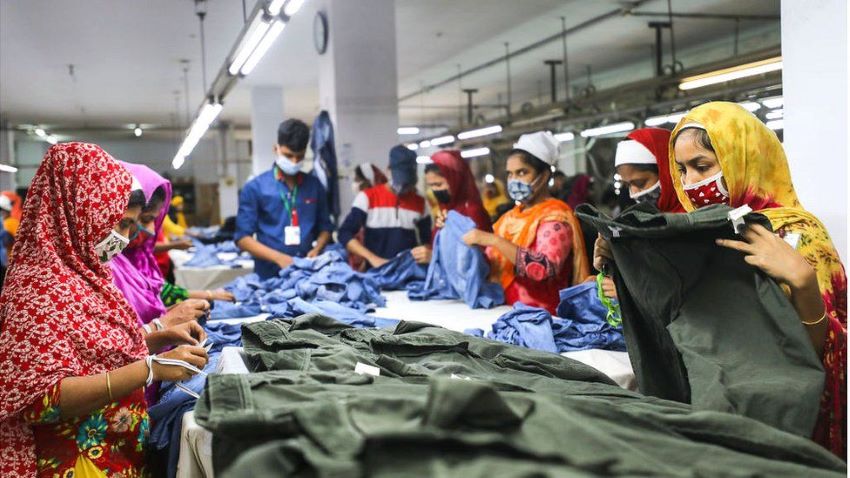
Leading data and analytics company GlobalData expects emerging Asia Pacific markets to significantly contribute to the revival of the global denim market. As per Philstar Global, the global jeans market grew at an annual rate of 0.5 percent between 2014 and 2019 to hit $74 billion. However, global lockdowns due to the pandemic led to store closures, which dampened overall apparel spend, including denim jeans. Ayan Gangopadhyay, Retail Analyst, GlobalData said the Asia Pacific region registered a growth in demand for denim over the years, supported by rapid urbanization, cheaper connectivity, growing investment in the digital space and a strong domestic demand.
Within this region, India is forecast to grow the fastest, driven by large investments by international and local retailers on online platforms. The men’s jeans market in the country will grow with increasing casualization of the workplace, said Gangopadhyay.
He advised brands to encourage women to buy more using strategies such as incorporating comfort in jeans by using softer fabrics, going beyond the conventional size ranges, as well as offering the opportunity to customize products based on personal preferences
Rising work-from-home initiated by several employers globally prompted demand for comfortable clothing to significantly increase. Hence, retailers must incorporate more stretch and comfort in jeans besides aiming for more sustainable sourcing, he added.
AEPC denies boost in demand for PPEs amidst rising COVID-19 cases
A Sakthivel, Chairman, Apparel Export Promotion Council believes, though PPE manufacturers are getting fresh enquires, the spike in COVID-19 cases may not necessarily lead to a surge in demand again. Raja M Shanmugham, President, Tiruppur Exporters’ Association agrees, though a few manufacturers will continue to make PPEs and masks, there will not be a major shift to PPE production as demand will not be high. Garment manufacturers are likely to continue making regular products.
A recognized laboratory to test PPEs and masks, the Southern India Textile Research Association, has been receiving a steady stream of samples to test different standards, but there is no rush for products as before. K S Sundararaman, Chairman, Indian Technical Textile Association believes, as there is no government mandate now on the use of PPEs demand is not likely to be high. Also, not all hospitals are keen on buying laminated PPEs as the focus now is more on the use of masks and sanitizers, and there is adequate capacity for manufacturing gloves, sanitizers, and masks.
The Lycra Company appoints new Chaiman
The leader in developing innovative solutions for the textile, apparel, and personal care industries, The Lycra Company has appointed Yafu Qiu as its new Chairman and Julien Born, Chief Commercial Officer as co-chief executive officer.
Effective April 1, 2021, the appointments follows the retirement of David Trerotola and is intended to help the company better implement its strategic development plan for the next five years and bring greater operational focus.
Born, currently the company’s chief commercial officer, will serve as co-CEO and lead the overall operations of the company and implement its ambitious growth vision. He joined the business in 2007 and, since 2018, led the company’s apparel business, where he managed the global commercial organization, helped strengthen R&D and innovation capabilities, and oversaw manufacturing assets. Prior, he had a diverse 24-year career spent in the U.S,, Europe and Asia, as both an executive in large multinational companies and as a business owner of a full-service corporate licensing agency.
Meanwhile, Qiu, in addition to continuing as chairman of The Lycra Company, will focus his co-CEO role on the company’s relationships with key stakeholders, board governance matters, strategic planning, and capital structure adjustments, including the strategy and timing of an initial public offering.
Textile ministry urging engineering firms to meet domestic machine demand
The ministry is urging engineering organizations to meet the gap in domestic machinery production and demand, informed Smriti Irani, Minister of Textiles.
One of the challenges that the Indian textile industry faces is the shortage of machine tools, saids Irani. With the guidance of Principal Scientific Advisor, K Vijay Raghavan, Irani reached out to IITs across the country, particularly Chennai, to highlight to them what the machinery needs of the industry were.
Another challenge facing the sector was that machine tool making did not fall within the Textile Ministry administratively, Irani said. However, she ensured that it will make sure the machines are made in India.
Irani said, the PLI scheme aims to create global champions in MMF apparel and Technical Textiles by providing incentive from 3 per cent to 15 per cent on stipulated incremental turnover for five years.
She said, the National Textiles Policy has been delayed because it could not have been conclusive when other things were developing. Irani appreciated the reforms in agriculture and labor but added that the new policy needed to find a balance between government’s speedy allocations and the industry’s preparedness to take that allocation and convert it into opportunity.
NIFT to introduce technical textile as an academic subject: Smriti Irani
Presiding over the first convocation of NIFT Srinagar, Smriti Irani, Union Minister of Textiles said, the National Institute of Fashion Technology (NIFT) plans to introduce technical textiles as an academic subject in the near future.
As per Apparel Resources, Irani said, the field of technical textiles, which involves production and design of textiles for use in industries other than apparel and decoration, is going to be the next big thing in the future. Textile Ministry is making efforts to utilize its potential to the fullest.
Despite limitations of space and other operational difficulties, almost 65 percent of the students of the first batch have managed to secure placements.
The permanent campus of NIFT Srinagar is coming up at an estimated cost of Rs. 287 crore and would soon be operational.
The Minister said that the first batch of NIFT Srinagar has added a golden page in the 35-year-old history of the institution.
NIFT Srinagar offers two undergraduate courses in Fashion Design and Fashion Communication of four-year duration each.
Minister of State for Youth Affairs and Sports Kiren Rijiju was the Guest of Honour and Lieutenant Governor of Jammu and Kashmir, Manoj Sinha attended the ceremony through video link from Raj Bhawan Jammu. Dr. Javid Ahmad Wani, Director, NIFT Srinagar and other senior officials of the state were also present on this occasion.
Textile and apparel companies increase investments in Madhya Pradesh
Many textile and apparel companies are increasing their investments in Madhya Pradesh, says a report by the Apparel Resources.
As per the report, Ludhiana-based Vardhman Group is investing Rs. 800 crore in spinning and this project is expected to complete in the next one-and-a-half years. Tirupur-based Best Corporation has started construction of its unit near Ujjain which is its first-ever in MP. The company is investing Rs. 60 crore in the garment factory which will be having initially 1,000 stitching machines.
Another textile company that has also announced to invest more in the state is Sagar Group, which is also the leading group of MP. The company is establishing textiles and food processing units at Tamot in Raisen district. There will be an investment of Rs. 600 crore in the projects and 2,500 people would get jobs in the two units.
The main reasons for the fresh investment are easy and very cost-effective availability of land and availability of labour as well. For example, Best Corporation has been allotted 15 acres of land on 75 per cent subsidy compared to the market price of land. On the ground level, the State Government is highly supportive of the industry.
S. Pal, Director, Vardhman Group, said along with polices, the major positive aspect is the supportive attitude of the State Government. Policies related to textile industry in the state are like a complete package for the companies.
The state also has some strong availability of resources for the textile industry like it is amongst the top 10 states of India producing cotton. Since 2008, NIFT is also operational at Bhopal with UG and PG courses. Similarly is NID, Bhopal.
Issue directives for forensic audit of yarn producers, urges PGRMEA
The Pakistan Readymade Garment Manufacturers and Exporters Association (PGRMEA) has called for a forensic audit of the yarn producers to break cartel of cotton mafia in line with the actions taken by the PTI government against sugar lobby.
PRGMEA has pointed out that the textile manufacturers have increased the rates of yarn by more than 40 per cent in a very short span, creating artificial shortage on the excuse of lower production of cotton in the country despite declining prices of cotton in the international market, hitting the apparel sector exports badly.
Sohail Sheikh, Central Chairman PRGMEA urged Prime Minister Imran Khan to take serious steps to break the textile industry cartel, giving it strong message that no cartelization would be allowed to manipulate prices in future and if they commit such crime they have to face the full brunt of law.
He asked the Federal Board of Revenue (FBR) and Federal Investigation Agency (FIA) to conduct raids on the warehouses of yarn dealers who have been hoarding a huge quantity of yarn to create artificial shortage and manipulate the rates in connivance with the manufacturers, taking advantage of record low produce of cotton in Pakistan.
Ijaz Khokhar, Chief Coordinator, PRGMEA said that arrival of low-cost cotton yarn from neighboring country through land route, on the approval of ECC, could have broken this powerful textile cartel, shaking the monopoly of yarn producers to fix the rates artificially very high.
Moreover, the deferment of cabinet to allow yarn import via Wagah has not only damaged the clear stance of the government's zero tolerance against all kinds of mafias like sugar, flour, petroleum and IPPs but also sent a wrong message to the international buyers that Pakistan is facing yarn shortage and authorities are not allowing raw material import. So, Pakistan value-added textile export industry cannot fulfill the new orders timely due to short and expansive raw material.
Indian textile makers to export fabrics to Kenya
Indian textile makers are planning to export fabrics for making clothes, carpets, rugs and towels to the Kenyan market. As per Business Daily Africa, these firms presented their bids to potential Kenyan apparel makers during the Reverse Buyer Seller Meet (RBSM) Wool and Woollen exhibition in New Delhi.
The three-day event which took place from March 25 to 27, saw Kenya’s fashion designers and sourcing agents interact with India’s wool and Woollen products manufacturers and exporters.
Kenyan fashion companies and importers that graced the event included Rialto Enterprises, Occasions and Days, Sao Satorial and Combiat Agencies.
Monica Kanari, CEO, Occasions and Days, said that they are eyeing partnerships with the Indian textile and apparel industry for a seamless source of quality fabrics for Kenya's textile industry.
Kenya has been pushing consumption of locally-made apparel to create jobs as well as reduce the annual forex stockpile spent annually in buying second hand clothes from abroad.
Under the manufacturing pillar of the government’s “Big Four” agenda, jumps-tarting the leather, textiles and agro-processing sub-sectors was seen as key in making quick gains in rebuilding Kenya’s industry.
Euratex expresses concerns over supply chain disruptions following COVID-19
In its Quarterly Economic Update, Euratex has expressed concerns over global supply chain disruptions following COVID-19 crisis which may affect the competitiveness of the industry.
Economic data up to December 2020 reflect a dramatic contraction in demand and production of textile and clothing items, caused by the COVID-19 pandemic. Over the full year 2020, the EU turnover fell by -9.3 per cent in textiles and by -17.7 per cent in clothing, compared with 2019. The crisis was particularly felt in the middle of the year. Towards the last quarter of 2020, business activity recovered in the textile industry, while it further deteriorated in the clothing sector, as a result of the decline in consumption expenditure and the slowdown in non-essential activities.
T&C extra-EU exports slipped back by -13.6 per cent in 2020. The majority of EU top-10 customers experienced a steep decline in 2020. EU imports increased by +5.5 per cent in 2020. However this increase was mostly due to the import of personal protective equipment (including facemasks), especially from China.
Looking forward, the EU Business Confidence* indicator of March 2021 gained momentum, with a confirmed upward trend in the textile industry (+3.8 points), and a modest recovery in the clothing industry (+1.6 points). Also, the employment expectations indicator saw a robust increase.
However, these signs of recovery are jeopardized by recent turmoil in the T&C supply chain. Raising prices of raw materials and transport costs, negative impact of CO2 prices and political turmoil in some important sourcing countries create uncertainty, adding to the challenges of the corona pandemic.
COVID 19: An opportunity for luxury brands to create stronger value
 The pandemic has brought profound challenges for the global luxury goods industry. As per a Bain & Company report, luxury goods sales fell to $331 billion in 2020. They are expected to reach 2019 levels only 2022-end or early 2023. A Forbes report estimates 2021 to be a year of transition for the luxury fashion industry. The year will drive conscious shopping among consumers. A World Bank report also expects the current recession to leave long lasting scars on the global luxury market with declining investments, job losses and disintegration of global trade linkages.
Minimize waste and be more responsive
The pandemic has restricted affluent consumers’ luxury purchase budgets. To boost sales, luxury fashion companies need to tighten supply chains, reduce waste and be more responsive. They need to engage in human resources. However, they do not need to reduce their marketing investment, say marketing professors Nirmalya Kumar, Singapore Management University and Koen Pauwels, Northeastern University.
The pandemic spurred online luxury sales from 12 per cent in 2019 to 23 per cent in 2020, says the Bain report. The analysts expect this growth momentum to continue with e-commerce being the leading distribution channel for luxury goods till 2025.
Amazon will lead this growth with its ‘Common Threads’ storefronts. The storefronts were opened early this year by Amazon for independent brands in association with Vogue and the Council of Fashion Designers of America. In September, the e-commerce company launched its luxury stores mobile app exclusively to Amazon’s 150 million Prime members.
Bridging the gap with human emotions
Luxury brands need to program into online technology called Sensitive Technology which centers around human thought, feelings and behaviors. They need to bridge the gap with the human side of luxury, opines Daniel Langer, CEO, Équité and Professor, Pepperdine University.
By 2020-end, Statista estimates the luxury travel market to have totaled to $545 billion. The analyst expect market recovery to pre-pandemic levels to be slow, with air travel not expected to reach 2019 levels until 2024 and hotel demand delayed until 2023.
Home improvement initiatives
In 2020, consumers of luxury goods diverted all their resources to improve their experiences at home. They are now investing in high quality home furnishings and furniture, home appliances, home improvement and electronics sectors, besides paying service providers to decorate and maintain home environments. In 2021, these consumers will continue to invest in home improvement projects. Home décor brands and service providers need to make the most of this opportunity.
Once consumers step out of their homes, they will begin investing in experiential luxury goods as fine art, luxury cars, private cars, etc says the Bain report. This will help customer-focused luxury brands to emerge stronger from the pandemic. Daniel Langer, Equite, opines luxury brands need to focus on building the strongest possible brand equity. They need to adopt sustainable and socially-responsible business practices besides supporting cultural values like gender, race, sexual orientation and income equality.
Future-proofing businesses
Luxury brands also need to future-proof their businesses by catering to consumers basic needs, says Martina Olbertova, Meaning Global. They need to enhance the quality and timelessness of their products and services, she adds. According to her, the crisis has given brands an opportunity to probe into their priorities and create stronger value.