FW
Texworld Evolution Paris to host over 400 international exhibitors
Sourcing event Texworld Evolution Paris will host over 400 international exhibitors from July 04 to 06 at the Parc des Expositions Paris-Le-Bourget. This year's exhibition marks the return of the major sourcing countries - including China - to Paris.
With around one hundred companies organized in pavilions at Texworld Paris, sixty of which are grouped together in the magnificent area supported by the Istanbul Chamber of Commerce (ITO), Turkey is back to its pre-crisis level of participation. Korean fabric manufacturers will also be there: 41 companies will be exhibiting under the pavilion of the National Union of Korean Textile Manufacturers (Kofoti), among which are regular exhibitors of the show, such as knitters People N'Nature, A Jin Corporation, or Youngwon Corporation (silky aspects).
The presence in Paris of some forty textile manufacturers from China - out of the 140 Chinese companies taking part in the shows - constitutes an exceptional level of exposure in the current context. Indi is also making a comeback, with some forty companies at Texworld Paris - out of a total of 60 - including embroiderers Tarom and Eco Royal Hantex, with exceptional hand-embroidered fabrics.
To facilitate the buyers' journey, the Elite area of Texworld Paris will bring together a selection of some fifteen Turkish, Japanese and Pakistani companies, chosen for their performance in terms of quality, competitiveness, responsiveness and services for the world's leading fashion brands.
InfinitedFibre Company to build commercial-scale factory for regenerated fibers
InfinitedFibre Company plans to build a commercial-scale factory to produce regenerated textile fibre.
As per an Innovation in Textiles report, the factory will be located at Stora Enso’s mothballed Veitsiluoto paper mill in Kemi, a Finnish city on the northern shore of the Baltic Sea.
The cost of the investment is estimated at €400 million, and is expected to create around 270 jobs in the area. The annual fibre production capacity of the planned factory will be 30,000 metric tons – equivalent to the fibre needed for about 100 million T-shirts.
Infinited’s technology enables cotton-rich textile waste to be transformed into a versatile, high-quality regenerated textile fibre called Infinna, which looks and feels like cotton.
Infinited expects to export most of the output of its planned factory, which makes Kemi an ideal location – the city’s port serves as very efficient link to the rest of the world.
Rising costs and sustainability challenges creating uncertain future for the industry: ILO
Challenges like rising labor costs, production and process automation, ‘reshoring’ and ‘nearshoring’, as well as increased pressure to transition towards a more sustainable business model, with improved wages and working conditions are creating an uncertain future for the industry and workers alike, says International Labor Organnization in a report titled ‘Employment, wages and productivity trends in the Asian garment sector’.
For decades, the sector has relied heavily on low labour costs to secure global market advantages. Real wages in the sector have increased in most countries although working conditions remain challenging in general, including long and intense working hours, poor occupational safety and health as well as violations of fundamental rights at work, the report said.
Despite the high share of wage and salaried employment and the dominance of larger firms in most countries, a significant proportion of the sector’s workers also remain highly vulnerable, due to widespread informality and the temporary nature of their working arrangements.
Female employees are overrepresented among the sector’s low pay workers, and countries with the lowest shares of female workers also have among the highest gender pay gaps in the garment sector, the report said.
While labour productivity in Asia’s garment sector has risen in recent decades, it remains low relative to other manufacturing sectors. Few garment producing countries have successfully moved up the value-chain in apparel production, with most manufacturers remaining engaged in low-skilled ‘cut-make-trim’ operations, it said.
Data in the report does reveal a positive association between growth in labour productivity and wages in the sector, suggesting that investments in labour productivity may play an important role in helping elevate worker pay.
David Williams, Manager, ILO- Decent Work in Garment Supply Chains Asia program, says, the industry’s future success will depend on mutually reinforcing investments.
Schoffel introduces new subsidiary for workwear market
German Company Schoffelintroduced its new subsidiary Schöffel Pro for the workwear market and a collection of highly functional and tough work pants featuring CorduraNaturalle fabrics at Techtextil 2022 in Frankfurt,
Thomas Brautigam, Managing Director Schöffel Pro says, made of special high-strength polyamide, Cordura advanced fabrics are known for their abrasion, tear and wear resistance. This durability paired with a sporty cut allows for a new generation of workwear that offers the highest level of functionality as well as a new level of comfort.”
The range offers three separate pairs for different working conditions, all reinforced for increased durability with CorduraNaturalle knee and bottom sections, lower back, leg ends and pocket openings.
The company aims to incorporate stretch properties and comfort into its textile technologies without compromising on strength-to-weight ratio, long-lasting performance and optimal protection,saysMalaykaErpen, Leader-Global Consumer Segment. Lightweight, water-repellent and stretchable CorduraNaturalle fabrics as protective outerwear solutions inspired by sportswear are ideal for this.
Bangladesh apparel exports grow to $3.52 billion in June
Shrugging off the 40-year high record inflation in the United States and European countries prompted by the Russia-Ukraine war, Bangladesh's apparel exports grew by 50 per cent to $3.52 billion in the first 27 days of June,
The sector also enjoyed an over 1,200 per cent growth year-on-year in a single day during the period, but the shipment declined by 39 per cent year-on-year on three days export of the 27 days, said Bangladesh Garment Manufacturers and Exporters Association (BGMEA).
The BGMEA calculated the exports on the basis of the data provided by National Board of Revenue data
In July-May of FY22, readymade garment shipments grew by 35 per cent to $38.52 billion compared to the same period last year, according to data published by the EPB.
Faruque Hassan, President, BGMEA informed, huge orders were booked with the trend expected to continue in the next two months. However, the next year would be tough due to global inflation and recession as some buyers with good inventory would be careful in placing new orders, he warned.
Supply disruptions in China worry Vietnam apparel exporters
The supply disruptions in China are causing concern over shortage of raw materials to Vietnamese exporters that have already procured orders for 2022. These exporters procure around 50-55 per cent of raw materials and accessories for the textile, garment and footwear industries from China.
PhanThiThanhXuan, Vice Chairwoman and General Secretary, Vietnam Leather, Footwear and Handbag Association, said businesses in the industry had to slow down export deliveries as their Chinese partners lacked empty containers for transporting raw materials and accessories.
The supply of raw materials from China also decreased as many factories had to suspend operations, she added.
Escalating fuel prices has also forced plastic materials prices to go up, influencing input costs of plastic product manufacturers. Some garment companies have had to postpone delivery of orders due to the lack of raw materials, according to Vietnamese media reports.
The Ministry of Industry and Trade asked manufacturers to find new sources of supply outside China besides negotiating with partners to share risks and extend the delivery time.
Cambodia, Myanmar catch up as Vietnam rises as the next popular apparel sourcing hub
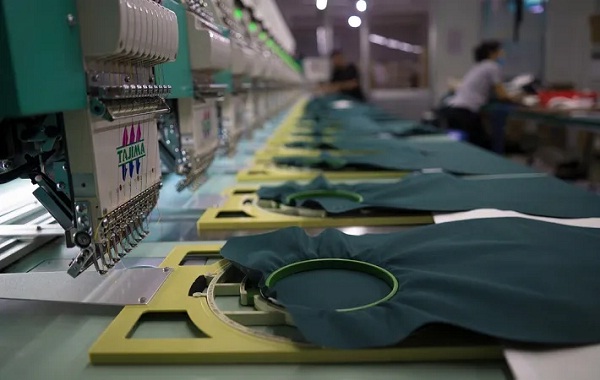
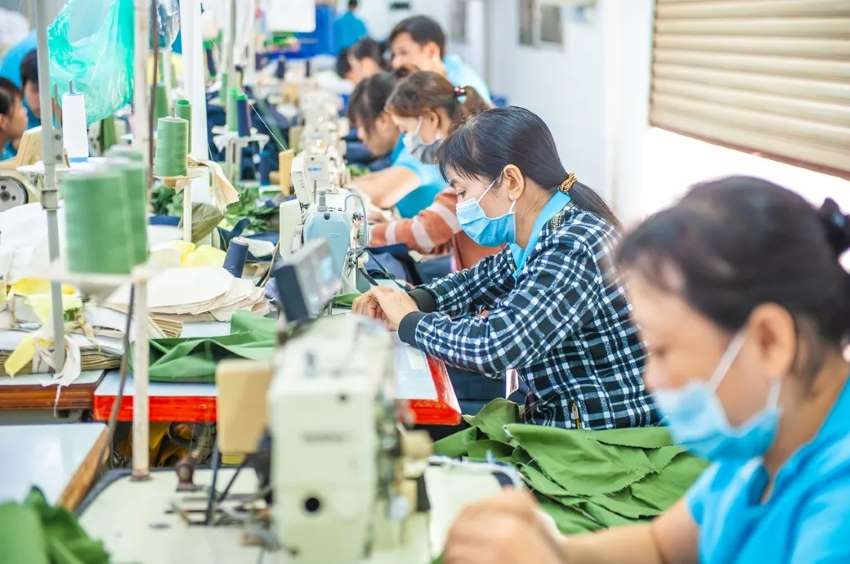
Widespread COVID-19-led disruption of business operations in China caused textile manufacturers to lose around 5 per cent export orders from October 2021 to March 2022. Most of these orders from the US were diverted to the Association of Southeast Asian Nation (ASEAN) countries, especially Vietnam, shows US Customs data.
Since the last few years, garment factories in China have been relocating to other nations due to rising labor costs. They have been mostly moving to countries in Southeast Asia and South Asia such as Vietnam and India, as per a Khmer Times. The popularity of Vietnam as a preferred apparel sourcing destination has been growing over the last few years. However, Myanmar and Cambodia have also caught up fast, says Wang Huanan, an industry leader with 20 years of experience in shipping and world trade.
The relocating of these factories has however, not had any major impact on China as it mainly involves manufacturing of low-value products. The relocation of textile factories has been directed to Vietnam in particular, as per a research by Everbright Securities.
New tax reforms and policies to attract investors
Cambodian and Myanmar have been attracting foreign investors by introducing tax reductions, exemptions and investment-friendly policies. The Cambodian government exempts foreign companies from import and export taxes for one year and corporate income taxes for three to five years on meeting requirements set by the Cambodian Investment Board. The government also exempts companies set up in special economic zone from taxes for nine years.
These facilities have enabled Cambodia’s exporters to outperform Vietnam’s. In the first five months of 2022, Cambodia’s exports grew 34.5 per cent Y-o-Y with garments, leather goods and footwear being the most exported products. Most of Cambodia’s exports are directed to the US. From January to May, Cambodia’s exports to the US grew 57.7 per cent to $3.73 billion. The garment industry benefitted from special tariffs imposed on Chinese textiles following US-China trade war in 2018.
Another emerging popular destination for Chinese factories is Myanmar. Around 70 per cent garment factories in Myanmar are Chinese textile enterprises, notes Shi Kun, President, Chinese Textile & Garment Association in Myanmar. Access to preferential treatment from the US, EU and Japan is attracting many Chinese enterprises to set up units in the country. From 2012-19, garment factories in Myanmar increased from less than 100 to over 500. During this period, Myanmar’s garment exports reached over 18 per cent of its total exports, and have now expanded to over 50 per cent. Exports totaled over $5 billion between 2018 and 2019, adds Kun.
The pandemic and following political turmoil interrupted this rapid growth and Myanmar’s foreign trade value dropped 19.5 per cent Y-o-Y. Garments, luggage and travel bags, shoes and hats exports dropped 21.4 per cent. Garment exports are recovering slowly with trade resuming. The sector is likely to attract more investment as the political situation stabilizes, adds Shi.
Availability of raw materials, rising costs hinder growth
Both Myanmar and Cambodia continue to make clothes from imported materials despite rapid growth of manufacturing facilities. Factories import 95 per cent of their raw materials, notes He Enjia, President, China Textile & Garment Association in Cambodia. On the other hand, Vietnam has established the complete textile value chain including weaving, dyeing, printing and garment making. It provides over 40 per cent of the fabrics and accessories locally.
Textile manufacturers in Cambodia also have to face high electricity and water costs, says He. The cost of electricity is about O.14 US cents per kilowatt-hour (kWh), compared to 7 to 9 cents per kWh in Vietnam. Another drawback is rising labor costs. Before 2021, Cambodia’s labor was low with basis salary of $61 a month. This has tripled to $194 a month driven mostly by political factors, these irrational rise is making Cambodia less competitive, affirms He.
‘Sri Lanka will emerge successfully from current crisis’: William Eias, Chairman, Sri Lanka Apparel Sourcing Association
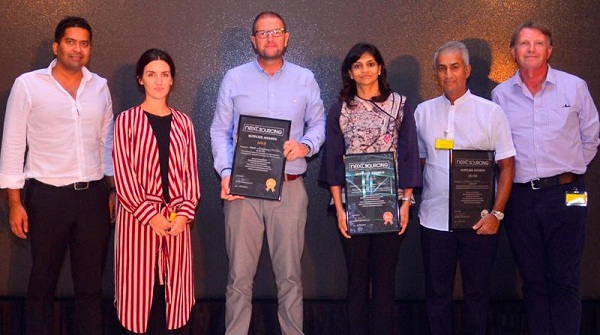
Having lived through a crippling civil war, a tsunami, the Easter Sunday bomb attack and the two-year long pandemic, Sri Lanka is geared to overcome the current economic crisis. However, it urges the rest of the world to believe in the country’s resolve. “Sri Lankan apparel companies have built a reliable industry that boasts of a speedy deliveries of good quality products,” opines Wilhelm Elias, Chairman, Sri Lanka Apparel Sourcing Association. “Through myriad crisis, companies have built an apparel industry that has become a reliable sourcing destination for some of the largest global brands. They have reaffirmed confidence in Sri Lanka’s delivery of both product and quality and always looked to Sri Lanka as a safe and reliable pair of hands. The country has developed an enviable reputation for ethical and sustainable manufacturing,” he says. The country had gained a reputation for manufacturing ethical and sustainable products. However, now, it is struggling with a macroeconomic crisis beyond its control.
Two years ago, the US and China entered a trade and tariff war that was exacerbated further by Russia’s invasion of Ukraine. The situation worsened as supply chains broke down and inflation rose across the world. The Sri Lankan industry may not emerge unscathed from this crisis.
Boost apparel exports
To sustain its current political stability, the Sri Lankan government needs to boost apparel exports that not just help pay for critical imports but also obtain credit from trade partners India and China, opines Elias.
Elias says, “Some taxes have been raised, and more will be. But the need is for structural reform, aligned in response to significant global economic changes. White elephant infrastructure projects, for example, should be removed from the country’s future plans.”
Additionally, Elias advises the government to prioritize export and manufacturing industries that are most forex earning sectors. It needs to create conducive environment for operating these industries and ensure adequate energy and raw material supplies. “Experience over three tumultuous decades has demonstrated that buyers, customers and lenders are as invested in Sri Lanka’s apparel industry and economic revival as Sri Lankans are. This is where faith in the apparel industry’s resilience is well seen.”
Cut back subsidies
The government needs to also cut back on the subsidies on products and increases prices of essential commodities including energy and food. It needs to establish a five or six-step economic revival plan, with the help the IMF and other agencies.
The plan should be aimed at making the entire political system accountable for meeting the set objectives. This will help Sri Lanka emerge victorious from the current crisis, he asserts.
Impending recession calls for inventory saving measures by apparel brands

As a looming economic downturn threatens consumer spending on fashion, apparel retailers are distressing over rising inventory levels. Manufacturers like FutureStitch are reducing the volume of their apparel production to cut stocks. Along with partners like Everlane and Crocs, Futurestich expects stocks across three manufacturing facilities to decline soon due to a drop in orders by a third.
Piling inventory a concern for brands
Over the last two years, measurements of success have changed for garment manufacturers, says Taylor Shupe, Co-founder Stance and Owner, FutureStitch. Earlier, a manufacturers’ success used to be measured by its gross margins, now it is measured by the inventory he holds.
On the other hand, brand partners measure a company’s success by the profitability of each product it holds in inventory. Reducing inventory has become extremely crucial for brands as seen from tumbling of Target’s shares after it slashed prices to clear unsold inventory in early June. Even Walmart plans to slash inventory that rose by 33 per cent last year.
However, not all brands are decreasing their orders volumes. A few continue to place large orders amid tight supply chains and delayed shipments.
Innovative ways to manage inventory
Matt Field, Founder, MakerSights opines, the best way to deal with an unpredictable inventory situation is to follow the 80/20 rule. His partners are cutting back on the number of Stock Keeping Units (SKUs) manufactured and making up for the fewer options with cost benefits.
Michelle Cordeiro Grant, Founder, Lively, an intimates brand adds, she has been focusing on SKU rationalization in anticipation of a recession. Around 85 per cent of her sales currently are coming from just 20 per cent of the assortment, she affirms.
Grant has been protecting her top-selling products while placing lesser emphasis on the low-selling assortment event though it’s causing her to lose out on the novelty factor. She has been using two materials to manufacture each of her products. Currently, each of her products is being made from a combination of nylon and spandex.
Expanding into new categories and new materials and increasing product portfolio are strategies useful in a booming market. A recessionary market, on the other hand, calls for a little saving on the available resources.
ICRA revises long-term rating for V-Mart Retail
Rating agency ICRA has revised the long-term rating for V-Mart Retail at [ICRA]AA- and short-term rating at [ICRA]A1+ for the captioned line of credit.
The Outlook on the long-term rating has been revised as Positive from Stable.
The rating agency has reviewed total bank facilities worth Rs195 crore. This includes Long-term facilities worth Rs132.43 crore, short-term facilities worth Rs16.57 crore, and unallocated facilities worth Rs46 crore.
The revision in the outlook on V-Mart Retail long-term rating takes into account ICRA's expectation of healthy growth in turnover and sustained improvement in profitability, driven by continued network expansion, recovery in sales per square foot from the pandemic impact, and profitable ramp-up in operations of the 'Unlimited' stores acquired in FY22.
This, along with calibrated expansions and low reliance on debt, is expected to keep the company's financial risk profile strong, with a conservative capital structure, strong liquidity profile, and robust debt coverage metrics.