FW
Brands adopt ‘no-waste’ policy as recycling gains ground
"From top fashion brands like H&M and Gucci to small fabric companies, all fashion lovers are making conscious efforts to reduce the colossal amount of waste filling our landfills every year. Luxury brand LVMH Moët Hennessy Louis Vuitton recently signed a five-year biodiversity partnership with UNESCO, committing to an ambitious set of environmental goals."
 From top fashion brands like H&M and Gucci to small fabric companies, all fashion lovers are making conscious efforts to reduce the colossal amount of waste filling our landfills every year. Luxury brand LVMH Moët Hennessy Louis Vuitton recently signed a five-year biodiversity partnership with UNESCO, committing to an ambitious set of environmental goals.
However, adopting systems and practices that make a difference, is easier said than done. As the annual ‘Pulse of the Fashion Industry’ report indicates, the rate of this improvement is slow as economic and technological issues prove a major hurdle. The report says, around 15 per cent of the global fashion industry is yet to embrace any responsible practices.
Sustainability penetrates the fashion industry
As per Nate Herman, Vice President of the supply chain at the American Apparel and Footwear Association (AAFA), sustainability was first adopted by outdoor clothing makers. The trend has now penetrated to every part of the industry as brands have learned new ways to reuse their products.
Unifi, a North Carolina-based manufacturer of synthetic yarns, launched a recycled polyester yarn, Repreve, in 2007. The brand opened its own recycling center in Yadkinville, North Carolina, in 2010. In 2014, it expanded its operations and opened a Repreve-dedicated bottle processing centre in 2016. In 2018, the company partnered with the Mercedes Benz Stadium, Georgia Aquarium, and Atlanta International Airport to recycle bottles. Till date, the company has recycled 14 billion plastic bottles into jackets.
Demand for recycled materials fuels expansion plans
Textile manufacturers are expanding their operations on basis of demand for these recycled materials. Aquafil, an international textiles producer with headquarters in Italy, makes and markets Econyl, a nylon yarn made from industrial and household waste. This yarn, manufactured from materials as diverse as fishing nets and discarded carpets, has been used by more than 600 fashion brands, including high-end designers like Gucci and Stella McCartney. Last year, Aquafil recycled five million pounds of nylon and other materials. The company now aims to double this quantity by 2021.
Growing preference for green chemicals
Fashion companies are no longer relying on harmful chemicals like mercury dyes and formaldehyde finishes. Some of them are recycling and reusing petroleum-based products such as polyester fabrics. In 2007, Patty Grossman with her sister, Leigh Ann Van Dusen, developed Two Sisters Ecotextiles, an eco-friendly textiles manufacturing company based in Seattle. The company only produces natural and cellulosic fibres. Its certified dyes don’t have too much copper in them.
The 20th edition of AAFA published its list of restricted substances earlier this year. The list features 250 chemicals. However, according to Herman, many of these alternatives haven’t been tested yet. Brands have thus failed in their efforts to decrease the environmental footprint around synthetics.
India ITME Society organises press conference to promote international events
India ITME Society, the apex non-profit industry body from India organised a press conference in Ghana to promote its international events ITME Africa 2020. The India ITME Society, strives to support and serve the textile industry through exhibitions, events, trade promotions, education scholarships, student placements etc.
The society plays a pivotal role in strengthening the domestic as well as International Textile Industry by facilitating exchange of knowledge and technology transfer. However, with specific objective of connecting to Africa, India ITME Society is organising an international business exhibition which focuses on business opportunities in the textile sector across the entire Africa, initialising technological revolution for textile industry, thereby creating new market opportunities for textile & textile engineering industry.
The prestigious international textile engineering exhibition is supported by Textiles Ministry, Commerce & Industry Ministry, Engineering Exports promotion council (EEPC), Federal Republic of Ethiopia, Ethiopian Textile Industry Development Institute, International Trade Centre (ITC), Botswana Textile & Clothing Association (BTCA) & Botswana Trade & Investment Centre (BITC), apart from many Indian and overseas Industry associations from Ethiopia.
ITME Africa 2020 has 220 Exhibitors with country pavilions from India, China, Italy, Switzerland, Turkey and participation from additional Countries including South Africa, United Kingdom, Austria, Belgium, Egypt, Ethiopia & Ghana.
CCI to procure cotton from the Punjab market
Cotton Corporation of India (CCI) is planning to procure raw cotton at MSP from the Punjab market. CCI will procure this cotton directly from farmers without any middlemen. Last time, the central agency had done the procurement in 2014-15. The agency will have to settle issues with the strong lobby of arhtiyas in Punjab, who are opposed to direct procurement.
The Union Government had announced the MSP of long staple (27.5-28.5mm) cotton, commonly grown in Punjab, at Rs 5,450 per quintal for 2019-20 (September 1-August 31). After facing inclement weather in July, cotton crop is progressing well and growers feel if no more rains lash the region in the coming days the crop is expected to remain good and they may get a yield of nearly 770kg of lint per hectare.
Raw cotton arrivals have been reported in small quantities in some mandis in the last two days and have fetched rates above the MSP. These are expected to decline when the arrivals increase in the coming weeks.
Indian spinning mills downscale
Spinning mills in India are facing a sharp decline in demand from fabric and garment manufacturers, forcing them to cut their production. They are also going in for business consolidation, mainly by laying off labor. One-third of the spinning mills’ installed capacity remains unutilised due to the weak demand. This is because India’s biggest market for yarn — China — has started sourcing cotton from Vietnam. Demand from China has fallen by 35 per cent. Also, the country’s competitiveness at the global level is low because of embedded taxation.
Demand for cotton is low as the textile sector is facing a recession as bad as in 2008. Due to weakening demand by spinning mills, the produce is selling at prices below the minimum support price. Apart from the domestic market, exports of garments are also down by 20 to 30 per cent. Since manufacturers opt for production after getting export orders, they have been forced to restrict production due to weak demand. On the domestic front also, sales are not picking up despite the festival season’s having started. Retailers are not willing to keep more stocks. As a result, manufacturers have little choice but to go in for consolidation and labor layoffs.
Louis Vuitton to expand production facilities
LVMH’s brand Louis Vuitton plans to expand its production to meet the growing demand in markets like China. For this, the brand will hire another 1,500 manufacturing staff in France by 2022. It will also add another site next to its newly opened workshop outside the village of Beaulieu-Sur-Layon in western France. Louis Vuitton has three production sites in the United States that cater to U.S. market. It currently aims to fine tune its manufacturing process to limit excess inventories.
LVMH's biggest revenue driver the brand makes the bulk of its trademark leather and canvas handbags in its home market, where it employs around 4,300 people in 16 leather goods workshops. It is currently riding high on strong appetite among young Chinese consumers for branded goods.
Indian cotton yarn exports down 44 per cent
India’s cotton yarn exports slumped 44 per cent in July 2019 compared to July 2018. The downward trend continued in the first week of August as well. Between April and July, cotton yarn exports fell nearly 35 per cent. Exports to China, Korea and Bangladesh are down. However, competing countries are increasing their share in exports to markets such as China, South Korea, and Turkey.
While India was the second largest exporter of textile and clothing in 2014-2017, it has come down to fifth position now. The space vacated by China in textile and clothing products has been largely consumed by Bangladesh, Vietnam, Pakistan and other least developed countries. While Indian yarn incurs 3.5 per cent to four per cent duty in China, the levy is nil for yarn exported to China from Vietnam, Bangladesh and Pakistan. India is now seen as a gap-filling segment and not as the main feeder. It is mainly because of tariffs.
The industry wants the three per cent interest equalisation to be extended to cotton yarn. Also the rebate of state and central taxes and levies scheme for garments should be extended to yarn and fabrics too. Further, it wants the raw materials for manmade fiber and viscose yarn to be available at international prices so that more spindles convert to synthetic yarn.
Transparency pushes luxe brands to create videos to showcase credibility
"A recent survey by Label Insights reveals, millennial consumers are curious about the companies they buy their clothes from. They covet transparency and honey and prefer to buy only from brands that are transparent. Apparel companies like LVMH’s Dior, Chanel, Gucci and Prada are therefore, supplementing visually-striking ads with mini-docs and behind-the-scenes videos on popular platforms like YouTube, Facebook, and Instagram. This is resulting in an increase in the number of monthly views, steady subscriber growth, and increased brand affinity."
 A recent survey by Label Insights reveals, millennial consumers are curious about the companies they buy their clothes from. They covet transparency and honey and prefer to buy only from brands that are transparent. Apparel companies like LVMH’s Dior, Chanel, Gucci and Prada are therefore, supplementing visually-striking ads with mini-docs and behind-the-scenes videos on popular platforms like YouTube, Facebook, and Instagram. This is resulting in an increase in the number of monthly views, steady subscriber growth, and increased brand affinity.
Top apparel brands are also making documentaries to showcase their ethical or sustainable product launches. For this, they collaborated with creators and celebrities in the run-up to marquee fashion events like the Paris Fashion Week and the Met Gala besides embracing user-generated content (UGC).
Luxury brands top video makers
Currently accounting for 32 per cent of the total luxury expenditure, Millennials will comprise 50 per cent of the personal luxury market by 2025. This makes it essential for brands to earn customer’s loyalty and videos are an ideal way to achieve this.
Nowadays, millennials are most fascinated with videos that reveal the more authentic side of a brand. Nearly eight of the top 10 luxury videos across these social platforms showcase the making of luxury apparel. Most of them incorporate interviews with designers and artistic directors. Examples include. Dior’s video on how it creates the illusion of movement in its Dior Summer 20 men’s garments (#1) and how Chanel made its latest Métiers d’Art necklace with 1500 individual rhinestones (#6).
Spreading social messages
Taking UGC to the deluxe level, Italian fashion house Gucci crowdsources online video artists worldwide to create one-minute films about its Ace sneaker (#24HourAce). The brand then showcases this premium user-generated content on Instagram, YouTube, and Facebook, drawing millions of views. It commissions UGC artists who are in tune with social video trends.
This year, the brand has commissioned ASMR (autonomous sensory meridian response) videos to give millennials a brain massage, associating gentle sounds like whispers or squishes with good feelings about their newest product. And it works — every single Gucci video in the top ten list above related to ASMR. These collaborative videos of Gucci alongwith its readiness to embrace social video trends endears the brand to millennials.
Gucci also uses Performance Insights to keep a tab on trends like ASMR. These insights enable the brand to identify the top trends in real-time and create new videos that resonate with their audiences.
Nostalgia with time-based videos
Reintroducing ghosted concepts, luxury watch brand Chanel plans to gift millennials with a sense of time before the smartphone era. Its recent campaign promoting its new J12 watch disrupts that notion of time with a video series about the value of time in a fast-paced world.
The luxury brand features ten celebrities from Keira Knightley to Naomi Campbell in a classic black and white interview format. The celebrities muse on the most defining seconds of their lives. Though the brand’s videos feature celebrities with large social media followings, its star-studded content is only released on its official social channels.
Using a unique distribution mechanism to increase its followers, Under Armour recently partnered Dawyney ‘The Rock’ Joahnso for releasing all of its video content through the Rock’s channels instead of its own. This strategy resulted in millions of views and engagements for brand which gets 4.3M views and 836K engagements per upload.
Endorsing high-art
Christian Dior, voted eighth best apparel & accessory brand by cross-platform views creates beautiful video narratives to attract millions of monthly viewers. One of its recent videos shows artisans crafting the Dior’s 30 Montaigne bag at a leather goods workshop in Florence, Italy. The video earned4.5M views on Instagram. This stitch-by-stitch video provides millennials with the transparency they crave. The brand also uses video to establish itself as an enthusiast of high art.
Textile applications of banana fiber developed by scientists
The South India Textile Research Association, Coimbatore, demonstrated its technology for spinning and yarn-making to make banana fiber suitable for blending with other fabrics in the textile industry.
The Tamil Nadu Agricultural University highlighted the significance of fiber-based nanofilm wraps for extending the shelf life of horticultural commodities in super markets. The Central Institute of Agricultural Engineering, Coimbatore, displayed its machine developed for minimal processing of the central core stem. ICAR-NRCB has already expressed its keenness to promote cluster development for mechanical extraction of fiber, and development of fiber banks to cater to the demands of the fiber industry and sustainable business models. An incubation center in Tirupur is promoting production of banana-silk clothing.
The Khadi and Village Industries Commission is promoting the use of banana fiber for making handmade paper bags, statues, pen stands and garments. Once the fabrics match the three categories of fineness, softness and durability, fine, soft and durable yarn will be extracted from banana leaves and stitched into clothes. Rugs made from banana silk yarn fibers are popular the world over. Banana fiber is also used to make cushion covers, neckties, bags, table cloths, curtains etc. In Japan, it has long been used for making traditional dresses like the kimono. It’s lightweight and comfortable to wear, and is preferred by people in Japan as summer wear.
BFC announces full catwalk schedule for London Fashion Week
The British Fashion Council (BFC) announced the full catwalk schedule for the London Fashion Week this September. Alongside the catwalk line-up, the show will also have access to panel discussions with key industry figures, who will share unprecedented insight to the fashion industry.
As a part of the new public-facing London Fashion Week proposition, the BFC has curated a Positive Fashion Designer Exhibition which will fully embrace #PositiveFashion, the initiative designed to celebrate industry best practice and encourage future business decisions to create positive change. #PositiveFashion is led by three key pillars: Sustainability, Equality & Diversity, Craftsmanship & Community; each brand showcasing in the Designer Exhibition answers to one or more of those pillars.
The BFC also announced that its designer brands and partners are participating in the Positive Fashion Designer Exhibition, which is open to both the trade and public audiences. The platform is thrilled to give these brands a platform to tell their compelling stories and educate the audience on how the fashion industry can be used as a force for change. The United Nations will launch the 17 Sustainable Development Goals, also known as The Global Goals to London Fashion Week. These goals are a universal route map and call to action to end poverty, protect the planet and ensure that every global citizen enjoys peace and prosperity by 2030. The #Togetherband tapestry installation will be part of the Positive Fashion Exhibition, to introduce the London Fashion Week audience to the goals.
Bangladesh denim show in November
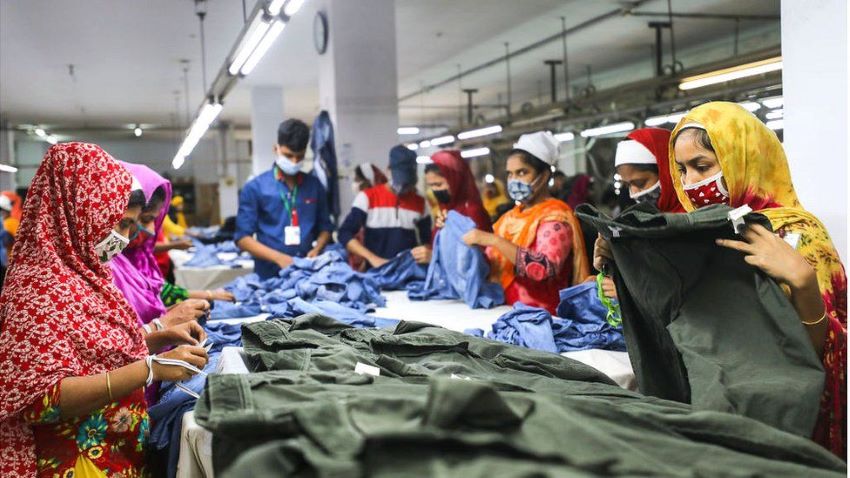
Bangladesh Denim Expo will be held from November 5 to 6, 2019. The expo covers all aspects of the denim supply chain. Exhibitors display fabrics, garments, threads, machinery, finishing equipment and accessories. Its underlying concept is to fulfill the needs of the international denim community, offering the opportunity to make new contacts, discover new products and gain a comprehensive overview of the latest developments available from the region. Nearly a 100 denim industry exhibitors will be presenting latest denim developments and innovations for autumn/winter 2021. Bangladesh Denim Expo offers the ideal environment for discovering the latest in denim trends and advances in sustainable denim production techniques within the country.
Now in its fifth year, the expo has grown from all angles, with increases in attendees, exhibitors, and international recognition from visitors and trade press. It’s now widely regarded as the most prestigious denim trade event in the region, helping promote Bangladesh and its denim industry to a broader national and international audience. Each expo presents a theme to promote discussion among exhibitors, guests and invited speakers, intended to inform attendees and the trade about issues surrounding sustainability, transparency, circularity and better business practices for adoption by the local and international denim community.