FW
Wrangler launches new water elimination technology
Wrangler, the leading denim brand has launched a new foam dyed technology called Indigood that eliminates 100 percent of water waste generated through conventional dyeing methods in denim manufacturing.
The technology reduces energy consumption and energy waste by 60 per cent as compared to other methods of dyeing. This new technique was created in partnership with Texas Tech University and a Spanish fabric mill, Tejidos Royo in Valencia. This new Indigood™ foam-dyed denim represents consistent commitment for using global scale to advance the denim industry.
Usually, to prepare a single pair of jeans, it requires gallons of water and chemicals to transfer the indigo to yarn. This new process uses a foaming agent instead of chemicals and that too without wasting water to give the the denim its blue color.
Having a potential to revolutionise sustainability standards for denim, Wrangler also plans to include other brands to get on board for this technique in future.
Blockchain redefines fashion transactions, emerge as a trust technology
"McKinsey’s State of Fashion reveals 2019 is a year of awakening for the fashion industry as it has brought along a number of strategic and operational challenges like sustainability, ethical fashion, etc. To take stock of these challenges, LINKS Foundation for TCBL released a research note that hails blockchain as a ‘trust technology’ that redefines the way transactions work by disintermediating middlemen and kick-starting an era of radical decentralisation."
 McKinsey’s State of Fashion reveals 2019 is a year of awakening for the fashion industry as it has brought along a number of strategic and operational challenges like sustainability, ethical fashion, etc. To take stock of these challenges, LINKS Foundation for TCBL released a research note that hails blockchain as a ‘trust technology’ that redefines the way transactions work by disintermediating middlemen and kick-starting an era of radical decentralisation. The technology is currently in its initial stages. However, its immutable ledger can give the fashion industry a makeover. The technology can be applied in three primary areas:
Transparency along the value chain: The technology guarantees transparency and traceability along the entire value chain as it brings visibility to the various production stages.
Enabling communication amongst companies and customers: It also facilitates interactions and commercial exchanges amongst B2B companies and their customers. Blockchain allows customers to verify the trustworthiness of all involved actors in order to streamline reputation management, loyalty programs, and compensation to influencers.
Involving users in company governance: Blockchain also encourages users to participate in company’s governance as well as day-by-day operations. The incentives of shareholders, employees and clients are aligned through tokens to unlock value and make businesses thrive.
Additionally, the research notes interest in blockchain-enabled services varies across different types of fashion companies. The study examines large premium brands, fast-fashion companies, and emerging brands deploying a non-traditional go-to-market model competing against established incumbents. These emerging brands defined as challengers’ – represent the reference archetype for the community of TCBL Associates that tend to prioritise ‘access to the market’ applications. These brands are also interested in ‘value chain management’ applications as it helps them to demonstrate their environmental and social commitments. They are also inclined to explore ‘user engagement’ opportunities as well, either to tap into collective intelligence or to experiment with new fundraising avenues.
Blockchain can thus be instrumental in the implementation of radical transparency paradigm from farm to retail. It can allow granular control of personal data in predicting offering platforms and can redesign incentive mechanisms in peer-to-peer transactions taking place within the TCBL ecosystem. This has been corroborated by the advent of blockchain-based offerings that TCBL Service Providers make available to Associates. Provenance, for instance, uses blockchain technology to enable secure traceability of certifications and other salient information in supply chains to prove authenticity and origin. Another TCBL Service Provider that harnesses the blockchain technology is Seratio, which can capture social value resulting from transactions involving people, products, processes and organizations through this technology.
Textile market in China improves
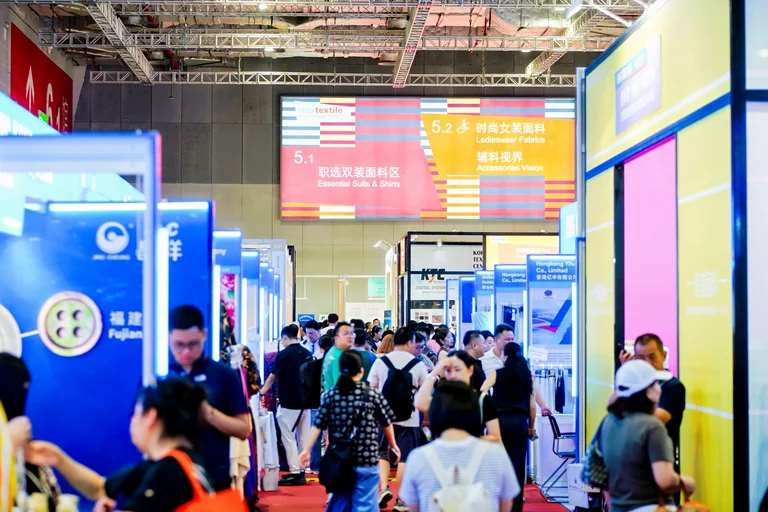
The textile market in China is showing signs of improvement. The rate of opening of textile factories is picking up, and various orders are beginning to be placed. Inventory is still at a high level, and the growth rate of inventory is also unusually high. Even in the peak season of the textile industry, inventories are growing. This is the fourth consecutive month of inventory growth of more than ten per cent. There is a serious oversupply.
The textile industry chain is running at a high speed, but the demand of end customers is lagging behind. Another phenomenon is that the price of textiles is falling rapidly. In particular prices of chemical fiber fabric and cotton spinning fabric are declining. Price of conventional silk-like fabrics has bottomed out. Taking advantage of the fact that raw material prices, grey cloth prices, and dyeing fees are not high, some people enter the market to look for the bargain-hunting and hope to sell at a high price when the market recovers.
The price of all kinds of silk-like fabrics has dropped by almost 20 per cent. Therefore, most bargain-hunting investors are buying such fabrics. When prices of these silk-like fabrics rise in spring and summer next year, they will make a profit.
Luxe seller Selfridges opens first resale boutique
Selfridges London recently opened its first resale boutique Vestiaire Collective to enable customers to buy and sell luxury goods. Launched on October 30, 2019, this boutique, located in an exclusive department store in London, sells amazing vintage pieces and sells pre-owned luxury goods.
The Selfridges Vestiaire boutique opened with 200 accessories and ready-to-wear womenswear pieces that are exclusive to the boutique, including a Mugler rainbow jacket from Spring/Summer 1990 (GBP 2650), an Azzedine Alaïa “Mon Coeur est à Papa” dress (GBP 3685) and an Yves Saint Laurent Rive Gauche cape (GBP 495). It helps customers sell pieces, either through a drop-off concierge service, where pieces are evaluated and processed by Vestiaire, or by listing the item directly through the app using a white photo backdrop available on-site.
Decathlon to achieve emission targets
Decathlon, the leading sports retailer, aims to achieve its science-based emissions targets in line with the goals of the Paris Climate Change Agreement. In order to achieve these goals, the company has sought approval from the Science Based Target (SBT) initiative, which has approved its Climate Change commitments. Decathlon has committed to reducing its CO2 emissions associated with direct and indirect emissions linked to buying electricity by 75 per cent and getting its main suppliers to set their own science-based targets by 2024.
These targets will be supplemented by a group-wide target to reduce CO2 emissions per product sold by 40 per cent between 2016 and 2026 for all its sports categories. Decathlon has also signed the Fashion Industry Charter for Climate Action, an industry-led initiative under the aegis of UN Climate Change, in order to help achieve its targets and encourage climate action across the sector
Decathlon aims to achieve these targets through a number of sustainable strategies, including using 100 per cent renewable electricity by 2026 in its stores – including its 45 in the UK - and warehouses, whilst supporting its industrial partners to do the same.
In addition to this, 100 per cent of new Decathlon products will be eco-designed by 2021 and it will also investigate into developing the sale of second-hand products throughout the store. The company also aims to use just 1 per cent air freight for its transportation needs and reduce the impact of other means of transport.
Monsoon sets sustainable goals, targets reaching them by 2023
Monsoon hopes to be 90 per cent sustainable by 2023. Summer of 2020 will see the UK fashion retail house unveil 90 per cent sustainable beachwear, which is being seen as a major step toward the company’s commitment to sustainability. The retailer is also planning to use 70 per cent organic cotton by 2020. Presently, it’s only 30 per cent. Additionally, it plans to increase the use of viscose from 60 per cent to 65 per cent by next year. Monsoon is working to devise new strategies so as to minimise its environmental footprint. The four-decade-old company currently has over 180 stores in the UK.
Monsoon’s vibrant fashion and accessories are inspired by bohemian designs, handcrafted in Asia. The collection features striking prints and embellishments. The company offers clothing, accessories and shoes, dresses, tops, knitwear, tunics and kaftans, beachwear, jerseys, trousers, skirts, coats and jackets, shoes and boots, and work wear for women. Monsoon’s exclusive, in-house designed collection of unique, classic pieces – from sophisticated evening to casual day wear – combines feminine styling with exotic color, beautiful fabrics and detailed finishing. For women’s fashion with a more contemporary edge, the Monsoon Fusion capsule collection blends up to the minute catwalk trends with Monsoon signature styling. Monsoon Men has a stylish, on trend take on everything from suits to relaxed day wear.
Tommy Hilfiger reissues vintage garments
Tommy Hilfiger is teaming up with US retailer Procell to collect and curate a limited selection of vintage pieces from the brand’s archives. The assortment will focus on Tommy Hilfiger garments from the ’90s and early 2000s—a time when the brand’s color-block windbreakers and baggy pants were part of the pop-culture uniform. This is a brand belonging to PVH Corp.
Tommy Jeans Platform is another example of how the brand is targeting Gen Z and millennial consumers with niche retail experiences. In August, Tommy Hilfiger launched Staycation, a shopping and tie-dye activation. And during New York Fashion Week in September, the brand held Tommy x Zendaya bus activations across New York City, allowing consumers to shop pieces from the collaboration.
Brands are using archival designs to establish new business opportunities. In 2018, Levi’s introduced a collection of pre-worn Levi’s denim. Other heritage brands are retrofitting their old garments for new consumers. In September, Gap partnered with Atelier & Repairs to reimagine looks from the brand’s 50-year archive. Atelier & Repairs was also tapped by Dockers this year to modernize the brand’s Signature Khaki pant and though not a heritage brand Madewell is refurbishing used denim for resale in select stores in a partnership with ThredUp.
Businesses yet to become proactive about supply chain
Despite corporate commitments to create a more responsible economy, global sustainability performance has remained mostly flat. Companies remain mostly stagnant around supply chain sustainability, says business ratings firm EcoVadis. Only 32 per cent of the businesses surveyed maintained diversity, discrimination and harassment measures such as effective whistleblowing procedures, awareness training and anti-discrimination recruitment tactics. Or to put it a little differently, 68 per cent of businesses have zero measures in place to promote equitable and inclusive workplaces.
The size of the company can shape the focus of its efforts. Larger companies, for instance, score higher on environmental and labor and human rights themes compared to smaller ones, which outperform them in corruption, anti-competition and data privacy. Globally, Europe leads the world in sustainability performance among large companies, followed by North America, Latin America and the Caribbean and, finally, Greater China.
Corporations proclaim their social and environmental bonafides but whether thoughts translate into deeds is another matter. Organizations need to more proactively engage with supply partners to identify and address hidden CSR risks. Left unmanaged, the deepest tiers of the supply chain can expose organizations, people and society to serious issues, including slavery, forced labor, dangerous working conditions, environmental waste, corruption and more.
Huge fall in Indian cotton yarn exports
India’s cotton yarn exports have fallen by 38 per cent from April to September. High cotton prices in India and global trade wars have created an uncompetitive situation for Indian spinners. Indian prices are far higher than global prices. Exports of cotton yarn to markets such as China, Bangladesh, Vietnam, South Korea, Colombia and Turkey have dropped. In particular exports to the biggest market – China – have dipped 50 per cent because of reduced demand on account of the trade war with the US.
Orders from China’s weaving, knitting, and garment factories have been drying up due to the ongoing trade war with the US. This has had a cascading impact on the textile sector in Bangladesh, which has been the top destination for Indian cotton and yarn. The subdued demand has dragged prices of yarn below the cost of production in India that hit exports. Similarly, demand from Indonesia and Vietnam has also fallen for the same reason. In addition cotton yarn mills are facing declining domestic demand due to the economic slowdown. To battle the situation, some mills are reducing production by up to 30 per cent.
However, as cotton prices are set to fall with arrivals of the new crop, Indian yarn too may be back in the game from November.
TAI-Mumbai elects Vilas V Gharat as new president
Vilas V Gharat is the new president of Textile Association of India’s Mumbai unit. He has over 50 years’ experience in manufacturing functions in all composite sectors of the textile industry. He has spent more than a decade in operations and HR with an emphasis on business process consulting. He has been involved in the restructuring and transformation of large textile units. He is specialized in various fields of the textile value chain like change management, business development and project management, supply chain management, resource allocation, process reengineering and planning function. He is business consultant for Oswal Hammerle, for its upcoming state of art technology plant for manufacture of sophisticated yarn dyed shirtings. This is a joint venture project of the Oswal group and F.M. Hammerle, Austria. He has been executive director, Suvin Advisors; senior president, S Kumar’s; technical and commercial advisor, J K Cotton Mills; senior president, Morarjee Brembana.
Vikas Sharan is the new vice president. He has had a distinguished career in the textile machinery and machine tools industry. He has been with the textile machinery division of Voltas and handled the nonwovens, carpets, synthetics and circular knitting businesses of the ATE Group. He is a director of Saurer India. He is interested in sports, music, travelling and photography.