FW
Wrangler to enter China next year
Wrangler will be launched in China in the first quarter of 2020. The go-to-market strategy will focus on digital, launching with a large digital partner. Wrangler’s wholesale revenue in the US declined three per cent in the third quarter. The brand’s US wholesale performance was flat year to date but revenue is expected to improve in the fourth quarter.
Wrangler and Lee are a part of Kontoor Brands. The fashion-forward Wrangler Heritage collection with modern styling pays tribute to the brand’s authentic western legacy. Customization laser technology is used to personalize the product. This technology allows the brand, or in the future its retail partners, to elevate the consumer experience through both customized design and heightened convenience. Asia and specifically China will be a focal point for international expansion overall. Lee’s revenue increased eight per cent constant currency in China during the third quarter, including a 10 per cent comp store increase, as it continues to leverage 20-plus years of business as a leading premium lifestyle brand in the region. Category extensions, which include expanding further into tops, outerwear and accessories, are being pursued aggressively for Lee and Wrangler. In addition, channel evolution, which includes taking both brands into select new points of wholesale distribution and direct-to-consumer, with a sharp focus on digital, will be undertaken.
Cotton USA allows mills to share best practices
The Cotton USA mill exchange program provides an opportunity for mills to share best practices in cotton yarn manufacturing, from cotton procurement to cotton yarn production.
Among Cotton USA’s objectives are to demonstrate that US cotton can improve efficiency and that US cotton quality is superior to cotton grown in other regions. While educating mills about the superior qualities of US cotton is its immediate goal, the ultimate goal is to sell more US cotton. Cotton USA wants mills to use more US cotton.
The six countries represented in the mill exchange program—Vietnam, Thailand, Indonesia, India, Bangladesh and Pakistan—are expected to consume more than 54 million bales, which accounts for 45 per cent of global cotton consumption.
Cotton USA offers innovations like new performance materials and origin tracing technology. The aim is to inspire the textile industry with new ideas, technologies and opportunities that propel businesses forward and help its partners rise to meet growing customer expectations and build business opportunities. Becoming a Cotton USA licensee can benefit businesses. The Cotton USA mark is of high value to consumers and can drive both preference and higher prices. Cotton USA is dedicated to providing the entire supply chain with networking opportunities, ongoing education, and the latest research and technological innovations.
Indorama Rama launches Deja
Deja is Indorama Venture’s new 100 per cent rPET fiber brand. It is available in various forms such as recycled flake, pellet, fiber and filament for use in multiple applications. With unique access to Indorama’s global recycling sources Deja has complete traceability from source to supply. Deja enables conscientious converters to differentiate and to increase their margin along the supply chain, giving consumers the confidence they need to select sustainable, purposeful products.
Based in Thailand, Indorama Ventures, a global chemical producer, has operating sites in 31 countries on five continents and a global manufacturing footprint across Africa, Asia, Europe and North America. It continues to build durable competitive advantages through its diversified portfolio, supported by a responsible approach to sustainable business, people and the environment, creating value for society and for customers. Deja is derived by recycling 4.17 billion plastic bottles a year and transforming them into extraordinary, innovative, product ingredients. Deja enables forward-thinking companies to make a decision based on performance and innovative future-proofed materials. Indorama has been at the forefront of the process in developing the technology to convert PET bottles into highly usable products for over 40 years. The company’s heritage in pioneering recycling technology for global applications has ensured consistent delivery and innovation in changing and challenging environments.
Kontoor Brands’ revenue down nine per cent
Kontoor Brands’ revenue for the third quarter decreased nine per cent year-over-year. It was a tough third quarter for the company, weighed down by US retail woes and global distribution problems. During the quarter, US revenue was down nine per cent on a reported basis and 6 per cent compared with 2018 adjusted revenues. International revenue was down 11 per cent on a reported basis. These were partially offset by growth in China and favorable timing of shipments in Europe.
Net income for the quarter dropped 80 per cent. Ebitda declined ten per cent on an adjusted basis. Adjusted ebitda margin decreased 50 basis points to 14.1 per cent. Gross margin increased 30 basis points to 40.1 per cent on a reported basis. On an adjusted basis, gross margin was up 20 basis points to 40.9 per cent. Increases were primarily due to the impacts of restructuring and quality-of-sales initiatives, as well as a favorable channel mix, which more than offset the negative impact of strategic actions taken in India and the pressure from foreign currency. Operating income was down 67 per cent.
The company continues to expect second-half revenue to improve relative to the first half of 2019, with the fourth quarter benefiting the most from strategic actions.
MarediModa records 3 % increase in visitors
More than 3,100 buyers, from Italy, France, Spain, England and Germany were witnessed at the 18th edition of MarediModa, the international European textile fair. The event, held from November 5-7, 2019 at the Palais Des Festivals in Cannes, wrapped up with a 3 per cent increase in visitors. It recorded a significant increase in visitors from the United States with the 110 European companies previewing their collections for summer 2021.
“It was one of the best editions in recent years both in terms of numbers and quality in the ambiance and as far as visitor consent is concerned,” commented Claudio Taiana, Chairman of the show.
“The work developed by David Shah on trend forecasting, the new area dedicated to trends, the conferences, the in-depth analysis of themes, the installations, and the highly convivial moments that animated the halls of the Palais Des Festivals this year were all greatly appreciated. Our salon undoubtedly represents an absolute reference point in the beachwear, underwear, and sports sectors thanks to growing interest on the part of large worldwide brands in European fabric of controlled origin who share a desire for speeding-up things regarding issues of sustainability; these increasingly important issues are the ones which are currently being addressed in our companies,” he added.
The winners of The Link, 2019 contest were also awarded. The contest is dedicated to fashion designers from over one hundred of the best-known European schools.
ASW ’20 to surpass benchmarks in visitor and exhibitor turnout
To be held at the Sheraton Grand hotel in Bengaluru. Apparel Sourcing Week (ASW ) will focus vividly on partnerships and responses shown by the participants, exhibitors, and visitors to surpass the benchmarks that it had set in its inaugural version.
ASW ’20s will organise nine seminars, six workshops and nine open house discussions on new and current topics amongst a reputed panel of experts in addition to four vendor sessions would give rare insights into the prevailing retail landscape, the emerging business opportunities, and how to explore and exploit those to the fullest, thereby giving the event a whole new dimension altogether.
ASW ’20 will provide depth on the conducive environment to build a long-term relationship, to understand manufacturing capabilities, the quality and timely delivery standards and identify the ways with which the manufacturers can address the growing needs.
Keeping in line with the vision to become the ‘Go-To Sourcing Platform’ for retailers and brands looking for apparel manufacturers from Asia, ASW 2020 will have a great mix of garment manufacturers from across the continent along with 50 innovative companies in fabrics and accessories the segment that understands trends and is compliant and sustainable. These 50 manufacturers and suppliers will display their collections, facilitating visitors to visualise and plan future assortments with ease.
Blue Kaktus will once again join exhibitor as its IT, partner. Also, onboard will be globally-renowned logistics service provider DB Schenker as Logistics Partner. Meanwhile, Lenzing will be associated with as the Fibre partner while Chargeurs PCC will be Interlining partner
The visitation of the event this time around will be extended beyond Indian and international retailers/brands working in the Indian market to include buyer delegations coming in from Australia, Japan, China, Russia, the US and Europe.
Higg model empowers sustainability for apparel industry
Changing climatic condition is creating a rift for the apparel industry; there is a need to understand the impactful measures through data. The Higg Facility Environmental Module measures seven environmental impact areas in factories, including greenhouse gas emissions, water use, and chemical management. The Higg Facility Social & Labor Module (Higg FSLM) assesses impacts that include wages, working hours and workplace harassment. Using the modules on Higg.org, facilities can complete a self-assessment and have their results verified by a trained third-party verifier.
Through the Higg Index's groundbreaking model, global factories are empowered to take ownership of their sustainability performance, helping to reduce the exhausting audit fatigue that burdens the industry.
"The amount of data requested of facilities is extensive and critically important," Nikhil Hirdaramani, Director Sustainability from the Hirdaramani Group said. "By leveraging the Higg Facility Modules we can increase efficiency, saving time and money. By implementing a single measurement tool that fulfills the most pressing sustainability needs in our industry, we can more successfully drive sustainability improvements."
"C&A has made a strategic decision to eliminate our internal environmental and chemical audits in favor of the Higg Facility Environmental Module," said Jeffrey Hogue, C&A Chief Sustainability Officer and C&A Foundation Board Director. "In just the last 8 months, our supply chain has conducted over 400 self-assessments at key facilities having been identified as having a high environmental impact. This year 50 percent of these facilities will have been verified.
Bangladesh apparel exporters kowtow to buyers
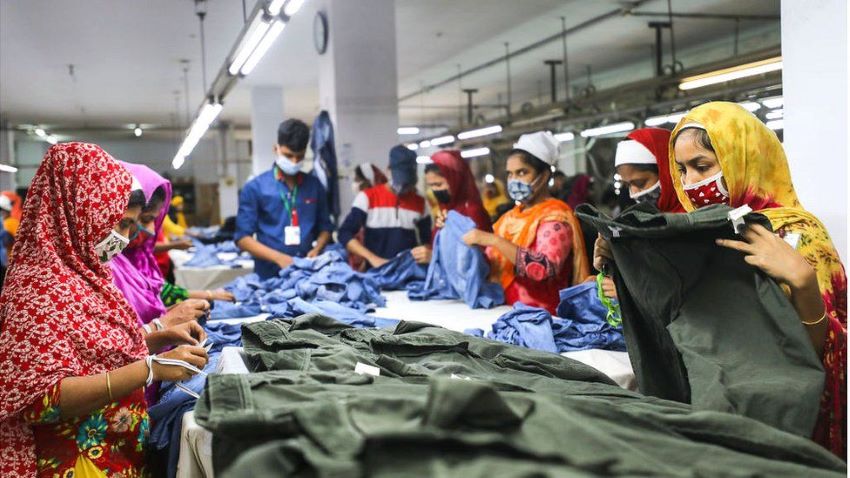
Garment exporters in Bangladesh frequently have to accept prices below their production costs. They feel they have to do this if they want to maintain business relations with their retailers. They fear losing out on work orders. Another fear they have is that if they do not accept prices below their production costs, they will lose everything and will not be able to pay workers at the end of the month. Another reason for accepting lower prices is the hope of price hike and profit in future.
Bangladesh garment suppliers are being driven down on price by apparel brands and retailers. While the unit price is going down by the season, prices of all materials and operation costs are going up. Very few buyers offer better prices. The relationship between suppliers and brands is essentially unequal. If ever there were a buyers’ market, this is it. So, the manufacturer may be asked to change the styling, add trims or change wash method of a garment but the buying team never wants to pay for these changes. Bangladesh is the world’s second largest garment exporter. If the country wants to race ahead, it needs more specialisation, more added value, and more innovation which will lead to greater bargaining power with brands.
Not deterred by Brexit, Inditex continues its expand in the UK
Despite Brexit, Inditex is opening flagships and restructuring its business in the United Kingdom. Inditex has a history of more than two decades in the United Kingdom. Currently, the Spanish giant operates in the country with 108 stores. Of these, 63 are Zara stores, 13 are Massimo Dutti, 11 are Zara Home, eight are Pull & Bear, seven are Bershka and six are Stradivarius. The first Inditex store in the United Kingdom was opened in 1998. This was for Zara. In 2003 Zara Home and Massimo Dutti were opened. Bershka came to the UK in 2005 and, two years later, Pull & Bear. Stradivarius landed in 2014.
The United Kingdom is one of Inditex’s main markets. The high penetration of e-commerce in the country (the highest in Europe) as well as its maturity and closeness have often led Inditex to test its new digital strategies in the British market. In 2018, for instance, Zara opened a pop-up store dedicated only to online sales at a shopping center. The concept was later replicated in Japan and Italy. In 2019 Inditex chose the United Kingdom to implement the integration of Zara Home and Zara. The country was the first in which the Zara Home collection could be purchased within the Zara platform.
Italy’s apparel sales up three per cent
Italy’s apparel retail sales rose 3.4 per cent in September 2019 compared to the same month last year. Footwear and leather goods sales in the same period rose 4.2 per cent. Sales of perfume and personal care sector rose by 0.9 per cent.
In January 2019, fashion sales in Italy fell 0.2 per cent, then grew 2.4 per cent in February and slowed down in March, to 0.6 per cent. In April, Italian fashion sales fell again, with a drop of 1.3 per cent, while in May the fall was 4.9 per cent. In June, the sector rose 2.3 per cent and in July the rise was 1.5 per cent.
Fifteen out of the 43 European fashion giants are Italian. Apparel is the most important segment in Italian fashion, accounting for 40.5 per cent of total revenues, followed by leather wear (20.9 per cent) and eyewear (16.2 per cent). The fastest growing segment is jewelry, with an annual average growth rate of 13.3 per cent. Italy’s fashion industry has grown by three per cent on an average every year in the last decade. Its annual revenues account for around four per cent of Italy’s gross domestic output.