FW
Levi Strauss & Co to pay in full for all completed orders
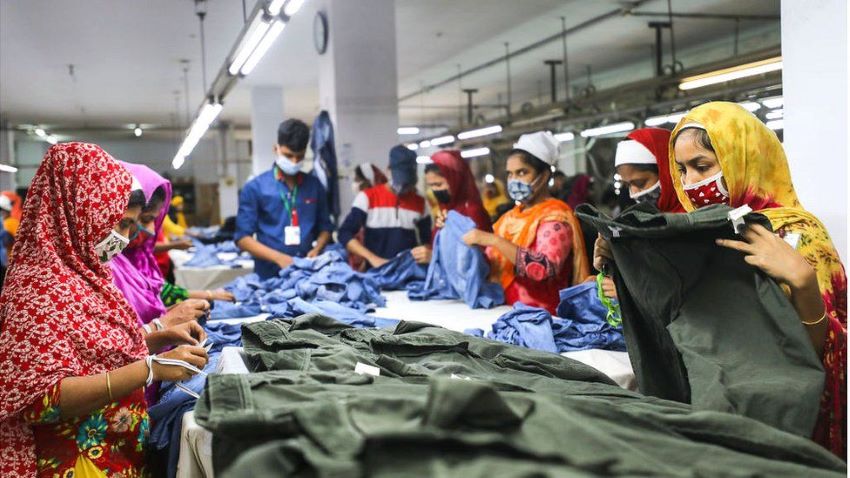
Giving in to pressure from Worker Rights Consortium (WRC), denim company Levi Strauss & Co has agreed to pay full price for all completed ready-to-ship orders and the production of in-progress garments. In later seasons, the company agreed to use the raw materials that suppliers had already received for product orders.
In early June, the 167-year-old brand credited with inventing blue jeans had appeared on a list of apparel giants not treating garment workers responsibly during the COVID-19 crisis. As of last week, Levi’s has settled its disagreements with suppliers. The business claimed that the decision by the brand to postpone the payments of negotiated terms put at risk the cash flow of suppliers and their ability to pay the salaries of clothing workers.
In partnership with the IFC, Levi’s has also introduced a new initiative that encourages customers to make early payments at competitive market rates. The company also helps companies in non-IFC areas. The foundation provided $1 billion in funding in April to meet the needs of clothing workers in the communities of provision of health, food and safety net.
Columbian brands launch PPE collections for international markets
Columbian fashion companies including Maaji, Uniondame, Color Siete, Layatee, Protela, Totto, Cueros Velez and Polito have launched new collections for adults and children featuring anti-fluid materials and face masks. These collections are being launched for clients in the international markets, such as the US, Bolivia, Ecuador, Guatemala, El Salvador, Panama, Chile, Aruba, and the Dominican Republic.
Maaji launched its 1World 2gether collection of overclothes including overalls, joggers, trousers, jackets with built-in face coverings and masks, all made in fluid-repellant fabric. Similarly Polito designed a protective collection, including jackets and full suits with masks. The company already has an order for these garments for June in Ecuador and hopes to reach more countries in South America, some in Central America, and the United States with this collection.”
Totto’s collection, Totto Element Block, is made with anti-fluid fabrics, includes reusable protective overalls, shoe covers, reusable protective collars, a wind-breaker, backpack protector, and a double-layer adjustable mask. The company has received orders from countries such as Bolivia, Ecuador, Guatemala, El Salvador, Panama, Chile, Aruba, and Dominican Republic.
Cueros Vélez, who launched a line of leather face masks with various designs and functionalities, etc has also received mask orders from Holland and is also in touch with potential clients in Spain and England.
Between January and April of this year, Columbia’s fashion exports rose to $212.6 million, according to DANE (National Administrative Department of Statistics) and ProColombia. The United States, Ecuador, and Mexico were the primary destinations for Colombian fashion exports. The country will hold its most important fashion trade show, Columbiamoda, virtually from July 27 to August 2.
The event will connect international demand to Colombia’s supply chain in an innovative way to support its businesses.
Polyester staple fiber market to grow by 4.1 per cent CAGR by 2025
A market research report by Transparency Market Research (TMR) forecasts the global polyester staple fiber market to rise over a steady growth rate of 4.1 per cent CAGR by 2025. The market valuation of the said market stood is likely to attain a figure of around $34.546 billion by the end of the year 2025.
The key segments to drive growth are: personal care and hygiene, home furnishing, apparel, filtration, automotive, personal care and hygiene, construction amongst many others. The apparel segment is anticipated to be the main driver raising the growth rate of 4.2 per cent CAGR from the year 2017 to the year 2025.
Apart from apparel, the automotive and home furnishings sector will also drive growth in the world market for polyester staple fiber. On account of its durability and cost effectiveness, polyester staple fiber is finding another extensive application as car fabrics. They assist in keeping the cost of the automobile low also. Taking volume into consideration, the market share of the automotive is forecasted to remain at 14 per cent in the years to come.
Polyester staple fiber is also witnessing major uptake from home furnishings. The category is anticipated to hold on to its share of around 14.5 per cent in the years to come.
Asia Pacific leads the Polyester staple fiber market with a dominant share. The regional growth is primarily backed by the commercial construction activities, increasing residential, increasing spending capacity of the people, and rapid urbanization.
Boyish Jeans launches transparency widget
Los Angeles based Boyish Jeans, a sustainable women’s denim brand, has launched the Retraced GmbH transparency widget on its online store to spotlights the sustainability efforts and achievements.
Boyish joined the Retraced transparency platform ‘retraced’ in March 2020. Since then, the brand has worked diligently with the tool to onboard and connect its selected network of sustainable supply chain partners, such as Bossa Mills, Strom Denim, and Lenzing AG. This included onboarding the respective suppliers into the system, collecting information on their ethical production methods and standards, and verifying their certifications and claims.
As a result, the brand was able to obtain eight badges with regards to transparency, fairness, and environmental sustainability. Visitors on Boyish’s website can now click on the retraced plugin and learn more about the product’s journey, the production processes, and the environmental implications.
Since its foundation in 2018, Boyish Jeans has been committed to making the planet and people-friendly women’s denim and sharing the process along the way. The brand aims to have its entire supply chain mapped and communicated by the end of 2020.
Fabric Days to offer creative work environment
Munich Fabric Start Exhibitions GmbH promises to offer creative work environment this season at the Fabric Days that will be held from September 1-3, 2020 at the MOC in Munich. In four fully booked halls on the ground floor of the MOC, around 300 German and European exhibitors will attend the event.
The organisers also stated that the exhibitors will present new developments in 5 segments for Autumn/Winter 21/22 in around 700 collections.
Among the list of confirmed international exhibitors are many high quality premium suppliers, who will showcase a broad product range. Thanks to established partnerships with leading textile agencies such as Berner & Sohn, Max Müller, LOOMseven and Püttmann, many collections from European manufacturers will be shown exclusively at Fabric Days this season.
The participating Fabric manufacturers include for example Lisa, Yünsa, Henitex and Davaris. In the Additionals area, Peter Büdel, Shindo and Varcotex will present their latest developments alongside others. Lica Design Studio, Circleline and Design Studio Fluxus are three of the exhibiting Design Studios. Lagoon, United 3 Fashion and Dimis Fashion Group are part of the Sourcing area. For Denim & Sportswear, Tejidos Royo, Verlcorex, Van Delden and Bossa showcase their latest developments. Trend setting innovations are presented by Blue RenTec one, House of U and Smart Fiber.
Visitors will get the chance to meet their suppliers and partners in person again at Fabric Days and use the three fair days in Munich for their collection design, exchange and inspiration. As well as the select, trend setting portfolio, Fabric Days will also offer a meaningful trend forum following the seasonal theme “Hopetimism”.
CFDA unveils new digital platform
The Council of Fashion Designers of America (CFDA) is unveiling Runway360, a digital platform that will serve as a centralized hub and business tool for the U.S. fashion community. The platform will enable designers to connect directly to industry stakeholders and consumers.
The portal incorporates key aspects of the designer business, from fashion shows to press, sales and consumer activations in an effort to help drive sales and showcase American fashion creativity.
The CFDA held virtual meetings with its members and press on Thursday to demonstrate how the platform works. It will be introduced right before New York Fashion Week in September, and both CFDA and non-CFDA members can participate. The abbreviated NYFW is slated from Sept. 14 to 16.
The platform is seasonless and serves as a permanent fixture and main designation for retailers, trade, press and consumers worldwide. The portal will support AR/VR, 360-degree capabilities, livestreams, e-commerce extensions, consumer shopping features and social media integration. The hub will also allow designers to host virtual press conferences and present press kits and fashion show and product images. Brands will be able to activate the integrated shopping elements on their pages to directly target consumers.
LVMH awards winners of its 2020 Inclusion Index
Luxury goods group LVMH awarded the winners of its Inclusion Index for 2020 at a virtual event on June 26. The brand recognised seven brand initiatives that promoted gender equality and inclusion, with each initiative corresponding to at least one of the seven United Nations Women’s Empowerment Principles (WEP).
Some of the initiatives honoured include Hennessy’s ‘Vignoble au Féminin’ programme, which showcased the important role of women in viticulture. LVMH US was also recognised for the ‘All LVMH Pride,’ an LGBTQIA+ affinity community for US-based LVMH employees.
The LVMH Inclusion Index was designed to promote gender equality and LGBTQI inclusion across all LVMH brands and regions
Sephora Poland’s ‘FUN.TECH.FUTURE’ campaign was awarded for helping women in low-income housing rejoin the workforce; while Sephora USA’s ‘Classes for Confidence’ project, which offered makeup classes for transsexual and non-binary communities, was also recognised.
LVMH Japan received an award for its ‘Balance for Better’ project, which has helped over 6,500 beneficiaries. Louis Vuitton Asia was honoured for making sure that partners of LGBTQI employees were eligible for coverage and health insurance, especially in countries where same sex marriages are not recognised.
Order intake for Italian textile machinery drops by 47%
As compiled by the Association of Italian Textile Machinery Manufacturers (ACIMIT), the index of orders intake for Italian textile machinery fell by 47 per cent for the period April-June 2020, compared to the same period in 2019, with orders falling both abroad and in Italy, mainly due to lockdown of production units, particularly in the month of April.
A 44 per cent decrease in orders was recorded on foreign markets, whereas the domestic market showed a 62 per cent drop compared to the second quarter of the previous year. The lockdown of production units in April heavily influenced the orders intake, and a deep concern remains for the upcoming months. ACIMIT noted that the current total extent of assured work amounts to just two and a half months.
Pakistan’s textile exports to Italy grow despite COVID-19
Despite the COVID-19-fuelled lockdown and supply chain disruption, Pakistan has fared quite well by registering a visible growth in textile exports to the Italian market in FY20, said Ambassador of Pakistan to Italy Jauhar Saleem.
Saleem said Italy was the eighth largest economy of the world with gross domestic product (GDP) of $2 trillion. It is the third largest economy in the European Union (EU) after Germany and France and the ninth top export destination for Pakistan as it hosts the largest Pakistani diaspora in the EU.
Italy is facing tough times due to the widespread impact of the coronavirus pandemic on its economy and the International Monetary Fund (IMF) has projected a 9-11 per cent contraction in the Italian economy whereas the Italian central bank is anticipating a decline of 9-13 per cent in its GDP this year.
The ambassador pointed out that in FY19 Pakistan had a trade deficit of $164 million with Italy. However, in fiscal year 2019-20, despite the coronavirus outbreak and lockdown in the country, Pakistan managed to record a trade surplus of $210 million.
Tukatech introduces 'feel factor value' to fabrics
Los Angeles-based Tukatech recently introduced the ‘feel factor value’ to fabrics based on a mathematical calculation using bend and surface friction values in all warp, weft and shear directions. The feature helps in 3D product design as customers can quickly relate fabric feel without having to wait for a physical sample that can delay the development process.
A ‘fabric feel factor’ is a number that someone may be able to learn and associate in their mind when imagining what the fabric will feel like. The relational value comparison is based on many fabrics familiar to users.
For example, most apparel people know from experience how soft a fine silk scarf feels and know that raw denim or burlap is rough. A number can be assigned to fabrics that will convey to the mind the feel factor of the fabric. If the softest fabric was a 10 on a scale of 1 to 10 and the roughest was a 1, then other fabrics fall in between.
This determination from most used fabrics now can be classified with reference number for each and a feel factor for new fabric will help the design community to ‘digitally feel’ the fabric while they can see the drape and movement of fabric in TUKA3D. These values can then be tabulated and the mean for each fabric taken and assigned to that fabric.