FW
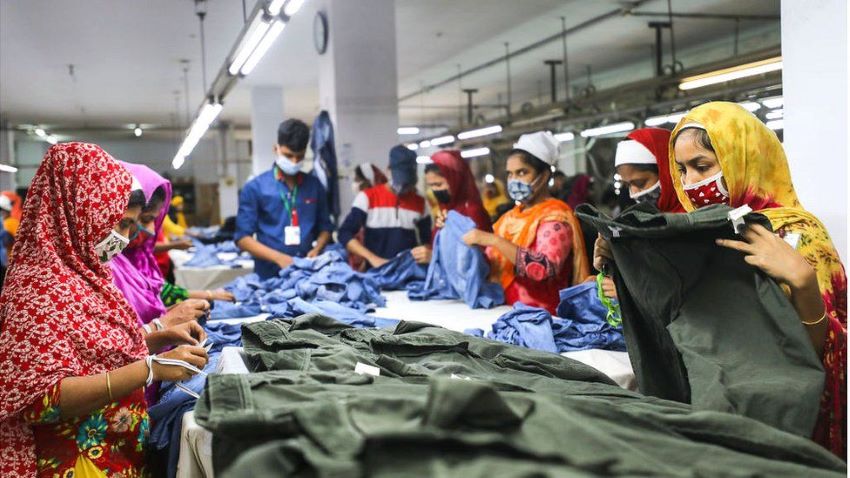
Myanmar’s garment workers get financial aid from EU
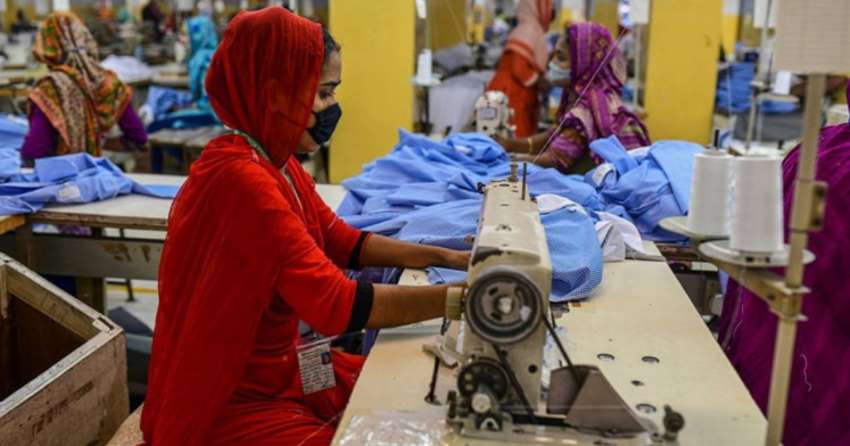
The European Union plans to extend a helping hand to Myanmar’s garment workers, especially women. An additional €5 million from its Myan Ku Fund will be used to help Myanmar’s garment workers, who continue to struggle from factory closures and lay-offs amid COVID-19. The EU has now channelled €10 million in support of the mostly unemployed women migrant workers in the sector. Some 60,000 workers have already received financial assistance since the funds were first distributed last year.
In May 2020, the EU disbursed a total of 108,320 cash assistance payments to over 60,000 garment factory workers from every State and Region of Myanmar. 84 per cent of the beneficiaries were women, and the greatest support went to those who were pregnant and to those workers who received little or no severance pay.
Migrant workers and workers willing to complete skills training programmes will also be supported. The scope of expert nutritional support services is also expanding, with 2,000 women targeted to receive maternal counselling and direct nutritional support from the project’s doctors.
Cotton yarn price to keep rising in India
The price per kg of Indian woven cotton yarn rose from $2.65 in August last year to $3.65 in January this year an increase of 37.7 per cent. The price per kg of combed cotton yarn of 30s count is now $3.55 per kg with an increase of 8.33 per cent over December.
The price of Indian cotton fiber has not increased significantly but the price of cotton yarn is higher than domestic and export prices. The problem is exacerbated by uncertain demand in supply chains. International buyers resumed their orders in the second half of 2020. Already inventories have dried-up as supplies failed to match demand and spinning mills resumed operations late across India.
The demand for Indian yarn is growing with a large number of orders coming in from Bangladesh and Vietnam. Bangladesh is already planning to buy from the stock market as the price of cotton has skyrocketed.
Manpower was limited at the time of the lockdown-induced factory closure resulting in limited production. Later when demand increased, traders and agents started selling more to those who were willing to pay higher prices and, therefore, prices have risen significantly in the last six months.
According to experts, the price may rise further by March 21. This could lead to further difficulties in the Indian textile and garment supply chain. Already weaving price increased from 12-15 paisa/pick to 20-24 paisa/pick in India.
H&M partners Lee for eco kids wear and Daley-Ward for loungewear
Encouraged by the growing demand for loungewear and sustainable fashion H&M has linked with Lee jeans for kids wear and a loungewear deal with Yrsa Daley-Ward. The Lee kids’ collection is a holistic collaboration with advances at every stage of design and production, with every single material made more sustainable. For the first time, it will also share Life Cycle Assessment (LCA) data on hm.com indicating the water, C02 and energy impact of each denim garment from raw materials to end of use.
The collection features, jeans, jersey pieces and accessories, with a 80s and 90s throwback feel. It includes relaxed-cut jeans, as well as a workwear influence in dungarees, dungaree dresses and jeans with cargo pockets. There’s a kids’ take on Lee’s classic Rider jacket, cut with a slightly cocooning shape. Jersey pieces play with the heritage of Lee’s world famous logo with relaxed tees and hoodies with pops of purple and cobalt blue. Accessories include knit beanies and a mini sports bag.
Meanwhile, the Yrsa Daley-Ward collection uses quotes from her powerful poetry. Key pieces include the longline Bermuda shorts with co-ord slogan sweatshirt, oversized T-shirts and seamless crop tops, and a drop-shoulder hoodie, all made with materials such as organic cotton and recycled polyamide.
European Commission moves ahead with circularity for textiles industry
The European Commission has published a guide marking the path for local textile industry's transition towards greater circularity. The document includes a consultation to gather the advice, observations and opinions of the local industry’s operators, with a response deadline of February 2.
The European Green Deal, the Circular Economy Action Plan (CEAP) and the Industrial Strategy have identified textiles as a priority sector in which the EU can pave the way towards a carbon neutral, circular economy, and announced an EU Strategy on textiles, indicated the EU Commission in the introduction.
The Commission’s goal is to draw up a comprehensive plan that will incorporate objectives and incentives to boost the European textile industry’s competitiveness. A plurality of stakeholders is expected to be involved, from manufacturers to buyers, researchers, consumer associations, investment funds and government bodies.
Future EU regulations will be aimed at the industry's weaknesses in terms of sustainable manufacturing, environmentally friendly products, and the use of polluting substances, while also attempting to boost the recycling of industrial waste and the use of recycled materials. Another goal is to identify horizontal actions along the value chain. Promoting greater transparency and respect of human rights are also listed among the EU initiative's objectives.
The document outlined some of the obstacles the initiative might come across, mentioning a number of studies on the European fashion industry and the role of sustainability within it. Among the obstacles, the remarkable complexity of the value chain which comprises 160,000 European companies employing 1.5 million people.
Bangladesh RMG exports fall with long lead time, negative growth in woven products
As per Export Promotion Bureau (EPB) data, shipments of apparel goods to the US declined 16 per cent to $5.07 billion in 2020 down from $6.02 billion in 2019. The steep decline was due to the ongoing pandemic, which hit people’s income and supply chain. Exports earnings from woven products witnessed sharpest fall of 22.13 per cent to $4.49 billion, which was $4.49 billion in the previous year. However, knitwear products posted positive growth up 2.73 per cent to $1.56 billion from $1.52 billion in 2019.
Production of woven products was hampered due to supply chain disruption during the first phase of Covid. Bangladesh needs to import fabrics for woven products mostly from China. However, experts also blamed longer lead time and sharp negative growth in woven products for the downtrend in US markets.
Amid the pandemic, lead time was crucial for importers and brands as the supply chain was disrupted. They preferred Vietnam due to shorter lead time. Experts feel in order to grow in the US market Bangladesh has to come out from the traditional exporting items and attract FDI in areas where there are opportunities for manufacturing value added goods. Additionally the country should develop strong backward linkage for the woven sector to reduce import dependency and to increase value addition.
Albania’s 2020 textile and footwear exports in negative zone
Albanian statistics office has released a data indicating a fall of 9 per cent in exports in 2020, with the biggest negative contribution, -5.3 percentage points, coming from textiles and footwear sector. Albania is an important nearshore production centre supplying Italy’s apparel sector. But as non-essential shops were closed and people stayed at home during COVID-19, global clothing sales slumped.
Geographically, the deepest falls in Albania’s exports in 2020 were to Italy (13.7 per cent), followed by Kosovo (12 per cent) and Spain (30.4 per cent). Besides textiles and footwear, there was a -3.5 pp contribution from minerals, fuels, electricity and -1.2pp from construction materials and metals to the overall 9.0 per cent decline in exports.
The worst month for both imports and exports was the lockdown month of April, when exports fell by as much as 45 per cent year-on-year and there was a dip of around 40 per cent in imports.
Burberry retail sales fall below estimates
British luxury brand Burberry’s comparable retail sales fell 9 per cent at constant exchange rates for the 13 weeks ending December. However, analysts had been expecting a 7 per cent decline. The steep decline during the pivotal holiday quarter shows how the pandemic continued to weigh on luxury fashion brands. The pandemic has also widened the gap between the strongest players like LVMH and Hermès, whose fashion sales returned to growth by the end of last summer, and more novel propositions like Burberry, which overhauled its designs and weeded out diffusion lines in a bid to move upmarket under designer Riccardo Tisci and chief executive Marco Gobbetti.
Burberry pointed at a silver lining with full-price sales that increased by more than 10 per cent in its key leather and outerwear categories. The brand blamed low tourist traffic at its off-price outlets and an effort to limit markdowns in its mainline stores for the overall sales decline.
Pradip Tripathi gets additional charge as Secretary Textiles
Pradip Kumar Tripathi, has been given additional charge as secretary, Ministry of Textiles. Since June 1, 2020, Tripathi is serving as secretary, Ministry of Steel. Tripathi will serve the textiles ministry till the appointment of a regular incumbent. Prior to Ministry of Steel, Tripathi served as special secretary and establishment officer in Department of Personnel and Training (DoPT).
Arvind Kumar Sharma, who was given additional charge of Secretary, Ministry of Textiles, at the beginning of this month, took voluntary retirement (VRS) to play a bigger role in the government outside civil service. He is among the 10 candidates fielded by the BJP for the Legislative Council election in Uttar Pradesh.
NCTC appeals for better policy support to boost India’s textile MMF sector
 The Parliamentary Standing Committee on Labour chaired by Bhartruhari Mahtab, visited Coimbatore and Tirupur to study the growth potential of MMF textile industry in Tamil Nadu. They interacted with the National Committee on Textiles & Clothing (NCTC). T Rajkumar, Coordinator, NCTC and A Sakthivel, Chairman, AEPC told the committee the state being the largest textile manufacturer accounting for India’s one third textile, with excellent infrastructure and eco system for innovation and manufacturing of high value added manmade fibre textiles, has the tremendous potential of attracting new investments including FDI/JVs and creating new jobs for lakhs of people.
Policies to tap full potential for MMF industry
They said, since India, particularly Tamil Nadu has reached saturation in manufacturing cotton textiles and apparels, there is tremendous scope in a post-Covid-19 scenario with China being sidelined, if a conducive policy for MMF textiles and clothing products is offered. As India accounts for only 2.2 per cent of global MMF textile trade, the Textiles Ministry has proposed a Focus Product Incentive Scheme for 40 HS lines of MMF Garments and 10 HS lines of Technical Textiles under the Production Linked Incentive Scheme recently announced by the Central Government. The global trade of these 50 HS line products is around $222 billion and however, India’s existing share is dismal.
NCTC stated the anti-dumping duty and customs duty protection given for domestic manufacturers and 18 per cent GST on MMF and 12 per cent GST on MMF yarn have curtailed growth. India could not even import speciality fibres that not manufactured in the country under zero duty. MMF raw materials are produced by a very few manufacturers. However, cotton produced by over 6 million farmers does not attract any duty and are available cheaper than international prices. MMF is expensive by up to 23 per cent.
Therefore, NCTC appealed to recommend removing anti-dumping duty and slotting the entire MMF value chain under 5 per cent GST on par with cotton value chain apart from addressing inverted duty structure issues at processing and capital goods. Based on the representation made by NCTC, the Prime Minister has already removed the ADD on PTA, Acrylic Fibre and rejected the proposed ADD on PSF and MEG, thus enabling global competitiveness for the polyester segment while the removal of ADD on VSF is under active consideration.
Amend labour to facilitate ease of doing business
Since the new labour codes would be implemented shortly, NCTC has sought certain amendments in the new codes to ensure ease of doing business. Fixing uniform minimum wages across the country for all trades/job roles is essential to create a level playing field. There is huge variation in the rates of minimum wages between states and also between trades/job roles within the state. NCTC also appealed the Committee to advise state governments to avoid applying Juvenile Justice Act that defines the child labour as 18 years below while Factories Act permits employment of adolescent workers aged between 16 and 18 subject to certain conditions.
NCTC also appealed for curtailment and harassment of NGOs especially in textile clusters of Tamil Nadu and tarnishing the country’s image in global market. The Tamil Nadu textiles & clothing industry pays highest wages and better welfare facilities to workers. This is evident from the millions of migrant workers coming to the state from across India.
Trends of 2020 will continue to evolve this year for fashion, footwear industry
 In 2020, fashion was shaped by shifting consumer priorities. Going ahead the trends that emerged during the pandemic will continue to reign through this year. As Beth Goldstein writs about the outlook for 2021 in her NPD article “The shifts in consumer preferences we’ve seen during the pandemic are accelerated extensions of those we were seeing before, and these trends will continue during the year ahead.”
Comfort, functionality to be top priority
Indeed consumers had already started focusing more on comfort and functionality of products even before the pandemic affected their choices. Year 2020, confirmed this even more as spending was around products that suited their stay at home lifestyle. “This is largely why the home, tech, toys, and sports equipment industries fared so well. Within footwear and accessories, styles that supported comfort at home or outdoor activities were the winners,” writes Goldstein.
“In fact, fashion footwear (particularly dress) has been losing share to more comfort-oriented and athleisure categories for years, aligning with similar trends in apparel.” And this became more prominent during the pandemic and lockdown. For example, in the US, slippers are expected to grow over 50 per cent for the year, and brands like UGG, Crocs, and Birkenstock clocked in good revenues at a time when others were floundering. She feels, as consumers start returning to work and life becomes more normal, brands can capitalize on the “more casual, comfort-focused features that consumers have become accustomed to wearing inside of the home, and adapt for use outside of the home.”
In fact, a NPD Group study had highlighted in September that 70 per cent consumers said once they go back to normal activities and work, they will continue to dress more casually than before the pandemic. Therefore, brands and makers should look at a “resurgence in fashion footwear”. Sales will surely move North and as NPDs’ Future of Footwear report predicts in 2021, the fashion category will recoup less than half of the volume it lost in 2020.
She says, in 2021, consumers will continue to prioritize spending on functional and durable products that offer solutions, and are therefore, perceived to be good investments. Hence, innovation is key for brands to move forward.
Online retail will continue to gain
Another clear trend that emerged during the pandemic was the growing importance of omnichannel retail. “The proliferation of shopping, pickup, and delivery options initiated digitally was a key driver for many of the successful retailers during the year,” she writes. Online penetration touched 40 per cent of total fashion footwear sales and 34 per cent of accessories sales reports an NPD Group/Consumer Tracking Service, January-November 2020.
In 2021 she feels, “brick-and-mortar retail will continue to be more transactional rather than experiential – and even as shopping in-store becomes less of a health concern, the dependence on digital will likely remain.” The retail industry should however, work towards bringing the customer back to the store “we should accelerate efforts to bring that experiential element to the digital world via enhanced technology and imagery. This does not, however, mean we should abandon progress in the physical world; while store closures will continue, there will be unique opportunities in the brick-and-mortar space as well.”
She sums up by saying in 2021, just like during the pandemic ‘normal’ will continue to evolve, shaped by forces that were both present before 2020 and those that intensified during last year. “Recovery will differ among consumer groups – and we’ll likely see behaviors such as working from home and increased online shopping stick. The brands and retailers that thrive in 2021 will be those that refuse to settle for just one new normal.”