FW
Sturdier supply chain partnerships to define sporting goods industry in 2021
 A new study by the World Federation of the Sporting Goods Industry and McKinsey & Company highlights supply chains as one of the main challenges for the sporting goods industry in 2021. Titled, ‘Sporting Goods 2021 – The Next Normal for an Industry in Flux’, the study says, for the first time since the financial crisis, the sporting goods industry’s growth declined 7 per cent to $348 billion. Most brands, retailers and manufacturers reported losses in 2020 despite a rebound in business after the 1st and 2nd COVID-19 lockdowns.
Bright future outlook
The report predicts a positive outlook for sporting goods industry over the next 12 months despite uncertainties due to second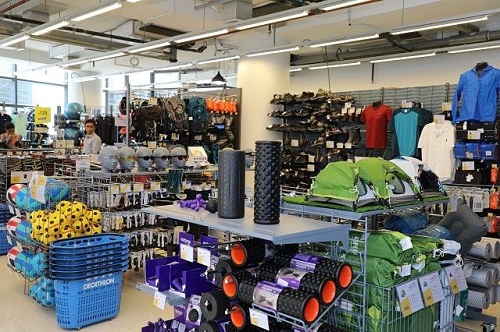 COVID wave and slow vaccination process. Sporting events like the Olympic and Paralympic Games and the UEFA European Football Championships are likely to make a comeback along with other home, outdoor and digital activities. Over 60 per cent sporting goods stakeholders are optimistic the current year will be better than 2020. They hope to build sturdier supply chain partnerships and explore local alternatives.
Faster processes and deeper ties
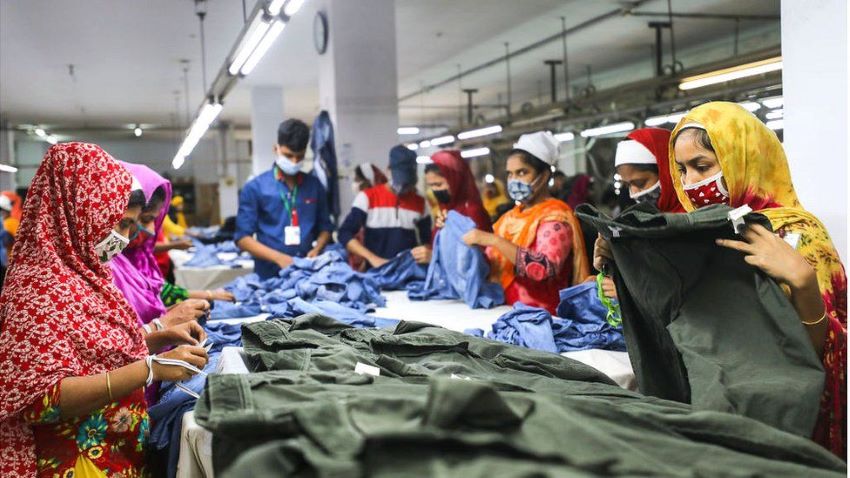
The report states, e-commerce model progressed as much as four years in the first month of the pandemic. E-commerce companies were more agile and had regular product runs closely associated with demand. The lead times of Asian suppliers and lead times of big sporting goods companies reduced to 30 days. The industry also explored near-shoring and re-shoring options to cut lead time and shipping insecurities caused by trade rule worries. Around 73 per cent sporting goods leaders are now engrossed in building closer relations with suppliers. Around 60 per cent expect to strengthen their supply chains over approaching period.
To benefit from these shifts in supply chain logistics and capabilities, industry leaders need to adopt a new business model that speeds up identification, production schedules, and supplier contracts. Also, companies need to focus on deeper ties with suppliers to make operations more agile and responsible.
Trends for 2021
The report also identifies the trends that will dominate sporting goods industry in 2021:
Athleisure: The pandemic has blurred the line between home and office. Hence, there is rising acceptance of athleisure in formal environment. Over 75 per cent expect the athleisure market will grow, and 33 per cent attribute its growing popularity to COVID-19.
Sustainability: COVID-19 has also accelerated demand for sustainable products. Around 67 per cent consumers emphasize on sustainable materials while buying clothes. From mid-2017 to mid-2020, the number of net new ‘sustainable’ SKUs introduced in the online market grew 58 per cent per annum.
Digital fitness: Driven by social distancing and stay-at-home requirements, digital fitness gained popularity last year. Though not a complete for traditional sports and exercise, this trend is likely to culminate in a hybrid model including free and paid apps, livestream and (non-)connected equipment.
Online shopping: Online shopping for sporting goods increased thrice as much from 2019 to H1 2020. Experts expect this trend to stabilize at around 25 per cent in 2021.
Shift in marketing: Cancelling or postponement of sports events encouraged sports marketing to shift from physical assets to influencers on social media channels. Around 43 per cent respondents do not expect sporting goods marketing to be as closely linked with major sporting events in future.
New retail experiences: Lockdown measures have accelerated the crisis for brick and mortar stores. Around 45 per cent respondents expect companies to set fewer stores in the current year. They also expect stores to offer new facilities and make the shopping experience more memorable.
Rise in cotton yarn prices affects small exporters in Tiruppur: TEA
According to the Tiruppur Exporters Association, the rise in cotton yarn prices and intermittent supply of cotton yarn in the past two months has affected small exporting units in Tiruppur.
There is a lack of a level-playing field due to non-existence of free trade agreements with the European Union, the United Kingdom and Canada, whereas competing countries like Bangladesh, Vietnam, Cambodia, Sri Lanka, Pakistan, Myanmar are now enjoying duty-free status in these markets, TEA said.. TEA requested the government to announce without delay the rates of the Scheme for Remission of Duties and Taxes on Exported Products (RoDTEP).
The trade body also requested the government to permit extension of Interest Equalisation Scheme for another three years, which will help the MSME exporting units to work out their costs accordingly and strive to take more export orders.
Recession leads to closure of 30% of Egypt’s factories
Recession and deteriorating economic conditions have led to closure of 30 per cent of Egypt’s textile factories, says MP Enas Abdel Halim. As per the Middle East Monior, the remaining factories had reduced production by 50 to 70 per cent.
Egypt had about 1,260 spinning, weaving and dyeing factories registered in Mahalla, but now only 320 factories are operating, employing 120,000 workers.
Halimwarned the government against neglecting this issue, while calling for the Minister of Trade and Industry, NevinJama, to be questioned in parliament about the recent deterioration in the textile sector.
Egypt's unemployment rate rose to 9.6 per cent in the second quarter of 2020 compared with 7.5 per cent a year earlier, due to the coronavirus pandemic, the statistics agency CAPMAS revealed in August.
Who’s Next cancels January edition
Ready-to-wear event Who’s Next had already cancelled this year’s January edition, and must now also give up on an event organised jointly with Première Classe at the Tuileries Gardens in Paris
As a result, Who's Next will not be held this season, while accessories show Première Classe will take place, but in reduced format. The next edition of Première Classe will be held exceptionally at the WSN headquarters, in the heart of Saint-Germain-des-Prés, as a highly exclusive physical showroom.
The showroom will be open for four days, from March 5 to 8, featuring about 40 fashion accessories exhibitors and a few ready-to-wear labels, with names like Inouitoosh, April Please, Paraboot, Be Parisian, Macon &Lesquoy, Herbert Frère Sœur, MaisonBoinet and Ubac Shoes.
WSN is now hoping to be able to return to the Porte de Versailles exhibition centre in early September with Who’s Nextand at the Tuileries Gardens in October with Première Classe.
Welspun partners Res.Q for digital factory floor
The Welspun Group has partnered Res.Q, a cutting-edge shopfloor process digitization solution to create a digital factory floor. Welspun will start digitization process with quality management module which is Res.Q | QMS.
According to Res.Q, the textile business of Welspun group began their search for a Quality Management Solution for Anjar, Gujarat facility. Their search criteria included an agile, user-friendly and a real-time tool in order to make data-driven decisions.
Res.Q’s installation at Welspun is the first deployment being executed 100 per cent remotely by the Team of Engineers at Res.Q, effectively showing how simple the solution is to deploy. The project is being undertaken in the midst of a global pandemic, limited travel. The company hopes to deliver value while working totally remotely, said Thushitha Kularatne, CEO, Res.Q.
Telangana to create textile value chain in the state
After having excelled in the fields of IT and pharma, Telangana has now set its sights on the textile sector. The state aims to create an end-to-end value chain for the industry to boost its prospects, says a Times of India report. One of the state’s plan is to set up the country’s largest textiles park — Kakatiya Mega Textile Park (KMTP) —over 1,200 acre for offering a complete manufacturing ecosystem for the textiles and apparel industry within its premises.
According to Jayesh Ranjan, Principal Secretary, IT & industries, Telangana, the state has acquired the required land for the project and is currently developing its infrastructure. It has also allotted 350 acre to two companies, Youngone Corporation and Ganesha Ecosphere. KMTP will also set up plug-and-play infrastructure for local weavers and textile manufacturers and a common effluent treatment plant. It will set up training centers in Warangal and its catchment villages to train the local population.
The state government also plans to set up country’s first technical textile testing lab with the help of the Centre at KMTP this year. The lab will be set up with an investment of Rs 150 crore.
Monforts Centre receives 36-roller raising machine
The Monforts Advanced Technology Centre in Monchengalbach, Germany received 36-roller raising machine manufactured in 1918. Introduced by Monforts, the raising machine proved to be a revolutionary product in the 19th century as it used low friction ball bearings for its raising rollers. This reduced the wear and maintenance of the raising rollers.
Despite current travel restrictions, the Monforts Advanced Technology Centre (ATC) is fully operational for industrial-scale trials and is run by highly experienced staff on behalf of customers. Since its opening in 2013, the technology centre has invested over €3 million in equipment. Spread across 1,200 sq m, the centre houses two full finishing lines, engineered to accommodate an extremely diverse range of processes based around the industry-leading Montex stenter, in addition to a Thermex range for continuous fabric dyeing and the newly developed CYD process for yarn dyeing.
New survey predicts 37 per cent brands to close stores this year
As per a Brightpearl survey, over 37 per cent of fashion brands plan to close stores across the globe this year. Around 56 per cent of retailers will shut their physical stores while 66 per cent of shoppers don’t plan to visit a mall in the next year.
One in five retailers plan to move their stores from major city centers and into local neighborhoods within the next 12 months. However, around 58 per cent retailers expect their e-commerce operations to fare much better than the rest of their business in the next 12 months.
These retailers plan to ramp up their digital operations over the next year to meet growing demand. Technically savvy companies plan to add local collection points to their online delivery, capitalizing on customers' increased preference for local shopping. Brands that are prepared to adapt to this once in a generation retail transformation will prove to be successful in the long-term, says the survey
Adidas to sell Reebok brand
German sportswear maker Adidas AG plans to sell its underperforming brand Reebok, 15 years after the US fitness label was bought to help compete with arch-rival Nike. Adidas will divest Reebok as a part of a five-year strategy it plans to present on March 10. It will report Reebok as a discontinued operation from the first quarter of 2021. It will either spin off Reebok as a stand-alone public company, or sell the brand to private equity, another major sports retailer or a multibrand player like VF Corp.
The company bought Boston-based Reebok for $3.8 billion in 2006 but its sluggish performance led to repeated calls from investors to dispose of the brand. The brand’s net sales fell 7 per cent in the third quarter of 2020 to €403 million after falling as much as 44 per cent the preceding quarter. In 2019, Adidas wrote down Reebok's book value by nearly half, compared with 2018, to €842 million.
Analyst believe Reebok's recent collaborations with celebrities like Cardi B and a refreshed focus on women's apparel have put the brand in a better place.
Punjab slips to the 7th position as exports tank in 2019-20
A major textile and garment hub, Punjab has slipped to the seventh position in volume of net exports in the sector in 2019-20. As per Ministry of Textiles, Punjab exported textiles and garments worth $1,509 million in 2019-20. The state was preceded by other states such as Gujarat, Haryana, Karnataka, Maharashtra, Tamil Nadu and Uttar Pradesh.
Industrialists warn Punjab’s position may slip further if the Centre and the state government keep turning a blind eye to the problems of garment and textile industry. Harish Dua, Executive Council Member, Apparel Export Promotion Council opines, at one time Ludhiana was the number one garment manufacturer in the country, but due to the apathy of the successive Central and state governments, its position was taken over by other states. Dua believes one of the biggest hurdles for Ludhiana's garment exporters is huge expenditure incurred on outgoing freight till the ports as compared with the other states. Manufacturers have been demanding freight subsidy for garment exporters of Punjab since many years.
Vinod Thapar, Chairman, Knitwear Club, advises the Centre and state to come together and introduce a tailor-made technological upgrade scheme for the state, under which it should be given financing at 0 per cent rate for purchase of machinery.
However, Narinder Mittal, General Secretary, Ludhiana Business Forums says, textiles is a vast term that includes a wide product range, including denims, carpets, saris, home furnishing and specialised fabrics. However, Punjab produces nothing of this sort and therefore lags behind other states UP and Gujarat. He urged the state and central governments to take steps to uplift the garment industry of Ludhiana.