FW
Bangladesh encourages manmade fiber garments
Bangladesh’s garment exporters may get cash incentives for making goods out of manmade fibers.
Currently the country has no special cash incentive for manmade fiber-based garment items. Development of a manmade fiber-based garment industry is important for three important reasons -- tackling the graduation challenges, the pandemic's fallouts and grabbing a bigger global market share.
Once Bangladesh graduates from an underdeveloped to a developing country in 2026, exporters may face the associated challenges. Garment exporters have demanded the incentive citing the severe fallouts of the pandemic. And the country can grab a bigger share of the global market since prices of garment items made from manmade fibers are higher than those made from cotton. Global demand for manmade fiber-based garments is higher than that for cotton-based ones. Of garment items produced in the world, 78 per cent are made from manmade fibers and the rest from cotton.In Bangladesh, the picture is the opposite.Of garment items shipped from Bangladesh, 74 per cent is made from cotton fibers and the rest is manufactured from non-cotton fibers.
Since China and Vietnam have been increasing their share of the global manmade fiber apparel markets, Bangladesh feels it’s time to grab a bigger market share.
Custom T-shirts printing market gets a boost from growing need for brand visibility
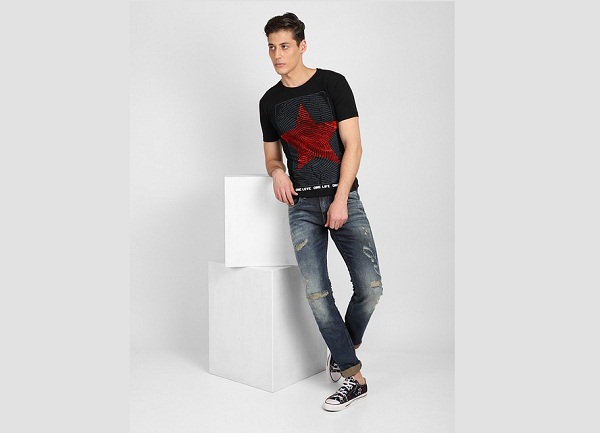
As per the Grand View Research Report indicated global custom T-shirt printing market was valued at $3.9 billion in 2021 and is expected to expand at a compound annual growth rate (CAGR) of 9.9 per cent from 2022 to 2030. Custom-designed T-shirts are increasingly being used by companies as a modern branding strategy to brand their company, products, or offerings. Companies use this technique, especially start-ups, to increase brand visibility and grab the attention of prospective customers. Therefore, the growing use of customized T-shirts as a branding tool is expected to be a major contributor to market growth over the forecast period.
Customized tees for branding
The fashion industry is witnessing a shift toward wearing customized clothing. Also, the increasing disposable income of consumers is enabling them to spend on customized clothes. As a result, people prefer wearing customized t-shirts with specific logos or slogans printed on them. The entertainment industry is contributing to market growth with a large number of people, especially movie fanatics, buying apparel with slogans or logos printed on them. For instance, TV series such as Game of Thrones and Big Bang Theory have a huge fan base. Fans willingly spend a good amount on buying T-shirts or other apparel with their favorite dialogues or slogan printed on t-shirts. This trend is expected to majorly contribute to the custom T-shirts printing industry's growth in the forthcoming years.
There is an increase in the use of custom printed T-shirts to create social awareness, raise a voice, and support a cause. However, specific designs and slogans printed on the T-shirts related to sensitive issues, such as diseases, gender, crime, and politics, are subject to criticism and legal actions. Further, customers from various industries, including hospitality, logistics, construction, industrial, and medical are increasingly providing custom printed T-shirts to their employees and customers which is used as a marketing technique.
Companies all over the globe are using it as an off-the-clock advertising tool. This advertising strategy has been observed to involve less investment as compared to other forms of advertising such as hoardings or TV. Therefore, companies are providing customized T-shirts to increase their brand identity as well as customer loyalty. Additionally, providing t-shirts with good quality material increases their shelf life, thereby helping the companies to gain visibility for a longer period, which in turn is anticipated to boost the market growth during the forecast period.
Demand growth fuelled by sports clubs
Sports teams and clubs of almost all sports have started to design and wear custom-designed t-shirts and jerseys with their unique logo and design. Various sporting clubs are following this trend to increase the visibility of their teams and to provide a unique appearance to their team players. Sporting activities across countries such as China, India, and Germany are witnessing considerable growth with increasing investments by governments of these nations in sports-related activities. As a result, demand for customized T-shirts is expected to increase in the years to come.
With recent COVID-19 outbreak, there has been a significant disturbance in most industries across the globe. While few industries experienced a contraction in their productions and businesses, others faced severe outcomes such as the shutdown of businesses and movement restrictions. For instance, the travel, entertainment, and hospitality industries had the most retrenchments, and on the other hand, healthcare, technology e-commerce businesses had an upsurge in demand. However, during the pandemic, the fashion industry experienced both a surge and decline all at once.
While various outlets and large brand stores experienced a drop in footfalls and clothing demand, there was an increase in demand for custom T-shirts from the e-commerce industry. Moreover, custom T-shirts printing business also witnessed several new entrants
during the pandemic.
EU strategy for sustainable textiles goes hi-tech
Recycling textiles through sophisticated industrial processes in the apparel segment is now a thing and it’s not easy. It’s now more of an obligation rather than a choice for EU countries to collect and sort their used textiles so that there is less wastage in the apparel segment as a whole. It’s still a niche yet essential segment with the USP of being environmentally friendly. However, there is no sure fire way to ensure the quality of fibres used and blending ratios of the chemicals used in dyes, prints and other variables does not hinder the recycling process or lower its efficiency to make it unpractical in the long run.
A report by the European Commission’s Joint Research Centre 2021 has pointed out around 4-6 per cent of the EU’s overall environmental footprint can be traced back to textiles. To address this issue further, in March 2022 an EU strategy for sustainable textiles pointed out that the recycling rates for textiles are currently rather low, with 1.7 to 2.1 million tonnes of used textiles collected annually throughout the EU while the majority of the remaining 3.3 to 3.7 million tonnes will probably be got rid off in mixed household waste.
Eco-design regulations make recycling easier
Under the new recycling process using sophisticated techniques, the EU market textile segment would need to be more durable, easier to mend and reuse and have a longer life-cycle by ecycling the materials they contain into new high-quality products that can be sold again. Improving design elements at the first manufacturing stage itself with newer and higher standards under the EU’s eco-design regulations will make life easier for the recycling industry. The EU Strategy for Sustainable and Circular Textiles is determined that in just eight years, by 2030, most textile products on the EU market will be durable and have a longer shelf life without hazardous substances and tick all the right boxes in protecting the environment and social rights.
“The incorporation of minimum amounts of recycled fibres in new textile products is quite promising. There are different ISO standards out there, but for recyclability, not yet,” points out Valérie Boiten, senior policy officer at Ellen MacArthur Foundation, a charitable organization for accelerating the transition to a circular economy in an interview with EURACTIV. Talking about the EU Textile Regulations Boiten goes on to explain, some might look at garments, some might look at garments and shoes, some might look at all possible textiles without really defining what a textile is. However, there’s already an issue where there is no EU-wide definition of textiles and what products fall under textile.
EU Waste Framework Directives on a high drive
The textile recycling segment will be helped by a policy big bang revision with the new EU Waste Framework Directive for waste collection and recycling targets starting in 2025, which will require all EU countries to establish systems for the separate collection of textile waste. However, now there are no immediate targets for collection and no obligation for member states to report, with only 13 EU countries currently doing some reporting. Even among these, only Austria, France, and the Belgian region of Flanders and Italy report annually on post-consumer textile collection while the others only map them once or twice over the past decade usually with the help of non-governmental bodies. France however, has shown the way in this respect way back in 2007, it became the first EU country to introduce an EPR scheme holding producers of textiles, household linen and footwear responsible for the collection and recycling of their products.
The long-term vision for consumers to benefit from high-tech yet affordable textiles and for manufacturers to take responsibility for their products along the value chain is now inching more towards reality than a dream.
Federation urges zero VSF duty in India
There should be no anti-dumping duty on viscose staple fiber. So says the Tamil Nadu Federation of Powerlooms Associations, India.
In Tamil Nadu, says the federation, over two lakh powerlooms have switched over to 100 percent viscose staple fiber and contributed significantly to fabric exports. The removal of the anti-dumping duty of 28 per cent levied on imported viscose staple fiber enabled the sector to increase 100 per cent viscose staple fiber fabrics exports from 25.49 million sq m during 2019-20 to 61.39 million sq m during 2021-22.
The federation says the powerloom sector in India is the largest woven cloth manufacturing sector, accounting for 85 per cent of the total cloth produced in the country. The country currently has around 3.86 lakh powerloom units in the decentralized sector and 25 lakh power looms, including around 1.5 lakh shuttle-less looms, providing direct jobs to around 5 million people.
The high volatility in cotton prices had had a severe impact on the powerloom sector and the removal of the anti-dumping duty on purified terephthalicacid, monoethylene glycol, polyester staple fiber, acrylic fiber and viscose staple fiber enabled the powerloom sector to diversify into manmade fabric, which is the future growth engine of Indian textiles and the clothing sector, says the federation.
ICAC appoints executive director
Caroline Taco is the executive director of International Cotton Advisory Committee. So far she has been business development manager. She joined ICAC in 2001 and is its longest-serving member. She will continue to also serve as business development manager. Taco has attended every ICAC plenary meeting since 2001 and has extensive experience, including the preparation of budgets, managing the flow of publications and committee documents.
ICAC provides public infrastructure that enables improvement through industry action. ICAC brings together governments and the private sector from producing, consuming and trading countries representing all sectors of the value chain. ICAC has contributed concretely to the lives of people in the cotton industry by facilitating cotton-friendly government policies, providing information for decision-making and by developing and disseminating technology. World cotton yields are higher, earnings are greater, and demand is stronger because of the work that the ICAC has been doing.
Formed in 1939, ICAC is an association of cotton producing, consuming and trading countries. It acts as a catalyst for change by helping member countries maintain a healthy world cotton economy, provides transparency to the world cotton market by serving as a clearinghouse for technical information on cotton production, and serves as a forum for discussing cotton issues of international significance.
Bemberg partners with Italian pioneer
Bemberg has partnered with PureDenim and launched a premium denimwear range.
The collection is made with seven fabrics made with Bemberg, either 100 per cent Bemberg or in blend with cotton, wool, and it applies the most advanced Pure Denim Technologies.
The fabrics made with Bemberg will also be dyed with Smart Indigo, an indigo dye technology internally produced by PureDenim, through a chemical-free production. The only elements involved are water, indigo pigments, and electricity. In terms of finishing, the fabrics’ looks and performances are enhanced by the Eco Sonic ultrasounds finishing technology which brings significant reduction of water used, increased aesthetic features and controlled discoloration.
Bemberg by Asahi Kasei is a unique fiber with a circular economy footprint obtained from cotton linters through a closed-loop process ensuring certified sustainability credentials through its transparent and traceable approach.
PureDenim is an Italian company whose strategy has been based on an entire re-design of the production system, inspired by circular economy principles that combines technology and innovative materials in order to offer the highest levels of design, innovation and real responsible values derived from an holistic approach to sustainability.
Pure Denim has revolutionized denim processes with new technologies, natural polymers and smart fibers.
India: Tirupur expects surge in garment exports in ’23
Garment exporters in Tirupur are hopeful of bagging more orders in 2023. They expect a 30 per cent growth in orders once the trade agreement between India and the UK is signed.This is expected to bring orders to knitwear exporters all through the year.
Tirupur’s exports of knitwear and garments to the United Kingdom are growing by 20 per cent year on year. About 20 per cent of the knitwear hub’s annual exports of knitwear and garments go to the United Kingdom. Also India’s economic pact with Australia has come into force. Exports to Australia from India crossed Rs600 crores between January 2022 and June 2022. They are expected to have touched another Rs600 crores during the remaining period of the year.With the economic pact having come into effect from December 29, 2022, garment exports from India to Australia are expected to see almost a 30 per cent growth in the first year as Indian apparel products now have duty-free access to Australia.
Though the garment industry in Tirupur is largely cotton-based, manufacturers have started experimenting with manmade fiber and in another three years the share of manmade fiber-based products in Tirupur is expected to go up.
Sri Lankan exporters wilt under power tariffs
Electricity tariffs have burdened Sri Lanka’s apparel exporters. In most factories electricity is the third highest cost incurred, after materials and salaries.
The price of electricity has increased by some 65 percent. So not only small and medium scale enterprises, but even large-scale companies are in trouble. Before the August 2022 electricity hike the cost of production was slightly lower in Sri Lanka than in its competitors.However, now the country is at a Vietnam cost level. The industry fears that with more hikes in the electricity tariff, its costs will be higher and it wouldn’t be able to compete.
Customers especially in a global downturn would not want to spend more on Sri Lankan products. Sri Lanka produces energy using highly costly sources, such as diesel, and there has been no attempt to move to cheaper alternatives.There is no plan to boost renewable energy production though there was a plan to move to 70 percent renewables by 2030. Before the tariff hike in August 2022, the daily demand for electricity was around 48 gigawatt hours but by December 2022, the demand had dropped to 36 gigawatt hours. Factory owners have curbed their use of electricity because they can’t afford to pay.
Indian knit exports up ten per cent
India’s exports of knitted T-shirts during January 2022 to October 2022 grew by ten per cent.
Exports to the US were up 20 per cent. Knitted T-shirt exports to Germany, UK, France and the Netherlands were up by 16 per cent, five per cent, five per cent and 23 per cent respectively. So there was export growth to the EU countries despite news about declining orders from European buyers.The US is the top destination for Indian knitted T-shirt exporters followed by the UAE, Germany, UK, France and the Netherlands.
Bangladesh and India have attained the highest growth rates of T-shirt production among the main producing countries. The increased exports from these countries is due to the export-oriented means of production, feasible as a result of cheap labor costs. Despite the fact that China remains a key global centre for the production of T-shirts, production is gradually shifting to other countries in Asia.
T-shirt consumption is set to maintain an upward growth trend in the immediate term, due to the recovery being seen in the global economy, the process of ongoing urbanization, the rising population, and increasing income levels. The global trend of the T-shirt market is expected to continue, with a growth of 1.7 per cent annually in the medium term.
Heimtextil to be held next week
Heimtextil will take place in Germany, January 10 to 13, 2023. This is a trade fair for home and contract textiles, interior design and trends.
Over 2,200 international exhibitors from 50 countries are expected. Heimtextil 2023 provides the perfect range of relevant market players and complements the benefits for buyers with an extensive supporting program. The overarching theme is that of sustainability.
Heimtextil Trends aims at setting standards for the future-oriented and sustainable textile furnishings of tomorrow. The focus is particularly on the subject of the circular economy.Circular economy also characterizes the staging of Heimtextil Trends. The area is as sustainable as possible with predominantly recycled materials and elements as well as a strict waste avoidance strategy.
Interior. Architecture. Hospitality, the specialist program for interior designers, architects and hospitality experts, will once again take place at Heimtextil on a large scale and in the usual high quality. The program includes renowned architects and hotel experts who will present their work and discuss current industry topics such as sustainability. Participants will be shown innovative textile solutions from the contract sector. A directory will list all the suppliers of contract textiles. In addition, the identification of the respective trade show booths ensures an effective trade show visit for the target group.