FW
Sustainability is the paradigm of digital textile printing
As the awareness of sustainability grows throughout our industry, and the community that it serves, we are witnessing a huge swing towards sustainable supply.
Digital printing technologies are by nature more sustainable than traditional analog alternatives, and offer a way forward towards clean, efficient, profitable manufacturing. As an industry all sectors of the textile community are embracing sustainable manufacturing practice, from the fibers that we choose to spin, the fabric preparation chemistry that we use to coat and finish, through to the print machinery and inks formulations with which we print. Massive investment has and continues to be made within every sector, many of which now collaborate to futher develop innovative new stream-line processes and technologies.
Sustainability can only exist alongside supply chain transparency, and collaboration is the key to success. Digital Print Technologies and CAD /CAM software offer a sustainable solution to the negative environmental impact of traditional textile manufacturing practices.
 Caption: Image Credit: Kornit Digital: “Sustainability is one of the key trends and directions today and public awareness for a better and greener planet is rising, the textile industry shift towards digital printing aligns with reducing its environmental impact”. Sharon Donovich | KORNIT DIGITAL
Textile manufacturing across multiple industries using analogue technology previously consumed massive resources and generated (now valuable) waste as a bye product.
Prior to Digital disruption the Textile industry consumed massive amounts of water and energy, contaminating the environment with dye stuff and numerous toxic chemicals used in the manufacture of both textile fabrics, inks, printing and the finishing of products.
Digital Textile Printing saved over 40 billion litres of water worldwide in 2018. Offering an efficient solution when compared to traditional water usage for rotary screen printing which is in the region of 50-60 litres of water per metre. Digital Textile Printing also uses smaller quantities of colour, typically 10% of the volume used when compared to screen printing. Using pigment inks as an example, and its requirement for fixation only finishing (no washing) uses less than 10 litres of water per metre.
Digitally Printed Cotton virtually eliminates the consumption of water and the discharge of noxious effluents. Using low volumes of liquid dispersions of Pigment Colours, therefor offering a positive environmental impact. Digital Textile Printing using Pigments also removes the need for water and energy greedy post processing, since colour fastness is achieved by heat fixation alone as opposed to lengthy steam fixation and washing off procedures.
Caption: Image Credit: Sensient: "Sensient is committed to sustainable developments and any new technology developed is rooted in a need to consider total environmental impact”. Simon Daplyn | SENSIENT
Today the Digital print Industry offers a clean future for the environment and as the consumer and buyer becomes more conscious of their environmental choices, and the true impact that those choices make, digital technologies and their application will continue to move forward to replace unsustainable inefficient manufacturing.
The hidden waste within manufacturing is now being addressed and harnessed with innovative re-cycling processes whether that be energy, water, textile fibers, inks or the fabrics we consume, and this sector continues to expand to meet the demands of the environmentally conscious consumer.
 Caption: Image Credit: Roland DG: “Our commitment to sustainability has always been strong and with greater attention on the issue globally, this is an area we continue to invest in at every opportunity”. ROLAND DG.
As we move towards “Circular Design” we have to be both conscious of, and responsible for the origination and the future life of the textiles we create. Re-cycling offers extended life for many of the fibres used in textile production as do “fibre to fibre” re-cycling initiatives for Closed loop textile supply chains. Re-purposing our discarded textiles and waste products offers a viable solution for Circular Design. The choices we make in our design practices all have an impact on the future cycle of the product. Choosing sustainable textiles and practice is now corporate policy for many large brands who seek to improve their global impact on the environment.
How we design our products is also paramount. Utilising AR and CAD / CAM as an industry we are massively reducing waste. Both within the design process but equally in the production process utilizing digital sampling, automated pattern grading and cutting, print placement and print on demand business models for customized manufacturing.
We also see a new industry emerging for supply chain management, whereby large companies, brands and independents can source their finished products through sustainable practitioners who provide transparent manufacturing. Such companies offer managed sourcing from their partners and thereby guarantee certified sustainable manufacture to defined production objectives for Brands and Retailers.
Regulation in many sectors isn’t yet compulsory and so we now also see multiple options for voluntary certification being readily accepted and utilized across the textile supply chain. Oeko-tex, GOTS, SEDEX, to name just a few now help to define supply chain transparency.
Sustainability Statements:
Recently winning the Responsible Care for Sustainability Commitment Award the CHT group received the award for the process that controls the reduction of critical raw materials in the company.
“This project was started by CHT in 2015 as part of its commitment to sustainability. Since then 1,900 raw materials have already been valued. 20 percent of these were classified as critical, 8 percent were already replaced. In addition, CHT defined ten critical raw materials that are to be replaced or significantly reduced by 2020. CHT has therefore initiated new research and development projects for environmentally friendly and health-compatible raw materials and supplied its customers with the new substances. According to the assessment of the national expert jury, such a project in a medium-sized chemical company serves as milestone”. CHT GROUP
Sensient: “Sensient is committed to sustainable developments and any new technology developed is rooted in a need to consider total environmental impact. Recently released products are certified for Eco-Passport by OEKO-TEX but also aim to deliver savings on total consumption, water and energy use and reductions in waste whilst maintaining the highest standards of quality in printing and application performance. Sensient is working with partners around the world to develop inks and processes that make a difference in terms of sustainability.” SIMON DAPLYN | SENSIENT
Roland DG: “Our commitment to sustainability has always been strong and with greater attention on the issue globally, this is an area we continue to invest in at every opportunity. There are sound commercial reasons for us to adopt this stance – our customers and their customers are much more conscientious about their direct and indirect impact on the environment and this is playing a greater influence on buying decisions.
As has been the case for many years, all of Roland’s manufacturing facilities in Japan have been designed to be carbon neutral. Great effort is made to ensure that the components within our devices are recyclable and the same can be said for the packaging we use to transport our devices.
Developing environmentally friendly ink is a priority for Roland and we make a conscious effort to cut down on the use of controlled chemicals, for example, those outlined in the Pollutant Release and Transfer Register (PRTR). Our challenge is to create ink that exceeds the standards of sustainability whilst maintaining the exceptional quality our customers expect. Meanwhile, we have significantly reduced our environmental impact by changing the packaging for our ink from rigid plastic cartridges to flexible foil packaging.
We have made great strides in developing inks and software to maximize the efficiency of our devices, ensuring that consumption is never higher than necessary. By providing effective and efficient solutions at reasonable prices, businesses can easily make the transition from more wasteful, traditional systems and adopt more efficient technology. In turn, companies who use our newer devices consume less water and electricity” .ROLAND DG
Kornit Digital: “In today’s world, the number one environmental risk factor in textiles is water pollution. The amount of water currently used, wasted, and polluted is huge and actually the amount of water used in conventional dyeing and textile print processes could fill the Mediterranean Sea every two years.
As sustainability is one of the key trends and directions today and public awareness for a better and greener planet is rising, the textile industry shift towards digital printing aligns with reducing its environmental impact. Kornit’s technologies are leading this effort with a 100% waterless process utilized in every single printing system we manufacture. No pre-treatments, steaming or washing is required, and as part of Kornit’s waterless printing system, the biodegradable ink and energy saving process makes Kornit an eco-friendly printing solution” Sharon Donovich | KORNIT DIGITAL
“Sustainability” is just one word that seeks to define an unquantifiable number of actions and processes within the vast textile supply chain. Navigating through a sustainable supply chain is not currently easy. Educating the consumer or buyer to truly understand the positive social, economic and environmental impact of clean, sustainable manufacturing has driven the industrial sector to engage and collaborate directly with brands to share knowledge, develop new technologies and provide transparency.
From Chemistry and Textiles, onto to Inks, Digital Print Machinery and Software, “Sustainability” is at the Heart of the Digital Printing Industry…
Yarn piles up with Bangladesh millers
Textile millers in Bangladesh have stacks of unsold yarns and fabrics. The reason: invasion of cheap Chinese substitutes. A section of unscrupulous traders import yarn illegally. For example, they open letters of credit for importing one truck of yarn but they end up importing more due to lack of proper monitoring at the land port.
If illegal imports are not checked, millers fear the factories’ inventories will soar and they will feel discouraged to continue production. About 30 per cent of their inventory is unsold. Spinners, who can meet 85 per cent of the demand from the knitwear sector and 35 per cent from the woven sector, have already slashed production by 40 per cent because of this.
Another problem afflicting the textile millers is that a section of unscrupulous traders have been selling goods imported under the bonded facility. Imports of duty-free goods under the bonded facility are allowed only for export-oriented garment factories. Some businesses are importing yarns and fabrics under the bonded warehouse facility and later on selling the duty-free items in the open market at low prices.
Bangladesh frequently hosts yarn shows, which introduce the latest sophisticated yarn, fabrics, accessories and emerging technologies for textile and garment industries.
Vietnam to scale up garment exports
Vietnam plans to become the world’s third major supplier of garments and textiles. With Comprehensive and Progressive Agreement for Trans-Pacific Partnership and the imminent signing of a free trade agreement between Vietnam and the European Union, this target is as possible. The CPTPP is expected to cut import tariffs and diversify products available in CPTPP member countries. CPTPP is expected to help the economy grow 1.3 per cent and boost export turnover by four per cent.
Another element would be the trade war between the United States and China, the world’s major garment exporter, because Vietnam is maneuvering to occupy market niches that would be banned to China in the United States, including garments. Vietnam’s major importer is the United States, with more than 50 per cent of the total exports, followed by Japan, South Korea and China, which import about 70 per cent of the production altogether.
Many companies in the sector have speeded up production since early 2019 to meet large orders for the first trimester. In 2018, the export turnover of garment and textile products marked a year on year increase of 16 per cent. However, Vietnam has to depend on raw material imports. Enterprises have to import over 60 per cent of the raw materials they need.
Sympatex launches a highly-breathable new line of footwear
At this year’s Lineapelle, to be held from February 20-2 in, Milan, Sympatex will launch a new line of functional materials for footwear in which PU foams are completely replaced by a fleece-like compound made from recycled clothing fibers. This innovation dovetails with several of the ecological goals set down in the Sympatex “Agenda 2020” sustainability strategy: avoiding waste while reusing valuable and scarce raw materials, replacing controversial chemicals with more sustainable alternatives, reducing CO2 emissions and significantly reducing water consumption during the production of the laminate.
By launching this new footwear line, Sympatex feeds valuable raw materials back into the textile loop while curbing CO2 emissions. The material also boasts impressive performance. Replacing the PU foam with recycled textiles has a decidedly positive impact on the breathability of the laminated material.
India still skewed toward natural fibers
Fiber consumption in India is skewed toward natural fibers, especially cotton.
But globally manmade fibers have a 70 per cent share in total fiber consumption while natural fibers constitute only 30 per cent.
So it is important for India to focus on manmade textiles along with cotton textiles.
The downstream industries in India’s manmade fiber textile value chain, spinning and weaving, the largest employment generators in the entire value chain, are facing acute stress due to high prices of domestic staple fiber. This affects the export competitiveness of the domestic downstream manmade fiber textile industry and also makes the industry venerable to imports of value added manmade fiber products.
Anti-dumping duties at the beginning of the textile manufacturing chain have hurt the downstream industry. Presently, the anti-dumping duty on PTA is Rs 4 to Rs 6 per kg and on viscose staple fiber, the anti-dumping duty is Rs 12 per kg. India has huge and efficient capacities in the manufacturing of polyester staple fiber and also viscose staple fiber.
Imports of manmade staple fiber in 2017-18 were less than 15 per cent of the total manmade staple fiber consumption in India.
Since GST, Indian imports of yarn, fabrics and garments have increased substantially.
Indian exporters fear losing GSP post new ecom rules
The US may withdraw GSP for India as it is unhappy with the recent tightening of foreign direct investment rules on e-commerce. India is the largest beneficiary of the United States’ GSP scheme, which is devised to promote exports from developing countries and which allows duty-free access to about 3,500 products.
Indian exporters are apprehensive of losing their competitive edge in the US market, especially in labor-intensive products if the facility is withdrawn. Exporters want some alternative schemes from India in case the benefits are revoked. One proposal is that in case GSP benefits are withdrawn, losses to exporters could be offset by giving some additional incentives to certain labor-intensive sectors.
Continuation of GSP benefits is expected to boost competitiveness of American manufacturers too by lowering their costs. About two thirds of US imports under GSP are raw materials, components, or machinery and equipment used for manufacturing goods for domestic consumption or for exports. Out of India’s total exports worth $49 billion to the US in 2017, exports worth $5.7 billion benefited from GSP.
Last year the US started a review process for India, Indonesia and Kazakhstan on the basis of complaints made by the US dairy industry and the medical equipment industry against perceived trade barriers.
Hong Kong’s Epic Group to set up garment manufacturing unit in Ranchi
Hong Kong-headquartered, garment manufacturing multinational conglomerate, Epic Group, will invest $20 million to set up its first manufacturing unit in Ranchi. The investment will be made in the initial two years to set up the manufacturing facility, machinery and training the workforce.
The company will initially produce 15 million units of garments in the unit. The group's clients include big retailers like Walmart, JC Penney, Kohl's, Levi's, Uniqlo, H&M, Tesco, Sainsbury's to name a few. The company currently has manufacturing units in Bangladesh, Vietnam, Ethiopia, and Jordan. Around 70 per cent of the company's revenue comes from the US while the remaining comes from markets in Europe, Japan, China, and others. The company currently ships its products to 47 countries.
Eurovet Group to join develoPPP.de program with sequagGMBH
Eurovet Group will join the develoPPP.de programme of the German Federal Ministry for Economic Cooperation and Development (BMZ), in partnership with sequa gGmbH. Under this partnership, Eurovet will initiate different activities to promote sustainable and circular lingerie manufacturers from Indonesia besides contributing to the development of the Indonesian lingerie industry through awareness creation, capacity building, knowledge transfer, practical implementations and the Interfilière Hong Kong trade fair.
As a part of this project, Eurovet, in partnership with the international sustainability consultancy suPPPort will assist four selected textile and lingerie supply manufacturers in improving their sustainability strategies according to international markets, enhancing their environmental impact through systematic solid waste and chemical management as well as workers health and safety training.
Bangladesh exports to India increases despite duty hike, labour unrest
After the Indian government increased duties on textile products to check cheap imports from China, apparel imports from Bangladesh has more than doubled. Despite a spate of labor unrest in Bangladesh, apparel exports from that country to India grew 143 per cent between July and December to $270 million from $166 million in the same month last year, as per the data from Bangladesh Export Promotion Bureau. Value of knitwear exports rose 107 per cent and woven garment exports by 161 per cent.
The government had doubled the duties to 20 per cent for over 300 textile products, ranging from fibre to apparels, in August, mainly to check rising imports of cheaper products from China. Imports started increasing after the implementation of GST. The effective duty rates came down as the countervailing duty of 12 per cent was done away with post-GST. In FY18, India’s textile imports jumped 16 per cent to a record $7 billion and of this around $3 billion came from China.
The rise of eco-friendly and durable fast fashion in India
"A Nielsen study conducted eight years ago showed that Indian consumers are becoming increasingly conscious of environment-friendly fashion practices. Groups like the Worker Diaries, that advocate the welfare of workers in the region and Fashion Revolution India, which pushes for sustainable and ethical practices in fashion, are making ethical and sustainable issues more visible."
 A Nielsen study conducted eight years ago showed that Indian consumers are becoming increasingly conscious of environment-friendly fashion practices. Groups like the Worker Diaries, that advocate the welfare of workers in the region and Fashion Revolution India, which pushes for sustainable and ethical practices in fashion, are making ethical and sustainable issues more visible.
India has doubled its commitment to reduce carbon emissions. The country is committed to absorb 2.5 to 3 billion tons of CO2 through planting trees, thus achieving 40 per cent renewable energy by 2030 besides reducing the intensity of greenhouse gas emissions based on its GDP by a third below its 2005 levels. A recent United Nations report shows, India is on track to meet the first two of these goals ahead of this deadline, reflecting the government’s dedication to averting a climate disaster.
On a per capita basis, India is still 128th in terms of emissions. As its economy grows, more people will have access to goods that contribute to the world’s pollution, including fashion. As the number of consumers grows, it’s arguably a critical time to introduce eco-friendly products.
As fashion’s biggest European and American brands enter the Indian market, sustainable selling makes good business sense.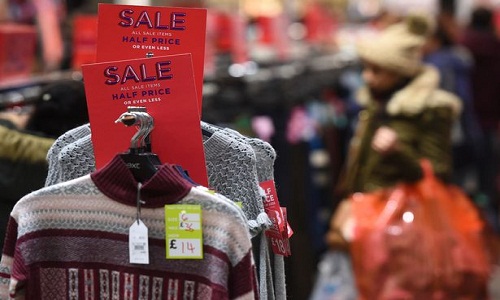 This is a part of the reason why global giants are pitching themselves to Indians as eco-friendly brands. It’s become clear that to truly tackle the looming threat of climate change brands need to rethink not only what they are selling to customers but also how much.
Innovative approach to reduce environmental footprint
American denim brand Levi’s has been trying to lower its environmental footprint by reducing carbon emissions and using lasers to finish jeans instead of chemicals. Levi’s broadcasts messages about its sustainability goals, its plans to reduce carbon emissions across its offices, retail stores, and distribution network by using 100 per cent renewable sources in its own facilities by 2025, or its new technique for finishing jeans that aims to save 50 billion liters of water by 2020. H&M, plans to use entirely recycled or sustainably sourced materials by 2030, and totally offset its carbon footprint by 2040. A part of this approach is to respond to customer demand and sell more products to eco-conscious Indians. The brand aims to source all its cotton sustainably which will help farmers reduce environmental stress by 2020.
The science of fabric recycling is still in its infancy. Organisations including the H&M Foundation are developing technologies that separate fibers used in fabric blends. But H&M is already collecting clothes from customers to be recycled. In 2017, the company collected 17,771 tons of textiles. It has recycling bins set up at all 40 Indian stores.
Focus on durability increases
As per Ellen MacArthur Foundation, the number of times a clothing is worn before it gets chucked out has declined by 36 per cent since 2000, with many consumers discarding garments after just seven to ten wears. And in that same period, the number of units of clothes sold annually has doubled from 50 billion units to 100 billion units.
Rather than selling more sustainable clothes, a truly earth-changing solution would be to encourage consumers to buy fewer, more durable products. Brands like Patagonia mend customer’s well-worn garments to extend their life. Eileen Fisher eschews fashion trends to encourage customers to wear the same outfits season after season. While these brands haven’t grown as fast as their more popular fast fashion counterparts, they are both successful, profitable businesses.
Global giants thus have a chance to rewrite the book on fast fashion. Instead of idealising newness they could adopt a more effective approach by focusing on quality, durability, and classic looks.